Super cool. For those who are glancing over, this is a big deal. 5G isn't really like 4G upgraded. It's more its own thing. I believe this has been available though for a while and many telecoms have partnerships with FAANG beyond Amazon.
With 5G you can essentially split a network into multiple partitions and scale them independently on-demand called Network Slicing. (like cloud computing but just the network).
This could be extremely useful for security. Maybe even the death of VPNs. This is also useful for scaling network resources to services as they need it.
Short-term, things like "Tesla Free Network" could exist for their self-driving cars. Or, Uber offering free fast Internet to their drivers or a truly private device.
Long-term, I am concerned about the emergence of private networks with different access. Such as a "Google Network" or a "Netflix Network" that offer different services or privacy levels at different costs.
It's a crazy, scary, but also fun direction we are going.
Edit: Final comment. If you think this might be the death of AT&T with independent providers, think again . Amazon & Co. and others like Google are bringing their developer platform, while the telecoms offer their infrastructure. It's a gross partnership that makes sense. When you send bits over the network -- everyone will be getting paid except you.
If you read the whitepaper, they list examples of what this would be useful for; namely, covering your own space with your own 5G for your own devices.
Deploy it in these areas instead of WiFi:
1. A stadium's remote ad/video/informational displays 2. A logistics distribution hub's stock-tracking robots/systems/handhelds 3. A corporate campus's smart displays or door access systems 4. Oil and gas drilling/processing sites's systems monitoring in remote, non-covered areas
So this isn't about creating a new provider in your local city, but rather about connecting your devices in your space in cases where WiFi is insufficient or overloaded.
So here's the thing, currently I have 2.4GHz and 5GHz WiFi in my home. Any device that is stationary connects to the 5GHz one and any device that moves around connects to the 2.4GHz one. Why? Because initially I had everything on the 5GHz network, but noticed if I move around with my phone/tablets/laptops (even as simple as standing still and turning around), the connection would become unstable/choppy and introduce some lag and in rare cases a drop in connection. The 2.4GHz one works no matter what I do in my home. I can also get 2.GHz all the way out to the curb and it still works, where the 5GHz one drops significantly once I'm outside my house. In some cases it will still show the 5GHz one being connected but any app that tries to use it just hangs and never loads whatever it tries to fetch. So the 5GHz version of WiFi has been utterly useless to me, thus I'm only using it for devices that I know have decent line of sight, are within certain distance and aren't moving around. I currently have no Bluetooth devices chatting in the same airspace and I've tried it with single network too (only 2.4GHz enabled or only 5GHz enabled) - still the same. It could be that there is interference from neighbors: I can see quite a few WiFi networks of neighbors, most have both frequencies active - but I also had the same issue before I live in this specific house. So if 5G can improve the situation, that will be pretty great.
I'm not sure of the advantage of this over Wi-Fi, though, except to get devices that have no other option other than cellular connectivity to be forced to go over your own network.
> Cellular technology such as 4G/LTE and 5G augments existing networks with higher bandwidth, lower latency, and reliable long-range coverage to an increasing number of devices. With AWS Private 5G, you can build private cellular networks to take advantage of the technology benefits of 5G while maintaining the security and granular application and device controls of a private network.
That's from the Amazon website. Why not just deploy Wi-Fi?
This doesn't seem to use AT&T at all, and amazon is actually bringing their own hardware too.
This isn't MVNO-aaS. Its Antenae-aaS.
I think a lot of people are missing this point. This will not allow someone to become their own carrier. It allows someone to install their own "cell towers" and have devices connect to them without having to use a 3rd party carrier.
Not sure how Tesla or Uber would get their own private 5G.
https://en.wikipedia.org/wiki/Mobile_virtual_network_operato...
one services towers on the ground. base stations. maintenance. physical network deployment
the other is the services of running the network. roaming agreements. customer management. internet breakout
tesla and other vehicle makers may see value owning the service side but very unlikely they want to maintain a network
I doubt Amazon has many towers of their own here and are almost entirely through one of the telecoms.
Amazon is talking about installing actual local hardware infrastructure here though. It seems like that only makes sense where there is no existing 5G, otherwise it's probably just cheaper to use the telco's infrastructure since, as you said, they could work directly with the telco to get their own slice.
Sort of like the difference in price between a dedicated hosted server (the AWS 5G) and a VPS (a slice of the telco's 5G)
I'm sure I'm misunderstanding some aspect of this whole thing though.
You can already get this - if you think you need it, you should google 'Private APN'. It's been available for years, assuming you're a corporate user looking for a few hundred SIM cards.
You can already get plans from the existing cellular providers to drop you onto a private secure network that behaves like a VPN though... that's common for people who need secure OOB access to their network gear: but install routers with 3g/4g/LTE expansion cards, get the SIMs on one of these plans, and voila -- OOB remote network access that isn't exposing your devices to the internet
This is exactly what the Helium (HNT) project is doing. They started with LoRa coverage (super low datarate but long range for IOT) and are moving into other protocols such as WiFi and CBRS 5G (same as this offering) via the FreedomFi project.
This is my understanding as well, but I have no idea about any of the details. I know there's something cool about "beams". Do you (or anyone) have a good "entry-level" article/doc that outlines some of the major features that makes it so different than 4G?
That is about it really. You can ignore mmWave which is pure hype. Most of the other enhancements are on the carrier / operation side and not consumer.
You can also ignore all the 5G Self Driving Vehicle crap.
About the payment, we're working on a model to compensate the users. Email me if you're interested
If that's true, I wonder if this affects Tailscale's business and how.
For example, AT&T's private APN service has been around since the 3G days: https://www.business.att.com/products/private-mobile-connect...
So like WhisperNet, except 5G, and anyone can make their own?
https://aws.amazon.com/private5g/faqs/
There's no "telecom as a service", and there's no "5g can be split into multiple networks" nonsense.
Amazon is just selling 5g access points and hardware (just like you would install wifi), and rents you a private connection for that hardware to AWS, and management of that network from AWS. Basically.
So now I can use 5G instead, and template and deploy it via the cloud? Yes, yes! We'll put this through some cost models, but it will likely jump NPV of IoT and automation projects by pushing down the initial capital costs (fiber runs pulled by union electricians to wifi gear installed by a vendor vs. 5G base stations and servers installed and configured by plant electricians and corporate IT).
For more info: https://dac.nokia.com/private-wireless/
Disclaimer: I work for Nokia.
Sure, it might have a good UX and not require as much expertise to manage, but it's not "deploy via cloud". That's just marketing.
That’s enough to make bars appear on your phone. What’s missing is the IMS, which adds traditional calling, voicemail, SMS, etc. However, FaceTime, iMessage, etc. will all work.
I don't expect this is for telephony, but rather a faster (I guess it's faster...) wifi. But who knows. Maybe if you install your own telephony servers or whatever you could call people on that network. Unsure anyone would care about that unrealistic usecase.
This actually works already over WiFi too and that's called VoWiFi. That does not support handovers between networks though, so it is not that convenient. Specifically it means that if you walk outside the WiFI network, your call will drop. I suppose the different branding is due to this quality aspect, as there's no difference in the protocol.
And unlocked phone should work provided it supports required frequency(tricky) and voice calls should be possible, but it probably can’t readily connect to PSTN and given actual “1-555-1234567” numbers, or make 911 calls for that matter. If you’re going to have Asterisk SIP VoIP server running on-prem, that is probably supported.
> At a minimum, you need to provide 110-volt AC power outlets, public internet access....
In the US, 120 or 240 volts are used. Per ANSI C84.1-2020
But you have a real point, and AWS already solved that with the 3G enabled Kindles by having carrier agreements. Why not doing that with Smart TVs?
Amazon regretted that pretty soon after they did it, people hacked their kindles to be hotspots and it became an arms race amazon didn't wanna play.
The TV company will deploy base station(s) in my town. Embed SIM cards in TVs they ship. No need to connect to my home WiFi to send personalised data back to their servers, or to upgrade firmware etc.,
Unless I'm misunderstanding how this works, it wouldn't need a base station in your home, just a commodity cellular modem with a network-specific SIM, and an uplink tower somewhere within range.
You seem to be interpreting this as "AWS is going to put 5G towers everywhere and smart TVs are going to connect to them to send data they collect!". That's not what this is at all.
This is one of the many reasons it's beneficial to read the actual article/post and comprehend the information, rather than reflexively reacting to keywords you notice in the title.
AWS was one of the companies they were negotiating with - I never realized they had not yet announced this service.
I dont' remember the exact feature name though.
The idea is to make sure they can keep that data flowing even if someone intentionally disconnects the TV from the internet
Given that there's an extremely simple and straightforward answer to your question (smart TV manufacturers sell data obtained from spying on users, and they need a way to get that data from the TV to their servers), I would encourage you to give some thought before making such an empty and vapid comment about voting habits on HN.
Alternatively, you could maybe do the same to your drywall if you are looking at new home construction... If every room is effectively a faraday cage, you are back in control over what can talk to what on a much more granular level. This clearly creates challenges for your own wireless/mobile signals, but presumably you also have the ability to hardwire additional access points if you are going to this extent.
They have teams of lawyers so suing them does no good.
EDIT: I assumed this was a partnership. I have no clue if they partnered here. Just speaking broadly after watching a couple of my founder friends get screwed by Amazon.
So it seems odd to call out AWS that they should have partnered with soracom or they aren't being ethical.
$187M for an exit is not that large. Were they offering a price in that range to AWS?
It feels a bit like some of the AWS IoT offerings are throw stuff at wall style.
Getting outdoor radios for rural access installed though is a bit more challenging, and I would be surprised if AWS was offering an outdoor solution here in the short term. Directional antennas and radio planning become a lot more important. There are a couple different players who will sell outdoor CBRS radios in small volume who all have pluses and minuses. CBRS is great for rural areas since there are often GAA channels available, but depending on the terrain may or may not provide huge area coverage. CBRS limits the height above average terrain and power you can deploy at. There are limits to the types of equipment and locations you can deploy without getting a professional installer certification. Getting the certification slightly raises those limits, but they are still something you need to take into account for wide-area access. You can actually get the CPI certification pretty easily via online classes offered by the different SAS (spectrum access service) providers. If you’re seriously considering founding a cellular wisp, there are some Facebook (unfortunately haha) groups out there that are pretty active and where you can get shoptalk questions answered about specific radios and technologies!
IMO the main value add from the AWS solution here is the access control, monitoring/auditing, and QoS management they are offering, which would be essential in an industrial setting, especially if running sensitive services over the network.
And in rural areas, 5G probably doesn't give you enough range anyhow. Have you considered mesh revenue-share networks like Althea (https://www.althea.net/)? There's a nonprofit one too operating in several cities, but I can't remember what it's called.
"In quick summary, the bands work as follows in the real world. One low band (600-700MHz) tower can cover hundreds of square miles with 5G service that ranges in speed from 30 to 250 megabits per second (Mbps). A mid band (2.5/3.5GHz) tower covers a several-mile radius with 5G that currently ranges from 100 to 900Mbps. Lastly, a high band (millimeter wave/24-39GHz) tower covers a one-mile or lower radius while delivering roughly 1-3Gbps speeds. Each of these tiers will improve in performance over time."
With Starlink delaying a good deal of preorders, something like this could be great.
You have to put in their SIM, so unless you have a dual SIM phone that can intelligently roam, doesn't seem like the right solution.
I did a stint as a (software) architect for a large Norwegian engineering company, and at the time they were looking at getting a private 4G network setup, as their facilities were absolutely huge. I did a little research, and quite a few mobile operators actually offer private 4G networks for exactly this use case.
My impression was that the high speed profile of 5G was basically the same as that of Wifi, with exactly the same issues. Am I wrong/is it better in lower speed modes?
https://lora-alliance.org/about-lorawan/It's also increasingly common to see private LTE/5g deployed to support municipal government operations.
Almost all major cities operate a private LTE network for city agency use, for example. But for various reasons it's mostly been out of the reach of private ventures. This could be one piece of changing that (5G brings a number of the other pieces).
Edit: Though there are other options: https://news.ycombinator.com/item?id=29395370
Amazon has come to not be held hostage and rely on outside companies for services all throughout their vertical including Fulfillment, Cloud Computing, and Logistics and Delivery. They have abstracted out their core operational dependencies into their own service offerings, so why not a private 5g network next?
(Honest question)
- Allows real concurrent connections (one "antenna" can connect simultaneously multiple clients vs. the switch that Wifi does for each client).
- The above improves latency, and you can achieve 1ms latency in private networks with multiple connections.
- The stack allows slicing which can help to isolate networks or devices.
Still, I'm confused. The article says that both WiFi 6 and 5G have similar theoretical max speeds. The main difference in the article seems to be that 5G operates on licensed spectrum. But if I understand correctly, this AWS service uses an unlicensed spectrum, so I'm still not sure why would I choose this over WiFi.
When I think about creating a high speed wireless network for my factory/campus I don't think of 5G first, since it appears like it has the speed of Wifi, the range of Wifi (the power efficiency of Wifi?) and way more associated cost for stations, modems and SIM stuff while Wifi APs are pretty cheap and Wifi modems virtually free.
3G/4G/5G are standardized and built for operators that are used to manage huge amount of users. A lot of effort is put in avoiding congestion, providing guaranteed bitrate/latency for dedicated services (like your phone calls), smooth handovers between different antennas, a lot of of security features, and obviously, an excellent user tracking in order to charge the customers.
[0] https://en.wikipedia.org/wiki/Citizens_Broadband_Radio_Servi...
From: https://d1.awsstatic.com/reInvent/re21-pdp-tier1/private-5g/...
- where every device you use belongs to a private company
- connects wirelessly through a network owned by a private company
- to services owned by a private company
- that loans you even more stuff owned by a private company
- and entertains you with content owned by a private company
- and all the websites and news and games and podcasts and chats are hosted on servers owned by a private company
and the democratic power that helps you control this private company is funded by the success of such a private company.
I fear a world where we have neither individual nor collective control of our everyday lives.
Nearest competitor to Helium's LoRaWAN deployment that I'm aware of is The Things Network[1] which has no incentive model and instead people often host an access point for their personal use and sometimes for the use of those nearby.
Helium is expanding to CBRS[2] 5G service which will offer traditional higher bandwidth services, but this deployment is very early and the first units are shipping next month from FreedomFi[3].
Coolest thing about the Helium LoRaWAN offering is that you can buy a $20 ESP32 microcontroller with Lora radio on Amazon, write some software, buy Helium data credits and use it anywhere helium has coverage. No contracts, no special hardware. And if it sucks you could switch your application to use another LoRaWAN offering (The Things Network). That said, I think the coverage of Helium vastly outpaces anything else because of the crypto incentives fueling the madness and growth. [4]
[0] https://en.wikipedia.org/wiki/LoRa
[1] https://www.thethingsnetwork.org/
[2] https://en.wikipedia.org/wiki/Citizens_Broadband_Radio_Servi...
The fuck
Helium is a useless concept (in practice) that is now getting on the 5G trains for marketing purposes. Their IOT is super-low data rate for anything useful. It is good for people to thinker and speculate but no use for real life applications that demand actual throughput.
1) Private 5G can be deployed either with licensed operator (Cellular provider) or in CBRS band (CBRS band is opened by FCC for the private cellular deployment). It can be used free or paid, different options. (Fees is minimal).
2) CBRS still doesnt support 5G. No idea how AWS will provide. But even if it is private 4G, for the end user it doesnt matter.
3) Your available bandwidth is limited by the air waves bandwidth you are using, nit by 4G or 5G. Per enterprise, CBRS band is limited to LTE equivalent band (20MHz). Total CBRS band is 200MHz, if I am not wrong). You are not going to get giga speed just because its 5G.
4) Not all phones support CBRS band. You will be limited to CBRS band support in handset feature. 5) Each end device will need SIM (SIM card either physical or virtual). Its not like your laptop will be connected with private 4G or 5G. You will need modem as well as SIM card (unless your devices support these features).
6) Its really for small geographic reason. Its not that easy to take the equipment with you and start using. (like in car or train etc).
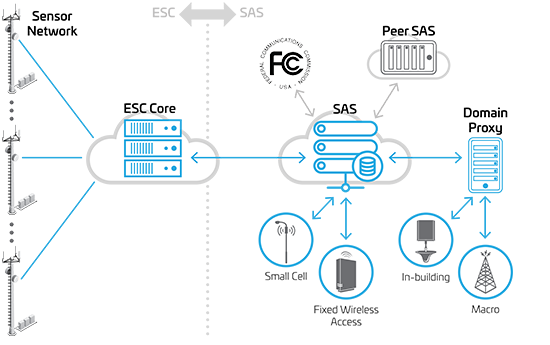
7) There is a concept of SAS server, that's why AWS device needs to be connected to this server in cloud (There are SAS license holders, to them). Once you install the system and that is connected to the SAS server, first you get the frequency band which is open in your area. If some one using that band (another CBRS player), you are out of luck (ask me , who has to call different teams when deploy in lab). PLus, there are scenarios when these licenses can be revoked (if you are using free band). The law enforcement can ask FCC to use the band temporarily. GCC can revoke your lic and stop the system.
What AWS did is big, but for enterprises.
I translate that to: we sell 5G access points as an alternative to wifi access points. Am I wrong? Cause if I am right I fail to see the bigness of it. I just see it as something reasonable.
1) Industrial area coverage: Where you need 50 WiFi radio unit, you can provide service with 3-4 p4G/p5G radios.
2) Hazardous areas: where you cant provide the networking at all the corners or areas, one p5G radio blast area (esp with beam technology) can provide the coverage.
3) Security: Mobile phone systems are based on shared secret and proven to be secure in terms of access compare as well as on air to other technology.
4) Packet loss: Less packet loss compare to WiFi (believe me, its big deal in Industrial world)
5) Compatibility: what's a negative for 5G modem (not many devices are available), is positive to some extent. Once investment is made with 5G modem, the device can be on road too. THink like, acting like enterprise node in p5G area and limited services outside (or device consumer).
6) Edge computing: With new standards, the applications can run at the edge. Those can be done currently with WiFi too. But WiFi has limitation of devices counts (too many needed), path reliability and geographic coverage. Whole factory or port or airport can be covered with small p5G footprint with specific applications running at the Edge (I live in this world :) )
p5G will be game changer in enterprises with large complexes with moving assets.
Regarding your point of tower level handover, that will not be an issue. It should not be in pLTE (p4G) too. But I can understand in earlier versions, the systems might be feature limited.
Are you sure it was local 4G service line p4G or Femto service where operators provide small device to cover either indoor no-RF spots or to move the traffic load from network to public internet/network.
I don't know how this service differs in pricing, so it's hard to quantify when this AWS service would be a better idea outside of coverage issues.
5G uses multiple bands, and the most useful, and highest throughput one, doesn't have a great range (high band, 24 GHz and up). So, perhaps you use 5G tech/devices but not use that, and instead focus on low band (600–900 MHz, few kilometers of range)? Would a mining company use this to oversee a large property? Would a large cattle operation benefit?
You can imagine containers coming in and out of ports are slowed when someone has to physically inspect them for damage. There are a few companies using AI to detect damaged containers and having a higher bandwidth allows those images to be more clear which in turn allows the AI to be more accurate.
>Enable business-critical applications
I'm not sure what manufacturing facility are they talking about but at the places I know you will get ridiculed for even entertaining the idea of controlling infrastructure over anything but good old copper or fiber.
And they are right.
The implication of this product concerns me, although maybe it's just a communication issue. Amazon is selling this as an Amazon product, but wifi isn't an Amazon product, nor is 5G. They are retailing the gear to put up a 5G network - so why call it a "product" and roll it out like this?
So the value proposition here is that Amazon is operating the actual network, which is not a small thing. You just have to install the radio hardware.
For something truly like WiFi it would be Standalone NR-U ( New Radio Unlicensed ).
I am just wondering if it will ever be cost effective for consumers.
-- Edit: I don't own any Helium, just curious from tech side what this new AWS service could offer. Not sure the downvotes are particularly about Helium or any crypto related discussion.
Due to some security issues with the Helium LoRaWAN proof-of-coverage, only authorized hotspots/access points are allowed to participate. Helium manages this by issuing keys or certificates (IDK which it is) via the Decentralized Wireless Alliance[0].
I think it's highly unlikely Amazon would deploy Helium enabled 5G radios.
I'm not sufficiently technical on this front and so I'm probably being a little on the side of paranoia but I don't trust Amazon with my cellular infrastructure.
https://azure.microsoft.com/en-us/solutions/private-multi-ac...
https://aws.amazon.com/about-aws/whats-new/2019/12/announcin...
1 Magma - Facebook built 5G hotspot platform: https://www.magmacore.org/
2 AWS FAQ - https://aws.amazon.com/private5g/faqs/
it's still a little unclear to me when 5g becomes a better option than 802.11. the standard bands are just a little faster than lte (which 802.11 outperforms) and the mmwave high bandwidth stuff requires line of sight with no occlusion. 802.11 seems better all around, it can work at high bandwidth without the line of sight requirements... especially considering that most mobile devices are designed to switch between 802.11 and mobile.
LTE and 5G have much more consistent latency, and can provide true quality of service mechanisms. Wi-Fi has 802.11e that moves VoIP packets to the front of a series of queues but this is only a probabilistic process not a guaranteed time slot every 20ms. Of course licensed channels are an important part of this carrier grade experience and Wi-Fi on a low duty cycle 5GHz channel is often good enough.
They’re working with a partner for hardware but redoing their software. So it’s a pretty low-touch white label job.
They have internal use planned but it was started explicitly for sale to external customers not internal.
This is a bit like responding to, say, the original announcement of EC2 with a link to download a Linux distribution.
edit: Reading more, it might not be the right use case - doesn't sound like something you use for your phone.
https://en.wikipedia.org/wiki/Citizens_Broadband_Radio_Servi...
[1] https://en.wikipedia.org/wiki/International_mobile_subscribe...
https://www.fiercewireless.com/5g/dishs-rouanne-says-aws-5g-...
For more info: https://dac.nokia.com/private-wireless/
Disclaimer: I work for Nokia.
Yes, just as with LTE, CBRS is one of the bands (specifically n48) allocated for 5GNR. The GAA tier is pretty open for anyone to use, with all the good & the bad that comes with that. Apple added n48 with the iPhone 11, and a lot of other popular phones support either LTE or 5G on that band.
In effect, CBRS 5G is like WiFi with better range.
Unfortunately, no mention of actual pricing.
By default, AWS Private 5G uses shared spectrum like Citizens Broadband Radio Service (CBRS) in the US.
anyway Amazon could handle the logistics to rollout hardware much better than existing manufacturers on the Helium network.
For those who were mistaken, which was it?
Which seems to be true for me. Despite having semi-pro levels of wifi gear and a "fiber" provider at home, I can often get transfers work by turning 'off' the wifi and going to LTE.
If I were a campus IT administrator, it probably makes a lot of sense to get rid of wifi costs.