Docks are horrifying products. Thunderbolt docks are doubly horrifying. They ordered in every single competing dock they could find, from that era's products, and found that every last one was garbage in some way or other, usually fatally so. The Thunderbolt interface in particular, and the firmware that needed to run on that interface controller, was the source of a lot of issues. None of them were particularly intrinisc to the protocol, but the hardware available was junk and the software available was worse. They couldn't really order up a custom non-garbage IC just for a $100 accessory that sells in limited volume. (Apple, however, could and would; they'd also demand to control the whole stack. This shows.)
They were very proud they got the thing working as well as they did, even though they all knew it was still pretty much trash. It was still better than the competition. Which is sad, but what can you do?
(At least it wasn't the Wi-Fi chip. The Surface Book's Wi-Fi adapter was chosen by higher-ups as the same one used in the XBox, presumably for sourcing reasons. It is trash. Again, much blood, sweat, and tears were spilled making it work as well as it does.)
(I also have the exact circuit for the LED that lights up on the charger cable. Apparently it was a big deal, which I find hilarious.)
Not sure if that's still the case but truly astonishing
https://support.microsoft.com/en-us/surface/surface-dock/tro...
Hardware, Frameworks has replaced any other OEM in the market for me. You have to pay me to use Dell, HP, Microsoft, Asus, Apple, ...
The build it rock solid, its trivial to run wsl for a Linux environment and I still get a windows environment for work with excel, etc.
The keys don't come off the keyboard like they do with my old mac chicklet style laptop keys and even my 10 year old can still drive multiple external monitors.
The backrooms version of an Apple Store… I’ve been to precisely one and it was, indeed, a sad experience.
You’d also need to pay me a lot to use Windows. I even have an assigned Windows virtual desktop at work, but I also have a MacBook for actual work - the VDI is only used for the stuff that doesn’t quite work right on Macs.
Never had any issues with them. Solid hardware and a good alternative to the Lenovo Thinkpads we're also using but "don't look so nice".
Apple doesn't have this problem because they don't even make docks they're so problematic. Enjoy dongles, Mac users.
Modern docks usually run their own internal OS and require frequent reboots to even attempt to appear stable.
The worst part is most use docks to get Ethernet, but docks nearly universally use low quality USB Ethernet controllers internally (vs PCI) making the whole exercise rather pointless.
Thing is, MacOS was heading the same way until the new chips saved it. The last few versions that were still running on Intel shouldn't have been as slow as they were.
Software is going to shit everywhere, it's just there's now M* equivalent for Windows and Intel.
All that to say: yes, I think you're spot on, the problem is sowftware, not hardware.
I wish Microsoft would separate their marketing shenanigans from Windows more drastically and stop requiring online accounts. My OS should be able to fully install and function without any internet, and continue to do so.
I'll default to buying Macs and Linux first systems instead.
I do hope these new Nvidia laptops see Linux flavors, I'd love to buy one. Maybe System 76 might build one? Not sure.
This is literally a Microsoft made hardware product which is extra integrated with Windows.
It's too late, I think they should have done all of this a really long time ago, but at least they see that they are bleeding mind and marketshare and recognize why.
You're not a hater, windows is hot garbage.
Windows is so damaged a this point, both in terms of rep and functionality, that microsoft might as well start form scratch with linux as the kernel. I am not even joking. And fire every mba that ever influenced the product.
It's awful. It feels like it's actively refusing to work properly with Linux.
Fair - it's not for Linux, and clearly that is expected with a Microsoft device.
I've recently had to call their support for missing rubber feet. I figured I could get the replacement mailed(that was how it went when it first happened about two years ago). An AI answered, did not understand what I was saying at all, hung up the call. I called again; it told me to check the website and hung up, not even giving me a chance to say anything.
Okay. Guess I'll never buy anything from you ever. Ordered them off of Aliexpress and moved on.
Surface-linux has done a ton of work to get some support, but yeah: they are quite the special devices:
> In contrast to other devices, however, some newer Surface devices route their keyboard and touchpad input via this controller. Unfortunately, every new Surface device requires some (usually small) patch to enable support for it, since devices managed by SAM are generally not auto-discoverable.
There is a huge feature matrix, so at least you sort of know what you are getting. Amazing work from open source folks! https://github.com/linux-surface/linux-surface/wiki/Supporte...
I use a Surface Go at home (running BlissOS) and a Surface Pro as my work "laptop" (running Debian KDE). I forget which generations they are, but they're probably 8-ish years old, so if they haven't died yet, they're probably good. They both work well for what I use them for, and are better laptops than actual laptops for what I need a laptop to do.
But as for getting rubber feet, I'm sure it's some backwards process with Apple too, if at all possible.
https://www.microsoft.com/en-us/surface/devices/surface-lapt...
Also, USB-A in 2026? Really? That was already an automatic disqualifier for me at the start of the decade.
As an Apple user who can’t make iPad OS work I am always tempted by the surface but..
Every time I contemplate the surface (I like the hardware / concept) it seems the software I might want to use doesn’t support arm..
Then I realized that it used the same shitty Windows with the same shitty registry that I had mostly avoided for my whole life to that point. I certainly wasn't jumping in on that tablet.
Doesn't Windows come with something like Apple's Rosetta to do on the fly translation? I expect it wouldn't work with games, but most other kinds of software should work.
Rosetta worked quite well for Apple so I would expect Microsoft could do something similar.
Then Panay left, Windows 11 has been a debacle, and Nadella seems to give zero fucks about anything which isn't Copilot or Azure, so the Surface momentum that they spent so much time building has just coasted to a complete stop. It's sad.
People who actually do real work and are interested in gaming, unlike people who just buy Macbooks to run VsCode and browse the web.
It's a shame, Microsoft could really do something if they created an ARM device that had the battery life of Apple Silicon, yet was a real computer that wasn't locked down, ensured/promoted ARM compatibility with their ecosystem. Heck, I'd even be OK with Windows 11, I know how to remove all the garbage now and could run WSL (though I'd prefer to just boot Linux on it).
Everyone except Bill Belichick, who famously hurled his Microsoft Surface to the ground when he was first forced to use it:
Isn’t that what this is? (Or is supposed to be?)
The margins on good hardware simply isn't there for Microsoft. It also don't look good if Windows works flawlessly and fast on Microsoft hardware, but craps out on the $300 - 400 shitty laptop their partners make.
Too bad the software is awful. Thankfully the Linux Surface community is pretty strong. Proprietary Microsoft drivers don't make it easy, but we're getting there...
https://github.com/linux-surface/surface-pro-x
I'll buy another one if there's some commitment from Microsoft to be more open source friendly, but since this will never happen, they can keep their HW.
Anyway, the whole trend to change from x86 to Arm on laptops is bad news for compatibility. It might be that the era where you can download an iso and expect Linux to run on a random laptop is over, and Linux users will have to stick to only a couple of devices with well known support. Did Valve release a laptop yet?
Because us nerds like to say “the software is awful,” but really, the bones of Windows are not awful at all. It generally works well, it just takes a lot of work to get all of the BS out of your way.
If you’re looking for open source friendly, just buy a Framework 13 Pro and be done with it.
By the way, the other news from Computex is Dell and HP’s Macbook Neo competition, and they really look legit. So, Apple is waking up the PC industry a bit, showing them that they are endangered. Hopefully Microsoft gets the memo.
No way I am spending any money on this future brick.
I swear, people just live in their echochambers these days. Win 11 pro + WSL2 is literally the best, do it all OS you can get these days.
Most peoples experience is with Windows home, which ironically is about as intrusive as Mac OS. When you get Windows Pro, you can disable all the annoying AI/Advertising shit that comes with Windows, and at that point, you get a system that is cleaner than Mac OS.
Then you install WSL2, which is a full linux environment down to being able to run graphical apps, use gpus natively, and even talk to usb ports.
Ive been on Win11 Pro for 4 years. The only major things that are installed under windows for me are VPN Software, Steam (with games), Ollama, and Browser. Everything else, I run under WSL2.
And how Linux fix the software problem?
Most people could pick up a modern Windows ARM laptop and everything they do would work just fine, just potentially with less heat and longer battery life than their older Windows laptop.
The primary annoyances would be Windows itself and its ad and engagement driven UI reminding you about Copilot and Edge every chance it gets.
I've been using a Qualcomm ARM laptop for the past year, and pretty much everything I use runs natively on it.
Pretty much. I broke down and finally bought my first Windows machine in over a decade to play Subnautica 2. It was so infuriating to use I returned it a week later. You literally have to hack it with shell commands to bypass Microsoft login now. Never again.
I have been leaning more into framework myself. My current devices are aging out but I am in a place where I am fully separated from apples walled in garden so switching is easy
What does this mean ? How can you make the world ?
Bloody cperciva put an end to that.
Ask Shakti, Shiva's creative sister.
Reminds me of all that "Lions. Not Sheep." gear I see people rockin'. LOL
Anyway, what I like of this machine is the 15" screen with a keyboard without a numberpad: the center of the body of the user can be aligned with the center of the screen. The screen seems to be particularly bright, which is good. There are claims of good self repairability, we will see when it starts to sell.
I'd wait a few years before buying one machine in this product line. I want to see how Windows on ARM will play out in terms of compatibility. My build targets are all Intel servers (Linux), so I don't want to have surprises. I would have to wait years anyway because I would run Linux and I think that it takes more effort to port Linux to new ARM hardware that to new Intel one (ACPI etc.) WSL is not an option because I still have Windows around it and it's even more unpleasant than having to deal a Mac GUI.
Let's say that if this were an Intel laptop I'd be tempted to buy it, if the hands on reviews will be good.
Repairability is important, but why repair something when you can only use terrible, soon out of support operating, which spy on you? (This means practically any OS vendored by large corporations)
For ARM systems openness boils down to the custom boot process, and of course the driver support. Has ARM PC vendors standardized on a boot standard yet? I cal recall the horror on reading articles how Raspberry Pi boot was working, or how M1 Mac bootloader is locked down.
Oh you mean like the incredible MacBook Pros of the last two generations that have been selling like hotcakes and have a surprisingly similar design to this device? "Redmond, start your photocopiers" never gets old.
ThinkPad P1 is the machine for you and you can run Linux on it.
Will never buy one if it's Windows only, though.
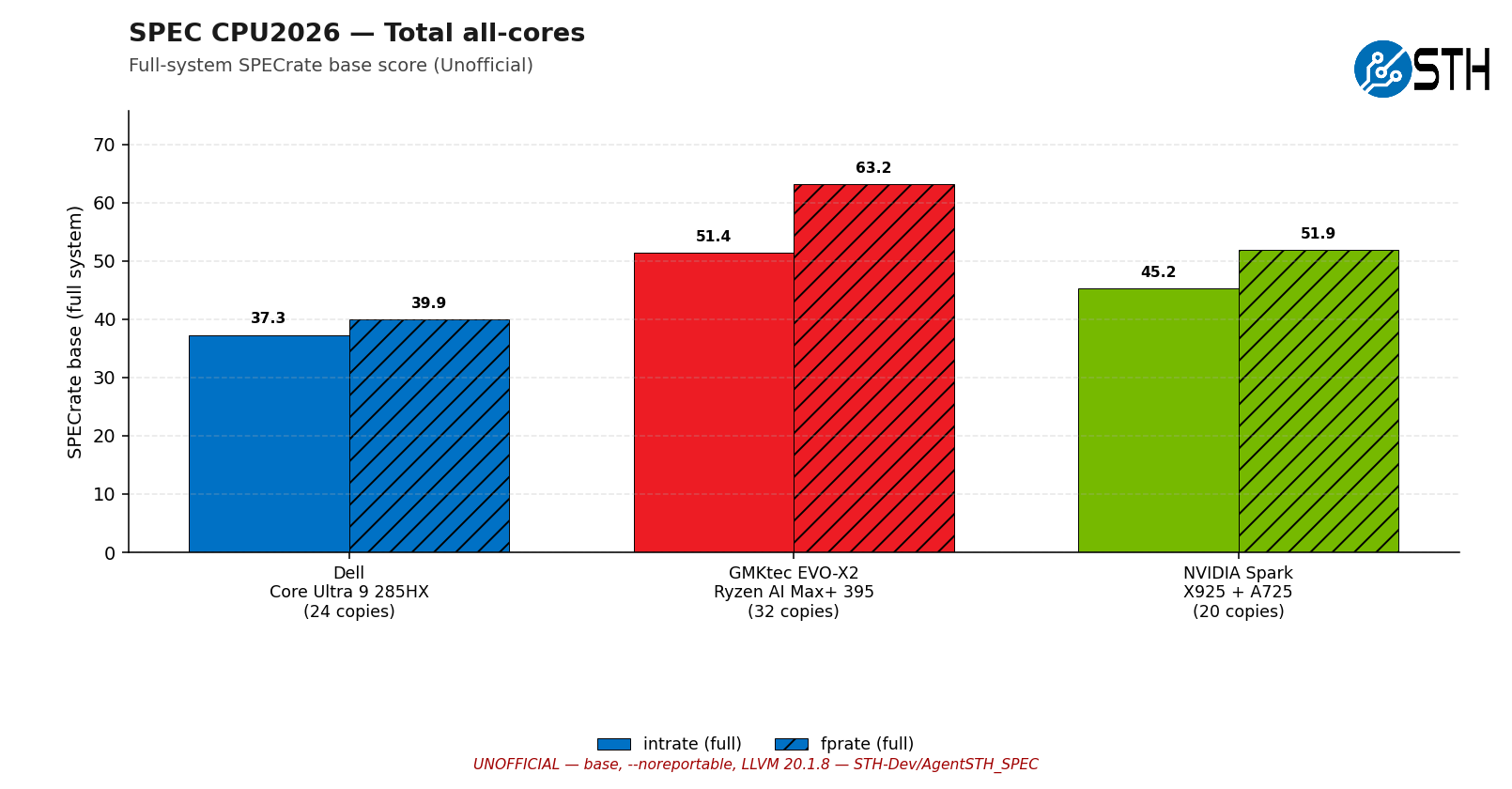
https://www.servethehome.com/wp-content/uploads/2026/05/cpu2...
So it's probably Intel
Cortex-X925 and Cortex-A725
  - Nvidia
  - Mediatek
  - Microsoft
    - Windows team
    - Surface team
    - Marketing team
  - ...
That's the reason Framework has an advantage over all these Ad driven companies. They are working together with the Linux / Kernel developers to make their products fit - however it is still lacking the completely cohesive nature of the product, because they still loosely depend on Intel / AMD and other Hardware manufacturers.
An example: Every Apple device with a headphone jack since 2013 (probably long before) including iPods, iPhones and MacBooks has that little proprietary chip with ultrasonic chirp authentication integrated to control playback and volume by the EarPods headphone remote. Now there is a USB-C to 3.5mm Adapter as well as USB-C EarPods that still support this... No Windows Laptop has ever had this. The funny thing is, that Linux now supports these USB-C Apple thingies because they register as input and output devices and that the Apple 3.5mm Adapters now also support other brands headphones with Android.
Source? Can't find any good source on this.
Some people think that's an advantage.
Disconnects, no good ANC, pairing is beyond miserable. Use them again with another iphone and they work fine. Now somebody could claim apple engineers are so incompetent they can't implement basic bluetooth connection that plugs from china for 10 bucks can do better but I have problem believing that.
So that tight integration you praise so much can be absolute curse for arrogant behavior that apple is definitely not stranger to. Open standards and competition forces companies to behave nicely and ie buy bluetooth plugs without worry if any source device will work with it, not some wishful thinking. Main reason I never owned apple device and most probably never will, just insulting behavior towards me as paying customer.
But everyone saw the M1 and realized that local AI basically made integrated memory the future. People can't choose between "A computer that is good at local AI" and "A computer that runs the OS that I need".
This is the answer to that. I _must_ run Windows, and I _want_ to have a computer with integrated memory.
But it didn't age too well, the battery is giving up and the SSD is pretty slow. Plus windows being a real slug doesn't make the experience that great anymore
?!?
https://surfacetip.com/surface-laptop-studio/
notes:
>Supports Microsoft Pen Protocol (MPP)
which is NTrig --- or do you use a Wacom AES stylus? (bought a Bamboo AES stylus, but it wouldn't work w/ my Toshiba Encore 2 Write 10)
Or are you genericizing "Wacom" as "active digitizer stylus"?
And their hardware is much more locked down. E.g it cant be reverse engineered as easy as Apple Silicone because Nvidia GPUs basically run own OS inside themself.
So practically only Nvidia able to build open source drivers for this, but so far it looks like it will take them another decade with current rate.
Alas, it is a laptop from Microsoft so hardware support in Linux is probably going to be painful as always.
Hard to say whether you'll get the Macbook Pro experience though.
With 128gb memory this thing is going to cost a fortune.
It'd be alright with Linux, probably better than a MBP if you're working heavily with AI (but no other reason to buy it TBH).
https://apps.apple.com/us/app/adguard-pro-safari-ad-blocker/...
I was eyeing SP for several generations and could never commit to it just because of issue like that. I want a fast device that's 100% reliable. SP felt sluggish whenever I picked it up in a store.
Maybe instead of hardware they should just stick to the knitting and deal with their quality issues around both the OS and the Office suite right now.
Also unlike the rest of HN, I don't have complete hatred of Windows. I wouldn't mind picking up one of these, but I'm almost certain the price is going to be somewhere between unaffordable and completely ridiculous.
Or every model after that just slowed down to a crawl after a year. Or the keyboard connection not working reliably.
No thank you very much.
First one had a battery bulge and got a free replacement to the current version. I think that went from 2016 to 2017. That one actually lost a battery bank and I got another upgrade to the 2018 version. The keyboard died on that one for some reason and they just replaced it for free.
I could understand if platform decay has occurred since 2018 though. But for a while, it was excellent.
…but never buy v1 hardware folks! Especially for limited runs like high end laptops.
Apple quality comes from scale. A narrow product line means they have literally hundreds or thousands times more testing than PC ultra books. (And still — don’t buy a first iteration of a new Apple chassis.)
I've heard there's still a large backlog of both software problems, and hardware problems with the platform. The software problems could be fixed with time, but they'll still give a shitty first impression. I'd have thought Nvidia would just bury this and try again with a successor run of silicon with a new design.
This thing seems practically destined to just be a repeat of the Snapdragon laptop debacle.
So vibes battery life. I'm going to assume it's like most Windows laptops and somehow only lasts 3 hours.
What aspects are these?
Chances for Microsoft and Nvidia combo doing the same are questionable. Better look for other non-Microsoft laptops on the same platform.
Personally, I got a HP Zbook G1A, which is HP's take on an MBP based on (x86, but unified memory!) Strix Halo.
Battery life could be better, but pretty happy otherwise. Local LLM perf is great and I get to run an OS that doesn't drive me crazy.
I genuinely do not want to deal with windows that much.
Fortunately since my computing needs are met by a fast x86/GPU I don't have to make that choice.
Hell no. Who would think that’s a good idea?
One of the absolutely best things about the MacBook Pro is that it’s silent when you’re not really pushing it. It’s incredibly rare for me to hear them on my M4 Pro. Normal work, including compiling, using docker, my IDE, etc. almost never does it unless I do something big over and over and over.
I’m not sure I’ve ever heard a single sound out of my M3 Air. I think it has a fan. I know my M1 didn’t.
Make the coolest computer you want. If noise is a prominent feature I will never go within 10 feet of it.
Mac Neo is the anti KGB device in a svelte shell. It is a long term strategic play and nothing running Windows will compete against it because Windows is the cancer.
Windows PCs will continue their decline unless Microsoft gives up its privatized KGB aspirations. Active Directory will not carry them forever once enough of the younger generation use Mac for data possession and privacy, meaning all their bits including passwords are not dark pattern snarfed by the OS.
Windows is horrific. Mac Neo is to Windows what Keanu Neo was to the Matrix. It does't even matter how much better PC hardware could be at the same price point since the Windows is basically a conduit to storing all your data and private info on Microsoft's computer instead of yours. Microsoft is even driving that dark pattern crap into the professional space and automatically grabbing passwords etc. via Edge.
They are committing long slow seppuku and do not realize it because Office 365 is letting them bilk enterprise customers, but the IT world knows that dark pattern crap portends a change in vendor eventually.
You can't even stop edge from syncing enterprise admin credentials on the latest versions. It is like getting violated by Microsoft every day where they beat you and take your password book if you are enteprise admin.
Microsoft has gone to the dark side so far they are broom handling their enterprise admin customers with dark pattern credential grabs and no way to know where the data sits.
Bring on the Neos and an alternative to AD. Windows 11 and their new direction of hovering, copying and moving all data is such a betrayal of ethical system administration from when they were young. It will take a decade, but Neo is here now. It has begun.
> And with all-day battery life[ii]
If they managed to get anywhere near Apple, they'd have confidently published some kind of actual hour figure without a scare citation.
[1] https://www.intel.com/content/www/us/en/ai-pc/overview.html
Microsoft cannot just throw upgraded hardware after the Surface, and expect it to compete with the Macbook Pro. The Macbook Pro is not primarily popular due to Apple Silicon, but the combination of a focused user experience (although, Liquid Glass was a significant step-down) and high-end hardware.
What's the actual connectivity? USB4? with or without PCIe tunneling? How many ports?
How much is it going to weigh? Battery life? Battery capacity?
DGX Spark desktops idle close to 20w on Linux: that's a lot for a laptop. I'm expecting Nvidia+Microsoft stepped up their driver game some for this release, but it's wild how few creature comforts or nicities DGX Spark came with. Launched with and still has almost no power monitoring or power management capabilities. If you turn on the highspeed NIC it turns into a 40W hotbox even at idle. Nvidia has such a weird mix of supporting what they want to support well, but doing absolutely nothing else. The way Shield TV is still occasionally getting some updates is impressive for example, but it's stayed on an ancient Android version & went a good fraction of a decade without update. Similarly, keeping folks locked on rickety old Linux4Tegra and now DGX Spark heavily modified Linux OSes has been brutal. It's hard to believe this system is going to be much better than a fantastically expensive bag of barely managed idiosyncratic quirks.
“Legendary”, not a “great”, or “good” one. Certainly not “excellent” or “spotless” but, definitely, legendary.
Who writes these pieces?
I've had several Surface devices over the years, the original SurfaceBook, and a Surface Pro 4 and Surface Pro 6. The Pro 4 was the most reliable and the Pro 6 was prone to overheat. But execution in the mechanical build was quite good.
That said the battery in my SurfaceBook went all Spicy Pillow on me, the Pro 4's power slot ended up dying, and the Pro 6 just stopped responding one day (it was a work laptop so I just gave it back but still). I'm still waiting to see how folks with Macbooks experience the end of life.
If MediaTek would partner with Framework to make a motherboard I'd totally try it out :-).
We use newer Surface laptops at work, even the artists, developers, and executives (note we are not a tech company). The laptops aren't very fast but they can take a lot of physical abuse and the batteries last all day. We don't need the top of the line, and forcing our developers to use lower powered computers actually improves the quality of the apps because they get to experience how our apps work for most of our customers and take performance into account from the beginning.
It's also a way for Nvidia to protect itself (a bit) from the impending doom at the AI datacenter sector.
It's about Conway's law in software development and software architecture, but he explains it with anecdotes about Windows, like how vendor communication challenges lead to 4 different volume sliders.
I would pass on an expensive heavy-partnership Windows device.
The UI is sometimes laggy, buggy and simply sucks.
Fresh installation of Windows 11 on a 2026 high-end machine: you open a File Explorer for local SSD and there is a delay in the UI. Oh, and of course, the UI is more ad invested then a cheap p0rn page from russia. WTF Microsoft?
from all the comments on here it seems like that model was an anomaly and the rest of the product lineup is often pretty lacking.
Could LLM based AI prefer Linux since it's more customizable?
It’s a good first start though. Competition is good. It’ll force my platform of choice — Apple — to keep competing.
>The custom NVIDIA superchip challenges both Qualcomm and Apple
But it seems NVIDIA didn't have enough in house know how and they needed MediaTek to develop the chip.
>20-core NVIDIA Grace CPU (Arm architecture, co-developed with MediaTek)
I was excited about the ARM laptops that came out a couple of years ago because there were a lot of promises about them moving the industry forward. In the end, I think they were mostly nothing all that special. This, however, really appears to rock the boat. I want Apple to have to compete. I want the best Mac I can get and this laptop will challenge Apple to work harder. This is good for everyone.
Yeah, sure... And that kind of work is...???
The only device I'm still happy to own from them is the Classic IntelliMouse.
For me, anything else, be hardware or software, I stay very far away from them.
Why are all the pictures so dark? You can't see it!
I have tried many touchpads, but nothing comes close to MacBooks. The tracking feels incredibly precise and consistent. The same goes for the speakers. It is surprising that no other laptop manufacturer has matched the sound quality Apple delivers. That is frustrating, because I genuinely want that same experience on a different system. I do not want to feel locked into MacBooks. I know the Youtube channel Dave2D did a video on this experience as well [1][2].
Another issue is how Windows laptops degrade over time. No matter how many I have tried, they eventually end up in a state where the fans spin up for no clear reason, the battery drains quickly, and I start getting notifications about low disk space even though I have not installed much.
When I check the “Uninstall or remove apps” section, it does not clearly show what is actually taking up space. I often have to use tools like WinDirStat to discover leftover files from applications I already removed. These remnants build up and contribute to the system feeling bloated.
I also start noticing small but frustrating delays, like the lag between pressing the Windows key and the Start menu appearing.
BUT I do have an idea though, Nvidia will hopefully support Linux kernel, so if I have the opportunity to switch to one of these new machines, I might just swap out Windows with a Linux distro instead. Linux Mint perhaps. I am open for suggestions on good distros, specifically for daily use as home computer for both office use and browsing the web, maybe even play indie-games.
But unfortunately, you get Windows
There is something about Microsoft's reverse Midas touch.
[edit:typo]
Will it be as silent as a MacBook Pro? Will you be able to throw it into a backpack without shutting it down?
At a quick glance it sounds like they're competing on specs and obviously missing everything else.
crazy.
strix halo was released more than a year ago.
I switched from a M2 Pro with 24gb ram to the new 8gb Neo and I kid you not, they perform just the same 99.5% of the time.
My lie detector is going off.
> The containment features sandbox local agents like Hermes and OpenClaw so they cannot interfere with your core operating system.
Wait, isn't that kind of the point of using local agents like OpenClaw? I thought people wanted the agents accessing all kinds of applications, files, etc.?
> Legacy application compatibility is equally crucial. Microsoft optimized the Prism emulation layer specifically for the new microarchitecture. Prism utilizes the raw power of the silicon and recent AVX and AVX2 instruction set extensions to run older x86 applications smoothly under emulation.
Okay, this is pretty nice. I'll give Microsoft credit for this one. It might save my company a lot of heartache one day in the near future.
All in all, this rig is going to be quite expensive. In a lot of ways, it probably is better than a MacBook Pro. However, as a diehard Apple fanboy, it is not enough for me to consider the jump.
A slightly more sober announcement is available at https://news.ycombinator.com/item?id=48352627.
We need and want an open, modular architecture, and currently it's not ARM, it's x86/64. Because I can't go buy CPU retail and replace it at home.
Edit: oh cool, CPU is MediaTek. No-no, I would stay as far as possible from it.
Thank you, but no, thanks.