In all of my time at Google AI, I never heard of pubapproval being used for peer review or to critique the scientific rigor of the work. It was never used as a journal, it was an afterthought that folks on my team would usually clear only hours before important deadlines. We like to leave peer review to the conferences/journals' existing process to weed out bad papers; why duplicate that work internally?
I'm disappointed that Jeff has chosen to imply that pubapproval is used to enforce rigour. That is a new use case and not how it has been traditionally used. Pubapproval hasn't been used to silence uncomfortable minority viewpoints until now. If this has changed, it's a very, very new change.
Ultimately it makes the whole Ethical AI department look more like a rubber stamp for Google.
I get the impression that she wrote a hit piece on Google and published with Google's name. For me, it's correct they demand a retraction. It's simply unprofessional to critque your company for something while not mentioning the work they're doing to combat that.
Having said that, if Jeff were to make public the paper, criticisms of the paper, and improvements made to address the problems described in the paper, that could go a long way towards clearing the air.
Publishing a transparently one-sided paper in Google's name would be a problem, not because of the side it picks, but because it suggests the researchers are too ideologically motivated to see the see the problem clearly.
Ironically, it indicates systemic bias on the part of the researchers who are explicitly trying to eliminate systemic bias. That's just a bit too relevant to ignore.
In paper reviews you can often see reviewers asking the authors to rewrite, clarify, add extra experiments, add missing citations. It's all normal.
Representing a more truthful reality is not 'softening'.
It's only 'softening' for those who have an already accepted, extremist view, and for whom any evidence to the contrary doesn't help their arguments.
While initially sympathetic to the author - the more I read - the more I have completely the opposite view.
Even more, it sounds like Google didn't ask originally for retraction, they just asked to take into account the newer research contradicting the paper - the thing that any researcher valuing integrity over agenda wouldn't refuse.
If somebody wants to do that research and publishing they just have to find another source of funding, i guess.
Anyway, the firing wasn't over the paper, the firing was over the unacceptably unprofessional reaction to it.
What's different in her case is that you don't see the names of the people reviewing. Being the devil's advocate, she MIGHT have a pattern of aggressively attacking people who reviewed their work before. So they might have made the reviewers anonymous this time.
If they approved the paper the message would be "google thinks language models are a waste of resources and racist". There would be no academic debate on this topic as its been framed as woke and published by a militant activist, so any disagreement would be racist (see prior interactions between this researcher and other researchers [1]).
Thats why the standard process of publishing, peer reviewing, academic critique etc would not work.
Why would their researchers working on language models stay? when they can go to Facebook, OpenAI etc. Why would new researchers join?
[1] https://syncedreview.com/2020/06/30/yann-lecun-quits-twitter...
The proper response to her position would be to publish a response or critique. Attacking her entire field does nothing to further the conversation.
Demand the best from your multi-billion dollar corporations.
Submitting conference papers last minute is... normal.
You only bring in HR protections to protect the company from a legal standpoint.
This is sad gaslighting of a reasonable concern the team had.
Having to endure some external review for what could otherwise be sensitive material.
The inability for the SJW crowd to work reasonably within very reasonable terms, to then resort to aggressive tactics such as 'demand the names and opinions of everyone on the board' and then publicly misrepresenting the situation is going to lose you a lot of favour.
Every time I read one of these stories I immediately feel sympathetic to the individual, but then upon learning more, I feel duped and maligned for having been effectively lied to.
The doors are wide open for progress, those who take it to micro-totalitarian lengths are not doing anyone any favours.
https://melwy.com/blog/black-female-scientist-timnit-gebru-f...
Publishing a paper with a lack of rigor about some obscure mathematical technique isn't a problem for google (beyond some possible but unlikely mild reputation damage). Publishing a paper with a lack of rigor that says google is doing unethical things, when those things are questionably accurate, that is something google would (and should) have a problem with.
Whether the paper actually lacks rigor in a relevant way is not something I can comment on.
[1] https://www.platformer.news/p/the-withering-email-that-got-a...
In some cases, though, it's not simply a matter of listing it as other work in the Intro - you may need to incorporate it into your models, etc.
This sheds some new light...
She has a Twitter army ready to set their aim on her reviewers and a track record, they can't reveal the names.
Which is of course not to say you can't have a more measured negotiation. But it can be hard to walk back from give me X or I do Y, especially if there isn't a lot of middle ground between giving you X or not giving you X.
If an employee is adversary toward the company, the trade off needs to be made no matter how much valuable the employee's work is.
This is a non-issue tbh. She wants to leave. Company wants her to leave. They both agree to part way because the premises are fulfilled (i.e. company can't meet her requirements).
If you want to get technical, I'd bet her employee's status is still in tact for 2 weeks; she just doesn't have access to laptop and etc.
I strongly encourage people to read some books on negotiations - as well as read up on legal ramifications to some negotiations.
Pretty much all books/courses on negotiations say: Ultimatums have their place, but are a minefield (i.e. they can blow up on you), and should be used as a last resort. From a negotiations standpoint, the response was adequate - which is why they all caution against using such an approach.
As for the 2 week thing, this is a convention, but not a requirement. In my company, it's not unusual for someone to be shown the door the same day they announce they plan to leave to another company (it's not the norm, but not at all unusual). The manager/company always ponders whether there are risks in keeping the employee for a few more weeks vs the gains, and this is the question Jeff pondered - that he did this is quite normal. Will the employee provide anything useful to us in those two weeks (e.g. handoff work to others, etc)? Could he/she cause problems (bad mouth people to fellow employees, steal IP, etc). If it's a disgruntled employee, they are usually shown the door the same day. In Timnit's case, it's unlikely there was any value in letting her stay for 2 more weeks.
I once intended to leave the company I was working for. The night before, I took out everything of (personal) value from my cubicle, as well as from my work machine. Only then did I have the discussion with my manager.
Having seen how she communicates and handles difficult situations, I think she really should read those kinds of books. Sometimes her behaviors are textbook examples of what not to do.
(Hint: If you're trying to influence someone, or a whole industry, you are negotiating, whether you choose to think of it that way or not).
Possibly because she made a personal problem into a team/department problem by asking their colleagues to stop working ("stop writing your documents because it doesn’t make a difference"). I couldn't imagine a company where such a call for work refusal wouldn't immediately lose you a ton of goodwill.
> ...if we didn’t meet these demands, she would leave Google and work on an end date.
Google's response to this was not accepting of her terms, it was to force an end-date for her —immediately— and lock her out of their systems ASAP.
employee: I'm not happy about x, y and z. If you don't do those, I'm going to quit.
manager: well we are not going to do those, so thank you for your time. We accept your resignation and would like it to start immediately (i.e. you're fired).
If you are gonna tell your manager that you plan to resign if a condition isn't met, then what do you expect them to say if they don't plan to fulfill that condition? It sounds like she was expecting them to say "Hey, well we don't want to meet your demands, but sure, we're happy to have a disgruntled employee around here, so feel free to stick around, or you could just quit on your own timeline, no sweat".
I suspect that many people would be fired on the spot for threatening to resign, so don't threaten it if you aren't okay with that consequence.
1. Was the treatment of her research in internal review reasonable?
2. Was terminating her employment reasonable after she sent the (now public) email to the women-and-allies brain listserv?
3. Was the end of her employment at Google a resignation or a firing?
To me, (3) is by a wide margin the least interesting part of the story and all of the discussion here is missing the point entirely. Whether she was fired or resigned has zero bearing on whether (1) and (2) show reasonable or unreasonable actions.
link to abstract and discussion - https://old.reddit.com/r/MachineLearning/comments/k69eq0/n_t...
Part of being a good manager is understanding your employees and helping them succeed. If someone makes a statement like this in the heat of frustration it doesn't necessarily mean they will actually quit. If they're a valuable member of the team you should present them with an opportunity to save face and remain.
To me this seems like taking an opportunity to fire someone they already wanted to get rid of. Either that or a bad manager who wanted to flex their power as a threat to the rest of the team.
One of the more difficult lessons I learned as a manager: Once a team member starts giving ultimatums in order to get their way or override decisions, it's not in your best interests to give in for the sake of keeping that employee. The obvious exception is if you realize you were actually wrong from the start, but reversing decisions for the sake of caving to someone's demands is a problem.
If someone is so ready to quit that they'll flaunt it to the company, it's doubtful that reversing a single decision is going to suddenly make them happy again with their employer. Worse yet, it sends a message that threatening to quit is the way to get what you want from the company. Once you validate the strategy, you will get a lot more of it.
Unfortunately, if someone already has one foot out the door and has been complaining openly (even on Twitter, in this case) about their employer, it's best for everyone to go their separate ways. From there, focus on identifying and fixing any underlying problems to minimize the chance of this happening again in the future.
See her previous (potential) legal troubles with Google that she even acknowledges herself.
> I was in the middle of a potential lawsuit for which Kat Herller and I hired feminist lawyers who threatened to sue Google (which is when they backed off--before that Google lawyers were prepared to throw us under the bus and our leaders were following as instructed) and the next day I get some random “impact award.”
https://www.platformer.news/p/the-withering-email-that-got-a...
> If I can’t know who is providing reviews to my work, it’s difficult for me to imagine continuing to work as a part of this group.
Many people would still describe this (erroneously) as an ultimatum even though it could be bleakly summarized in the same vein as a true ultimatum.
In any case, she has been very vocal on twitter and has not seemed to deny that she gave some sort of ultimatum. If she didn't give an ultimatum, it would only make Google look worse, so why not mention that on Twitter (given that she has tweeted probably 100 things about this incident in the last two days)? Given the absence of a denial, I'm going to assume that it was worded as an ultimatum.
The thing is, there's a big difference between resigning and being fired for cause, even if both end with you not working at the company anymore.
Maybe she isn't that important for the company? Why bother working with someone making demands if they aren't worth your time. Google might have actually thought she was detrimental to the company and wanted an excuse to fire her and she gave it.
Even if Google is acting presenting the chain of events faithfully, their final move to jump on an opportunity to remove the researcher and call it resignation seems so aggressive and incongruous that from the outside it makes it seem like this conflict is rooted in a larger and more difficult relationship that they calculated was no longer in their interest.
I’m wondering if the cost benefit analysis is still looking that way on the inside, because this move and the attention it’s causing is so contrary to their stated goals that I have to wonder if Google is committed to those goals at all. Others must be wondering exactly the same thing.
I wouldn't say this has blown up in their face. But to be honest, I've not seen that much drama about it than one post. Have I been missing something?
This seems a very solid move from Google. Someone tried to bully their way into getting information from Google they shouldn't give out. If you go to HR in confidence that confidence should be upheld. The fact someone had to go to HR for a peer review and the fact it was upheld states something.
If someone says "Do X or I'll quit" when you're not going to do X, it is a resigination and seems quite standard that they don't want such an active detractor within their company ranks.
I believe she basically sent an email to fellow employees basically telling them to stop working. That alone is a firable. That is completely nuts and unacceptable work place behaviour. The fact Google didn't fire her for that should speak volumes.
To me, from a HR point of view, this is completely the right move to make.
This is little more than gossip unless you can point to something specific that people can judge for themselves. Saying “she basically did X” is a clever way to influence how people feel about her.
I’ll admit, I had negative thoughts till this thread. Now I’m not so sure. She’s definitely passionate, and one might say aggressive, but more and more people are saying that it’s extremely unusual for Google to demand a rejection for academic reasons rather than business concerns. Whether she was a good employee is kind of beside the point now.
I mean, whether or not this stands up legally isn't worth discussing but I don't think this is typically how an ultimatum goes. Rather it's more along the lines of "this or I'll quit", "okay, we're not doing this", "right, I quit". It's not called calling your bluff for nothing.
I agree that her email to the Brain group makes her position at google almost untenable, but that's a separate question. However, it might make her choose not to fight them on the resignation.
This morning, there were front-page posts about this on the New York Times, Washington Post, Wired, Google, BBC, and Financial Times. It's being covered pretty widely.
Just anecdotally, I don’t think a man sending a “do x or I’ll quit” email would be met with the same response. I think issues of race and gender are playing a role here, and that’s a shame, because while firing (accepting this resignation) of this researcher might make short term business sense, it seems like it does harm to Google’s long term credibility in trying to engage with reducing the barriers faced by (among others) women and people of color.
It’s a shame there wasn’t a pathway to keeping the dialogue going, for example by getting in touch with her and letting her know that some things she was asking for wouldn’t work, but that you could work with her to accomplish her goals in some other way.
From my privileged outside point of view, that seems like it could have been a more humane response which could have disarmed the conflict. I think opportunities to pursue options like that are de-emphasized when management are put in an all or nothing position.
A missed opportunity for leadership.
Edit: I'm not sure what this tweet is referencing, but it's an indicator of her attitude towards her superiors, I can see why they would want to let go of her.
Social media is not real life. Every company, Google included, needs to simply ignore social media outrage and focus on their mission instead.
Internet outrage only has power because companies give it power. Angry words and hit pieces from biased media do nothing on their own. If you don't let them make you afraid, you have no reason to be afraid of them. The internet screamed at Coinbase after the company showed their internal activists the door, but Coinbase is doing just fine. See? Nothing to be afraid of. Just get rid of troublemakers.
Also: Googles bar for hiring is extremely high. For multiple senior engineers/managers to corroborate this description is rather damning.
Previously, we only had one side of this story. But if this is Dean's best spin on Google's side of the story, I'm very tempted to conclude they're in the wrong here. Obviously I don't have all the information, but the information I do have feels consistent with the idea that someone important at Google didn't like Gebru's paper for corporate-political (meaning making Google look good, as opposed to political-political) reasons, they tried to get Gebru to play ball, she refused, and now they have to back-project a justification in the name of "scientific integrity".
Unfortunately, I think this is a story where most people's opinions about who's in the right will be more informed by their previous opinions about Gebru and Dean than the narrower question of what happened with this particular paper. I'm probably even guilty of that to some extent myself, given that I'm a fan of some of Gebru's previous work.
What I don't understand is why in the discussion nobody proposed amending the paper rather than withdrawing it. If Dean's issue was it didn't cite papers X,Y and Z, rather than demand a withdrawal, why didn't he just demand "I want you to amend the paper to add cites to X,Y,Z". And then, if Gebru and her coauthors were willing to add those cites, that would resolve it.
Indeed, from what I understand, "you should add a cite to X" is common peer review feedback, and a lot of papers get citations added due to requests from peer reviewers. So this isn't hugely different from that scenario.
It would seem that withdrawal over this issue would only make sense if Gebru and her coauthors refused to amend the paper to add the requested citations, but I haven't heard anything saying that she did refuse to do so. It isn't clear if the alternative solution of amending rather than withdrawing was ever brought up in the discussion by either party.
Not that I'm a researcher or anything, but if I was, and a superior told me "we need you to withdraw your paper because it doesn't cite X,Y,Z", my immediate response would be "How about I add the citations you are requesting and resubmit it with those additions?"
Unless corporate tells you to kill the paper and you need something that resembles legal cover.
If a paper does not analyze the improvements from recent work, and just older work that has been surpassed (deemed inefficient by Dean), the new reanalysis might not be as favorable to the results as the paper proposes which means the paper is moot.
Or the second point is about bias in language models, but it sounds like these issues are mitigated in recent research, which means people are already aware and have solved a bulk of the issue being described in the paper.
But certainly it's possible that the paper's contributions stands strong even after accounting for the recent work that Dean mentions. In that case, it could be corrected for camera ready. But my point is that we can't tell right now without seeing the paper, and the relevant research that was omitted.
And Jeff has lost mine. Even if his comments are not just bad faith, his blindness borders on incompetence for the role he has. Yet another clever, blind white man.
I hope a position in the Biden administration can be found for her, and her vision can have a larger societal impact.
People claiming that the deficiencies in the paper are minor and wouldn't be blockers obviously have little experience submitting to academic journals. Other parts of Google doing deeply technical work probably don't have the same level of review as the Ethical AI group -- for obvious reasons.
There is usually a long back and forth -- there are even memes about the infuriating comments from "Reviewer 2" [1][2]. Omitting to mention argument-obsoleting developments in the field (from your own lab!) is more than enough to send you back to extensive redrafting.
To be clear on terminology -- a retraction is an academic black mark, and occurs to a paper after publication, usually for reasons of research misconduct. This is not an instance of that.
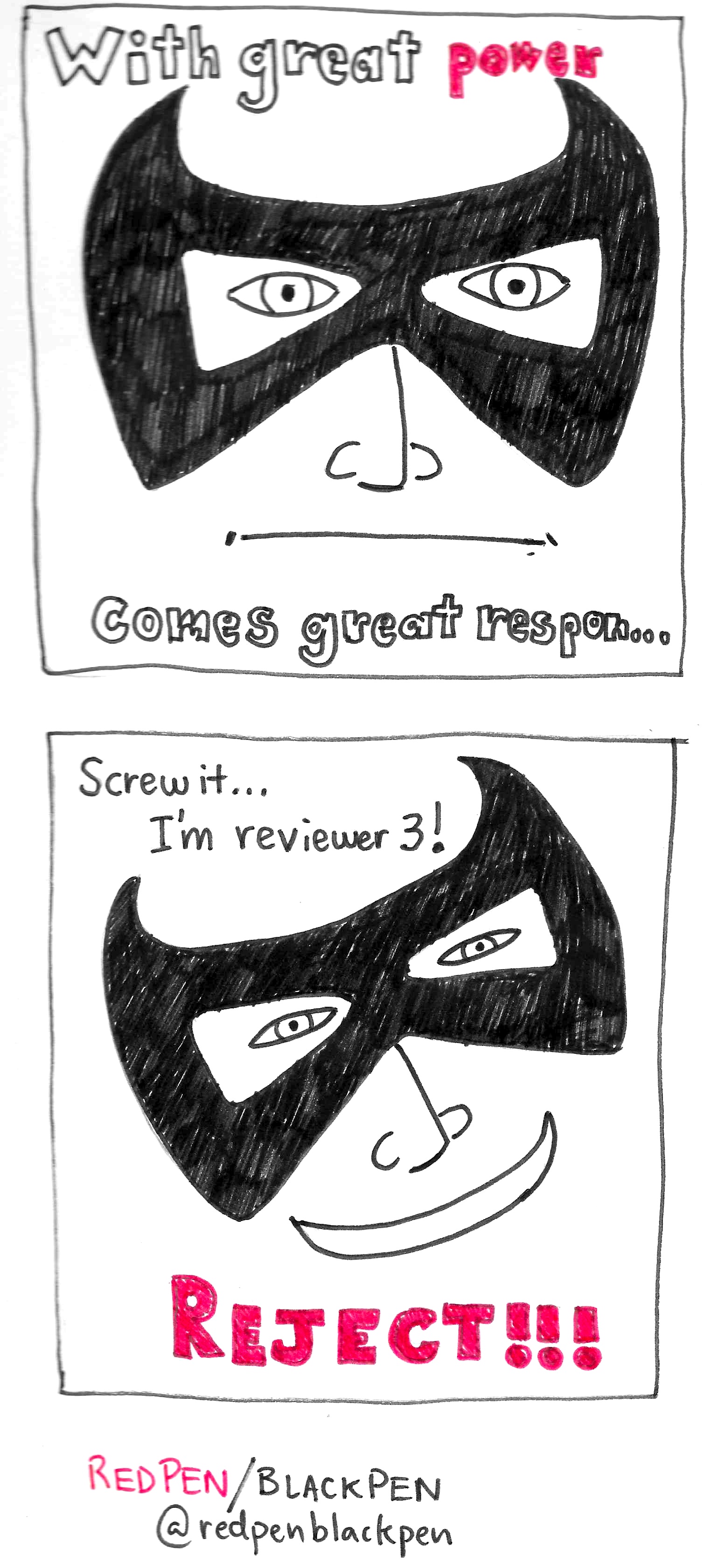
[1] https://twitter.com/redpenblackpen/status/113344056990719590... [2] http://jasonya.com/wp/wp-content/uploads/2016/01/PowerRespon...
AI ethics are important and I'm willing to bet that the Google execs want to know about biases and other problems in their products and probably don't care that much what is published. They probably don't want high maintenance researchers that cause them headaches and are obsessed with microaggressions, etc. I expect that this stuff has been a distraction for too long and they are happy to be rid of this and happy for the signal it sends across the company.
I have little sympathy or concern for Ivy educated elite in-fighting. There is probably a huge number of qualified people just dying to have the opportunity to work there, have access to those resources and do research.
Tweet explaining how she "resigned": https://twitter.com/timnitGebru/status/1334343577044979712?s...
An external reviewer of the paper: https://www.reddit.com/r/MachineLearning/comments/k69eq0/n_t...
I think you should be more open about what potentially actually happened because your first sentence seems very accusatory without proper information, the very bias that Gebru speaks of. According to her email that Dean references in his, her "feedback" for the paper was given in the form of a confidential HR document. That seems highly nonstandard for a review process supposedly only concerned with scientific rigor and is not addressed at all by Dean's statement. Further, his statement clearly, likely intentionally, muddies the water about what the actual sequence of events were that led to the paper being created, internal reviewers originally being notified, when the submission happened, who approved it, who submitted it externally, who asked for this to be retracted, and when and in what order all this happened. The fact that his statement, that was apparently meant to clarify these exact proceedings, makes it even more vague about what actually happened seems pretty damning to Dean's case, in my opinion.
Both Gebru's and Dean's statements have very little overlap in flavor and in facts, so it's pretty apparent something is going on here that is nontrivial and abnormal.
The non-research motive is arguably to control the narrative about using ML (I admit I still choke at calling it AI) and big data techniques. I fail to see how this is advanced by having a very public spat.
I've no doubt some senior exec decided she had to go, but I don't think it is because of any intersectional reason, or to cover up any particular publication, but that she wasn't seen as an asset to the company. Strategies for negotiating exercise of power are very different at Google to social sciences academia (or twitter, which is engorged with righteousness over this), which she seems not to have grasped. There are few enfants terribles in corporate tech that don't have controlling stock.
There's a classic documentary about this phenomenon: https://www.youtube.com/watch?v=9UiF7BsC1Ig
To be clear, both of these had been received for the paper in question.
> Unfortunately, this particular paper was only shared with a day’s notice before its deadline — we require two weeks for this sort of review — and then instead of awaiting reviewer feedback, it was approved for submission and submitted.
It seems like someone short-circuited the review process and submitted without review to meet a deadline, with a post-submission review. When this occurred, it was not all green lights. The expectation is that you then pull the submission and, post review, submit elsewhere. After all, conferences are all virtual now, it is not a hardship to submit elsewhere.
If you have other information as to the facts or the internal process do tell.
If managing people were the same skill set as computer science perhaps we would not be seeing this play out as it has.
This is seriously a massive failure on the part of Google to handle their own shit. I often wonder if these people are too old or out of touch to appreciate how this kind of thing may or may not blow up on social media.
To not consider how this might cause public relations issues especially when dealing with someone who has an established social media presence seems like a misstep.
On the flip side maybe they thought it was worth it. Weather the storm for a few days and twitter will move one. It's hard to say.
The correct name is really MapShuffleReduce and the most important step is the shuffle, because it's a distributed sort. Of course, they didn't invent distributed sort, but combining these three concepts together in a distributed fashion and running it as a production system is really what was important.
This post from Jeff Dean simply underscores that he has failed to balance the need for diplomacy with the research thesis of his own research group. I'm not saying he's being malicious, but incredibly tone deaf. While I appreciate he gets "attacked" at nearly every talk (at one retinopathy talk I saw him grilled for 10 minutes on race), he's going to continue to get this sort of attention until he can stop being the Googler who wants to tell you why their view is right.
The 'email from Timnit' doesn't exactly look good... I would expect a manager posting company lists in that manner to be dismissed (or a junior employee to receive some mentioning about professional conduct, if not dismissed).
I don't believe anyone has published the ultimatum email, which I think would be more accurately described as what precipitated the outcome.
[1]: https://twitter.com/timnitGebru/status/1334881120920498180
It always amazes how blatantly authoritarian these "woke" types are. I would not be surprised if the sole reason she wanted the identities of every consultant was to engage in some sort of witch-hunting and bigoteering[0]
[0] https://www.urbandictionary.com/define.php?term=Bigoteering
Since this is Google's side of the story its in their interest to use words that would imply she's overbearing, or otherwise unaccommodating
(for all I know she could be all of those things, but this narration isn't sufficient evidence to prove that)
If your entire career is built around solving a problem, then actually solving it is against your personal best interest.
edit: typo
(We have a publication approval process, but its purpose is to prevent IP leaks and maybe shield liability, not uphold scientific rigour standards)
They know they have a bubbling ethics problem and they've screwed over their best chance to do anything other than completely fuck it up.
In history, this will be a wtf double facepalm moment.
https://twitter.com/le_roux_nicolas/status/13346019609729064...
This, though, looks and feels like thinly-veiled retroactive and pretty unconvincing PR. It's short on detail and appears somewhat at odds with several points from Timnit Gebru's resignation note [0]:
- Dean says the paper was reviewed by a "cross-functional team". Gebru says she received the feedback through a "privileged and confidential document to HR"
- Dean says the paper was submitted for review on the day it was due to be published; Gebru says they had notified "PR & Policy 2 months before".
- Dean suggests the feedback was due to the paper not highlighting mitigating work for some of the limitations the paper was exposing. That seems like a very normal part of the research process. Why, then, does Gebru claim that she was told that a "manager can read you a privileged and confidential document" and that no other recourse or exploration of the feedback was permissible?
The only thing we know from the outside is that reality will be far more nuanced and complicated than the tidbits that leak out. Even allowing for that though - and reading some of the related comments here - Google isn't coming out of this well at the moment.
[0]: https://www.platformer.news/p/the-withering-email-that-got-a...
EDIT: Fixed spelling of Timnit Gebru's name.
Wait, really? That’s an important detail if true. The one-day timeline was a central part of the narrative surrounding this story. Notifying them two months ahead of time makes this a completely different situation.
I’m a bit skeptical. Could this claim be verified somehow? Since it’s very public news at this point, we may as well try to be rigorous.
I agree that Google isn't looking good at the moment. But if I had a colleague who seemed intent on finding ways to place the company in legal jeopardy, then I too would avoid direct communication whenever possible.
I don't think these two takes are at odds with each other at all. It sounds like a cross-functional team reviewed the paper and produced that "privileged and confidential document" but Gebru didn't find that document sufficiently detailed.
Our aim is to rival peer-reviewed journals in terms of the rigor and thoughtfulness in how we review research before publication.
But Gebru writes that HR and her management chain delivered her feedback in a surprise meeting where she was not allowed to read the actual feedback, understand the process which generated it, or engage in a dialogue about it:
Have you ever heard of someone getting “feedback” on a paper through a privileged and confidential document to HR?
A week before you go out on vacation, you see a meeting pop up at 4:30pm PST on your calendar (this popped up at around 2pm). No one would tell you what the meeting was about in advance. Then in that meeting your manager’s manager tells you “it has been decided” that you need to retract this paper by next week...
And you are told after a while, that your manager can read you a privileged and confidential document and you’re not supposed to even know who contributed to this document, who wrote this feedback, what process was followed or anything. You write a detailed document discussing whatever pieces of feedback you can find, asking for questions and clarifications, and it is completely ignored.
(from https://www.platformer.news/p/the-withering-email-that-got-a...)
I've been through the peer review process at Physical Review Letters, SIGMOD, and VLDB. You get a document containing all the reviewer's comments, plus a metareviewer's take on the overall decision and what has to change. You can engage in dialogue with the metareviewer, including a detailed response letter justifying your choices, highlighting things the reviewers may have missed, and explaining where you plan to make changes. You get additional rounds of comments from the reviewers in light of that letter on later drafts.
I'm not a Googler, and I have no idea what the standard review process looks like there, but what Gebru describes does not sound at all like peer review. I also note that Dean does not contradict Gebru's account of the meeting or feedback process. If I had a paper rejected in this fashion, I would also demand to know what the hell was going on and who was responsible.
This feels off.
A manager in ethics shouldn’t ask Google to break the law by not providing confidientality that was requested.
It is not implied anywhere that the reviewers requested confidentiality. It is certainly not implied that Google would be violating the law to rescind that confidentiality (and, to be clear: they almost certainly would not be).
I imagine some reviewers extracted agreement from management before giving negative feedback on this paper that the “anonymous” in “anonymous feedback” was a promise. This explains the unusualness of the situation, why the feedback flowed though a special HR channel, why specifically management was unwilling to let her have a written copy of the feedback (that could be closely analyzed to de-blind the reviewers), and why management accepted her resignation and the resulting fallout rather than agree to de-blind the reviewers.
I can see how this might be frustrating for academics working within Google. The field already has systems in place for peer-review. While I admire the idea of Google holding their research to a certain standard, it also provides a mechanism for dismissing research that paints Google (the corporation) in a bad light. If a paper is good enough to pass an (external) review process, why should it not be published?
There are many journals that have a poor track record on peer review, and in fact even those that have a generally good track record often have times that it famously failed.
Whether we agree or not, Google want to protect their reputation. Because not every journal will be up to their standards, ensuring that papers do meet a standard is going to be important for them.
They could do this by only allowing submission to certain journals, but this would require an understanding of each journal, its processes reputation, etc. Perhaps easier is just to review papers before they are submitted.
This does also allow them to protect potentially NDA'd info from being accidentally included in a paper given to external reviewers, which is (whether you agree or not) something they will clearly want to do.
I'm in industry and am not allowed to even talk about the projects I work on, much less publish papers, it kills recruiting conversations with maybe 10% of the people at conferences.
Image that one set of NDA'd data was included in the paper, that painted Google in a bad light, but a different set of NDA'd data was excluded in paper, that painted Google in a good light.
I have no idea if that's what's going on here. But if some of the people who objected to publishing the paper thought this was happening, it may explain their objections to publishing the work.
Now I think I was wrong, Google looks like they're full of crap. If the research doesn't pass muster I'd like to read it and pass my own judgement. I'm guessing the tone was justified.
OTOH Timnit sounds like a down-the-middle SJW type, which means that every conflict is about identity, privilege, and so on, which honestly hurts her message. To me, its enough that Google shut her paper down and wouldn't tell her why or give her even a chance for a different outcome -- perhaps it is, ironically, her SJW nature that makes it risky for Google to engage her in the way she wants to be engaged, because a deeper conflict cannot look good for Google in the current cultural climate. (E.g. sounds like she's got strong intellectual integrity points, and weak SJW points to make about Google, but they couldn't engage the former without also dealing with the latter.)
Funny, because she mobbed Yann LeCun and after she obtained a forced apology from him and an invitation to a civilised and serious discussion she said "this is not worth my time".
Maybe it wasn't worth their time.
Hopefully more employers will reject hiring "woke" people after seeing the trouble they're causing.
However, the suggestion that employers will work to identify and preemptively reject employees with an SJW bent is not only sound but almost certainly already underway.
Probably, even Google knows this, and this is just a mistake. If I was in the position of this researcher, I’d threaten to quit, too. Google’s actions suggest it wants to appear to care about ethics in AI rather than actually caring. That’s not a environment conducive to her to have any impact, so why stay? Clearly she’s not going to have a problem finding a job elsewhere.
One of their most valuable functions is to stop you "letting go of" people for stupid and petty reasons that blow up in your face, spectacularly.
There's also the angry email that she sent to other people ranting about Google's behavior and telling them to stop work.
Either of these scenarios would get you fired any place that I have worked.
People are forgetting about the part where she basically encourages her colleagues to talk to congress, at a time when tech CEOs are regularly being hauled in front of congressional committees. At the point when that is written, this clearly is an adversarial relationship between her and Google. And it wasn't Google that made it adversarial
I couldn't imagine writing something like that and keeping my job
Jeff's emails, which were surely also crafted with sign off from PR and legal, attempt to frame this "resignation" as an issue of the paper's content, as well as the inability to meet Timnit's demands. However, this framing does not seem to align with the experiences of other Google researchers, and does not explain why she was terminated in this particular manner. If that were really the case, why didn't they just wait for Timnit to return from vacation, try to resolve the issue, and if unsuccessful, accept her resignation? Why not try to deescalate and handle the situation more tactfully?
Timnit's account of the email she received also seems to confirm this:
"we believe the end of your employment should happen faster than your email reflects because certain aspects of the email you sent last night to non-management employees in the brain group reflect behavior that is inconsistent with the expectations of a Google manager. As a result, we are accepting your resignation immediately ..." [1]
So, what aspects of that email triggered such a prompt termination? Well, Jeff's first email says that Timnit was telling employees to "stop work on critical DEI programs", and I've similarly seen some comments focus on the part of her email that reads, "What I want to say is stop writing your documents because it doesn't make a difference," but Timnit is clearly not saying to stop DEI work, she's saying to "focus on leadership accountability" and to apply external pressure.
That seems to me to be the real issue, and the sort of thing that would trigger pressure from legal. The fact that the tone of the email is frustrated, and it airs some dirty laundry, would not necessarily result in firing, if leadership really wanted to keep her on, they could work something out. According to Timnit, her own manager was not informed, she's well liked by her academic community and her Google reports (who are expressing their dismay on Twitter), and Jeff has regularly praised Timnit in the past. So, the mention of congressional pressure in her email really seems to me to be the real catalyst here.
[1] https://www.twitter.com/timnitGebru/status/13343647354463313...
Seems pretty transparent.
It seems disparaging your own company while ignoring research that counters yours is Google’s limit, but we’ll have to wait to see the research paper if it leaks.
https://news.ycombinator.com/item?id=25292386
It's not a stretch to say that the world has a problem with discrimination, or that big personalities can rock the boat when they go against the grain. Or that corporates have interests to defend.
I'd like in this case, though - not to say that all the other factors aren't worthy of examination as subjects in their own right - to see this paper. The authors/collaborators are leaders in the field. There are legitimate concerns about AI/ML; the validity/reliability of data from which, nowadays, consequential outcomes are derived.
Please, let's ignore - at least for now - the corporate politics, the heat of the race/gender politics, the PR machines weighing in (look at all the news outlets grabbing this atm), and take a look at what the paper says. The right people (those in the field and qualified/able to do so) should be listened to.
As for the politics of this, and the posturing and politicising and agenda-building on all sides: that doesn't help.
AI and ML affect us all now. This is a trend. Let's at least expose the findings of acknowledged leaders in the field - let's see this study - before we descend into the sideshows of politics and factionalism. Please.
Edit to clarify: tl;dr - I've not seen/read this contested paper. Whatever its contents, I want to see them, and imo that is more important than the current controversy blizzard etc.
I don’t think there’s a contradiction in the reaction, personally.
High level research (and engineering) will involve egos and you should expect this kind of push back when you stop someone from publishing. Nothing here justifies how he handled it
Of course, I think many of us have seen this reaction before, maybe even done it ourselves. It’s bad for everyone, don’t do it Jeff!
Apparently Google has varying degrees of transparency when it comes to decision making. To be expected at a large company. There are some things my company & boss do that seem abnormal and out of character. You have to go with the flow sometimes and shut up. It seems like this person had some kind of utopian mindset where she felt management was obligated to explain everything around the blocking of her paper.
I doubt a guy like Jeff who wants to do tech all day has a vendetta against black women that want to publish papers.
What a way to go.
> Unfortunately, this particular paper was only shared with a day’s notice before its deadline — we require two weeks for this sort of review — and then instead of awaiting reviewer feedback, it was approved for submission and submitted. A cross functional team then reviewed the paper as part of our regular process and the authors were informed that it didn’t meet our bar for publication and were given feedback about why. [...] We acknowledge that the authors were extremely disappointed with the decision that Megan and I ultimately made, especially as they’d already submitted the paper.
When it was "approved for submission," was that approval final and actionable, or some kind of conditional approval? Is demanding a retraction after an approval the normal way it works at Google, or was this an unusual occurrence that Gebru was right to question?
I mean... come on man.
Jeff is way better than this so I really have no idea what’s going on here.
https://twitter.com/timnitGebru/status/1335017524937756672
> 1/Man there’s so much to pick apart. Let’s start with one thing. I want to ask if Jeff Dean has looked at the publication approval policy that he keeps on mentioning in his email. Like, for example, a simple look at the website? Let’s read.
> 2/First off “Start the PubApprove process at least 1 week in advance of any deadline”. Okay, not sure where the 2 weeks in Jeff’s email came from.
> 3/ But ALSO “The perfect policy” “There is no such thing as the perfect policy. Fortunately Googlers like to do the right thing. Please do that here—read the policy and do what makes sense.”
> 4/ ALSO “Meanwhile, we strive to make the PubApprove process as lightweight as possible: hopefully eliminating the temptation to skip it.” I don’t know man you might have to resign immediately if you just “do what makes sense” so beware.
> 5/ Finally, I wouldn’t want to know what would happen to you if you had “the temptation to skip it” mentioned on the website. Beware researchers
> 6/In spite of this, we gave a heads up BEFORE even writing the paper—on September 18. Saying that we were about to write this paper. So much to say here, so much. But I’ll stop here for now.
The important issue in the paper seems to be that the paper villainized large language models, which Google has a vested interest in.
The paper was likely publishable with a bit more context in the introduction.
I've been in similar situations and they were handled offline.
The explosiveness of this situation seems to have been prepared the history of Timnit's relationship with Google.
This incident was just the spark.
> Highlighting risks without pointing out methods for researchers and developers to understand and mitigate those risks misses the mark on helping with these problems
You have to have sympathy for her position but in the end if all you do is offer criticism then it's hard to see you inside Google, let alone as a manager.
What we want to know is if that is actually the case.
It is sad to see him drop his credibility and become a PR mouthpiece. I know how this happens and I know why. But it is still sad to watch. Like watching you favourite band sell out to a big label.