Tape/wedge the drive lid sensor down, power up with a real game in (you don't need to close the lid as the sensor believes the lid is always shut) and allow it do the initial copy protection check on your real disc.
At this point it stops the disc for just less than second - just enough time to pull the real disc out and swap in a CD-R. It takes a little practice and potentially can damage the drive motor if your timing is frequently poor.
Games this won't work with are those spanning multiple discs where you need to swap discs in game to progress.
Then I killed it trying to mod it. Got a PS1 instead, couldn't figure out the trick anymore.
It was funny that they kept on changing the points where the disc would read info, you had to swap multiple times at different points. They wouldn't stop either, just slow down.
Maybe you can shave the back of the shimmed wobble edge down, so that it won't stick out as much on the burned CD. This shimmed wobble can be your key for all the burned CDs you have.
Maybe double sided tape can keep the wobble shim attached to your burned CD while still allowing it to be removable for other CDs.
I've never had a Saturn, so I don't know what this wobble edge looks like in person. Am I missing something?
I can assure you, I am not looking forward to the TPP!
To achieve this did not require fully reverse engineering the cdrom controller but it is great someone did though.
For PCB assembly, http://www.4pcb.com/ is recommended.
Some reviews from Lady Ada: http://www.ladyada.net/library/pcb/manufacturers.html
Also check out http://pcbshopper.com/
long story short, it is the real solution, but its not a practical one by any means.
Emulation is the best possible path IMHO since it enables the games to be played (and experienced) on pretty much any hardware. I think this work may do quite a bit to help in that area, there's really no reason the Saturn isn't nearly perfectly emulated these days.
Reproduction is the next best and much harder than Emulation. Basically figuring out how to build the hardware again. There's several versions of this with much older hardware (C64, 2600, etc.) with new hardware being produced that can run the old software natively. There's also "lesser" versions that use modern CPUs, etc. to run the code basically also in emulation, but this is not the same thing. However, reproduction is both technically more difficult and has a smaller audience who's willing to add yet another machine to their collection to see old games.
also, MESS's emulation is also not too terrible, I was pretty surprised with how many games worked under it
There are a lot of great games (including PS1 and PSP games) for the system, but once the hardware dies or the download servers are shut down, what is left for people who still want to play these games?
In the back of my mind I've been thinking what digital consumer rights look like. It seems like this point in history has laws that favor publishers more than consumers or the public good.
It'd be a shame if we suddenly couldn't play these classics anymore just because Sony wants us to repurchase it on Console XYZ.
No point cracking it till they stop making games for the thing though.
Submission of complete source code, on the other hand, could help.
Anyway, the basic story is that the Saturn had copy protection in the form of physical marks on the copy protected CDs. This puts a huge barrier to entry on homebrew and the like, so a guy going by Dr Abrasive tried to reverse engineer a way around that. He first looked into a way of disabling the copy protection on the CDs to allow burned CDs to be used but that proved too difficult.
He eventually hit upon the fact that the Saturn had an external module that could be added to allow the system to play video CDs. He then built a component to take advantage of that fact and feed in his own commands through this interface thereby avoiding the copy protection entirely. This allowed content to be run from USB sticks without the need for CDs at all, lowering the barrier to entry even more. It also helps workaround mechanical failure of the CD drive which is becoming a common problem for the 20 year old hardware.
So now if you have this custom built component, you can take an off the shelf system and start running code from a USB stick without any soldering, hacking, or modification at all beyond plugging the device into the back of the console.
Also, I love that his original motivation was to use the sound processor for mixing chiptune, and basically opening up the entire system at metal level is a happy by product.
ALSO, the fact that he decided that his first working prototype was too hands on and finding a way to piggyback the video playback expansion card to make the mod orders of magnitude less complicated to install / execute.
Super impressive stuff
>I, myself, am not going to release these ROMs. This isn't the first project where I've dumped a commercial object for some other purpose and been asked to share (see: shairport, for one), and after much thought I conclude - now, as then - that it's not the right thing for me to do in any project. There are legal and professional risks which I'm just not comfortable taking. That's not negotiable.
>But that's not to say I won't help you dump it yourself. I'll have a dump feature in the cart, and I'm sure someone will rapidly archive all the available systems.
He does claim legal and professional risks as his reasons in the assemblergames forum thread[0] though.
[0] http://assemblergames.com/l/threads/saturn-cd-block-rom-dump...
I really think it should be a standard act of corporate responsibility and platform stewardship to make it so that work like that of Professor Abrasive's, is not the only spare key we have to current culture a few decades down the road. We as a global culture just might be really, really lost and bereft of history if that was to be the case.
I frankly think that Apple under Tim Cook is in a historically unique position of making cultural preservation of games and software feasible and something built into the whole social and legal contract of proprietary, locked down platforms. It's not like Sony is going to lead the way with the PlayStation?
I mean, to really make preservation legit, there needs to be some sort of useful official emulation and data extraction capability down the road. For all we know now, there might be terrible legislation that prohibits reverse engineering in a lot of jurisdictions.
There's of course a lot problems to solve, with all the crypto and stuff, and licensing, but someone should be on this. Especially since software distribution is becoming all ephemeral and download based! Not to mention the cloud fragmentation of personal data.
Anyway, the world looks really bleak for open platforms right now.
The main example is Android. If you have like one toe dipped into a role related to infosec at the moment, you can't serioulsy recommend that people you work with or care for even touch mainstream Android phones. Because the patching situation is such a dumpster fire.
Even Google's Nexus crap that is getting patched, seems to be set on a 2 year lifecycle, with 2014 phones getting end of lifed a few months from now. Pretty weak sauce if Google's intention is to set any kind of example for vendor security support on Android.
My sister runs my first iPhone, a 2012 iPhone 5, fully patched. It's going to be supported for another year or two, probably.
https://support.google.com/nexus/answer/4457705#nexus_device...
###
I don't particularly want it to be this way, but I have to almost force people I care about to buy iPhones. It feels bad, especially in cases when they'd have better use for their money.
So with Apple, specifically, they're really good at the closed platform game and I don't see them getting out of that, especially if they're getting more into things like payment services or automotive. Their crypto stance really implies that they want institutional-level trust from their customers. http://www.antipope.org/charlie/blog-static/2016/03/follow-t...
###
Game consoles are unlikely to quit DRM too: the only thing that'd make them stop with DRM per se is probably to make all games just streamed from the, uh, cloud. Doable... maybe soonish but that'd rule out a lot of people and use cases where the connectivity just isn't there.
That's kind of why I suggested my half-baked idea to pressure, force and shame closed platform vendors into proper legacy support as part of the "social contract". Or whatever. Not that certain "social contracts", like the ones Western countries have with banks are working out all that great at the moment.
###
But as I said, this idea of mine is half baked. Someone like Apple is only part of the puzzle, since apps and games increasingly rely on server backends to work properly. It's not like Apple could save the gaming world's cultural heritage in 2030 just by offering a binary blob that runs all iPhone apps from 2010.
Also app-specific DRM is unnecessary AFAIK, so that will avoid common problems.
Also, you mention CD-RW, but IIRC you could not boot off CD-RW, only CD-R. Or maybe that was the softmodded xbox?
Skies of Arcadia was I believe the biggest ever 'released' - 2x1GB. A group called Echelon did manage to release it after many months/1 year+(?) without anything ripped, sized to fit on 2x700mb CD-R's. They pre-compressed the whole game and wrote a custom on-the-fly decompresser. Apparently this did slow the game down in places, but the technical achievement certainly needs to be appreciated.
Yeah about that, I don't get it. Is there data hidden in that spiral that acts as a checksum for the CD or something? Or is it of special material that lights up differently under certain light (like money)?
To me it doesn't look that hard to duplicate a simple spiral, but then I know nothing about it.
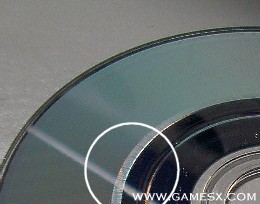
Gamecube discs utilised a similar technology which you can easily see on the disc surface - http://www.gamesx.com/grafx/ngcdisc2.jpg & https://en.wikipedia.org/wiki/Nintendo_optical_discs#Burst_c...
Years before, companies actually did a similar thing with floppy discs, albeit in a slightly different way.
And in general, most console systems are a serious bundle of hacks, mostly tolerated by programmers by the sole fact that you can rely on every system to be identical.
Not to mention that all the relevant information may not exist anymore, or is in a storage facility somewhere growing mold.
This included the remark that Hasbro would not go after developers for discovering or bypassing the encryption key (which was discovered shortly after) to run their own software: http://allanswers.org/games/games/video-games/atari/jaguar-4...
I don't know. Winning people's hearts? For the fun of it?
Of course, if you sit at that point in the system you have a different set of problems and capabilities. Much easier to build hardware for, but no data output, and of course you need to disassemble the console to get there in the first place.
[1] http://assemblergames.com/l/threads/saturn-cd-block-rom-dump...
No modchip required, no soldering, broadband penetration on the rise, filesharing was now a thing.
I completely understand the Saturn's botched launch and limited number of retail outlets, but the Dreamcast had the best launch of all time up to that point and broke sales records.
I'm not convinced piracy is not in fact the cause of the Dreamcast's demise.
I really did love the Dreamcast, built in modem and the second-screen VMU.
If you don't think piracy killed it, what do you think killed it? The PS2?
If a new console used the wobble/burst then surely you'd be able to order these CDR's from Alibaba..
These days my interest in game cracking is mainly for archival purposes. (are you going to be able to play this game in 50 years?)
Breaking DRM is like finding a cure for insanity ;)
Well said.
Isane.
It takes a special set of skills and a mindset to do this. I recommend everyone to try that once. Just take a foreign binary, any which you know the application of, and try to modify it. Then, after you give up, take a note this was done on an unknown binary with (almost) unknown functionality. TBH, he did say he looked up a table of known functions on a wiki somewhere, but still...
Harder to program of course.
You can also rip a sega saturn CD in your computer. I particularly enjoy the music from Sega Rally Championship and Virtua Fighter 2.
These crazy reverse engineering projects kind of make me feel insecure about my own abilities, as weird as it sounds.
I wonder if I would have been able to come up with the same solution if I worked at it. My fear is that I would not, but who knows.
A lot of it is purely analytical, but there is a portion that relies on pure creativity and problem solving abilities.
I understand the process he went through as well as the technical details behind it, but following along is much easier than looking at a circuit board with a blank face, wondering where to begin.
I spent the last 2 hours last night just reading about Sega Saturn…
Playstation also had a trapdoor Parallel I/O port exposing raw address/data bus, it was meant for network interface, debugging(PSY-Q) and stuff(ActionReplay/GameShark). Great thing about that port is you can hang your own ROM there and console will execute it while booting, no code signing/drm crap.
Afair at the beginning PSIO patched original firmware replacing all CD routines with its own, but later in the project it was discovered a lot of games talked straight to the hardware ignoring SONY requirements for using BIOS routines. This is why current version comes with small board you need to solder inside to reroute chip select signals from the CD controller chip - PSIO emulates that chip completely. You still get data faster than CD due to no seek times. https://www.youtube.com/watch?v=Wc3rOb7Evxc
Original work from 1999 http://web.archive.org/web/19990220052039/http://www.geociti...
Gamecube has IDE-EXI, same thing http://www.gc-forever.com/wiki/index.php?title=Ide-exi
The Playstation also has one, the ps-io[2]. I'm really hoping for someone to step up and do the PC Engine, Neo Geo CD, Sega CD and 3DO.
[0]https://gdemu.wordpress.com/about/
[1]https://gdemu.wordpress.com/installation/rhea-installation/
You might be interested in the turbo everdrive from http://krikzz.com/
"I hope this lays the matter to rest, and prevents anyone from wasting more time on it (like my day burning useless discs). I'm sure someone will wave their hands around and say that custom burner firmware could do the job, but good luck finding a burner with a programmable DSP in the pregroove tracking loop and managing to modify it to do the job."
http://assemblergames.com/l/threads/saturn-cd-block-rom-dump...
I applaud crazy fuckers like you. The world needs more of you.
Well done sir.