YASA was founded in 2009, a spin out from Oxford University following the PhD of founder and still CTO, Dr Tim Woolmer.
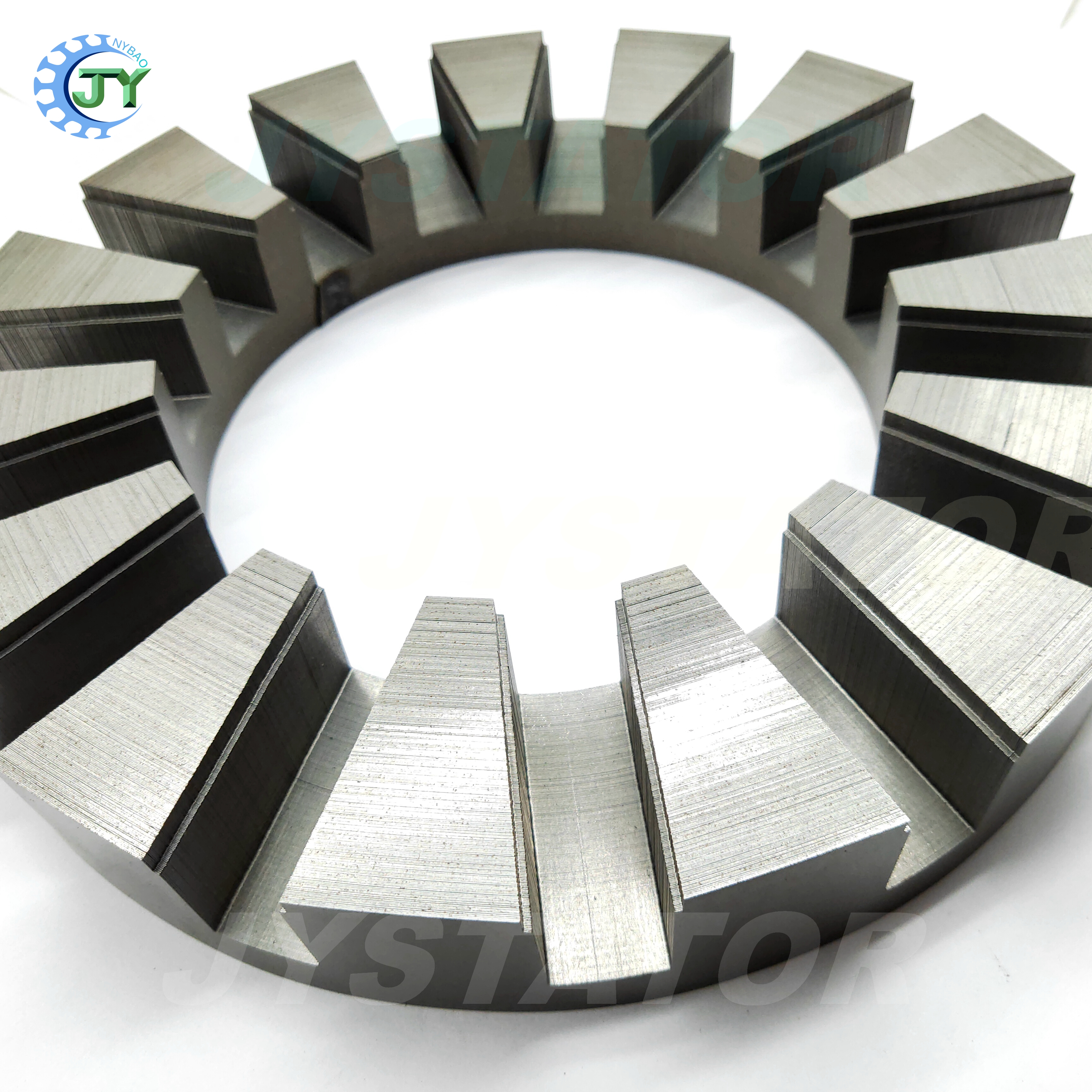
"Over the decades that followed both of these technologies were explored. But despite the potential for weight reduction, smaller size, shorter axle length and increased torque, it was the difficulty in manufacturing the axial flux technology that limited its commercial viability, because the motor could not be made by stacking laminations, as with radial machines."
"The breakthrough innovation came by segmenting the axial flux motor in discrete "pole-pieces", so the motor could be manufactured using Soft Magnetic Composite material.
SMC can be pressed at low cost into a wide variety of 3D shapes. This removed the need for the complex laminations, overcoming the major manufacturing challenge of the axial flux machine."
"In 2025, after a £12m investment, YASA opened the UK's first axial-flux super factory, in Oxfordshire.
The opening of this facility boosts YASA’s manufacturing capacity, setting new benchmarks in e-motor technology and quality, and enabling production to scale beyond 25,000 units per year."
This is awesome. Lighter motors also make electric flight more viable
EV motors are already lightweight. The electric motor in a vehicle like a Tesla Model 3 already weighs less than you do. Reducing that one component by 75% would be a weight savings equivalent to about a half of a passenger.
Not a significant efficiency improvement for vehicles that weigh over 3000lbs (or double that for many EVs).
Every little bit helps, but this isn’t a game changer.
Right now it takes about 10-15lbs of motor to produce a 3KW motor for an electric bike, this motor is about 10 times that in power density afaict.
The Livewire electric motorcycles use something like 100-200 lbs of motor to produce 1/4 as much power, 75kw, so that’s an improvement of 8-16x.
Then you can do clever things with traction control without having to use the ABS system to brake the drive wheels.
Or dramatically change the turning circle on big cars and vans. Maybe even reduce the size and weight of the braking system by taking on some of that role.
All for the same weight budget.
Lighter motors for mobile robots could also be cool.
It does seem like with this advancement, and the size of these axial flux motors that maybe, all wheel drive vehicles will be the default. As well as sub 3 second acceleration, which can make vehicles safer, for example getting out of the way of an incoming object. Of course it could also make them less safe because that vast of acceleration is kind of dangerous.
But I do wonder if the weight reduction (over 30%) of lithium sulfur batteries paired with these is really going to make a great recipe for all sorts of quiet, long lasting, powerful electric vehicles and robots!
For example, by making the flywheel in a clutch lighter, you reduce the amount of torque it takes to spin the flywheel. Saving 10 pounds there is not a 10/3000lb difference.. it could be a huge percentage of total power output.
Of which there can be two, or even three.
It can make cars cheaper, or longer range, or faster, or any number of other designs based on what the manufacturer is looking for.
But to OP's point about flight - stacking 6 Tesla motors is not an option. Stacking 6 of these YASA motors? Much less weight.
Unfortunately I feel much less safe in a Fiat 500 when a significant portion of cars in the road weigh nearly 3 tonnes and perhaps can't even see me. I suspect most people are in SUVs because they're the pragmatic trade off between safety and convenience, not because they were hoping for excellent performance.
This is why the first performance mod that most people put on their cars is an adjustable coil over suspension. Dropping the car down by an inch or 2 changes has just as much of an impact as shedding some weight.
Ironically, most people put lift kits on Jeeps but that also usually comes with widening the wheel base and putting on larger wheels/tires.
It was an absolute shock the first time I braked in the Volvo, not to mention trying to take a corner.
This is a blanket statement and completely untrue. Good driving experience is directly correlated to TRACTION, not just weight. And traction isn't just a function of weight - it also is affected by center of gravity, friction between the wheels and the road. Traction is what gives you the perception of being in control of the car.
I used to own two cars of the exact same model - one petrol and one diesel. The petrol is lighter in weight, about 100+ kgs lighter than the diesel variant. And the driving experience on that is slightly scary especially on roads with strong winds. In fact, it is so light that if you drive over tiny puddles or rumbles strips, the car will sway sideways. The diesel always feels more planted because it is front-heavy, thus adding more traction to the front wheels (both are FWDs). I always prefer the diesel for longer drives because of the heft and confidence it provides.
It’s a little sad to me that fundamental innovations in electromechanical engineering like this get just a few million in investment, yet if this had been yet another derivative software startup with “AI” in the pitch, they’d probably have 10x+ or more investments being thrown at them.
They claim, this compounding effect works out to basically double the effective weight saving from battery and motor.
ie if you start with saving 50kg on motor, and 50kg on battery, you end up saving 200kg over all. Still only about 10% of a typical electric car.
Not really. EV's are very heavy from non-motor weight. A Model Y weighs ~4300 lbs. A motor that is 75 lbs lighter is a 1.7% savings. That's not nothing, but I wouldn't say "significant". You can do better by swapping for fancy wheels or eliminating some of the glass roof.
And really this is true up and down the electric vehicle world. Weight-sensitive applications are always going to be completely dominated by battery weight. Making the motor smaller just isn't going to move the needle.
Basically this is good tech without an application, which is why it's having to tell itself with links like this.
But yeah, EVs seem weird except for racing reasons perhaps.
What I can’t figure out is how they dissipate the heat - double digits kw per kg is crazy.
This video https://m.youtube.com/watch?v=WU9Ptibu2WQ&t=179s claims that SMC materials have much higher losses at low frequencies than laminated materials, up to around 400 HZ when they very rapidly pull ahead.
So as the core of a step down transformer for consumer electronics, SMCs would be worse than a laminated core (stack of sheet metal pieces punched with a press, stacked and wound with the windings). But in a motor operating at 100s of rpms, no problem. And as I understand it, in high torque motors the magnetic fields pulse far more often than once per revolution because the windings are many and small, so that several can pull on the armature at any orientation.
There is a single exception, and it's a big one. Direct-drive, wheel-hub motors are not well-regarded right now, specifically because they increase unsprung weight (the part of the car more closely coupled to the road surface than the passenger) and this impacts handling substantially. So instead we backport a bunch of the mechanical infrastructure that transfers power from a traditional ICE engine to the four wheels. We're paying that bill already, on almost all production EVs. Quadruple the power density and simple, 1-moving-part wheel hub motors look like a lot better case versus central driveshafts and mechanical linkages.
It will always be lighter to not have the motor in the wheel.
> So instead we backport a bunch of the mechanical infrastructure that transfers power from a traditional ICE engine to the four wheels.
No, we do it because it's smart and efficient for freeway-capable vehicles.
Wheels get banged up in use. They're easy to replace for different applications. They're exposed to 200 kph salt spray at hundreds of RPM. They are not a great place for motors.
That is ever more special
Even if motors were literally weightless and mass-less, EVs would weigh more than ICE cars.
It's like making a more efficient CPU for your phone when all the power is eaten up by the cell-modem, screen and RAM. People wonder where the practical battery life gains are and theyre miniscule in practice
As others have noted, battery remains a major factor in overall mass, and motor placement (in-wheel vs. driveshaft) is a concern in ground-transport.
In aviation, battery limits overall range, but a high-power, low-range, lower-mass vehicle could be useful for short-hop flights, manned or unmanned, especially where payload considerations are paramount.
Mobile-power applications (tools, transportable equipment) might also benefit from high power-to-weight, especially if this means that overall weight limits could be more readily met (e.g., total vehicle weight, total carried weight), or additional equipment (or battery) could be provided.
How far does YASA's tech allow the motor weight to scale down, for applications where you don't need the power?
Can you make it 2.8 pounds instead of 28, if all you need is 100 hp? Likely not.
In Bay Area that is small investment in a startup which would be able to lease a small office
>Could lead to significant efficiency gains for EV's, because 1/4 of the motor weight means better power-to-weight ratio...
that would help VTOL a lot. Unfortunately YASA motors are priced for supercars and availability seems to be low. Until some factory in China starts making similar ones, there are not much chances on getting hands on such a motors.
If we take a Tesla model 3, I believe it weighs 1611kg, and the motor shows up at 80kg if you google it (no idea if this is correct). This YASA motor by comparison weighs 14kg. So, this would drop the vehicle weight by 66kg out of 1611, so that's a 4% saving.
1/4 of something that is a small fraction of the total weight of a car means very little improvement in overall power to weight ratio.
I suspect that gaining 40% of car seat weight would be much more beneficial even if way less sexy.
So yeah, weight reduction on EVs is great.
Tesla (I know) claimed a 30kg (?) weight loss on their Cybertruck (I know) just from moving their 12V systems to 48V, allowing for lighter cables at lower currents. Not all such potential is untapped, and my hunch is that there is more to be had with structural battery integration, battery cooling, and high voltage wiring.
For light weight vehicles on the other hand, it might be.
The next innovation we need is Aerial refueling[1] for electric planes. High density swappable batteries and high altitude wind/solar plants that can swap batteries mid air. Perhaps some billionaire will develop a large fleet of these to service all flights! If no western billionaires, we just have to wait for China to develop this tech.
Also planes would not have to wait for a tug to pull back from the gate, which improves turnaround times for the airline.
Not very feasible, but an option that has been thought through.
I guess there’s a system that’s gated to track dependent technologies, to track improvements and what they’ll enable.
But how many footballs a small dog weighs?
Which kind of football: the British or the US-American one? :-)
At this point why don't we get rid of the k prefix and write 59W/g?
Edit:
I was half joking, but various answers mention kW being standard for motors, kg being the SI unit for mass etc. All true, but as used here in a combined unit, which means "power density" it still would make sense IMO. It's not like the "59" tells you that it's a strong motor and hence you want kW to compare it to other motors. You can't, it's just a ratio (power to weigth). W/g just reads much nicer in my head. Or we could come up with a name, like for other units. Let's call it "fainpul" (short fp) for example :)
59 fp is a new record for electric motors!
Same reason you wouldn't use m²/s³ even though that's also technically correct.
Could the motor in question be shrunk down to 1kg, producing 59kW? Probably.
Could it be shrunk down to 1g? No.
The YASA link is primary, links to test data and back story, and has more detail substance and authority.
Most people usually understand what it means something to be 20 meters, 5kg or 2 liters intuitively. Like, when I hear that something is 60m tall I intuitively think if it as 20 story apartment building and don't benefit from the extra info about how this is like 18 elephants stacked on each other.
The primary company link is from a UK subsidiary of Mercedes-Benz and is (almost) fully metric (the fundemental units US weights are officially defined with respect to (for more than a century now)).
See: https://yasa.com/news/yasa-smashes-own-unofficial-power-dens...
  Earlier in the summer YASA achieved 550kW (738bhp) from a 13.1kg version of its new axial flux prototype motor, equating to an unofficial power density world record of 42kW/kg

  Now latest testing of an even lighter 12.7kg version on a more powerful dynamometer has shattered this record, with a staggering 750kW (>1000bhp) short-term peak rating, resulting in a new unofficial power density record of 59kW/kg
> Large boulder the size of a small boulder is completely blocking east-bound lane Highway 145 mm78 at Silverpick Rd
(That's 28 pounds, 1000 hp peak, 470+ hp sustained.)
The 40% improvement is actually 36% and is versus the previous model of the same company.
I wonder if we defined peak as sustained peak over 100 milliseconds, or some more meaningful number, what that would do to the claims. You aren't really generating meaningful torque over 1 microsecond.
Wheel hub motors are obviously bad, for harshness reasons, but if you could have a motor like this weighing 1-2 kg, and put one on each wheel, that'd be okay.
Power-wise this would be okay if things are linear. 26 kW per wheel sustained power output is more than enough for a light car. The question is what torque a scaled-down machine can be expected to have.
30kW sustained/60 kW per wheel peak power is easily enough even for large passenger vehicles. Sustained could take 3 ton vehicle up a 10% grade at 120 km/h.
or about the same as a small dog
Basically all EVs have small and light motors compared to ICEs or compared to the battery. Shaving off ten pounds there is irrelevant.
- Toyota-style hybrid drives could be a lot lighter, and they don’t need large batteries.
- e-bikes with tiny batteries?
- Hybrid aircraft? What if there was a battery large enough for takeoff and landing, a small motor (or pair for redundancy) for cruising and to recharge the battery, and motors and fans or propellers wherever is best from an aerodynamic perspective.
- Power tools.
An e-bike with a 100Wh battery and a 300W motor would be extremely useful if it were light enough: you could carry it up stairs, onto trains, etc easily, and it would give plenty of boost to navigate traffic for short distances and make it easier to go up hills. The idea would be that most of the energy would come from the rider. 100Wh of modern LFP cells doesn't weight very much, but you still need to carry around the motor and the structure to support the motor.
In an airplane, you need a lot of power to take off, and weight is a big deal.
While I see Toyota-style hybrids as designed for efficiency, there's also the performance hybrids like the new Porsche 911 T-hybrid where an electric motor spins up the turbocharger to eliminate lag while another integrated into the gearbox adds power. There is no "EV mode" so it doesn't need a large battery.
Arguably the most important characteristic of a sports car is light weight, so lighter motors would be immediately useful there.
The hybrid electric motor in a Toyota is already pretty comparable in weight to the motor in TFA, but obviously much less powerful. You can see the main hybrid motor of a RAV4 at [0]. If memory serves both the Camry and RAV4 hybrid models are only 2-300 lbs heavier than their gas counterparts.
https://yasa.com/news/yasa-and-lamborghini-high-performance-...
Technically a hybrid but probably not what you had in mind?
That being said, could this be adapted so that a 2.8lb motor produces 100 hp? That would allow putting a small motor in each wheel, thus completely eliminating axels, driveshafts, and allow recapturing the space they used to occupy. It also wouldn't significantly impact unsprung weight.
Second, don't forget that you're trading one complexity for another. Eliminate a drive shaft and you still have to get power to the wheel somehow, which means now you're running high power electrical cable in a very dynamic environment with exposure to the elements. On top of that, you need to cool the electric motor, so you're probably running some kind of fluid out to it. Not that it isn't a solvable problem, but it probably doesn't reduce the weight much, if at all, when the system is all added up. You'll find that while you eliminate an axle, you still need to mechanically connect the two wheels together (look at the rear subframe on an FWD car) for strength, which also reduces the weight loss. Then the steering on the front... etc.
Until a more significant change than this motor (where maybe a 2.8lb motor could produce 100hp without needing active cooling), we're better off with "inboard" motors still.
It's easy to laugh at, but there are still many people who haven't shifted, in their mind, to the differences.
Even after driving EVs for over a decade, I still need to shift. My habit is to turn the car off and close the garage inside the car. My new EV only controls the garage if it's on, so I had to get used to closing the garage with the car on. There's still a part of my brain that screams "but carbon monoxide" every time I do it.
Sounds like it could be more important for drones?
Not sure why the negatives in this thread (maybe too many folks hold TSLA stock?), this is properly awesome (r)evolution.
Mercedes‑Benz Group AG (MBG.DE) – ~ US$62 billion
Just noticed that they are owned by mercedes benz- they will kill it accidentally. Corporate wont be able to roll it out. They will try and capture all the value and kill its potential
Motors need to be made of laminated steel sheets to reduce parasitic eddy currents. The laminations need to be thin in the direction of the direction of the flux. For radial flux motors you just punch out a shape and stack a bunch of sheets up. For axial flux you have to wind a strip: https://15658757.s21i.faiusr.com/2/ABUIABACGAAgmviFqAYozvPw-...
Each layer of that strip has a different cut in it, so its much more complicated to make. The shape and manufacturing method typically impacts efficiency; YASA avoids that by spending more money. Efficiency is an unavoidable requirement of high power density- heat is the limiting factor, and going from 98% to 96% efficient means double the heat.
The mechanical demands on the motor are also much higher- radial flux is balanced since the magnetic force pulls the rotor from opposite sides. Axial flux motors are usually one-sided, so the magnets are trying to pull the rotor and stator together with incredible force. That also makes vibrations worse. Extremely strong, expensive bearings are required to handle it. With permanent magnet rotors you need a jig to lower the rotor into place; they can't be assembled by hand. That also makes maintenance more difficult and expensive.
You can roll a spool of that material and then machine the shape out of it. I've seen this done for axial flux motors. There are other approaches as well, and the cost differences get even smaller if you throw automation at the production process. I used to believe axial flux motors were one of those oddities that won't win in the end, but now that I work with them I'm not so sure. They are at least competitive with radial flux machines.
If it isn't very good, then it might be excellent for drag races, but maybe not so many others.
Also, any power that doesn't turn into torque, is likely to be expressed as heat.
So, no rare-earth magnets? And it will be cheaper than existing motors?
I have no idea, but:
I searched axial flow motor in wikipedia, and the last link is:
https://newatlas.com/technology/conifer-iron-magnet-electric...
So maybe?
This one has a narrow ring meant for 3/8” bolts? I guess if you’re buying a 1000 hp motor you can afford titanium carriage bolts.
Doesn’t change the fact that those are tiny bolt holes for holding a 750 kw motor. How are they affixing it to a vehicle?
I think electric motors should focus on other vectors.
Of course, when consumer car efficiency increases, they won't necessarily get higher ranges because the manufacturers will instead try to downsize the battery.
I think it would only make financial sense if it were like swappable batteries: you rent it all.
On what battery?
I would appreciate a 1 oz motor that can put out 1 hp on an ebike.
That would be craaaazyyyy!! I'm imagining drag cars literally blowing liquid metal out the back when they brake hard..
"something that is not just random" ==> Probably a long way away from something in production. I wouldn't hold off on any urgent transportation needs waiting on this tech.
e.g. high RPM, or high torque options over existing generators?
(Sources: https://yasa.com/news/yasa-smashes-own-unofficial-power-dens... and https://yasa.com/technology/)
"Sustained power output between 350 and 400 kilowatts" is also a bit interesting since that is basically right in line with what people expect out of the 2026 electrical component of the power unit.
A bit handwavy, but given the inherent torque advantage of electric, I doubt torque is an issue. If anything, a lot of EVs would probably do better with a touch less torque.
Source: https://yasa.com/technology/
What would make you think we wouldn't sell our tech crown jewels also? (throwing in our grandparents and children to sweeten the deal).
- divergence -
This is perhaps my greatest frustration with wealth inequality. Billionaires like Elon Musk (not to single him out of the thousand others) sometimes fund innovative projects initially, but seem to get lost in the weeds doubling down on evolutionary tech, while missing obvious opportunities in fringe tech and old ideas that were suppressed.
For example, the Tesla turbine could have been used for an onboard generator, and what better opportunity than to build a hybrid Tesla car using it? Its main drawback is that it gets fouled by combustion products (with secondary drawbacks in low torque, noise, etc). So why not use natural gas, propane or hydrogen? Why not use an external combustion system that heats air and runs it through the turbine in place of using a larger (due to low compression) Stirling engine? Why not mount the turbine in sound dampening material or a vacuum? These are all trivially overcome engineering challenges. Yet we can't buy a cost-effective mass-produced Tesla turbine or even a Stirling engine of any appreciable power online.
As we see more and more of these missed or suppressed innovations by moneyed interests, I can't help but come to the conclusion that wealth inequality is the largest force stopping widespread prosperity, especially the kind brought by automation to provide basic resources. We can claim that so much progress has been made possible by crony capitalism, for example the computers we are writing and reading this comment on, but I believe that they exist despite concentrated wealth, not because of it.
And I'm worried that access to fee-based AI will widen the wealth gap even further. Because people with money will be able to pay AI to do their jobs and get paid, while people without money may be forced to do those jobs by hand performatively under ever-increasing pressure as the cost of AI only decreases due to economies of scale and Moore's law. So that the main goal for moneyed interests could become to deny access to capital to the working class so that they can be exploited. Even though it would be far easier and more beneficial to more people to distribute the costs of some minimal level of AI to everyone in the world.
I dunno, the more I see these exciting innovations that could practically be built for cost of materials (28 pounds of copper costs less than $150 and is the most expensive component) yet never reach widespread adoption - while other inferior products that use more material flourish - it makes me question if our market-based economy even works anymore. I'm not saying that older (antiquated?) alternatives like socialism/communism would work better today, just that there may be a post-scarcity 21st century economy where patents that could increase equivalent personal wealth by orders of magnitude are put into the public domain. Not for money, but as automated and open source goods/services/resources having equivalent value to what money would have provided. The closest I can get is stuff like solarpunk, which still hasn't caught on for reasons I don't understand.
Edit: before I get flamed too badly for this comment, I should add that neodymium magnets could perhaps cost more than copper, and/or be a scarcer resource. If I were working on this type of motor, I would try to get similar performance from non-rare-earth magnets and aluminum wire, as well as explore hybrid motors that achieve say 80% of the power and efficiency using only 20% of the rare stuff. On that note, we are long overdue for mass-produced graphene and carbon nanotube wire. We need a definitive answer as to whether they are safe enough to use commercially, or if they are a dead end like asbestos. I don't understand why billionaires don't put more money into getting this sort of first-principles "real work" done. If I won the internet lottery, I would set up a foundation with an endowment to tackle these pressing problems and invite hackers through grants, sort of like what MacKenzie Scott is doing.
It might not make sense to younger people, but for me growing up in the 1980s, there were many decades of tech stagnation where basically all alternatives to internal combustion engines were suppressed. And the people who made vast fortunes didn't care about disrupting the status quo, so we were forced to live with substandard tech and pay a premium for the privilege. It wasn't until Elon Musk disrupted the car industry with Tesla starting from 2004 that anything changed, which we take for granted now. I really idolized him before he lost his wunderkind status by falling for political propaganda like a mark. Maybe that's my own projection, I don't know anything anymore.
Whereas today, tech is evolving so rapidly that we don't have time to invent much before the singularity hits in the 2040s. We're facing a different existential crisis now, one of finding meaning when so much happens through manifestation outside of our own actions, instead of facing the void that we can't contribute due to the realities of the time it takes to afford the cost of living (a theme from Fight Club). So my points are maybe anachronisms now, frustrations from an era that no longer exists.
Why I got triggered by this motor: 1000 hp at 28 pounds is enough to lift a large car or truck. The rule for helicopters is about 5 pounds per hp (more with a longer prop that has a higher aspect ratio - edit: the Mars Ingenuity drone gets 3.6 lbs per hp in at atmosphere 1% as dense as ours). So 4 of these motors would make a quadcopter the likes of which we've never seen before. It's almost Star Wars tech IMHO. We're talking extremely high ceilings like 50,000 feet or more. Drones that fly at 400, 500 mph or more, even close to the speed of sound.
And we could have had this tech a long time ago, because it's not especially complex. It's just that nobody devoted the small investment for the research. Same for lithium iron batteries, especially LiFePO4, which could have arrived in the 1980s or 1990s because they're so easy to make. Possibly even the 1960s: the SR-71 flew in ..1964! But we had other priorities.
Anyway, it's a great accomplishment and I'm happy for them. I just mourn what might have been had the geopolitical situation been different.
I see lots of press from Yasa & Donut motors, but afaik no public pricing & relationships with select partners only.
Never underestimate the swabians.
You need the long axle to apply the power to.
You never heard of them as they are only producing 30 a year.
The amount of ads this page has is ridiculous
It costs 10,000 Wh to power this car.. for 12 seconds.