Instead of buggy code causing innocent people to become criminals, here a “computer glitch” was blamed to explain away a signs of criminal behavior.
And mechancial counters were a thing in 1981 as well. I mean the machines had a way to say "you need to pay X amount" or a way to count money, surely that can be fed into a daily / weekly counter, a printed record, etc.
And also, they were pretty precise with the amount that he stole: they can't bring a guess to court, they had an exact record of how much was stolen.
> The failure to catch him, despite discrepancies between fares and cash raised in two audits, was put down to a belief that the errors were software glitches and, after his arrest, led to a significant amount of internal finger-pointing.
I'm not sure I could ignore outright theft. But I've definitely ignored - and watched others ignore - sandbagging, particularly when it has followed burnout.
They should have incentivized them with an annual bonus for reconciliation. Obviously keep the ticket and cash people separate (so they don’t just game it to get a bonus).
There was case like this in Boston about 15 years ago that came to light as they were switching away from tokens to Charlie Cards. It was an MBTA mechanic. IIRC he was caught because it looked strange that someone kept showing up with bags of tokens to exchange for cash at one of the stations.
Even with the new card system, someone figured out a scheme to steal:
https://www.universalhub.com/2011/mbta-revere-man-made-sold-...
And when I was a kid there was a big parking meter scandal in which most of the collectors were implicated after a resident saw two of them skimming. Loved this quote from the investigator:
''The meters in Boston are the oldest I've ever seen,'' Mr. Vitagliano said. ''In some cases, it is actually easier to take a quarter out of one of our meters than to put a quarter in. I mean that.''
https://www.nytimes.com/1982/07/08/us/boston-meter-collector...
Many a cold morning in Boston my father would prefer to pay the $1 for his Dunkin coffee than pay for parking as we ran errands in the city. A trail of disabled meters laid in our wake. Not the best lesson for 8 year old me but a funny memory nonetheless. RIP Dad.
The repair shops must have hated that. Imagine having to take apart meter after meter to remove the stuck penny.
https://nationalpost.com/news/canada/royal-canadian-mint-emp...
In 2015, this fellow was making $55k/yr, contrast to the guy in the article making $31k in 1981.
Token sucking - described by police as the most disgusting non-violent crime committed on the NYC subway.
https://www.sfgate.com/news/article/robbed-blind-parking-cza...
Several articles were written about them, I think I saw an ad for a movie even, but it took both of them working very long days to pull this off, including standing in convenience stores for hours at a time pushing buttons. I think they ended up making less than $100 an hour between them.
Which is a better job than many people can get, but if you're retirement age in a job you can actually retire from, then this is more about Sticking It to the Man than about getting rich.
Both sound like a lot of work though.
There are only several properties that can be easily distinguised from coins without complex digital processing: weight (and its distribution), sizes, conduction and ferromagnetism.
I suspect US quarters would have the same makeup
I had thought pennies were made of zinc towards the end but that was only for a couple years. Then they were made of steel which should be magnetic.
Also, I'm sure you realize, but the US has had dollar coins since at least 1971. The public never really had much interest in using them and with cash use declining, I wouldnt expect that to change.
Obviously I won't be naming Banks here but what usually happens is:
1) If they succeed in their investment they put the money back and walk out rich. Their venture can be detected during an audit some time later but if there's no money missing the worst that will happen is that they will be fired because banks are very sensitive on their reputation and they don't want people to hear that its possible for a such thing to happen. They also don't want the insurance and other regulatory bodies to hear about this.
2) If they are caught before returning the money(this could be audit, customer complaint or a whistleblower) they will be given the option to return the money and get fired. If they can't return the money, then a formal investigation and criminal case is initiated.
3) If they lose their investment, they will flee and trigger an audit. They won't be able to resign and leave gracefully because the process of using this money involves periodically putting it back at strategic times to avoid trigger an audit due to discrepancies, therefore it's very risky to keep coming back to work if you don't have the ability to put the money back at short notice.
This is one of the reason for people in banking having mandatory 2 weeks time off at a time in many jurisdictions. Stealing needs maintenance and maintenance needs access.
I also wouldn't call it "repay his debt to society" because due to money that he stole, he made the public transport more expensive and housing less affordable.
The book deal aspect was interesting also. So, the guy profits and has a potentially lucrative book deal with minimal jail time.
edits: another source says he settled with the insurance company which implies its less than the total amount.
This also moves the risk of the perpetrator not being able to pay the damage. Now the victim does not carry that risk anymore. The insurance does. Which is their value proposition.
"Why didn’t any Wall Street CEOs go to jail after the financial crisis?" - https://features.marketplace.org/why-no-ceo-went-jail-after-...
This is provably false. It's not "most" real estate, it has only recently approached 30% or so, and only in hot markets like Vancouver and Victoria.
There's a money laundering problem in Canadian real estate for sure, but let's try to be reasonably accurate in our statements, shall we?
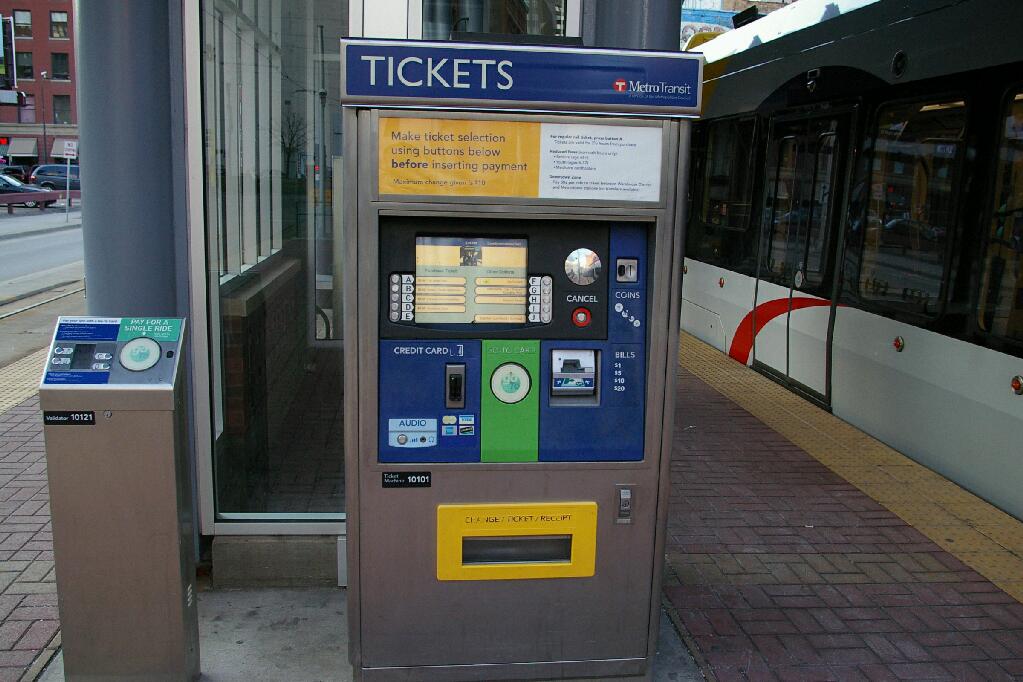
I can't picture how his rig worked, the article would have benefitted by anything visual help :/
https://lrt.daxack.ca/Cities/Minneapolis/hires003.jpg
The coin slot is in the top right.
    As Kara only maintained the machine function, he
    didn’t have direct access to the cash box where
    the coins were collected after customers had fed
    them to purchase LRT tickets.

    He removed the face plate from the ticket
    machines, which as a repairman would raise no
    suspicion
Ultimately what I think happened is that, behind the faceplate, the opening for the coin box is larger than the coin slot on the faceplate, possibly for tolerance reasons to ensure that a coin passing through the faceplate always lands into the coin box. This gap was enough to get an antenna down into with a magnet attached to the end.
Do the napkin math -
1. There was no AliExpress to get amazing magnets from, and there were no amazing magnets.
Average of $3k / week
$3000 / 6 days working / 8 hours = $62.5 per hour
Personally I get rid of lower coins into machines. So lets say 4 coins to get $1. He's pulling out 200 coins a hour? And doing his job. And no one sees him pulling up and down 4 time a minute for hours on end?
-------------------------------
Segway -
On the evening of Sept. 29 1994, Constable Ken Chatel, a member of the RCMP Customs and Excise Section in Edmonton leaned back in his chair to catch the six o'clock news.
One of the items that evening covered a police search of the home of Salim Kara, a city transit employee who was charged with stealing in excess of $2 million dollars from Light Rail Transit coffers.
As the camera panned the interior of the opulent residence on Osborne Crescent, several objects caught Chatel's eye and made him lean forward with renewed interest.
The camera revealed two zebra skins on the walls and a threefoot carved tusk in a display cabinet. Depending upon the species of animal each item represented, it was possible that they were protected by international legislation.
https://www.gamewarden.ab.ca/agwmagazine/1996/summer%201996/...
Excellent magnets available inside any speaker, just crack off a piece of the length you need. Basically free.
Dick Smith was the kiwi one, then they kind of stopped doing hardware/electronic parts at all, then went online only. Not sure if they're even still around, now.
Hobby stores are closing all over the place, but only bc they've been replaced by online/Adafruit, Sparkfun, etc.
Laundromats would have been ideal for this kind of, well, money laundering. In a pre-digital era, who’s going to check that the number of cycles on the washing machines line up exactly with the takings?
This can't be right. How can one person steal 20% of the coins going through all the machines? Have they miscalculated the amount he took versus one year rather than 13 years?
> maintain and fix the 68 ticket machines of Edmonton’s LRT
So it’s not like the total number of machines is that crazy either.
That said, https://edmontonsun.com/opinion/columnists/gunter-edmonton-t... gives much higher numbers operating costs and fare revenues.
> In a report released Tuesday, Wiun revealed the cost to operate Edmonton Transit went from $105 million a year in 2000 to $327 million last year.
Maybe a lot of the revenue comes from transit passes and/or card payments and the 20% are supposed to represent only tickets sold for cash?
Edit: Just saw the year, so you'd have to adjust that for inflation again too, but credit cards likely weren't a thing for transit passes.
Although I can't remember now if the older or the newer coins were the magnetic ones, I wonder if the composition was changed in part due to this case?
[0] https://en.wikipedia.org/wiki/Coin_pusher
[1] No
[2] British slang for 1 and 2 penny coins due to colour
https://www.royalmint.com/stories/collect/why-are-some-uk-co... - the composition of 1p and 2p coins was changed from bronze to copper-plated steel in 1992 and the composition of 5p and 10p coins was changed from cupro-nickel to nickel-plated steel in 2011
I suspect though, that some detail of the various ways he did this just got lost over time. You could probably fish them out with superglue or sticky mastic on the antenna rather than a magnet, for example.
Or maybe the magnet was always used to hold some kind of trap door open rather than directly fishing the coins.
Loonies are coated in a different metal making them less magnetic, but stronger magnets will fix that.
Now, yes. But this was the 90s. You could still (just about) buy some items for a single penny back then.
In other words, you wanted to cheat. I can't comment on whether that's fraud in a legal sense, it's still cheating.
There's a reason 13-14 year olds aren't held to the same standards as adults.
The game in question --the penny pusher-- pits a player's skill against the (the design of the) game, and (probably) allows a skillful player to earn a greater return. The game is inherently designed to restrict winnings, and (so goes urban legend) the owners can restrict winnings further by, for example, gluing coins to the base in certain areas.
I'd therefore argue that exploiting gaps or flaws in the game's design are just an example of a especially skillful operator beating the game and its designers, and not cheating. The line between clever exploitation and outright theft is a probably difficult one to draw; although turning up with a giant electromagnet which just pulled the coins straight off the shelf, would probably be over that line :)
What stood out for me was that the Canadian tax authorities didn't get to him. Maybe he payed tax on his earnings; the article doesn't clarify.
I mean, the theft itself is obviously unlawful. But perhaps you wouldn't be taxed on theft proceeds anyway, so no tax laws are broken in that case.
Edits, thinking about it...the article says he claimed the money was from his business. And the bank took in the money. So perhaps he did pay tax?
For the US, yes.
Well tax on income is theft ( my opinion). So tax on theft income would be theft on theft. Life sure is complicated ;)
If that was their 1981 salary, that’s damn impressive.
Looking at a similar job in Toronto they make $80-100k today
https://career17.sapsf.com/career?career%5fns=job%5flisting&...
https://pub-edmonton.escribemeetings.com/filestream.ashx?Doc...
Edit: disregard — this doc is for parking meters rather than LRT machines (which the article also calls LTR).
I think this guy snagged money from the light rail transit ticket/token system.
Funny how parking meters can be somewhat standardized, meanwhile every transit system seems to want to design/build its own solution.
https://www.reddit.com/media?url=https%3A%2F%2Fpreview.redd....
Unless his coins were microscopically thin, three sides would be more accurate
Well… what’s the point of stealing money if you can’t ever spend it?
Conspicuous consumption is bound to trigger alarms. The smart wealth makes itself as invisible as possible, and typically plans generational succession instead.
If you really want to enjoy your riches, you better build all sorts of deniability layers first, or do it as part of retirement from the game. If this guy had dismantled the hack, left the job and retired to a Florida mansion, he wouldn't have been caught.
LTR's record keeping/monitoring must have been abysmal if they didn't realize the sudden drop in revenues when they hired this guy, unless the person he replaced had been doing the same !
Your neighbours will be too afraid you’ll wonder the same question about them.
$38k in 1981 in Edmonton was firmly middle class.
Plenty of homes cost less than $100k. Rent was in the $100-300 per month range for a nice 2 bedroom.
Dude just got greedy. If he had skimmed $600 per week instead of $3000, he would have doubled his take home pay and likely never would have been caught. It would have amounted to almost $100k every 3 years which is a tidy sum back then.
It seems to me that once a person builds an illegal habit, it demonstrates they: (a) probably have a higher risk tolerance than most people and/or an inaccurate understanding of the empirical risk level and/or (b) they have, perhaps only temporarily, found a self-interestedly-rational aspect of law/society to exploit.
Once one's behavior crosses into that realm, "dude just got greedy" seems to miss the point. It was greed that got them there, right? How many optimally greedy criminals are there? I don't claim to know, but I'm suggesting that risk-adjusted _optimality_ and the criminal mind are not highly correlated.
Anyhow, it doesn't seem the 'level' of greed was the problem; it was the level of spending; the article suggests that Kara's lifestyle upgrade attracted considerable attention.
More generally, the risk-adjusted calculus between "steal a lot quickly" vs "steal a lot slowly" is interesting. First, being a repairman of said machines, he would be a suspect if any discrepancy was found. Second, dragging a larger-than-usual bags of coins to the bank for years seemed rather brazen. But perhaps the consistency of his behavior made it seem 'normal' to the local bankers? Putting both together, sure, larger amounts would attract more attention, but the relationship between intake and risk is probably not linear. As a guess, one might think halfing his intake might only reduce his risk by 10%. If so, a self-interested, amoral calculus might suggest that his intake was reasonable.
” You can spot these assholes by watching the way they bet. Like this guy. He's bettin' lavender chips at five hundred each with only one little problem. He's always guessed right. If he wasn't so fuckin' greedy, he'd have been tougher to spot. But in the end, they're all greedy.”
Then again it was Alberta so even minimum wage workers were probably making $17/hr back then since housing costs would have been nuts, or anything really.
Lots of demand throughout the 70s for electricians in Alberta.
I hope anyway…
Hm? It does:
> In 1993, with the red flags mounting up, the city authorities hired private investigators to observe Kara, which finally caught him in the act.
> My wife can barely look me in the face.
> Mine looks me in the face and more because she knows I'm on these mean streets every day juggling power and justice like they were damn chain saws.
It's hard to find any information about this since it happened 30 years ago, but I wonder if he had to pay a fine. If not, he probably made out pretty well, investing the $2 million into real estate.
M: Yeah... they did it in Superman III.
P: Right.
M: What a good movie, actually. And then a bunch of hackers did it in the 70s as well and one of 'em got busted.
P: Well, so they check for this now.
M: No, here's the thing. Initech's so backed up with all the software we're updating for the year 2000, they'd never notice.
P: You're right. And even if they wanted to, they couldn't check all that code.
M: Thumbs up their asses. Thumbs up their asses.
P: So, Michael, what's to stop you from doing this?
M: It's not worth the risk, I got a good job.
P: What if you *didn't* have a good job?
Edit: All of the publicly available scripts and quotes were wrong. Checked the original source. ;@]
https://www.reddit.com/media?url=https%3A%2F%2Fpreview.redd....
His fatal mistake. Anyone with an indoor fountain is obviously up to _something_.
"Before his sentencing in March 1996, Kara made an enigmatic statement in court, promising at some point to share his side of this fascinating tale “Remember, every coin has two sides”