Japan is about half a generation away from mass-scale mediocrity.
To the parent, the credit card system will be parrallel to Suica/passmo, not a replacement. People would freak out with a system that isn't prepaid (think school kids), doesn't fully work offline and is twice as slow as the current one.
As a US software engineer, I can not figure out how a country that can make great hardware (e.g. high-speed trains), has a beautifully minimalist design aesthetic (e.g. wabi-sabi), and lots of talented artists and engineers can produce such crappy user interfaces. Or for that matter, beyond a few games is irrelevant in the world software markets. Does anyone have an idea?
A minimalist design aesthetic also doesn't automatically equate to good UX. I think there's lots of people on this site that would say modern, western UX is often poorly executed and potentially getting worse (in some regards.) A common complaint I hear is that interfaces have too much white-space.
If UX is predicated on user research, it's important to recognize that people coming from outside Japan and who don't know the language aren't the target users and probably not the right ones to be making a judgement calls on the quality of Japanese software as a whole.
If you're asking about the difference in design sensibilities, this is speculation, but a couple things that come to mind are:
- The information density of local written languages.
- The relatively small number of fluent English speakers in Japan means there's potentially less opportunity for ideas and design patterns to cross pollinate, making each style feel more foreign to outsiders.
- Software engineering wasn't much of a prestige profession (I suspect still isn't), and most bright STEM students ended up studying other forms of engineering
- A general lack of interest in hacking and tinkering
People make some wild claims, such as kanji or East Asian culture, but there is plenty of quality Chinese and Korean software.
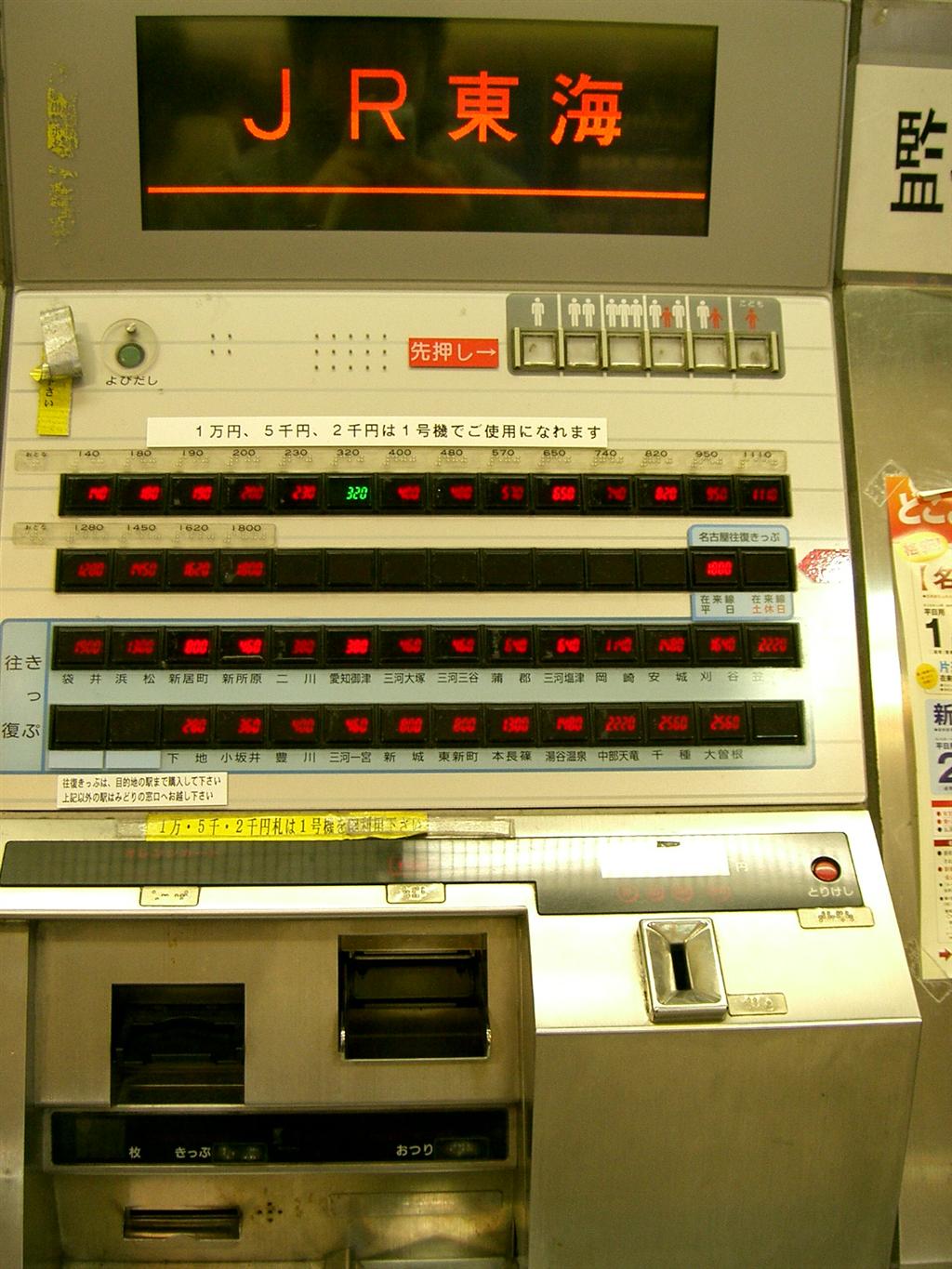
Agreed that the UI for Japanese train ticket machines can be confusing for first-time users such as foreign visitors, but foreign visitors aren't the primary use case. These machines are designed to be familiar and fast for the bulk of their users: residents of Japan who know how the train system works. Stations need to move massive numbers of people through these machines quickly, and this layout is incredibly efficient for that.
Older terminals used a very similar layout of two groupings [1]:
1. physical pushbuttons with prices displayed using 7-segment LEDs
2. physical pushbuttons for most common multi-passenger sets
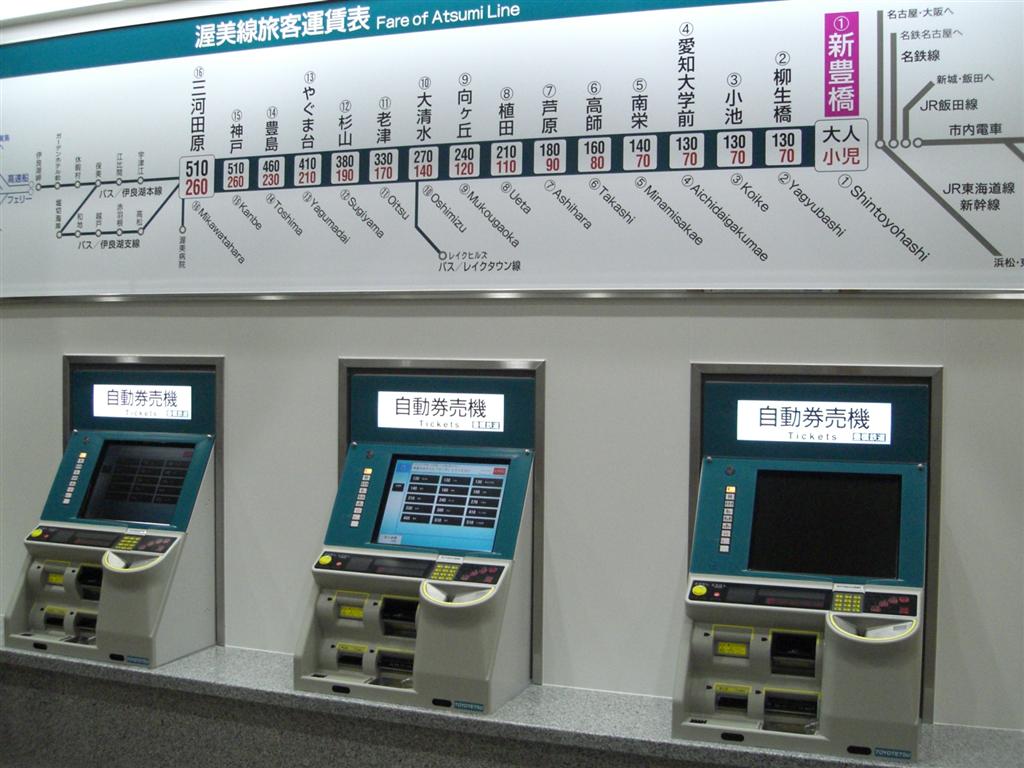
The touchscreen terminals provide this exact same layout, which provided continuity as the changeover happened, and kept the lines at the machines moving quickly. They're also freakin' brilliant when it comes to minimising the button-presses required to buy tickets. e.g. two parents and a kid going to a station that's 400-yen from here? Press the "two adults, one kid" button, then the fare. You're done. Fare zones are listed on a large train network map usually posted right above the machines with both adult/child prices [2], but locals almost always know where they're going and how much.
Given how heavily-trafficked Japanese stations are, it's way more critical to minimise the time required to use the machines and keep the lines flowing than it is to provide an easy experience for foreign visitors. Compare to e.g. Montréal where even users familiar with the metro can spend upwards of a minute to buy a ticket or recharge an Opus card.
[1] https://livedoor.blogimg.jp/ticket4_ta/imgs/f/d/fdfe28d7.jpg
[2] https://livedoor.blogimg.jp/ticket4_ta/imgs/4/9/4987e9ba.jpg
The name is also a bad pun; Sui-sui is onomatopoeia for smooth movement (like fish swimming), so it’s the card for moving smoothly. Also, suica means watermelon so the card is green.
Suica is also available on the watch and it's much better? Why is that?
There is also probably a practical element to it, in that Suica and other IC cards are managed by entities that are closely linked to the various train systems in Japan. The terminals are known to them, the cards were all issued by them; they can probably preload a lot of stuff at all the train stations and keep the data regarding the cards synced directly among the stations. (It's at least feasible that by the time you get to the next station, 90% of the time, the information about your card is already there.) This is in contrast to what would happen if you used Mastercard or Visa to pay for train fares, where all the data would first have to go to northern Virginia...
It doesn't expire, I think everyone in Japan already had one.
https://www.timeout.com/tokyo/news/sale-of-pasmo-and-suica-c...
And there was a HN post about a relevant tweet before that.
Suica sales are back as of a week ago. They are available in JR East Travel Service Centers all around Tokyo, even if there is a sign saying they are not. You will have to ask the folks at the counter. Technically there is a restriction of one card per person, however if you are nice and ask them for more and say it's for friends they'll sell you more. Get one now, because they might be limited again soon.
Pasmo card sales are also back as well, however it is very rare . These can be obtained from kiosks. You can find some of them in stations in non-central Tokyo or Yokohama. It's a hit or miss, and often they'll sell out of them from the kiosk in a day or two. Have found them in random stations in the burbs. I haven't seen them at large stations in central Tokyo. Less cool than Suicas.
Toica card sales are still there, and you can get them from Tokyo Station Yaesu North. They're not as cool though, and you might encounter a weird situation where it might not work. Also they look ugly. Might as well hit up a JR East Travel Service Center.
Icocas are still available freely in the Kansai area. Great if you're flying there first. Just as cool as Suicas in my opinion, and cooler than Pasmos for sure.
Welcome Suicas are sometimes available at the airports. Sometimes they aren't. It really depends on the day (have checked multiple days). As of a week or so ago, they've become less available at the airports. I think that the whole supply chain is a bit weird at the moment, and they cannot keep up with demand. They also suck if you plan to come back.
Pasmo Passports seem to be relatively available at major stations. It kinda sucks though because you have to have your actual passport to buy one and they look really cheesy and uncool. Do not recommend. Hit up a JR East Travel Service Center instead.
Mobile IC cards as of today:
Apple: (latest update 17.2) Non-JP foreign visas are working as of now. There was a previous bug/intentional feature that blocked some non-JP foreign visas that is now gone with the newest IOS update. All the large card processors are working for foreign cards, but have only personally verified visa & amex. You can use any iPhone sold from any country. If it's not working, it's because of your credit card issuer claiming fraud detection and you will have to call them. Unfortunately, some CC's will trigger the fraud detection on every transaction trying to charge your card, especially if you're charging from the US. The fraud detection teams explained it as it seems suspicious since it's through apple pay for a foreign service, and some cc companies were unable to even whitelist the transaction due to it being through Apple Pay. You just have to call them/have them call you. Be careful trying to load if you don't have cell service though because they might disable your CC until you call.
Android: If you are going and do not have an Android with NFC-F ENABLED (not just present physically as the hardware may be built in, but ENABLED) you will be unable to use it. This causes a lot of confusion given that there are Google Pixel Pasmo ads all over the stations. Unfortunately, most android phones not sold in JP or other countries that use NFC-F will not be able to be used as a tap device for transit. Basically: did you buy your Android phone in JP? If not, don't count on it working.
Things are changing daily so might be out of date in a week or two.