While not as breathtaking as the panoramic view of a truly dark sky, experiencing this "micro-structure" is also a mind-expanding experience: The sky is no longer a set of random point sources. Its an organic "thing" enclosing other "things".
Galileo was immediately astonished by this when he made his first telescope and instantly saw the complexity of things up in the sky.
https://www.gutenberg.org/cache/epub/46036/pg46036-images.ht...
https://physics.stackexchange.com/questions/26664/is-it-poss...
Not just no light pollution, but much less atmosphere too! It looked like those long exposure images of the Milky Way. There aren't words available to describe how incredible it was. I’ll just state that it was one of the highlights of my life!
we would all be better off with fewer lights on buildings, and fewer streetlights. there is no reason for most of them, and the cost is existentially incredible.
Yes there is, it's crime. Street lights deter crime.
Also simply driving safety. Driving with just headlights causes more accidents than on a well-lit street, since visibility is so much worse.
I love to see the night sky as well, but I don't want to pretend there aren't extremely good reasons for street lighting, and those reasons aren't going away.
That being said, are there ways to reduce outdoor lighting of giant industrial parking lots, of stadiums at 3 am, or whole floors of skyscrapers when 99% of people have gone home? Sure. But at the same time, reducing nighttime lighting by 50% isn't really going to make any difference in sky visibility. It's more about not wasting electricity.
I'm talking mostly about urban areas though -- in rural areas where there's already a decent amount of visibility and the population is small enough that most roads already don't have street lights, then regulation can actually make a difference, e.g. banning always-on floodlights on people's driveways.
Some of these things won't be gone for generations or more, whereas you can turn lights off pretty easily. Ideally we'll swap out the older designs of streetlights and such as better designs become prevalent and there's economic incentives to do so.
Some light pollution is unfortunate but it’s essentially trivial in comparison. It causes no long term damage and doesn’t really do anything but make the sky less interesting.
One moonless night I walked outside and looked up and my jaw dropped at how startlingly bright the sky was with stars. It was like a long-exposure photograph but in the highest resolution my eyes could see.
Growing up, I never even thought that people would not know what it's like; it was always just a part of my life.
Now I live in a city...it sucks...
I've been in the Namib desert in Namibia around the Orange river at night, although not during winter. There are loads of stars, but it's not colourful like the pictures and people will be underwhelmed if they have that expectation.
I took a group of people who had only lived in cities into the countryside to watch a meteor shower. It was fun seeing their minds blown when there were more than like 10 stars.
One thing I can't believe not everyone has seen is Andromeda. What's more is it doesn't even seem to be common knowledge that you can see it.
If you're in the southern hemisphere the coalsack nebula is cool although a bit scary.
It's a small Island, only accessible by boat. One summer evening I went for a walk along the beach with my partner and we stood there in the clear night - with no light pollution, with the whole milky way above us. There were thousands and thousands of stars I had never seen before in a giant array that stretched across the whole sky. Subtle colours and brightness differences gave the milky way a structure and randomness at the same time, it was an incredibly beautiful and humbling experience, and changed my perspective of the universe too.
We would be a more inward focused civilization, and lesser for it.
https://en.wikipedia.org/wiki/Nightfall_(Asimov_novelette_an...
I don't think they ever got a nibble from that. It turns out that the population of amateur astronomers willing to drive long distances to dark spots isn't all that large.
But this is the internet, and a niche interest can have a significant following, and you're not trying to make a bunch of money with this. So from us dark sky lovers, thanks.
Where I live (southern NM) we've had a steady influx of people from out of state, and the first thing they tend to do is install outdoor security lighting that is in clear violation of the NSPA. All that to say that I have noticed that some of the newcomers who were in violation may have been reported since their fixtures are now turned off after 11pm. So, enforcement does happen; it just takes time. Thankfully, we have a few astronomers in the community!
(The one deficiency in the NSPA is that it defines fixtures based on wattage rather than lumens. There have been efforts to change this language, but they've stalled.)
The NM sky is amazing during the day, too. Such a vibrant blue!
That's quite surprising to me as a person who occasionally will drive long distances just to see the dark night sky without a telescope. But I guess any group looks well populated from the inside. I suppose amateur astronomers with good equipment can get quite nice views where they live, though.
I have a couple of suggestions/recommendations if I may:
- Put a Bortle filter so that hotels on specific (dark) areas can be selected. I understand this is a bit difficult but it would make an even better filtering option.
- Localize it, give us an option to see prices in different/local currency. Currently it's only visible in USD.
- I can see the Affiliate ID from Booking, perhaps it would be better to mention this somewhere to avoid complaints from users.
- Perhaps add a popup/permission notification for accessing location (see previous point as well).
- Put an info/about page so that you can give more info and also take some credit for your work.
Is the site using the location from the browser or just IP location? (My location was 240Km (150 miles) away from my home.)
I want to suggest also permalinks.
I actually found this quite concerning!
Very cool. I was buying some land a few months ago, and made a similar map of the country to help choose areas with consistently good air quality.
I couldn't get the calendar to change from October, so I couldn't check myself, but I was wondering if you adjust for seasonality. Some areas have a distinct "burning season" when farmers burn their fields and the air quality is significantly worse.
I was also wondering if you're using publicly available sensor data. The granularity looks a lot better than what I had downloaded.
I wonder if there would be a strong correlation between the two.
That said it's probably asking quite a lot to composite that kind of data together in any meaningful way. You need a lot of domain knowledge for that.
I clicked on one of the social media buttons and immediately went back, and then I could see the map. No hotels, though, but that has been mentioned already.
I'd recommend using one of the tried and tested scales from ColorBrewer (https://colorbrewer2.org). Great info there to help you decide.
And when you do pick a scale, Chroma.js (https://www.vis4.net/chromajs) is a fantastic color library that has built-in support for ColorBrewer scales.
Also http://turfjs.org has some great tools for manipulating GeoJSON.
You'll see the same scale in use at other light pollution sites, such as:
http://www.cleardarksky.com/maps/lp/large_light_pollution_ma...
Text that explains exactly what each color refers to would be helpful.
Edit: This map of Bakken Formation rigs correlates to their location in Western ND https://en.wikipedia.org/wiki/Bakken_Formation#/media/File:B...
Those are the gas and oil fields of North Dakota.
It also shows the lack of development of eastern Europe's rural areas. The contrast from one country to the next is quite strong.
It's probably fairly accurate overall, but there is undoubtedly some region-specific things (different lighting styles, etc) that throw a wrench into the mix.
One place out my direction has a blue blob in the middle of a dark gray area, so you wonder what kind of civilization is there. Nothing, just a few buildings that are uninhabited and unlit. So there's no light pollution in actuality, but dark skies thinks there is.
But, then I go down to Australia and nearly the entire continent is great for sky gazing (other than all the critters trying to kill you).
Like winds and sunsets, wild things were taken for granted until progress began to do away with them. Now we face the question of whether a still higher ‘standard of living’ is worth its cost in things natural, wild, and free. For us of the minority, the opportunity to see geese is more important than television, and the chance to find a pasque-flower is a right as inalienable as free speech.”
- Foreword to A Sand County Almanac by Aldo Leopold, 1949
One example for anyone who isn’t familiar: He dedicates several pages to an oak tree he cut down for firewood after a lightning strike destroyed it, and his tribute to its sacrifice left me in tears.
Today it claims to be a dark sky certified community, but this seems baloney. No more Milky Way. And while the town claims to have all those regulations to protect the dark, they start right off by ignoring those rules for the schools' football fields and stuff.
LOL today
In the map of the UK, for example, low light pollution can be experienced within a 2 hr train ride from London to Wales, Devon or Cornwall. Similarly for France or Spain.
Central Europe and Eastern US has little such luck, though.
One suggestion is to also include probability of cloud-cover at that time of the year.
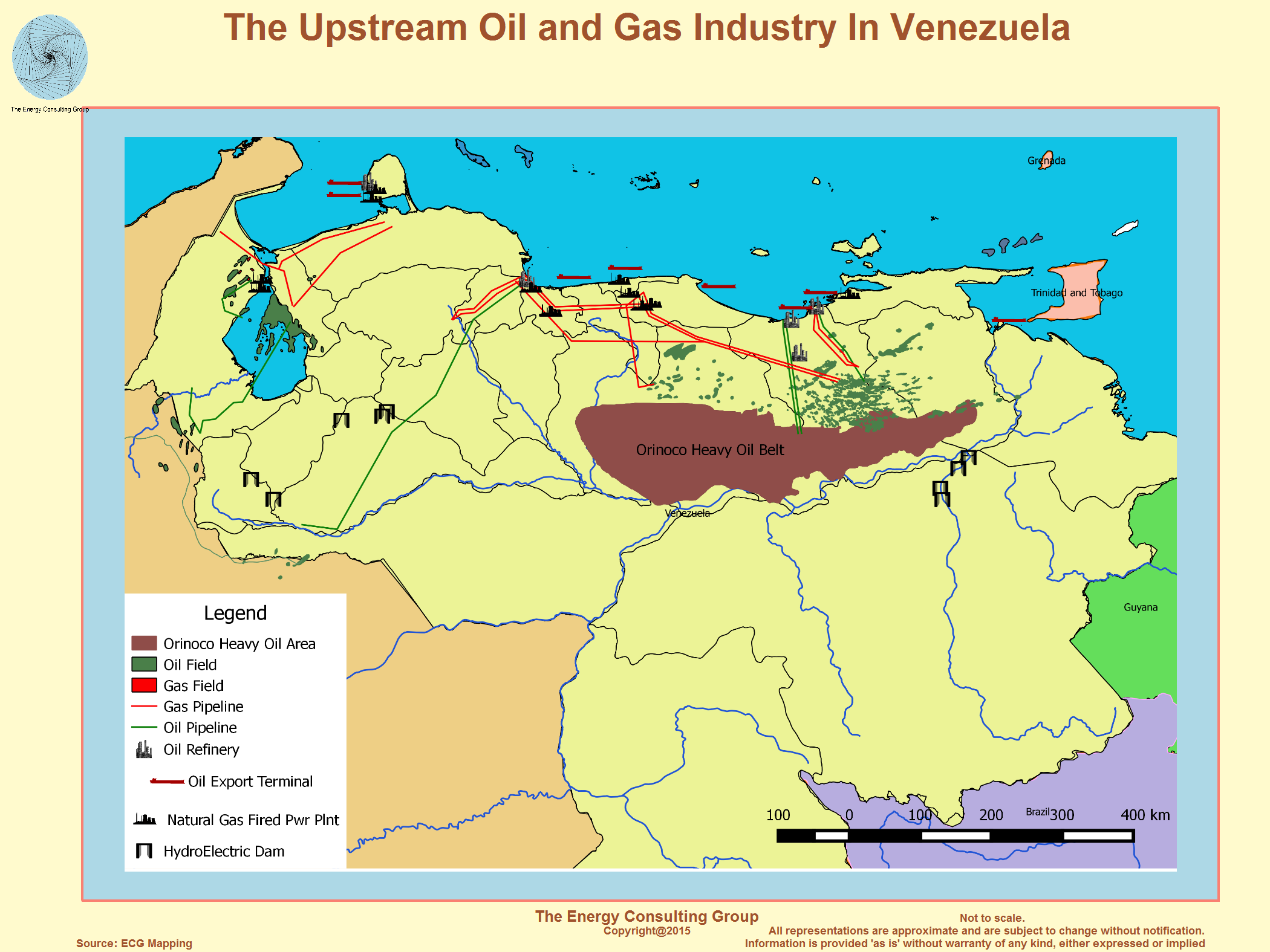
[1] https://energy-cg.com/OPEC/Venezuela/OPEC_Venezuela_BaseMap_...
Dark blue: you see all the stars that can see you.
Cue two dozen kids saying “oohs and ahhs” in sync. Don’t think I’ve seen such a spectacularly starry night since.
https://www.easternsierraobservatory.com/california-dark-sky...
* Maybe fly in to Bend. Nearby you can go up Pine Mountain to visit the observatory in the summer. Best views of the sky I've ever had... you're up at around 2000 meters, away from the city, with clear air, usually. You can very easily see the milky way and SO many stars.
* https://traveloregon.com/plan-your-trip/destinations/lakes-r... - dark sky park near Prineville.
* Steens Mountain & Alvord Desert - https://traveloregon.com/things-to-do/destinations/parks-for...
This past summer, I'd be outside working late (necessary in 100F+ heat) and turn off the lights, wait a minute and look up.
It was breathtaking.. and we're not even in the darkest place.
Use hotels. They're cleaner, cheaper, and full of amenities. Plus, you don't have to clean before you leave!
Edit: And, before anyone downvotes me too much, think about the fact that Airbnb does NOT audit any stays or even verify proof of ownership of the property and/or the right to sublet.
If you do complain, Airbnb will give you the runaround for months in end, perpetually pushing goalposts further down the field, even amid a slew of overwhelming evidence.
Yes, this is empirical data I'm working off of. And, no, it wasn't a one-off event.
Imagine all the crap sold on ebay that isn't vetted. Now, apply that to a vacation rental and you have the company in question.
/s it is so beautiful. Really helps to understand the shape of humanity at a global scale. Middle East and Korea made me reflect.
A grayscale mode would be even better (thought less pretty at first sight).
- a legend of the colors would be great, explaining in words what they mean, what I might expect - date range search is a bit odd for this, I guess if I was aligning with astronomical events, but if I'm just looking for nice places to stay. - Mine defaults to my location, seattle. I've seen 3 total astronimical events here in 13 years due to clouds.
Would be interested in something similar for the 8th April Eclipse.