If there was a "DC" light socket in the house we could have LEDs outlasting owners, and for cheap. Nearly all the expense of LED bulbs is the power supply. Everything else is dirt cheap. A single home DC power supply with ~200W of output could light an entire house, flicker free.
What's even more frustrating is I think we could fix it. A national regulation for DC light sockets would fix it. Mandate a voltage, shape, and max amperage and BAM, you'll get 1000 different manufactures making standard compliant bulbs and home power supplies that will last an eternity.
The lights are all basically cut 12v light strips inside of old light fixtures with a custom controller that also terminates PoE. The 48 volts that most PoE standards specify is more than enough to push power down the line for < 100 meter runs.
The advantage of PoE here is that anything under 50 volts is considered low voltage and does not need to follow the same rules as normal house wiring. I did not like that everything is hinging upon a beefy PoE switch so I actually made it passive PoE instead by design.
USB-C PD is at a useful voltage & wattage level, and so is Ethernet POE. I wouldn't be surprised to see them start to be used for general power distribution in niche applications, like RV's and off-grid cabins.
I don't think we're going to ever get a bulb standard, though.
I could definitely see this becoming more common. Powering the ~100 watts of fixed lighting spread across my whole house on ten different 15A 120v circuits, each with their own arcfault breaker and 12 gauge copper electrical lines running back to the panel is fabulously expensive for what could be done with a bunch of CAT5 in each floor running to some conveniently located “POE injector” type devices.
You would want to be able to take a standard fixture and just push DC through it and use special bulbs with a standard A19 base, but that’s problematic when the next owner tries to screw in a standard bulb - what happens when it sees 48V DC?
I would guess if for safety reasons it has to be a non-A19 connector, then your light fixture choices get cut down to almost nothing and no one will make the switch?
It’s really interesting to think about, most everything I’m plugging into AC outlets in my house, the first step is converting it to DC. A lot of my outlets I’ve switched to include USB ports so I don’t need the wall warts. If you have solar and battery backup even more-so you start to question why we are wasting so much money moving everything back and forth between DC/AC/DC within a house.
If by "standard" you mean a incandescent tungsten filament bulb, nothing at all.
For a true LED driver power supply, it would be constant current, so the tungsten filament would see 25mA (or whatever the constant current is set for) of DC, and nothing bad would happen (the filament also would not likely illuminate either).
Screwing in an LED bulb with integrated power supply, the external supply will still feed the constant current value, so what happens depends upon the design of the LED bulb's integrated power supply. If 25mA is enough to drive everything, the LED bulb might light up. If 25mA is not enough to drive everything, most likely nothing lights up.
Either it lights up or not? I don't see a problem here.
But I'm not sure moving part of power supply elsewhere will help that much, it needs current driver electronics anyway.
But choosing a DC system for part of the house can make a lot of sense.
For one residential new construction room, it can be practical to have one shared power supply rather than one per LED. Say you have a 12 V, 5 A DC power supply. Using a star wiring topology, this can serve 10 lights (at 500 mA) fine with 16 AWG.
And switch mode power supplies are relatively inexpensive and quite efficient.
Not practical
I say this, because I was guilty of this exact shortcut thinking (in another comment). But I paused and thought to myself "I should run the numbers before just repeating the usual voltage drop criticism".
So I compared scenarios and it depends a lot on the topology, lengths, costs, and situation (new vs renovation).
Sure, a whole house system doesn't typically make sense, but I don't think that's what people are really talking about. I think people are interested in hybrid systems; e.g. DC power supply for each room.
I don't know if you meant it, but the sentence about "any sophomore level electrical engineering student can solve this" can easily come across as dismissive. I also think it gives too much credit to sophomore students. :)
I would have more confidence in an electrician apprentice on this one. I think they'd have more practical experience when it comes to figuring out what are the right questions to ask.
I did EE in college and do a fair bit of hands on residential electrical work.
P.S. How many sophomore level engineering students learn to do a sensitivity analysis?
I think the way to change it is to replace sockets with hardwired LED fixtures. This is easy for something like a standalone ceiling light. It may be harder for other devices like ceiling fans that integrate a light bulb socket, but converting those devices to take DC power as in your proposal isn't easy either (most would just get discarded and replaced).
Doing it well is more expensive in the short-term than screw-in bulbs. A quick look on Amazon suggests integrated ceiling lights are about 10x the price of LED bulbs, though I suspect the longer service life pays for itself.
Absolutely, the incandescent light bulbs have that shape for a reason: the screw is small because there is nothing to put in it and it doesn't heat, the bulb is large to dissipate all the light and heat it generates. And the LED light bulbs have exactly opposite problems: almost all of the heat is generated near the screw while the bulb itself generates almost none and the light-emitter doesn't even need the bulb that large around of it. Oh, and the casing around the screw is plastic so the thermal conductivity is horrible. Honestly, it's a profoundly terrible form-factor which we're now stuck with.
<https://www.designboom.com/technology/self-cooling-100-watt-...>
<https://i.pinimg.com/originals/b5/c2/c5/b5c2c5d69fb240a571ba...>
It's also helpful to recognise that existing lighting fixtures and lamps were designed around the constraints of incandescent bulbs. The first generation of LED bulbs and lamps largely conform to these. As LEDs mature, both fixtures and lamps which address the limitations and requirements of the technology (transformers, perhaps dedicated 12v circuits, heat dissipation for the transformer rather than lighting elements themselves, and better light-temperature and intensity regulation) should emerge.
We're presently in the somewhat-messy half-emerged state. Think horseless carriages, wireless, and the days of dual gas/electric lighting and lamping systems (yes, these existed, and yes, the failure modes were ... much as you might imagine).
Simple metal fins are more than sufficient along with a high efficiency power supply.
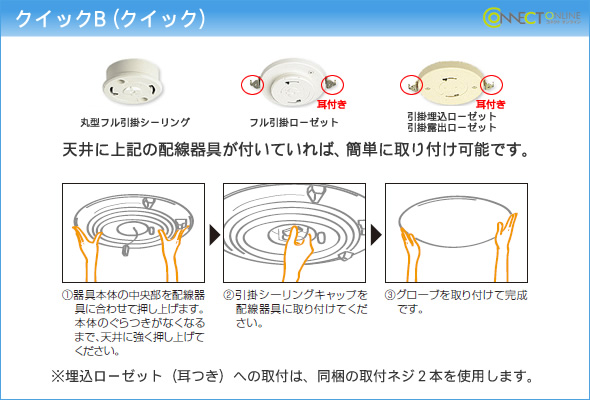
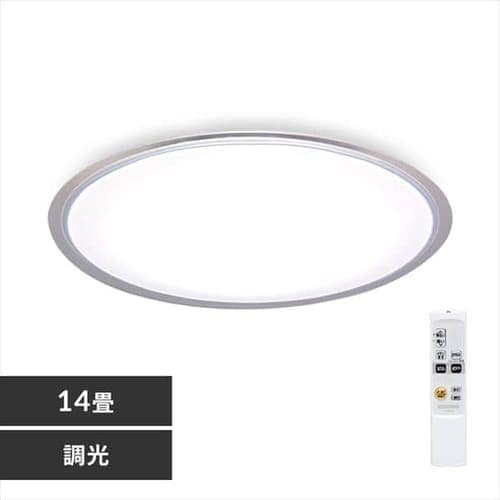
I live in Japan, and instead of just a pair of wires coming out of the ceiling, there is a standardized "ceiling socket" [0] which can also support the weight of a lamp. This means that swapping out light fixtures is plug and play, so the standard LED lamp is something like this [1] where you have a nice big flat metal plate backing the hardware is mounted to for heat-sinking.
I don't own any LED bulbs at all - all our lamps are of this type so I wouldn't have anywhere to put one.
It was the same when I lived in Sweden - a standard ceiling light outlet (IIRC there is a EU standard for this now called DCL) so that replacing light fixtures was easy. Moving into an apartment, often they wouldn't even come with light fixtures, you'd bring your own.
[0] https://www.e-connect.jp/images/to_quickB.jpg
[1] https://www.irisplaza.co.jp/IMAGE/HK/PRODUCT/H246902.jpg
And since we need high voltage (at least 100V) to keep line losses very low and allow the use of thinner-gauge copper wiring, we need a switching power supply at every light fixture, so it really doesn't matter if it's AC or DC, since modern SMPS (switch-mode power supplies) work equally well with either.
Finally, on top of all that, LEDs are current-driven devices, and need a constant-current power supply. So the power supply must be very close to the diodes, or else fluctuations in supply voltage will have very negative effects.
That means it's totally fixable. You can install such a system in existing buildings right now, and it's not crazy expensive unless you want to run the wires inside the walls.
If we could shift cultural expectations around this, adding a LV system in new construction would not significantly increase the construction costs. It will start to be done if buyers start demanding it.
The constant current thing is true, but that's not a terribly difficult problem.
LEDs are like 15% efficient and power supplies are >95%. They just need to be separated slightly so the LEDs aren't heating the power supply. Most recessed LED lighting now has a separate junction box with the power supply.
I think the biggest problem is that many cheap power supplies cycle at lower frequencies that cause flickering which is perceptible subconsciously. A modern switchmode power supply might operate in the 50-500khz range which will not cause perceivable flickers.
I'd say it's a very bad choice for a bedroom or living room light, but I have nothing against it for the outdoor lights, signage and a bunch of other applications where cost is king.
You can fudge it with resisters like in an LED strip, but you lose efficiency and dimming quality.
That being said, I expect that power supplies with 48VDC input or so would be cheaper.
Probably with some sort of current sensing system to make it compatible with dimmers.
Pair that with DC A19 LED bulbs that have no internal power systems.
Probably expensive to put together and to install, but if the goal was to have LEDs that last longer, that would do it.
The problem is that in 99.99% of homes outlets are on the same circuits as light fixtures, you would need to do some major rewiring.
I think that non-bulb LED fixtures are relatively common. For example, a style exists where you cut a hole in the ceiling and friction-fit the LEDs with the power supply up in the attic (presumably with infinite convective airflow): https://www.lowes.com/pd/Utilitech-Canless-Color-Choice-Inte...
These power supplies aren't going to die from overheating because the power supply is nowhere near the heat-producing LEDs. And, it's not like $30 for your entire light fixture is going to break the bank.
How about power over ethernet?