I really hope they stay true to their vision and that this means expanding it into other consumer product lines.
I also love the expansion ports.
I am really glad they have raised a series A, because in 3-5 years I want the freedom to upgrade the motherboard without creating a ton of e-waste.
FWIW I've been using elementaryOS 6.1 for most of the time and it's been really nice too. Full disclosure though it was pretty DIY; wifi did not work right away (I had to upgrade the kernal), I had to install some software to enable the fingerprint reader, and I needed to manually enable fractional scaling.
I definitely recommend it to run Linux, the community is fantastic and another strong selling point.
https://www.youtube.com/watch?v=Jibqw5C3gk8&t=15m45s - timestamp to where he discusses fixing sleep issues
Never take outside money unless there is simply no other way.
Some feedback from a global visitor-who-tried-but-gave-up-to-preorder:
Please decouple preferences for language/location/currency. You may be surprised about the number of people in your target market who aren't native speakers of the local language in their place of residence, and using credit cards denominated in a foreign currency (sometimes with ridiculous conversion rates).
Having them default to the same might be reasonable but never make hard assumptions about your visitors like that.
Look at iherb.com and aliexpress for two sites that IMO get this right.
It drives me crazy when these are coupled because they have to make an opinionated choice that, for the Swiss use case, has to be wrong for the majority of users.
Can you please blog a bit on origins of framework? I read in press releases elsewhere that you 3D printed the prototype laptop. It'd be very interesting to see how such startups get off the ground. Given that multiple tech-shops have tried and binned plans for modular hardware, framework's early success is remarkable... yet, the story of its nascent stages remain elusive.
I would like to write more about Framework as well, but will give it more time to be more sure of what worked and what didn't.
Very excited for your raise!
These are plagued by planed obsolescence. I would totally pay for repairable ones even with a premium. Imagine a dishwasher that you can hack and program yourself :D
Imo the main issue, is that these things are so cheap that replacement is cheaper than repair labor + cost of parts.
My fridge also had some kind of fault with the drainage tube (kept freezing up) but there's simply no way to access it. The back panel is not removable.
> PCBs that have been manufactured for decades ... same designs.
Absolutely not the case. Go and look up any washing machine control board. They're different for almost every model.
Washing machines & fridges may be better; I've never had to take one apart.
The only good solution to this problem I've come up with is requiring manufacturers to dispose of unwanted appliances for free. That way they have at least some incentive to make them last for a long time and be easily recyclable / repairable.
One example I came across recently after hearing how hard Dyson vacuums are to repair is Lupe https://lupetechnology.com/
"Someone" should make a list of these companies, or maybe there is already some site or place which focuses on quality-repairability-longetivity?
These guys have built a nice little business fixing appliance pcb's. Most household appliances are fairly repairable given the time/patience. The issue becomes the cost/benefit. I have a kitchenaid dishwasher that is about 7 years old now. About 3 years ago the heater control element broke and it cost me about ~$250 to fix. It would have cost a repairman ~$350. The dishwasher itself only cost $500. So if it breaks again I'm not sure I'll so readily try and fix it...
I was able to source parts for my 2004 Whirlpool french-door fridge until the sealed system finally died two years ago. That required a new fridge, sadly.
We replaced our washing machine and dryer a couple years ago, but that was only to upgrade to HE models. I could have repaired the circa 2000 washing machine. Not sure if the new HE models will be as easy to repair.
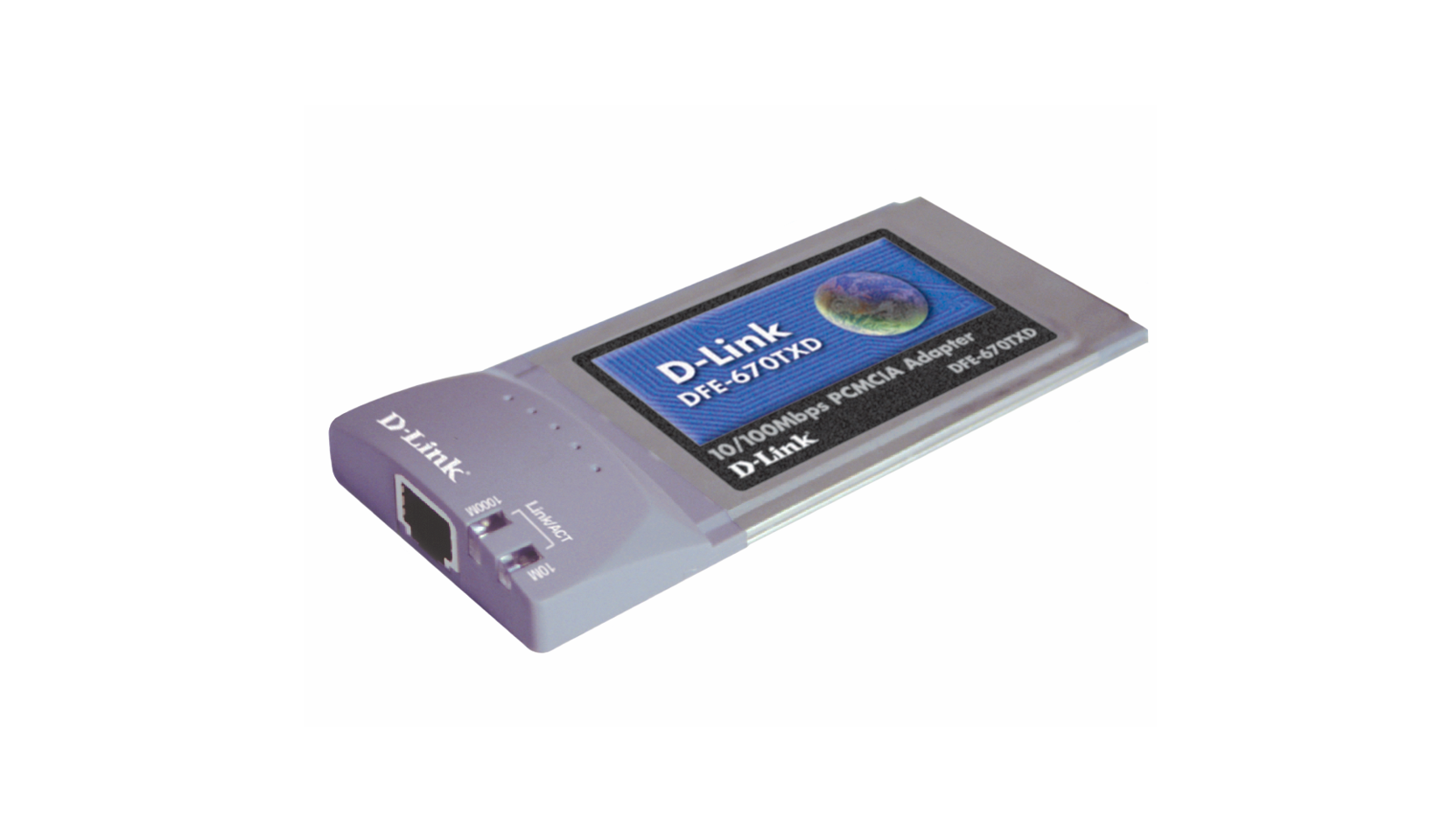
I don't know how much licensing would cost, but Framework could possibly offer a driver for the internal card as an addon. Then the slot could be used for a small headphone amp which would be more third party friendly I think.
https://en.wikipedia.org/wiki/PC_Card
You could get standardised addons for laptops, but I guess they disappeared due to lack of interest/better alternatives.
It's weird how the world goes around in circles.
It'd be particularly cool to get balanced outputs.
Can miscellaneous third parties can create and sell their own Framework-compatible expansion modules?
Can other manufacturers make laptops with Framework-compatible expansion slots?
Example: https://github.com/commaai/openpilot
It'll be really interesting to see where they go next. Given that they're already in computer and custom board space, I'd make a guess that it's going to be routers - similarly embedded devices and they'd make a great option for replaceable parts (i.e. WiFi, connection options etc).
Pop OS pretty much works without fuss on Framework, but taking care of the final 5-10% of tuning would make all the difference for many people to make the switch.
Pros: - price. I have spare RAM and NVME ssd so this brings the price further down - modular port...
Cons: - display/hinge is not very stable - touch pad is not as good as macbook's. I can't reliably click-and-drag using a singe hand (thumb finger to click, then index finger to drag). On macbook this gesture works perfectly fine.
Wish there is a bigger version, and/or a swappable battery!
It's just a bit too lose, to the point that the screen will slowly fold flat over the course of an hour on my lap. It's also just lose enough that it transfers a lot of vibrations on my desk (from typing) into wobble on the camera during screen-shares.
If that hinge were just a bit tighter, I'd have no complaints about it. It's a great laptop.
I was considering the i5 1135g7 Framework with 16gb of RAM. A friend of mine bought it, and it's idle power draw is of 8-9W with Gnome 3 and Firefox open.
I decided to get a laptop with a 5800H and an RTX 3070 instead. My power consumption as I'm typing this comment right now is of 7W with a dozen tabs and an IDE, messaging, etc... open. That is despite a 46% larger screen, and a much faster, unlocked TDP, 8 core CPU.
That's a real shame, IMO. Combined with a 55Wh battery, it's quite problematic, and was a deal-breaker for me.
If I want to switch to Dutch, it won't let me. My basic understanding of French is that this product is not yet available in my country. Still horrible experience. Why not show me the English page?
This website makes the wrong assumption someone's language is tied to the location.
This is a bit of a premature "remote debugging" done, though.
From what I see, they use Solidus and Rails as backend. This does not rule out your conclusion. But it is not a typical thing: in Rails (and Spree, from which Solidus is forked) it is, for example, far easier to read out the `Accept-Language` header than to do geo-ip language detection. It is easier to the right thing than the bad. Again: not saying this makes it guaranteed the cause.
More likely causes: location-based caching (you got a cached version which was generated using French), or same thing with a CDN.
More likely, because with Rails (and Solidus, and Spree) it is easy to make too-simple-caches, easier to ignore a parameter when building a cache, than to do right thing.
https://news.ycombinator.com/item?id=30166510
As mentioned there, for countries like Switzerland with more than two languages, whichever language chosen would be wrong for a majority.
I'd even claim that for the market they're targeting, having English and nothing else for all regions would likely be way better than the current situation.
Any guesses?
I'd love to buy a Framework phone — if they can guarantee Android updates.
https://www.notebookcheck.net/Framework-Laptop-13-5-Review-I...
1)Default Ubuntu install was very laggy. Not sure what was up with this.
2)Default Arch install is pretty much perfect.
3)Both Ubuntu and Arch have ok battery life. Pretty much as I expected for an Intel laptop. (i.e. not great)
4)By default, battery drain with the lid closed is pretty bad though. Don't expect to leave it laying around and it to still have battery when you go back to it. There is probably an easy solution to this but I haven't had time to look into it.
There is some community discussion on ways to optimize suspend power consumption as well: https://community.frame.work/t/ubuntu-21-10-on-the-framework...
But from the blog post looks like they are doing extremely fine.
Making it repairable, upgradable, customizable and using morally sourced raw materials seems like too much for a start-up to handle. If they focused on 1 or 2 goals at a time, I reckon they'd be able to manufacture these faster and cheaper.
... they went from concept to manufacture of a completely new and novel laptop design in a year. The result, in that year, is a laptop that has a premium feel but is as cheap or cheaper than other competitors in the space, while also hitting all the marks on their mission of repairability and consumer focus.
This is, as far as I can tell, a complete, out-of-the-park success. I can't imagine how they could've executed any more flawlessly.
Dell recently showed a repairable concept https://www.delltechnologies.com/en-us/blog/pushing-the-boun... that gives pretty strong "don't buy Framework, just wait for us to catch up" vibes. Discussion: https://news.ycombinator.com/item?id=29569470
Small companies are a great tool to squeeze out market inefficiencies. Just look at EVs, which have been useful for decades and only recently seen companies spending large amounts of money on them as a (formerly) small company was laying the marketing groundwork.
The real genius of Framework is that it doesn't even have to be the Framework company manufacturing your favorite keyboard, it's just a standard form factor.
I personally would buy a replacement ortholinear keyboard, if one was available.
Not sure how that's useful as the form factor doesn't really allow for a 7-row keyboard, or full-sized arrow keys. Which is a real missed opportunity in my opinion: a laptop (any computer, really) is primarily a device with inputs (keyboard, touchpad) and outputs (display) so naturally you want those to be as good as possible (and if there isn't a 99.9+% consensus on what that means, modular/configurable) as that's what you'll end up using for hours every day. Why compromise on a single "pretty" layout of physical keys?
When I shopped for a development laptop recently, some gaming laptops were really good matches for my needs. But the keyboards / key caps were squishy rubbery things that I couldn't get used to.
It would be awesome each buyer could tweak the laptop design based on personal preferences, where large manufacturers could never justify selling that exact config due to low demand.
With a friend, we had an idea of making custom keyboards for all laptops. With a 3d printer you may get away dealing with most of the covers. We desisted from the idea noticing that to change the keyboards you have to practically disassembly the complete laptop, testing would be very expensive too.
I feel there has been a growing market for a company like this over the last few years with the RTR movement and upgrade cycles for hardware delivering less than they previously did.
I'm talking about schematics, PCB layouts and 3D models of the chassis.
Nothing proprietary or patented?
A Framework car with open source ECM would be quite an ambitious project!
Protectli is very nice, but the area could use a push forward.
I very much am looking forward to their next product, and I hope they stick to their goal of a sustainable, consumer-friendly laptop ecosystem.