Plus, let’s be real, end to end encryption doesn’t exist if you’re using any sort of pre-built app. It’s encrypted-looking to most people, but the people who matter always get back door access.
Why do you think this is the case? I know for a fact (with a reasonably high level of confidence) this is not so.
Or do you really think that when for example DoH gains wider adoption all the countries using DNS based blocking will go "Oh well guess the techies got us".
End to end encryption is vital to the operations of modern businesses, it's not going anywhere anytime soon.
In general this holds: There's no privacy on the internet.
They’re not going to find every backdoor. But I’m sure their work serves as a deterrent to some degree. Vendors aren’t going to deploy backdoors unless some state actor forces them to, and even then chances are they’re caught and called out.
Fingers crossed, but is it enough? What can we do to prevent this sh*tload?
> The European Commission has already announced a follow-up regulation to make chat control mandatory for all email and messaging providers. Previously secure end-to-end encrypted messenger services such as Whatsapp or Signal would be forced to install a backdoor.
https://joinup.ec.europa.eu/collection/open-source-observato...
And no I won't risk setting it up myself and risk missing on some portion of my emails like I've had happen at workplaces before we'd sigh and switch to Google.
For Chat tg/signal seem like they would but I am less sure what the best option is for email.
Something that doesn't store the chats in a decryptable form on their servers is probably preferrable. So Telegram out and Signal, Threema or WhatsApp in.
So Signal, Matrix or possible Threema (I don't know it) is in.
Personally though, I use Telegram and I drive an ordinary car, not an armored one.
Put more bluntly, is this even a democracy in anything other than the trappings?
We in the US continually hear from the FBI and other agencies how they need to abridge rights in order to be more effective. IMO, that really shouldn't be in their wheelhouse. They should be enforcing only laws that exist. Making new laws for their convenience should be none of their business. If they are hamstrung by some pesky civil rights, tough.
I'm sure there may exist counterexamples, but I can't think of where an agency has advocated in favor of more personal protections.
Of course every kind of worker has his wishes to change law/rules for work. But the agencies are really good in pushing for new laws (and more work .. perpetum mobile).
We now get probably the narrowest interpretation that could still be considered a democratic process. The people have the power for the fraction of a second it takes to cast a vote, followed by years of absolutely no real power of any kind, beyond the vague "consultation", and no real obligation from their representatives to represent the people.
To be blunter still; systems of government can collapse and be replaced in function but not in form. The early emperors of Rome ruled surrounded by the trappings of republicanism, even though we now know that they were autocrats who had killed the republic whose skin they wore. I wonder if later generations will consider us to be oligarchies and not representative democracies, considering how little the will of the voters seems to matter to those who nominally rule on our behalf.
Ah, who am I kidding, no one in power wants to give the plebs more power.
Perhaps people just do not consider this an important issue, and do not factor it in to how they choose their representatives very much?
What do you suggest as the alternative? Direct democracy? Anarchy?
https://theanarchistlibrary.org/library/ziq-do-anarchists-su...
Representative democracy is really not that good, when you can't recast your vote; and you're forced to pick X/Y for Z years. Your options are vote a representative, don't vote a representative, become a representative yourself.
I personally am a firm believer that due to the proliferation of technology, Liquid Democracy can become feasible for our generation. But I doubt those in power would let the democratic process evolve in that direction.
Great example is maternity leave: amazing thing, exists across Europe for a length of 4 to 36 months. In some countries moms can take nearly three years off, and still get paid. Great in principle but after three years (or more with more kids) those moms basically have no chance to get a job in their field as their knowledge is outdated and they often end in precarious low wage low skill jobs. I'm 200% in favour of maternity leave, but if you set the incentives wrong you don't help families more - you just kick women out of the workforce. So how do you put a referendum on this? You need trial, expertise, analysis - not a simple 'do you want 12 or 36 months of paid maternity leave' as most voters don't understand the long term consequences.
Any lawyer, social worker, data scientist, product owner, pharmacist, bank manager, midwive, content writer, day care worker or nurse will be perfectly capable of picking up from where they left off after 3 years.
- this is temporary legislation limited to 3 years
- hopefully we get some real dialogue on the final legislation
I'm having a hard time understanding how they can stand for internet privacy and legal mass surveillance simultaneously.
>According to the Data Retention Directive, EU member states had to store citizens' telecommunications data for a minimum of six months and at most twenty-four months.
And they knew that this was illegal. They did it anyway. Same political body that now talks about protecting privacy.
Maybe the values of British society really are different from those of the rest of Europe... Anyway, there should be less of a push within the EU for introducing these illegal directives now.
Not divorced. Separated (meaning living apart for whatever reason, without getting legally divorced). I'd say for what time period, but there is literally no time period given. When kids are asked any time period is taken.
Siblings ... insulting each other ... is now child abuse. Seriously.
Serious medical problems of any caretaker figure ... is child abuse. WITHOUT any further qualification.
And of course, government facilities, whether homeless, or at this point even any hospital, all constitute child abuse. This is apparently not a problem, only parents are problematic ...
https://acestoohigh.com/got-your-ace-score/
Meanwhile, of course, the reputation of services attempting to address child abuse is atrocious. Violence is a constant everywhere in youth services in pretty much all countries. Both violence by youth services personnel, violence among kids within youth services, violence outside of youth services itself, but directly related (e.g. the police forcibly moving foster kids, or the reverse, drug couriers or prostitution rings "recruiting" in youth services, often with help from officials and/or caretakers)
And we all know their reputations when it comes to raising succesful kids:
https://www.kansascity.com/news/special-reports/article23820....
Child abuse, itself, is dying. Less and less convictions, every year again. But there is ever more interference in the life of children by the government, with demonstrated atrocious results. And they want to be tough on child abuse? This will destroy far more kids' lives than it will save ...
So the question on the table now is if there is no differentiating factor, do we go with the established US company or the new EU company when a product has to be selected?
It's not going to be the EU company.
With GDPR, a notoriously convoluted set of rules and regulations that fails to achieve what it set out to, yet at the same time pesters SMEs while allowing large corporations with legal departments to continue to do as they please in terms of privacy, the EU has made sure it stays that way.
Laws like this one are just the icing on the cake that is the fundamental misunderstanding by most MEPs of how technology and the technology business works, not to mention the very real downsides such laws have regarding privacy.
EU adopting this measure means the enforcement will likely be corrupt and impossible to enforce standards.
Unprecedented compared to who? Every sovereign state has more control than the EU does: US, China, etc.
> Notice how they chopped up the UK during Brexit.
How did the EU chop up the UK?
Of course it fails to advocate - which itself may have become a vice.
Press release: https://www.europarl.europa.eu/news/en/press-room/20210701IP...
Summary from the above link:
> Service providers can continue applying voluntary measures to detect, remove and report child sexual abuse content
> National data protection authorities will have stronger oversight of the technologies used
> Temporary solution for maximum three years
According to the text of legislation, looks like this kind of scanning was allowed until Dec 21st 2020 when it become affected by a stricter privacy directive, and this reallows such scanning.
I haven't read through it all, but the notable paragraph seemed to be:
This Regulation therefore provides for a temporary derogation from Article 5(1) and Article 6 of Directive 2002/58/EC, which protect the confidentiality of communications and traffic data.
[0]:https://www.computerweekly.com/opinion/European-chat-control...
[1]: https://www.europarl.europa.eu/RegData/docs_autres_instituti...
Edit: It does seem that the intention here was to allow tech companies that were previously scanning for child abuse to continue to do so after December 2020, see politico.eu article
Birgit Sippel says in her statement to the president of the parliament [2]: > Dieses Gesetz ist eine Übergangslösung für drei Jahre. Die Kommission hatte versprochen, noch vor der Sommerpause einen neuen, dauerhaften Rahmen für die Aufdeckung von Kindesmissbrauch vorzuschlagen. Jetzt dauert es noch bis September oder Oktober. Dafür erwarte ich einen deutlich verbesserten Vorschlag. Die langfristige Lösung muss sich mindestens an den Datenschutzgarantien der temporären Lösung orientieren. Sie muss zwingend Lösungen für das gezieltere Scannen privater Kommunikation finden, sonst wird sie vor nationalen und europäischen Gerichten kaum Bestand haben.
Translated (by myself): > This law is a short term solution for three years. The commission promised a permanent solution to combat child abuse before the summer break. Now, this will take until September or October. Thus, I await a much better proposal. The long term solution must have at least the same guarantees for data protection as the short term solution. It [the long term solution] must have solutions for purposeful/targeted ("gezielt") scanning of private communication, otherwise it will not hold up in front of national or European courts.
So maybe things do not change that much right now.
But back to [1], I am especially curious about article 3(e): > the provider annually publishes a report on its related processing, including on the type and volumes of data processed, number of cases identified, measures applied to select and improve key indicators, numbers and ratios of errors (false positives) of the different technologies deployed, measures applied to limit the error rate and the error rate achieved, the retention policy and the data protection safeguards applied
Do you know if and where such statistics are published? (today?)
[2]: https://www.europarl.europa.eu/doceo/document/CRE-9-2021-07-...
It's here:
https://www.europarl.europa.eu/doceo/document/TA-9-2021-0319...
Looks like it has a more restrictions and a reduced time period (3 years) than the proposal you linked, and some requirements to feed statistics back to monitor the performance of the law.
In 1986, the United States Congress updated the Omnibus Crime Control and Safe Streets Act of 1968 by enacting the Electronic Communications Privacy Act which included an updated "Wiretap Act" and also extended Fourth Amendment-like protections to electronic communications in Title II of the Electronic Communications Privacy Act, known as the Stored Communications Act.
In Carpenter v. United States (2018), the Supreme Court ruled warrants are needed for gathering cell phone tracking information, remarking that cell phones are almost a “feature of human anatomy”, “when the Government tracks the location of a cell phone it achieves near perfect surveillance, as if it had attached an ankle monitor to the phone’s user”. and that
[cell-site location information] provides officers with “an all-encompassing record of the holder’s whereabouts” and “provides an intimate window into a person’s life, revealing not only [an individual’s] particular movements, but through them [their] familial, political, professional, religious, and sexual associations.”[5]
AND
From https://www.legalmatch.com/law-library/article/e-mail-and-wa...
Are there Any Laws that Protect Your Email Privacy?
Under the Electronic Communications Privacy Act (ECPA), police can access emails without a warrant if the emails are stored in the cloud and at least 180 days old. However, this law is outdated and lawmakers are attempting to pass the E-mail Privacy Act. This would update the ECPA by requiring warrants for all email searches. At the moment, in July 2018, the ECPA has yet to pass.
E-mails that are in remote storage and opened or older than 180 days do not require a warrant. Instead, the police only need to obtain an administrative subpoena. Administrative subpoenas are issued by federal agencies without any approval by a judge, so they are much easier to obtain.
So.. run your own email server in your basement if you're concerned (which would require a warrant). Or try end-to-end encryption solutions.
18 U.S. Code § 2258A - Reporting requirements of providers
In short, it requires ESPs to report incidents of child exploitation that they become aware of to the National Center for Missing & Exploited Children.
According to NCMEC's published data there were over 20 million reports in 2020. The latest breakdown by ESP I could find was from 2019, which shows facebook making 15 million reports.
https://www.missingkids.org/content/dam/missingkids/gethelp/...
EDIT: Here's the 2020 report:
https://www.missingkids.org/content/dam/missingkids/gethelp/...
In 2010, the Sixth Circuit held ECPA to be unconstitutional as it relates to email and compelled disclosure without a warrant (at least for large volumes of private email) [0]. This hasn't been tested at the Supreme Court, although the Warshak opinion has been cited approvingly, mostly because providers don't disclose content without a warrant so nobody has had a case to take up.
Carpenter shows 4A can protect metadata under some circumstances too (for more than 7 days of CSLI), even if law enforcement obtain a court order, which requires less evidence than a search warrant.
In fact, I have to wonder if this will put that ruling in danger of being overturned now?
(And how much do you want to bet that the lawyers at Facebook are gearing up for that very fight right now?)
Then when EU will start running concentration camps for thought criminals, we will say it's okay China already do it...
If it's not done openly, will be done secretly(like in the USA as revealed by Wikileaks).
Normally I support the position of political progress("We" and the politicians are not different subset of people, EU is not bunch of Belgians) instead of technological solutions. However, this time I think we need a technological solution.
No matter who is in charge, the temptation is too big if the access is possible. They don't even have to have malicious intents, all kind of people's job will get much easier if they had access to the communications of others.
Vote.
So you can live in a rising socialist surveillance dystopia or robocop style capitalist dystopia. It's political hysteresis and the only thing that reverses it is war.
ECR: Bourgeois, Jurzyca, Kanko, Melbārde, Terheş, Van Overtveldt, Zīle
NI: Beghin, Buschmann, Castaldo, Comín i Oliveres, Ferrara, Furore, Gemma, Giarrusso, Gyöngyösi, Pignedoli, Ponsatí Obiols, Puigdemont i Casamajó, Regimenti, Rondinelli, Rookmaker, Sinčić, Sonneborn, Vuolo
PPE: Adamowicz, Ademov, Adinolfi Isabella, Alexandrov Yordanov, Amaro, Arias Echeverría, Arimont, Arłukowicz, Asimakopoulou, Băsescu, Bellamy, Benjumea Benjumea, Bentele, Berendsen, Berger, Berlusconi, Bernhuber, Bilčík, Blaga, Bogdan, Bogovič, Buda, Buşoi, Caroppo, Carvalho, Casa, Caspary, del Castillo Vera, Christoforou, Clune, Colin-Oesterlé, van Dalen, Danjean, De Meo, Didier, Doleschal, Dorfmann, Duda, Düpont, Ehler, Estaràs Ferragut, Evren, Falcă, Ferber, Fernandes, Fitzgerald, Fourlas, Frankowski, Gahler, García-Margallo y Marfil, Geuking, Gieseke, Glavak, González Pons, Halicki, Hansen, Hava, Herbst, Hetman, Hohlmeier, Hölvényi, Hortefeux, Hübner, Jahr, Jarubas, Juknevičienė, Kalinowski, Kalniete, Kanev, Karas, Kefalogiannis, Kelly, Kopacz, Kovatchev, Kubilius, Kympouropoulos, Kyrtsos, de Lange, Lega, Lenaers, Lewandowski, Lexmann, Liese, Lins, López Gil, López-Istúriz White, Łukacijewska, Lutgen, McAllister, Maldeikienė, Manders, Mandl, Marinescu, Markey, Martusciello, Mato, Maydell, Mažylis, Meimarakis, Melo, Metsola, Millán Mon, Monteiro de Aguiar, Montserrat, Morano, Mortler, Motreanu, Mureşan, Niebler, Niedermayer, Nistor, Novak, Novakov, Ochojska, Olbrycht, Patriciello, Pereira Lídia, Pieper, Pietikäinen, Polčák, Polfjärd, Pollák, Pospíšil, Radev, Radtke, Rangel, Ressler, Sagartz, Salini, Sander, Sarvamaa, Schmiedtbauer, Schneider, Schreijer-Pierik, Schulze, Schwab, Seekatz, Sikorski, Simon, Skyttedal, Šojdrová, Sokol, Spyraki, Štefanec, Tajani, Terras, Thaler, Thun und Hohenstein, Tobé, Tomac, Tomc, Vaidere, Vandenkendelaere, Verheyen, Vincze, Virkkunen, Voss, Vozemberg-Vrionidi, Walsh, Walsmann, Warborn, Weber, Weiss, Wieland, Wiezik, Winkler, Winzig, Wiseler-Lima, Zagorakis, Zarzalejos, Zdechovský, Zoido Álvarez, Zovko, Zver
Renew: Alieva-Veli, Al-Sahlani, Andrews, Ansip, Auštrevičius, Azmani, Bauzá Díaz, Beer, Bijoux, Bilbao Barandica, Botoş, Boyer, Brunet, Cañas, Canfin, Chabaud, Charanzová, Chastel, Christensen, Cicurel, Cioloş, Cseh, Danti, Decerle, Dlabajová, Donáth, Durand, Ďuriš Nicholsonová, Eroglu, Farreng, Flego, Gade, Gamon, Garicano, Gheorghe, Glück, Goerens, Gozi, Groothuis, Grošelj, Grudler, Guetta, Hahn Svenja, Hayer, Hlaváček, Hojsík, Huitema, Ijabs, in 't Veld, Joveva, Karleskind, Karlsbro, Katainen, Kelleher, Keller Fabienne, Knotek, Körner, Kovařík, Kyuchyuk, Loiseau, Løkkegaard, Melchior, Mihaylova, Mituța, Müller, Nagtegaal, Nart, Oetjen, Paet, Pagazaurtundúa, Pekkarinen, Petersen, Pîslaru, Rafaela, Ries, Riquet, Rodríguez Ramos, Schreinemacher, Séjourné, Semedo, Šimečka, Solís Pérez, Ştefănuță, Strugariu, Søgaard-Lidell, Tolleret, Toom, Torvalds, Trillet-Lenoir, Tudorache, Vautmans, Vedrenne, Verhofstadt, Vázquez Lázara, Wiesner, Yon-Courtin, Zacharopoulou, Zullo
S&D: Agius Saliba, Aguilera, Ameriks, Andrieu, Androulakis, Angel, Ara-Kovács, Arena, Avram, Balt, Barley, Bartolo, Belka, Benea, Benifei, Beňová, Bergkvist, Biedroń, Bischoff, Blinkevičiūtė, Bonafè, Borzan, Brglez, Bullmann, Burkhardt, Calenda, Carvalhais, Cerdas, Chahim, Chinnici, Cimoszewicz, Ciuhodaru, Číž, Cozzolino, Crețu, Cutajar, Danielsson, De Castro, Dobrev, Durá Ferrandis, Engerer, Ertug, Fajon, Fernández, Ferrandino, Fritzon, Fuglsang, Gálvez Muñoz, García Del Blanco, García Muñoz, García Pérez, Gardiazabal Rubial, Gebhardt, Geier, Glucksmann, González, González Casares, Grapini, Gualmini, Guillaume, Guteland, Hajšel, Heide, Heinäluoma, Homs Ginel, Hristov, Incir, Jerković, Jongerius, Kaili, Kaljurand, Kammerevert, Kohut, Köster, Krehl, Kumpula-Natri, Lalucq, Lange, Larrouturou, Leitão-Marques, López, López Aguilar, Luena, Maestre Martín De Almagro, Majorino, Maldonado López, Marques Margarida, Marques Pedro, Matić, Mavrides, Maxová, Mebarek, Mikser, Miller, Molnár, Moreno Sánchez, Moretti, Negrescu, Neuser, Nica, Noichl, Olekas, Papadakis Demetris, Penkova, Picierno, Picula, Pisapia, Pizarro, Plumb, Regner, Reuten, Roberti, Rodríguez-Piñero, Rónai, Ros Sempere, Ruiz Devesa, Sánchez Amor, Sant, Santos, Schaldemose, Schieder, Schuster, Sidl, Silva Pereira, Sippel, Smeriglio, Stanishev, Tang, Tarabella, Tax, Tinagli, Toia, Tudose, Ujhelyi, Ušakovs, Van Brempt, Vind, Vitanov, Vollath, Wölken, Wolters, Yoncheva, Zorrinho
The Left: Arvanitis, Aubry, Barrena Arza, Björk, Bompard, Botenga, Chaibi, Daly, Demirel, Ernst, Flanagan, Georgoulis, Gusmão, Hazekamp, Kokkalis, Konečná, Kouloglou, Kountoura, MacManus, Matias, Maurel, Michels, Modig, Omarjee, Papadimoulis, Pelletier, Pineda, Rego, Rodríguez Palop, Schirdewan, Scholz, Urbán Crespo, Villanueva Ruiz, Villumsen, Wallace
Verts/ALE: Alametsä, Alfonsi, Andresen, Auken, Biteau, Bloss, Boeselager, Breyer, Bricmont, Carême, Cavazzini, Cormand, Corrao, Cuffe, Dalunde, D'Amato, Delbos-Corfield, Delli, Deparnay-Grunenberg, Eickhout, Evi, Franz, Freund, Geese, Giegold, Gregorová, Gruffat, Guerreiro, Hahn Henrike, Häusling, Hautala, Herzberger-Fofana, Holmgren, Jadot, Keller Ska, Kolaja, Kuhnke, Lagodinsky, Lamberts, Langensiepen, Marquardt, Matthieu, Metz, Neumann, Nienaß, Niinistö, O'Sullivan, Paulus, Pedicini, Peksa, Peter-Hansen, Reintke, Riba i Giner, Ripa, Rivasi, Roose, Ropė, Satouri, Semsrott, Solé, Spurek, Strik, Toussaint, Urtasun, Vana, Van Sparrentak, Von Cramon-Taubadel, Waitz, Wiener, Yenbou, Ždanoka
Document: https://www.europarl.europa.eu/doceo/document/PV-9-2021-07-0... (page 5)
Use of technologies for the processing of data for the purpose of combating online child sexual abuse (temporary derogation from Directive 2002/58/EC)
In favour:
ECR: Aguilar, Berg, Berlato, Bielan, Bourgeois, Brudziński, Buxadé Villalba, Czarnecki, de la Pisa Carrión, Dzhambazki, Fidanza, Fiocchi, Fitto, Fotyga, Fragkos, Ilčić, Jaki, Jurgiel, Jurzyca, Kanko, Karski, Kempa, Kloc, Kopcińska, Krasnodębski, Kruk, Kuźmiuk, Legutko, Lundgren, Mazurek, Melbārde, Milazzo, Możdżanowska, Poręba, Procaccini, Rafalska, Ruissen, Rzońca, Saryusz-Wolski, Slabakov, Sofo, Stancanelli, Stegrud, Szydło, Tarczyński, Tertsch, Tobiszowski, Tomaševski, Tošenovský, Van Overtveldt, Vondra, Vrecionová, Waszczykowski, Weimers, Wiśniewska, Zahradil, Zalewska, Zīle, Złotowski
ID: Adinolfi Matteo, Androuët, Annemans, Baldassarre, Bardella, Basso, Bay, Beigneux, Bilde, Bizzotto, Bonfrisco, Borchia, Bruna, Campomenosi, Casanova, Ceccardi, Ciocca, Collard, Conte, Da Re, David, De Man, Dreosto, Gancia, Garraud, Grant, Griset, Hakkarainen, Huhtasaari, Jamet, Joron, Juvin, Kofod, Lacapelle, Lancini, Laporte, Lebreton, Lechanteux, Lizzi, Madison, Mariani, Mélin, Olivier, Panza, Pirbakas, Rinaldi, Rivière, Rougé, Sardone, Tardino, Tovaglieri, Vandendriessche, Zambelli, Zanni
NI: Beghin, Bocskor, Castaldo, Deli, Deutsch, Ferrara, Furore, Gál, Gemma, Giarrusso, Gyöngyösi, Győri, Gyürk, Hidvéghi, Járóka, Kolakušić, Kósa, Lagos, Pignedoli, Regimenti, Rondinelli, Schaller-Baross, Tóth, Trócsányi, Uspaskich, Vuolo
PPE: Adamowicz, Ademov, Adinolfi Isabella, Alexandrov Yordanov, Amaro, Arias Echeverría, Arimont, Arłukowicz, Asimakopoulou, Băsescu, Bellamy, Benjumea Benjumea, Bentele, Berendsen, Berger, Berlusconi, Bernhuber, Bilčík, Blaga, Bogdan, Bogovič, Buda, Buşoi, Caroppo, Carvalho, Casa, Caspary, del Castillo Vera, Christoforou, Clune, Colin-Oesterlé, van Dalen, Danjean, De Meo, Didier, Doleschal, Dorfmann, Duda, Düpont, Ehler, Estaràs Ferragut, Evren, Falcă, Ferber, Fernandes, Fitzgerald, Fourlas, Frankowski, Gahler, García-Margallo y Marfil, Geuking, Gieseke, Glavak, González Pons, Halicki, Hansen, Hava, Herbst, Hetman, Hohlmeier, Hölvényi, Hortefeux, Hübner, Jahr, Jarubas, Juknevičienė, Kalinowski, Kalniete, Kanev, Karas, Kefalogiannis, Kelly, Kopacz, Kovatchev, Kubilius, Kympouropoulos, Kyrtsos, de Lange, Lega, Lenaers, Lewandowski, Lexmann, Liese, Lins, López Gil, López-Istúriz White, Łukacijewska, Lutgen, McAllister, Maldeikienė, Manders, Mandl, Marinescu, Markey, Martusciello, Mato, Maydell, Mažylis, Meimarakis, Melo, Metsola, Millán Mon, Monteiro de Aguiar, Montserrat, Morano, Mortler, Motreanu, Mureşan, Niebler, Niedermayer, Nistor, Novak, Novakov, Ochojska, Olbrycht, Patriciello, Pereira Lídia, Pieper, Pietikäinen, Polčák, Polfjärd, Pollák, Pospíšil, Radev, Radtke, Rangel, Ressler, Sagartz, Salini, Sander, Sarvamaa, Schmiedtbauer, Schneider, Schreijer-Pierik, Schulze, Schwab, Seekatz, Sikorski, Simon, Skyttedal, Šojdrová, Sokol, Spyraki, Štefanec, Tajani, Terras, Thaler, Thun und Hohenstein, Tobé, Tomac, Tomc, Vaidere, Vandenkendelaere, Verheyen, Vincze, Virkkunen, Voss, Vozemberg-Vrionidi, Walsh, Walsmann, Warborn, Weber, Weiss, Wieland, Wiezik, Winkler, Winzig, Wiseler-Lima, Zagorakis, Zarzalejos, Zdechovský, Zoido Álvarez, Zovko, Zver
Renew: Alieva-Veli, Al-Sahlani, Andrews, Ansip, Auštrevičius, Azmani, Bauzá Díaz, Bijoux, Bilbao Barandica, Botoş, Boyer, Brunet, Cañas, Canfin, Chabaud, Charanzová, Chastel, Christensen, Cicurel, Cioloş, Cseh, Danti, Decerle, Dlabajová, Donáth, Durand, Ďuriš Nicholsonová, Farreng, Flego, Gade, Garicano, Gheorghe, Goerens, Gozi, Groothuis, Grošelj, Grudler, Guetta, Hayer, Hlaváček, Hojsík, Huitema, Ijabs, in 't Veld, Karleskind, Karlsbro, Katainen, Kelleher, Keller Fabienne, Knotek, Kovařík, Kyuchyuk, Loiseau, Løkkegaard, Mihaylova, Mituța, Müller, Nagtegaal, Nart, Paet, Pagazaurtundúa, Pekkarinen, Petersen, Pîslaru, Rafaela, Ries, Riquet, Rodríguez Ramos, Schreinemacher, Séjourné, Semedo, Šimečka, Solís Pérez, Ştefănuță, Strugariu, Søgaard-Lidell, Tolleret, Toom, Torvalds, Trillet-Lenoir, Tudorache, Vautmans, Vedrenne, Verhofstadt, Vázquez Lázara, Wiesner, Yon-Courtin, Zacharopoulou, Zullo
S&D: Agius Saliba, Aguilera, Ameriks, Andrieu, Androulakis, Angel, Ara-Kovács, Arena, Avram, Balt, Bartolo, Belka, Benea, Benifei, Beňová, Bergkvist, Biedroń, Blinkevičiūtė, Bonafè, Borzan, Brglez, Bullmann, Calenda, Carvalhais, Cerdas, Chinnici, Cimoszewicz, Ciuhodaru, Číž, Cozzolino, Crețu, Cutajar, Danielsson, De Castro, Dobrev, Durá Ferrandis, Engerer, Ertug, Fajon, Fernández, Fritzon, Fuglsang, Gálvez Muñoz, García Del Blanco, García Muñoz, García Pérez, Gardiazabal Rubial, Gebhardt, Geier, Glucksmann, González, González Casares, Grapini, Gualmini, Guillaume, Guteland, Hajšel, Heide, Heinäluoma, Homs Ginel, Hristov, Incir, Jerković, Kaili, Kaljurand, Kohut, Köster, Krehl, Kumpula-Natri, Lalucq, Lange, Larrouturou, Leitão-Marques, López, López Aguilar, Luena, Maestre Martín De Almagro, Majorino, Maldonado López, Marques Margarida, Marques Pedro, Matić, Mavrides, Maxová, Mebarek, Mikser, Miller, Molnár, Moreno Sánchez, Moretti, Negrescu, Neuser, Nica, Olekas, Papadakis Demetris, Penkova, Picierno, Picula, Pisapia, Pizarro, Plumb, Regner, Roberti, Rodríguez-Piñero, Rónai, Ros Sempere, Ruiz Devesa, Sánchez Amor, Sant, Santos, Schaldemose, Schieder, Schuster, Sidl, Silva Pereira, Sippel, Smeriglio, Stanishev, Tarabella, Tinagli, Toia, Tudose, Ujhelyi, Ušakovs, Van Brempt, Vind, Vitanov, Vollath, Yoncheva, Zorrinho
The Left: Maurel
Verts/ALE: Dalunde, Holmgren, Kuhnke, Ropė
ECR: Aguilar, Berg, Berlato, Bielan, Bourgeois, Brudziński, Buxadé Villalba, Czarnecki, de la Pisa Carrión, Dzhambazki, Fidanza, Fiocchi, Fitto, Fotyga, Fragkos, Ilčić, Jaki, Jurgiel, Jurzyca, Kanko, Karski, Kempa, Kloc, Kopcińska, Krasnodębski, Kruk, Kuźmiuk, Legutko, Lundgren, Mazurek, Melbārde, Milazzo, Możdżanowska, Poręba, Procaccini, Rafalska, Ruissen, Rzońca, Saryusz-Wolski, Slabakov, Sofo, Stancanelli, Stegrud, Szydło, Tarczyński, Tertsch, Tobiszowski, Tomaševski, Tošenovský, Van Overtveldt, Vondra, Vrecionová, Waszczykowski, Weimers, Wiśniewska, Zahradil, Zalewska, Zīle, Złotowski
ID: Adinolfi Matteo, Androuët, Annemans, Baldassarre, Bardella, Basso, Bay, Beigneux, Bilde, Bizzotto, Bonfrisco, Borchia, Bruna, Campomenosi, Casanova, Ceccardi, Ciocca, Collard, Conte, Da Re, David, De Man, Dreosto, Gancia, Garraud, Grant, Griset, Hakkarainen, Huhtasaari, Jamet, Joron, Juvin, Kofod, Lacapelle, Lancini, Laporte, Lebreton, Lechanteux, Lizzi, Madison, Mariani, Mélin, Olivier, Panza, Pirbakas, Rinaldi, Rivière, Rougé, Sardone, Tardino, Tovaglieri, Vandendriessche, Zambelli, Zanni
NI: Beghin, Bocskor, Castaldo, Deli, Deutsch, Ferrara, Furore, Gál, Gemma, Giarrusso, Gyöngyösi, Győri, Gyürk, Hidvéghi, Járóka, Kolakušić, Kósa, Lagos, Pignedoli, Regimenti, Rondinelli, Schaller-Baross, Tóth, Trócsányi, Uspaskich, Vuolo
PPE: Adamowicz, Ademov, Adinolfi Isabella, Alexandrov Yordanov, Amaro, Arias Echeverría, Arimont, Arłukowicz, Asimakopoulou, Băsescu, Bellamy, Benjumea Benjumea, Bentele, Berendsen, Berger, Berlusconi, Bernhuber, Bilčík, Blaga, Bogdan, Bogovič, Buda, Buşoi, Caroppo, Carvalho, Casa, Caspary, del Castillo Vera, Christoforou, Clune, Colin-Oesterlé, van Dalen, Danjean, De Meo, Didier, Doleschal, Dorfmann, Duda, Düpont, Ehler, Estaràs Ferragut, Evren, Falcă, Ferber, Fernandes, Fitzgerald, Fourlas, Frankowski, Gahler, García-Margallo y Marfil, Geuking, Gieseke, Glavak, González Pons, Halicki, Hansen, Hava, Herbst, Hetman, Hohlmeier, Hölvényi, Hortefeux, Hübner, Jahr, Jarubas, Juknevičienė, Kalinowski, Kalniete, Kanev, Karas, Kefalogiannis, Kelly, Kopacz, Kovatchev, Kubilius, Kympouropoulos, Kyrtsos, de Lange, Lega, Lenaers, Lewandowski, Lexmann, Liese, Lins, López Gil, López-Istúriz White, Łukacijewska, Lutgen, McAllister, Maldeikienė, Manders, Mandl, Marinescu, Markey, Martusciello, Mato, Maydell, Mažylis, Meimarakis, Melo, Metsola, Millán Mon, Monteiro de Aguiar, Montserrat, Morano, Mortler, Motreanu, Mureşan, Niebler, Niedermayer, Nistor, Novak, Novakov, Ochojska, Olbrycht, Patriciello, Pereira Lídia, Pieper, Pietikäinen, Polčák, Polfjärd, Pollák, Pospíšil, Radev, Radtke, Rangel, Ressler, Sagartz, Salini, Sander, Sarvamaa, Schmiedtbauer, Schneider, Schreijer-Pierik, Schulze, Schwab, Seekatz, Sikorski, Simon, Skyttedal, Šojdrová, Sokol, Spyraki, Štefanec, Tajani, Terras, Thaler, Thun und Hohenstein, Tobé, Tomac, Tomc, Vaidere, Vandenkendelaere, Verheyen, Vincze, Virkkunen, Voss, Vozemberg-Vrionidi, Walsh, Walsmann, Warborn, Weber, Weiss, Wieland, Wiezik, Winkler, Winzig, Wiseler-Lima, Zagorakis, Zarzalejos, Zdechovský, Zoido Álvarez, Zovko, Zver
Renew: Alieva-Veli, Al-Sahlani, Andrews, Ansip, Auštrevičius, Azmani, Bauzá Díaz, Bijoux, Bilbao Barandica, Botoş, Boyer, Brunet, Cañas, Canfin, Chabaud, Charanzová, Chastel, Christensen, Cicurel, Cioloş, Cseh, Danti, Decerle, Dlabajová, Donáth, Durand, Ďuriš Nicholsonová, Farreng, Flego, Gade, Garicano, Gheorghe, Goerens, Gozi, Groothuis, Grošelj, Grudler, Guetta, Hayer, Hlaváček, Hojsík, Huitema, Ijabs, in 't Veld, Karleskind, Karlsbro, Katainen, Kelleher, Keller Fabienne, Knotek, Kovařík, Kyuchyuk, Loiseau, Løkkegaard, Mihaylova, Mituța, Müller, Nagtegaal, Nart, Paet, Pagazaurtundúa, Pekkarinen, Petersen, Pîslaru, Rafaela, Ries, Riquet, Rodríguez Ramos, Schreinemacher, Séjourné, Semedo, Šimečka, Solís Pérez, Ştefănuță, Strugariu, Søgaard-Lidell, Tolleret, Toom, Torvalds, Trillet-Lenoir, Tudorache, Vautmans, Vedrenne, Verhofstadt, Vázquez Lázara, Wiesner, Yon-Courtin, Zacharopoulou, Zullo
S&D: Agius Saliba, Aguilera, Ameriks, Andrieu, Androulakis, Angel, Ara-Kovács, Arena, Avram, Balt, Bartolo, Belka, Benea, Benifei, Beňová, Bergkvist, Biedroń, Blinkevičiūtė, Bonafè, Borzan, Brglez, Bullmann, Calenda, Carvalhais, Cerdas, Chinnici, Cimoszewicz, Ciuhodaru, Číž, Cozzolino, Crețu, Cutajar, Danielsson, De Castro, Dobrev, Durá Ferrandis, Engerer, Ertug, Fajon, Fernández, Fritzon, Fuglsang, Gálvez Muñoz, García Del Blanco, García Muñoz, García Pérez, Gardiazabal Rubial, Gebhardt, Geier, Glucksmann, González, González Casares, Grapini, Gualmini, Guillaume, Guteland, Hajšel, Heide, Heinäluoma, Homs Ginel, Hristov, Incir, Jerković, Kaili, Kaljurand, Kohut, Köster, Krehl, Kumpula-Natri, Lalucq, Lange, Larrouturou, Leitão-Marques, López, López Aguilar, Luena, Maestre Martín De Almagro, Majorino, Maldonado López, Marques Margarida, Marques Pedro, Matić, Mavrides, Maxová, Mebarek, Mikser, Miller, Molnár, Moreno Sánchez, Moretti, Negrescu, Neuser, Nica, Olekas, Papadakis Demetris, Penkova, Picierno, Picula, Pisapia, Pizarro, Plumb, Regner, Roberti, Rodríguez-Piñero, Rónai, Ros Sempere, Ruiz Devesa, Sánchez Amor, Sant, Santos, Schaldemose, Schieder, Schuster, Sidl, Silva Pereira, Sippel, Smeriglio, Stanishev, Tarabella, Tinagli, Toia, Tudose, Ujhelyi, Ušakovs, Van Brempt, Vind, Vitanov, Vollath, Yoncheva, Zorrinho
The Left: Maurel
If my comma-counting shell game is correct, this makes for 89/98 MEPs in what used to be the liberal group (ALDE) before they joined up with LREM in favour. A pretty shameful display, but while I was in a way relieved to see that the five German (FDP) members of the group [1] are not appearing in the list, that does mean I'm not even sure who I could complain to (since it's not like we have other "pro-freedom" parties in the EP)...
[1] https://www.europarl.europa.eu/meps/en/search/advanced?count...
This is surely a fantastic extrapolation of this author. The chance of this happening is zero, which is also the chance of this being explicitly stated in the legal text.
It would be a disaster of course. And extremely controversial. Which is why it doesn’t just get passed under the radar, even as a temporary measure.
Isn’t there a copy of the actual legal text anywhere? Or a sober analysis of that text that isn’t made by a member of the pirate party?
Edit: Here https://www.europarl.europa.eu/RegData/docs_autres_instituti...
It doesn’t mention encryption, back doors, or forcing any entity to do anything. It does mention allowing companies to temporarily continue current monitoring for child abuse under certain conditions. What exactly is the outrage about?
The reason it didn’t raise many eyebrows is because it doesn’t mention this.
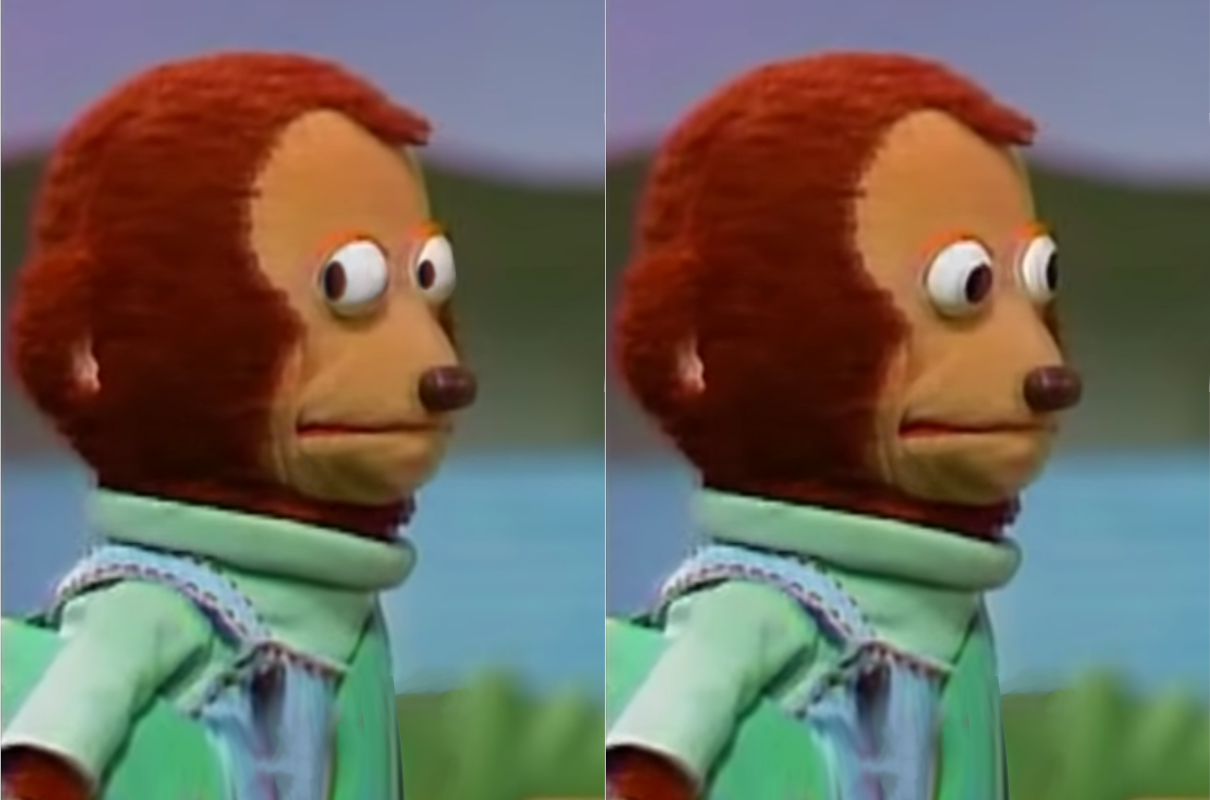
https://i.kym-cdn.com/photos/images/original/001/471/227/dd0...
Of course that's not how they portray it, but doublespeak has been strong around Brexit and still is.
It never made much sense to Brexit if you were in the UK and favoured personal, family or human rights. Including rights like privacy and a protected private life, and freedom to make open source software (EU is against software patents, UK is not).
I have a similar view on federal laws in the United States - they don't tend to repeal federal surveillance laws without violence.
While this doesn't seem to oblige providers to scan your content, that is expected to come in a next step.
2. it would probably be compatible with GDPR anyway. GDPR article 6, paragraph 1: "Processing shall be lawful only if and to the extent that at least one of the following applies [...] (c) processing is necessary for compliance with a legal obligation to which the controller is subject"
Which is caused by the open borders and migrant settlement programs promoted by the EU in the first place.
Convenient isn't it?
.pdf:
https://www.europarl.europa.eu/RegData/docs_autres_instituti...
The votes seem to be here (page 5):
https://www.europarl.europa.eu/doceo/document/PV-9-2021-07-0...
I suppose this will only show up on sites like https://www.abgeordnetenwatch.de/eu/abstimmungen or https://www.votewatch.eu/en/term9-european-parliament-latest... later...
https://www.openrightsgroup.org/blog/access-denied-service-b...
Which are the most privacy-focused nations in the EU that might leave over a law like this?
Europe already seems to be losing to the US. Will this accelerate this brain drain or slow it? [0]
[0] https://spectrum.ieee.org/at-work/tech-careers/the-global-br...
What exists in the US is primarily the absence of restrictive laws. Private companies can - for the most part - freely scan your communications/data that go across their service depending on the terms of use/privacy they set.
What the EU is doing is quite different from the US approach. They're starting out from a supposed perch of claiming that they very strongly believe in privacy rights, and then they're violating that to an almost comical degree. The difference is one of remarkable hypocrisy.
Ok so what you are saying is any users whatsoever of EU based email providers can be subject to companies doing some scanning if they wish to. Since most multinationals will have European offices, it might apply to every provider and therefore pretty much everyone.
The actual text that has been adopted is at https://www.europarl.europa.eu/RegData/docs_autres_instituti... AFAICT
Not only was nothing done but BBC's upper management escaped any responsibility for the protection they gave Savile.
One could mention the Dutroux affair, British PM Ted Heath, and many more scandals... yet it does seem that the European elite excuse themselves and instead invade everyone else's privacy instead.
* the act of officially stating that a law or rule no longer needs to be obeyed,
and
* the act of talking about or treating someone in a way that shows you do not respect him, her, or it,
according to [0]. If the shoe fits, I guess?
---
[0]: https://dictionary.cambridge.org/us/dictionary/english/derog...
> special permission not to obey a rule, law, etc.:
Is that actually so?
Isn’t Signal FOSS? I don’t know how they’d police that when everyone can just fork it and remove the back door. Also don’t VPNs circumvent this legislation as well? How will they police self-hosted email servers?
I know the response to these questions is usually “You’re right, this is what happens when the techno-illiterate write laws” but I genuinely can’t think of how I would go about doing this if I was the one who wanted a back door.
If the goal is large scale surveillance, it can be combatted fairly effectively as has been shown with e.g. kino.to and other streaming sites which have gone practivally extinct. The same would happen to websites hosting illegal apps.
If the goal is to go after real criminals this is of course useless. But EncroChat [1] has shown that at least large parts of the criminal world don't seem to have great operation security practices.
I can kinda understand how and why crime happens, but I never understood the motives or way of thought of the people who want this kind of stuff implemented.uch less the ones who vote for it.
Obama: https://www.wired.com/2013/05/doj-got-reporter-phone-records...
Trump: https://www.vanityfair.com/news/2021/05/trump-doj-reporter-s...
Surveillance for thee but not for me: https://www.rt.com/usa/nsa-probably-congress-greenwald-arres...
This makes the stuff they find legally useable for evidence I guess.
[0]: https://en.wikipedia.org/wiki/Four_Horsemen_of_the_Infocalyp...
> According to police data, in the vast majority of cases, innocent citizens come under suspicion of having committed an offence due to unreliable processes
With this being said, what is the rationale for this?
Its worth noting however, that the current legislation "allow[s] providers of e-mail and messaging services to automatically search all personal messages of each citizen for presumed suspect content and report suspected cases to the police" but does not mandate it yet.
If it's going to implement a draconian surveillance state that will converge towards corrupted abuse by its officials and member states, then why not live in any number of totalitarian like countries elsewhere with cheap out of living and a nice beach instead? There is no functional difference anyways.
http://web.archive.org/web/20040618062603/http://kris.koehnt... (German)
It's fun watching old people legislate on things they don't understand.
Which means all their other cries of human rights about other issues are empty crocodile tears. Even when it may happen that the side they take is a good one from a human rights perspective, that's obviously purely by coincidence that it happens to align with their agenda.
Horrifying.