In 2015, Pebble had a watch that had:
- an app store, third party apps, third party watch faces, and a developer ecosystem
- always on screen that didn't require a button press or specific arm gesture, and worked in bright, normally lit conditions
- physical buttons instead of tiny buttons on a tiny screen barely larger than the finger pressing it
- week long battery life
Pebble was crushed by Fitbit, which didn't have any third party support, and by Apple, which had miserable battery life and relied on the connected phone to do most of its work.
Now Pebble is long gone, Fitbit bought the remnants of Pebble is being acquired by Google, Google itself doesn't seem to have any interest in WearOS, and Apple Watch almost has two-day battery life and app store has never lived up to expectations. We now have "smart watches" which basically combine basic phone notification API implementations, a package of often unreliable sensors, mostly-off touchscreens, and bundled "apps" which can only be used with the hugest social media sites.
* App store with 3rd party apps and faces.
* Always on screen
* Physical buttons (Vivoactive is mostly touchscreen oriented, but all their "athlete" watches use buttons)
* Week long battery life - Even running GPS tracking for 12 hours straight leaves enough battery for the next day.
The biggest downside to the Garmin is trying to figure out which watch to buy. They stupidly gate certain activities to specific watches. For example Garmin has a Hike activity on their Fenix line, but not their Vivoactive so I need to track my hikes as a Walk.
However, as you've noticed, each device feature set is determined by overzealous marketing. My Forerunner 245, despite having tons more memory than my ancient Fenix 3 and considerably faster, has less data screens for running. It doesn't have an altimeter, but the cheaper Vivoactive series has an altimeter because fitness users want to count floors climbed. It has Bluetooth but is not allowed to connect to bike power meters, because then it would overlap with Garmin's much more expensive triathlete watches.
This leads to app store problems, because each app and watch face has to be explicitly compiled for each watch - even when the watches have the same display size and feature set. Buying a new device often means that you'll have fewer options than someone with an older one.
If they could fix this one problem, I'd buy more of their sports-oriented watches, but this is the one thing that I find really hard to deal with.
Otoh, the watch is phenomenal and beautiful, and I love having a watch that lasts 5+ days on a single charge and looks like a normal watch, but tells me my calendar and such, and can be used to track running and hiking.
It's the best thing if you're sporting an Android phone. 3rd party apps are mostly weather apps and apps mimicking features of more expensive Garmin watches to be used on cheaper models. And don't expect apps to talk to the apps on your phone - you mostly have to enter all details into the Garmin apps again (using the Connect software on your phone).
However, I recently switched to an iPhone and bought an Apple Watch and it's so much better if you are more into smart watches instead of a fitness tracker with smart features. Yes, the battery has to be recharged as often as I do. And yes, it's a touchscreen that's utterly useless in a downpour or when swimming. But apart from that, and I don't say this easily, I get more from the Apple Watch than from my Garmin then-top-of-the-line model.
The battery was a bit degraded and I got tired of not being able to acknowledge Pagerduty notifications (even though I could receive them), as well as not having any fitness features whatsoever (other than the steps counter). So I bit the bullet and bough an Apple watch.
Within two days, I stop using the Pebble. Yes it's nice, but against what's essentially a supercomputer in my wrist, with a bunch of useful apps... I switched. Sure, having to charge daily is not _ideal_, but I can put it to charge while I'm having dinner or in the shower, and it will be full pretty quickly - specially if you are just topping off daily. It is not as convenient, but I didn't hate it as much as I thought I would.
The screen is always on too. I disabled the feature, didn't see much of a difference.
Just this weekend, I had a pretty spectacular fall from my bike. Fall detection kicked in - I did not need emergency services, but it was a reminder that some features can be life-saving.
My company's SSO supports IOS, which means it is now integrated with my watch. Pretty secure too, the watch will lock if it is removed from my wrist. It can unlock my machine (and my car). I can control other devices. I can take just the watch outside and still receive phone calls, or buy groceries. Many of those things, I couldn't do with the Pebble, or they would be more cumbersome. Yes, physical buttons are nice, but also limiting.
Pebble had the right idea. But they executed too slowly and too late. The fitness focus was missed by them for quite a while, I bet that they could have stayed relevant if they had implemented features like heart rate monitoring.
They were also _way_ too small to compete with the industrial design, manufacturing capability, and marketing clout of Apple. Or even Samsung. They were inevitably gonna get crushed.
And I say this as a four time Pebble Kickstarter backer who could see it even back then. A couple of kids with an amazing YC pitch deck and ambitions-untempered-by-experience-or-reality? They were never gonna "win" if Jony Ives and Foxconn ended up in their market segment. I don't regret a cent I spent with Pebble. I hope the founders made out like bandits when they sold out, and I hope it launched them onto spectacular career trajectories. But they never really stood a chance of being the top player in any sophisticated consumer electronics space...
I like my Pebble because it's a watch first and foremost—I've worn a watch since I was around ten years old—but it just so happens to also show me notifications, and glance at things like the weather and my calendar. And I can do all of that super quickly.
I wore mine until last month when the battery gave out. If I could buy one with a new battery (not a replaced one as it compromises the waterproofing) I'd choose it over any other option available today.
- an app store, third party apps, third party watch faces, and a developer ecosystem
- always on screen that doesn't require a button press or specific arm gesture, and works in bright, normally lit conditions
- physical buttons instead of tiny buttons on a tiny screen barely larger than the finger pressing it
- week long battery life
Also has GPS, Music storage/playback, actionable notifications, and a ton of health and fitness stuff.
https://lupyuen.github.io/pinetime-rust-mynewt/articles/watc...
It's not perfect, but it's the closest thing to what the Pebble used to be.
See this thread from below here: https://news.ycombinator.com/item?id=25269500
You could create and compile your watch apps to your heart's delight without asking someone for permission.
I don't even have a Rebble account yet, but it's surprised me how much still works and how much use I can get out of it in my daily life.
It's great, and probably the closest thing to a successor to a Pebble watch.
But, the big downside is the software. It’s veeeery limited. The latest update made things a lot better and Fossil seems to be headed in the right direction, but it’s just not there yet. Customization is big for me, and the Fossil HR has limited amounts of it. No SDK for example, so no third party apps. You get what Fossil says you need.
That being said, I love my Fossil HR to bits. But man, I really wish I was wearing a Time Steel 2.
anecdotally, in my life I've seen maybe enough apple watches to count on one hand? and a few fitbits. That's it. A far cry from what I expected the future to be like, back when pebble was getting hype and when apple announced their offering. What is the problem with the market? is there really just no demand for smartwatches of any kind?
If they got down to $100 or so, you'd see wide adoption. Which is why the Wyze Watch at $20 is so fascinating to me. At this price, you can just buy one instead of a Casio.
Median income in the USA is $68,703.
Why would someone spend 1/25 of 1 percent of their income on something that they wear 100% of the time? That makes no sense.
I shell out $200-$300 each year for the latest FitBit (Apple Watch is promising, but that battery life :(. The sleep tracking is gold).
Now that it is aimed at the high end, Apple needs to include lots of features, a nice display etc. Lots fancy features means they need to use a powerful processor, which along with the nice display leads to a lot of power draw. This is why they have a small battery life, as you mention, and didn't even have an always on display until S5. Neither of these are technological constraints, since the Pebble had 7 day battery life with an always on display from the first version.
Now, the Apple Watch has sold well, so maybe it's a fine tradeoff to make. But I think this "high-end" constraint has definitely shaped the product (and in a way I think is worse when viewed as a watch first).
Be that as it may, there's absolutely a non-trivial amount of revenue available at the low end of the market. Apple historically never participates in that market, but that's an opportunity for other hardware providers.
I buy lots of cheap things even though there are "better" versions available for more money.
https://www.census.gov/content/dam/Census/library/visualizat...
There are a lot of people that can’t spend $200 on a watch, but can spend $20.
U.S. per capita healthcare spending is $11,172. If the U.S. gave everyone a $200 a year tax credit to spend on a smart health watch, we'd probably save $2,000 a year per capita and get a 10x ROI.
Price has been a main barrier to my wearing a smart watch as my expectation is that something on my wrist will get damaged even more often - I do a lot of mechanical work. Certainly my $15 Casio is pretty scratched up. At the $20 price point, though, I might give this a try.
But I view the value of smart watches in the $100,000+s if not $1M+s. How much is your health worth? How much is it worth to passively keep an eye on your heart rate, and stress levels, and oxygen levels, and sleep levels? Granted, I still think it is very early for smart watches, and the value we are getting now is ~1% of the value we will be getting from them in 5-10 years (if they aren't replaced by a "smart tooth" or "smart necklace" etc). But I think at this point the value is definitely there and easily worth 10x+ the cost.
Making a single actionable decision based on data received from a wearable could have a life changing impact.
And again, speaking in probabilities here, and it depends if you look at the data and adjust your life based on it, but I think expected value of these is huge, and probably the best single health measure anyone can take.
I would say try the cheap one, and think about upgrading if you like it.
If the product fulfills their needs why would they waste an extra $180 on a different product?
My experience with them years ago when they first launched was really positive. Any issues with a device, and another one was in the mail.
I consider it still "early adopter" territory and am happy to put up with some problems as they blaze a trail to a healthier world via massively increasing the amount of health data available.
$300-400 is a high ticket item, point blank.
Aside from Apple, the world is owned by entities that compete mostly on price.
Obviously there's strong middle-class bias built into that number, but I don't feel like it has moved much in decades.
I won't argue with that, especially in 2020 :).
Why would you update your Fitbit that often? Is it really that much of a difference from year to year?
I wear them 24/7, so it's literally the thing I use most in the world.
They're usually 2-10 times cheaper than their competitors, while providing better features, better design, and better support.
I love all of my Wyze devices and purchased another $100 worth of them just yesterday (3 bulbs, 2 sockets, 3 sensors, 1 camera, 1 SD card).
I like how they go out of their way to add features to their devices. For example, they provide a firmware for the Wyze Cam that turns it into a webcam, which I've been using for online education for the past few months.
For the past few days, I've done extensive research on smart watches and fitness bands. I looked into everything, from Apple Watch, Tizen, Pebble, WearOS, Fitbit, PineTime, etc. I haven't found anything with such a good value as the Wyze Watch. Some of the hackable nRF52832 based devices (PineTime, Colmi P8) have similar prices, but they have a smaller display, no SPo2 sensor, and you basically have to write your own OS (InfiniTime, WASP-OS, Zephyr, RIOT).
I'm really impressed. I wonder if there's a catch.
The best we can hope for by paying for a product is getting additional features and not being inconvenienced (ie, avoiding ads).
FYI - for some camera models (Xiaomi or Wyze), you can flash them with this custom firmware[1], allowing for a lot more customization.
Their products are cheap enough that if it misses a motion event you'll say "oh well, it's doing well for a $20 camera."
I would like to believe there is good in the world, but other than Linux nothing has held it up.
You could probably include the EFF, GNU Project, BSD's, and a couple others as well.
© 2020 Wyze Labs, Inc
Amazon, Alexa, Echo Spot and all related logos are trademarks of Amazon.com, Inc. or its affiliates.
Google, Inc., Google, Google Home, Google Home Mini, G logo, The Google Assistant built-in, and related marks and logos are trademarks of Google, Inc. All rights reserved.
> © 2020 Wyze Labs, Inc Amazon, Alexa, Echo Spot and all related logos are trademarks of Amazon.com, Inc. or its affiliates.
The page is copyright Wyze Labs. Separately, those other terms are trademarks of Amazon.
I hadn't heard of them till this year when I saw their camera on sale, but now they have a full suite of hardware products with ~50 employees.
Are they essentially rebranding some Chinese manufacturer?
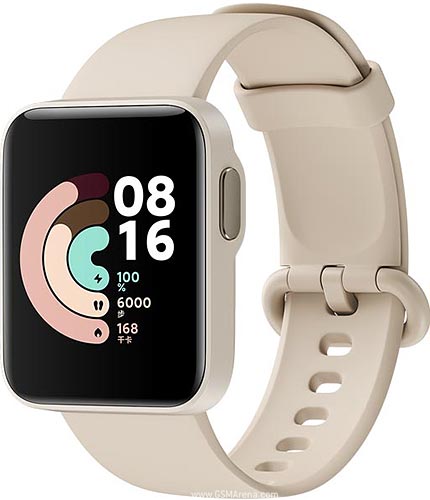
https://fdn2.gsmarena.com/vv/pics/xiaomi/xiaomi-redmi-watch-...
Otherwise there other very similar looking watches in the Chinese market as well.
(though to be honest their iOS app isn't great. But still)
As is, I see no reason to upload my health information to a random corporation.
Indeed, I can see plenty of business models where I could give away smartwatches and cameras for the wealth of data I'd collect. Selling still makes more sense; you want people to have a vested interest in them.
Doing quality control + localization and delivering a product that just ridiculously undercuts the competition.
I have a lot of admiration that they can make these prices work at all.
They had a home sensor platform that seemed cheap ($5!) and reliable, but Reddit forums are full of complaints that a low battery bricks the sensors.
Wyze will send you a replacement, but can’t engineer a fix on the fly, apparently.
They are a really awesome company, not trying to sell you some shit and making money, but honestly wanting to develop good products to improve your life! Very useful features for health monitoring and they don't cost as much. Plus the watches looks super cool!
I love it- Like you said, it's a smart-enough watch. I get text notifications on the small screen, which is surprisingly useful, and it does things like step tracking, heart rate, sleep tracking, etc. But it also has a multi-week battery life, and looks like, and is sized like, a normal watch. Highly recommended.
Liked having a real watch, loved only charging it every two weeks, but finishing a squat set and having it tell me my heart rate was 60BPM when it was closer to 180 just bugged me.
This was before they put in sapphire glass, during the time when it was sold as a Nokia, so it wouldn't surprise me if they improved this in newer models.
The Apple Watch does so much more that it isn't even funny, but it's also not a watch, it's a rounded rectangle that sits on my wrist where a watch goes. I wish the perfect fusion between these products actually existed...
I’ve recently gotten the ScanWatch and it feels quite premium. Probably the sapphire glass adding to the heft.
My only gripe is that they do not offer any sort of repair service! If you break the glass, they will instead off you 25% off a new purchase.
EDIT: After a firmware update, it's now recognizing the SD card, but just as parent said, there is no video of me walking up, standing in front of the camera, and unplugging it. It's not missing 4 minutes, but definitely at least 20 seconds.
This means a thief could just walk up to any Wyze cam, yank the power cord, and be certain that he wouldn't be caught on camera. Maybe there's a way for Wyze to grab the data from their cloud if the police asked for it, but it seems impossible for an end-user. Really disappointing.
T-Watch-2020 - $26 - http://www.lilygo.cn/prod_view.aspx?TypeId=50053&Id=1290&FId...
T-Wristband - $18 - http://www.lilygo.cn/claprod_view.aspx?TypeId=21&Id=1282&FId...
Pebbles were very hackable, but you can't buy new ones as other threads have pointed out.
They pretty much have the same hardware as the PineTime. The most popular one is the Colmi P8, which you can buy for $20-25.
The battery life is worse but the color screen is really nice and the watch can do more (most notably have multiple alarms set from the watch). Vibration motor is better on the Fitbit.
Sleep tracking is slightly better on the fitbit (re. graphs and data). Accuracy seems better but I'm no expert (I've gotten false positives where the Garmin thinks I'm sleeping if I'm sitting at my computer not moving much, Fitbit has tracked naps which is impressive).
I kind of liked the Garmin app more than the Fitbit one. The fitbit app can be confusing to navigate and it's irritating that they try to upsell you on a subscription. The garmin app is more spartan but it's easier to see your data. I think it might be easier to extract your data from garmin as well.
Syncing both watches to your phone is equally painful.
I don't know of anything new that has a long battery life like the Vivosmart HR. Garmin claims equally long battery life on their newer devices but I'm skeptical.
Even so, battery life is measured in weeks, not days.
Oh, and the battery lasts forever and because of the low pricetag I won't cry if I break it or scratch it during sports or household chores.
I feel like the Bip is the unofficial successor to the beloved Pebble.
Edit: and it can be operated in a real un"cloud"ed mode if you use the 3rd party gadgetbridge app (born of pebble user needs and extended to support more watches since). That was the dealmaker for me.
I do recommend it. Another differentiating factor is the display. The Wyze product doesn't indicate the display tech, but the Amazfit using e-Ink, so it's always on and has good visibility even in bright light, something that competitors like Apple (with its minuscule battery life and disappearing display) can't claim.
i also like the heart rate monitor, great for runners.
If anything, it’s not that good because my Forerunner 735XT does more stuff and achieves that while doing GPS tracking on workouts.
Like the sibling, I've found Apple Watch to be totally reliable, but my Nokia Steel HR was not.
The visible difference is, when you flip the Steel over you see rapidly flashing green lights, when you flip the Watch over it looks like solid green, presumably flashing too fast to notice.
One gets two weeks between charges, the other one day. Guess which is which...
Similar prices to xiaomi etc but their apps look good. (though the xiaomi apps are pretty good too)
I've never used a reshipper but I looked up reship.com and they charge at least $30 (!) to get a 200g parcel (150mm x 150mm x 150mm) shipped here.
Sad to say, it's terrible. Mostly what it did was remind me how much I appreciate stuff that actually works well (e.g., wrist position sensing, so that it turns on when it's supposed to, a reliable touch interface, etc). I ended up buying a Fitbit Sense when they came out a month or so later. I don't regret it, even at >10x the price. I have my gripes with the sense but most of the time it is vastly more usable.
It's just not well formatted. If you look into the source code it's supposed to look like
> © 2020 Wyze Labs, Inc
> Amazon, Alexa, Echo Spot and all related logos are trademarks of Amazon.com, Inc. or its affiliates.
> Google, Inc., Google, Google Home, Google Home Mini, G logo, The Google Assistant built-in, and related marks and logos are trademarks of Google, Inc. All rights reserved.
After using it for a year, I kind of understand why pilots often use Garmin watches:
https://gigazine.net/gsc_news/en/20191025-garmin-smart-watch...
New routes can be uploaded as .gpx files the same way.
Not super convenient but it works.
That being said, what I'd really like (if someone out there is listening) is a smart watch which is not only cheap (<$20), but it would also have microHDMI and microUSB ports, and basically you could take it off your wrist and hook it up to an external monitor, keyboard and mouse, and use it like a very underpowered Raspberry Pi...
Yes, it would be slow compared to other computers...
Yes, it would be limited in many respects compared to other computers...
But dagnabbit if it wouldn't be cool to have, if you couldn't just take it off and use it like a general-purpose stand-alone computer!
To me, that's the killer feature that any smart watch must have...
Oh yeah, and Open Source everything, too...
And yes, I realize that I ask for a lot! <g>
Now have multiple cams, bulbs, and so on. Getting the watch is a low dough no brainer.
Solid stuff for not a lot of money.
I miss the simplicity of the original Mi Band and with the Mi Band 4 was more open, but they're both fantastic and do most everything I need a smartwatch to do.