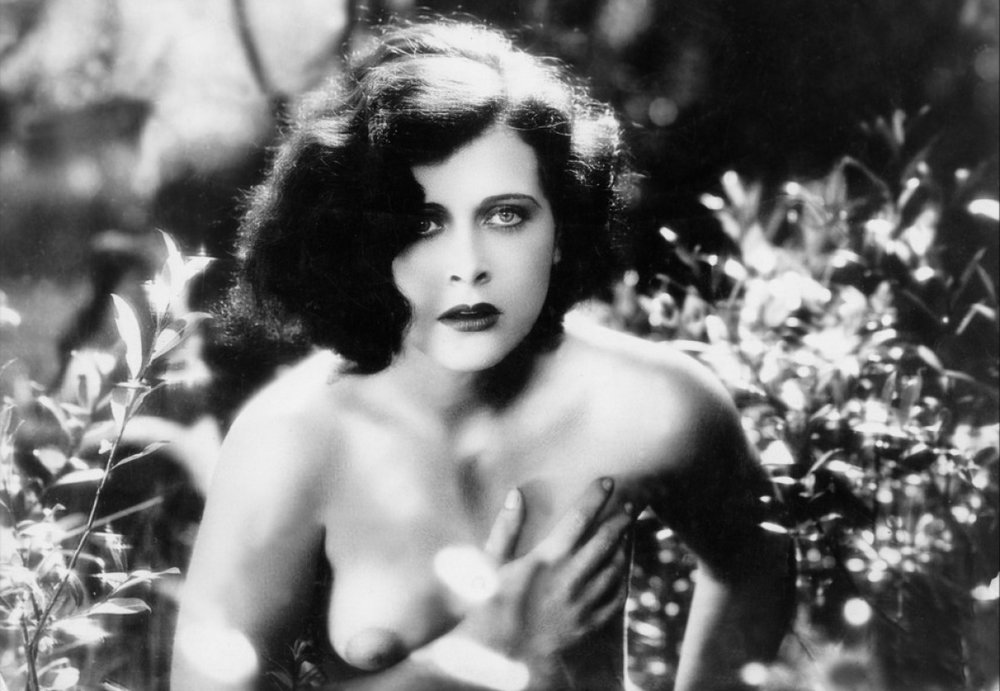
PS: In any field, not only technology, and any time in history.
https://en.wikipedia.org/wiki/Sophie_Germain
So I'd argue that many past inventions that are credited to men might actually have been achieved by women scientists publishing under their husbands / colleagues / friends name as a pseudonym.
In Paris I once saw an original print of Marie Curie's book on radioactivity, where her name is given as "Mme Pierre Curie". This probably shows how difficult it was even then to get something published under your own name as a woman (Cover and autor info here: https://www.amazon.fr/Radioactivit%C3%A9-1-Madame-Pierre-Cur...).
Nothing to do with publishing difficulties at all. It was simply the way a married French woman would be addressed at the time - as "Madame [husband's full name]", eg Michelle Obama would be "Mme Barack Obama". (It's still in use in more formal / old-fashioned contexts.) The reader would understand that the author of the book was Pierre Curie's wife, rather than him.
Not just in France, and not just in centuries past. I've met women in the United States, England, and Austria who refer to themselves as Mrs. husbands_first_name husbands_last_name.
It's formal. It's not insulting. You can see it commonly in 19th- and early 20th-century literature.
Several of the Christmas cards my wife received this year were addressed that way, plus "and family."
> This probably shows how difficult it was even then to get something published under your own name as a woman
Or are you suggesting that it was not difficult for a woman to publish under her name, only that it was not customary to do so? Can you point to some supporting examples of this, if so?
> (It's still in use in more formal / old-fashioned contexts.)
formal / old-fashioned / misogynistic contexts.
A few related links:
https://theculturetrip.com/north-america/usa/articles/12-fem...
https://jezebel.com/homme-de-plume-what-i-learned-sending-my...
http://introductionsnecessary.com/2016/06/14/wang-zhenyi/
(Yes, I realize my sources are about mostly writers, not scientists.)
Interesting. I read the first Harry Potter novel (i.e. the german translation) as a kid about 3 or 4 years after it was released. I'm pretty sure I knew the "J" stood for Joanne from the get go.
OTOH, I still can't remember what H.G. Wells' first name was, although I must've looked it up a couple of times by now…
One example is the DAME which stands for Dark Avenger Mutation Engine. It could recompile DOS viruses into equivalent but different machine code on the fly, including the mutation engine itself.
An extension of that is the emulation scene, but that tends to be done in public for the most part.
If it weren't for this community I'd feel far less in control of my own computer.
Think about it, nobody knows who invented the ability to control fire, and yet it is still, by far, the most important technology in our lives. The largest economic sector is oil and gas, in other words, finding things to set on fire. All of our technology is powered by electricity, which is still predominantly generated by setting things on fire. Rockets are powered by fire. Guns are powered by fire. Cars are mostly powered by fire. Even if we switch to renewable, GHG-neutral sources of energy, that is only possible because of millennia of fire. Hell, we only evolved big brains in the first place because we unlocked tons of extra nutrients by cooking with fire.
For example, the inhabitants of North Sentinel Island, one of the last uncontacted peoples in the world, have bows and arrows. Also, they tend to use those bows to shoot arrows at everyone who attempts to approach North Sentinel Island, which is why they remain one of the last uncontacted peoples in the world. Other examples include American Indians, some of whom, like the Comanche, were able to use bows effectively enough to consistently defeat Westerners well into the 19th century.
It's also interesting that not all of these inventions are universal--for example, the Inca civilization did not have wheels, because the Andes are too rugged for wheeled transportation to make sense. But they had lots of other things and fairly advanced mathematics, which was important because they had a relatively advanced mercantile culture where goods were traded by means of pack animal.
This series was one of the most fascinating reads I've ever enjoyed!
> Le Roux admitted that he had created the encryption software E4M but denied that he had developed TrueCrypt, its famous progeny.
Also:
> Hafner and his SecurStar colleagues suspected that Le Roux was part of the TrueCrypt collective but couldn’t prove it. Indeed, even today the question of who launched the software remains unanswered. “The origin of TrueCrypt has always been very mysterious,” says Matthew Green, a computer-science professor at the Johns Hopkins Information Security Institute and an expert on TrueCrypt who led a security audit of the software in 2014. “It was written by anonymous folks; it could have been Paul Le Roux writing under an assumed name, or it could have been someone completely different.”
The developers of E4M and of VeraCrypt are known; the developers of TrueCrypt are not fully known.
[1] https://www.idrix.fr/Root/mos/Contact_Us/task,view/contact_i...
Is there a symbol for the squiggly equals sign?
https://www.theverge.com/2018/10/24/18019464/4chan-anon-anim...
Here is a link to the Wikipedia entry: https://en.wikipedia.org/wiki/Differential_(mechanical_devic...
Mind you, this may not be a good answer to the question, because there are a couple of claims for the invention.
EDIT: although I do agree, I remember first reading about Stuxnet when it was first discovered, before evidence of its origin was known, and being absolutely fascinated
The origin of OWAS and the CryptoNote protocol is also interesting :) https://moneromonitor.com/episodes/2017-12-05-Episode-016.ht...
TLDR: https://spectrum.ieee.org/tech-history/silicon-revolution/nw...
> Heck, I've done the opposite. There's quite a bit of code out there which I haven't published under my real name (for various reasons). Not any Lua stuff, though. Good luck hunting it down. ;-)
http://lua-users.org/lists/lua-l/2009-11/msg00106.html
> I’ve only published AFLG (auto-fast-loader-generator) under my real name in the German “RUN” magazine.
https://www.pagetable.com/?p=656
Of course, like many of the other examples here, unmasking him isn't of much interest to the tabloids since he's not much of a "public figure".
From Wikipedia[0]:
> There were originally 32 proposals; these were reduced to ten candidates. These ten were put to a public survey. After the survey had narrowed the original ten proposals down to two, it was up to the European Commission to choose the final design. The other designs that were considered are not available for the public to view, nor is any information regarding the designers available for public query. The European Commission considers the process of designing to have been internal and keeps these records secret. The eventual winner was a design created by a team of four experts whose identities have not been revealed. It is assumed that the Belgian graphic designer Alain Billiet was the winner and thus the designer of the euro sign.
“Invention secrecy in the U.S. dates back to at least the 1930s, but it really took off in the ’40s, when the development of nuclear weapons was shrouded in classification. It became official policy in 1952 with the Invention Secrecy Act, which allows USPTO to keep patents deemed “detrimental to the national security” on lockdown. Under the act, USPTO’s commissioner of patents became empowered to flag patent applications—even those developed by private citizens—for review by government defense agencies, which could request that certain inventions be kept secret.”
edit: sure, you'll often (but not always) see the actual inventor's name listed in patent applications... along with their manager(s), one or more executives, the lunch cook etc.
Also many phrack articles are released under pseudonyms.