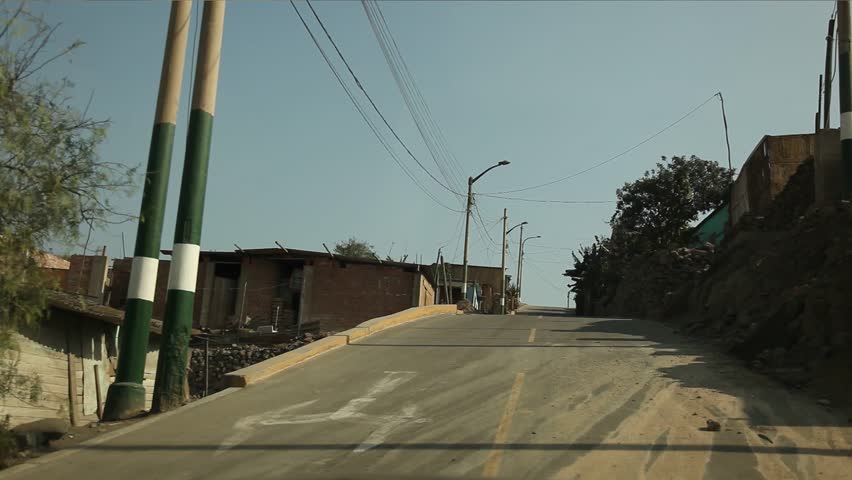
And also because it's easy to draw and show for 5 seconds in every anime to save on the precious animation budget because it's super static and goes everywhere. Added bonus it can be added into any decor and you would not notice it's the same pattern imported all over again in between animes.
Compare to the Simpsons for instance. It is set in present day American suburbs, but it doesn't look at all like a photograph. All the small details are missing unless they are relevant to the story.
In the west, even if real life photographs, power lines are commonly seen as a nuisance and avoided, or even edited out.
It is clearly a different approach to animation. I think we can make the parallel the way hands are drawn. 4 fingers for western animation (simplified), 5 for anime (realistic).
The animation budget argument makes sense, and it certainly a good explanation for pylon or railway crossing shots. But I don't think it explains everything, both obscure series and big-budget animation films have their fair share of power lines.
Anime is all about cutting costs, time and work... much of the anime aesthetic evolved from the same cost cutting methods as Disney employed by cutting a few fingers off of Mickey Mouse. The (in)famous elevator scene in Evangelion[0], for instance, was as much about Gainax saving money as it was minimalist storytelling. There's even a word for the rare times anime isn't lazy (sakuga.)
And apparently, Japanese media (anime and games) avoids 4 fingered hands because it implies a connection with the Yakuza or Burakumin. Some Western properties have had to redesign their character models and artwork to add an extra digit when exporting to Japan because of that.
Turns out the crew went to Hong Kong for a week and actually filmed everything out as well as taking lots of Photos, before sitting down and draft out the action and anime.
According to this video, a large reason for not using 4 fingers is related to a caste system in Japan.
For the record, there is an ongoing debate in Japanese urban centres on whether these lines should be placed underground for good.
They are a function of the astonishingly rapid development Japan underwent in previous decades, when nobody really cared about details like the urban landscape because they had "more important things to worry about". There is an argument that, now that wild development is over, it's time to move on and improve regulations for stuff like this.
The counter-argument is that anything underground in Japan will suffer from continuous earthquake activity; that it has become a distinct characteristic of modern Japanese life (precisely thanks to depictions in all sorts of media); and that it would be extremely expensive and hard to scale, since Japanese density in urban centres is so massive. The current system can look ugly, but it works, it's very flexible and cheap, and it's pretty easy to repair.
Water and sewage is underground right? If they can figure out pipes underground they can figure out power lines underground.
[edit] Not directly related but I find it encouraging that the number of houses and carports there with solar panels on the roof is remarkably high and seems to be increasing all the time.
I am waging you have never seen powerpoint slides made in Japan.
I'm not sure it is. First, that forces you to put a serious effort in perspective. And then you just can't draw black lines, you need to draw the technical devices that they connect to (transformers or whatever). This requires either technical knowledge or ground research.
Until their depiction in Neon Genesis Evangelion in 1995, power lines were virtually non-existent in anime. After all, why draw them when they take up more time and effort during a time-packed production schedule? However, Hideaki Anno, the director of the aforementioned anime, began to implement them in backgrounds, bringing in a new kind of mechanical urban aesthetics. Anno has a certain kind of obsession with mechanical structures, such as power lines and rail tracks, as he likes the way they continue into a distance. He continued depicting them in his later works, such as Kare Kano as well as live action features such as Shiki-jitsu, Love and Pop and his recent blockbuster Godzilla Resurgence[1]. Given how Evangelion revolutionized anime, the industry quickly followed its influence including its aesthetics.
Source: I've interviewed him. [Link](http://rickyreports.com/archives/annohideaki/)
[1] Well, it is rather an essential feature to portray destruction within this long-running monster franchise.
Despite the fact that his best works are anime TV series, I always thought Anno was one of the best filmmakers alive. His works in the 90s are absolutely amazing, particularly Evangelion and Karekano. He is a complex artist on many sides; formally he is the first (and mainly only) modern anime director: he uses the long-shot substantially less in favor of close-ups, which are just harder to use (almost anything can be OK-explained by a long-shot, while close-ups are pretty limited semantically). Aesthetically he is very original, with how he plays with music (Haendel in Evangelion 22, Beethoven in Evangelion 24, Bach in the "sex scene" of Karekano) or my favorite aesthetical treat, the use of text.
Love and Pop, and then Shiki-jitsu were a very promising start for him as a live-action filmmaker... but unfortunately, it looks like personal issues got to him. In the 90s there was a trio of Japanese filmmakers with similar approaches and amazing talent: Hideaki Anno, Satoshi Kon and Shunji Iwai (who is also the main actor in Shiki-jitsu). For different reasons, none of them seems to have used their whole potentials.
https://www.youtube.com/watch?v=II9GZrKztXQ
When I heard power lines, for some reason one scene from Patlabor came to mind.
It's the quintessential Tokyo city view from the window, and the quintessential view inside a window from the city. Outside there are power lines. You cannot avoid them. And looking in, you see the tatami flooring and dudes in their underwear.
I thought it might have been Patlabor 2, but it was the original movie. So that's 1989. Both movies are staples of Japanese anime.
But power lines can also be found in episode 1 of the TV series.
https://www.youtube.com/watch?v=OFTs97NpnUo
So my short answer would be Patlabor, but that's just from my own memory.
I think the commonality here is that the power lines are used to portray a sense of scale for the robots. A kid growing up in Tokyo knows exactly how high those lines are.
Patlabor The Movie, similarly, is about Hoba taking them on a tour of the city with their investigation. Half the movie is a travelogue of futuristic Tokyo.
I think both in general were representative to of the change from the faster-paced action shows of the '70s and '80s to the languid artsy style we see in 90s anime.
The rest of this post isn't directed at you specifically, you probably know this and much more. Evangelion perhaps popularized this kind of shot, but there's an interesting broader history and context.
In general, this kind of shot is called an establishing shot: https://en.wikipedia.org/wiki/Establishing_shot
    [An establishing shot] establishes the context for a
    scene by showing the relationship between its important
    figures and objects.[1] It is generally a long or
    extreme-long shot at the beginning of a scene indicating where,
    and sometimes when, the remainder of the scene takes
    place
    A "pillow shot" is a cutaway, for no obvious narrative reason, to
    a visual element, often a landscape or an empty room, that is held
    for a significant time (five or six seconds). It can be at the start
    of a scene or during a scene. At a minimum, in Ozu’s work, these pillow
    shots inject a sense of calm and serenity and contribute to the elegant
    and stately pacing of his movies.

    The term “pillow shot” was coined [...] by the critic Noël Burch in his
    book To the Distant Observer: Form and Meaning in the Japanese Cinema:
    “I call these images pillow-shots, proposing a loose analogy with the
    ‘pillow-word’ of classical [Japanese] poetry.”
This context is something I feel a lot of people miss when discussing those shots of power lines in Evangelion, perhaps ascribing to them more symbolic significance to them than Anno intended -- they are a stylistic hallmark of Evangelion, but aren't unique to Evangelion.
However it does not recreate itself to much in this details of the urban landscape.
E.g. 歩くひと, (the walking man).
I remember reading on how one of the people involved was surprised at its popularity despite all the "characters being messed up".
I always hear people talking about how "The Sopranos" was the first TV show that did this, but anime like "Neon Genesis Evangelion" and "Cowboy Bebop" came out years before it.
http://www.ntticc.or.jp/pub/ic_mag/ic018/intercity/higashi_E...
Keep in mind that Azuma has his own slant as something of a pop philosopher in Japan, but I think he nails exactly what made Evangelion a surprise and a trendsetter.
Let me know if you enjoyed the article—I can post more links on useful reading or you can PM me for more.
Anime and manga had long excelled at high drama; the space operas and melodramas and such.
And the creators of anime and manga were certainly not lacking in self awareness; there were lots of parody and comedy in anime and manga over the years, much of the light parody focusing on other works in their own genres or the general tropes found in those works.
But Evangelion was arguably the first major work in which those worlds collided. It never breaks the fourth wall, but the subversion of anime's tropes and conventions is utterly central to its drama.
1. The protagonist is a teenage boy. No surprise there -- the protagonist of any show is usually representative of the target audience. But instead of a simple "boy becomes a man" narrative, he more or less descends into depression and PTSD. The act of piloting a robot in bloody combat against incomprehensible is not healthy for him (because it wouldn't be, for anybody) and he is simultaneously loathable and also incredibly sympathetic because god damn is he put through hell. He responds to these traumatic events in ways that we might - imagine if your abusive father abandoned you and then forced you to become a child soldier? How screwed up would you be? He's probably the first anime protagonist to say: "Wait, this isn't fun. This is seriously fucked up." (And going further down the rabbit-hole of self-awareness, Shinji is painfully aware of how messed up he is)
2. Giant robots. They are a staple of anime for a number of reasons, chiefly because they sell toys, and toy sales help to finance these shows. Evangelion give you "robots," alright, but they are utter nightmare fuel in ways both visual and psychological.
2a. A trope in anime is when the pilots of giant robots "feel" their robots' pain. Evangelion takes this to the darkest and most literal extreme possible, with damage to the robots resulting in physical and emotional damage to the pilots.
3. Weirdest. Love triangle. Ever? It would be spoilers to say more, but it makes Game of Thrones look wholesome by comparison. Romantic tension is a given in... just about anything... but maaaaaaan does Eva make it weird. Another expectation, subverted, darkly.
4. Misato is something of a surrogate mother to Shinji. That gets, uh, interesting.
That said, Evangelion is not good just because "it's dark." There are lighthearted moments, and happiness, and some characters grow and become better people. It never feels "dark for the sake of being dark" in the way that some series like Game of Thrones are, where you almost dread the happy moments since those happy moments because they are immediately followed by some sort of gruesome tragedy, as if the viewer themselves is being punished for daring to be happy.
It's not quite the same as simple scenery shots emphasizing the powerlines, but they were significant before too.
Anime/manga also loves to meme/trope things like this because animation studios are cheap and love 30s tracking shots across 2 hand-drawn panel with nothing more to animate than a bit of lens flare. IMO it started as a style thing but quickly became a “this is a cheap way to pad our runtime” thing.
I feel the same way about much of the societal commentary in Ghost in the Shell: Stand Alone Complex -- they totally nailed the way groups like ISIS and the alt-right would spread like wildfire over social media, and the way that "fake news" makes finding the truth an exercise in futility. It was so accurate a decade before any of it happened that anyone who watches it now is unimpressed because it seems so topical as to be trite.
I think Evangelion was well loved on both sides of the pond but I have no idea about Lain. It seemed a closer fit for Western cyberpunk sensibilities though, and I have no recollection of it turning into a media phenomenon the way Macross, Eva, or One Piece did.
Back then, it didn't really get popular in the US unless it was already popular in Japan. I realize that's changed now, but back in the early days of Internet video there just wasn't the same level of access.
To your point, Cowboy Bebop can probably be considered to be one of the biggest causes for anime to gain so much traction in the US due to being on Adult Swim and having a killer feel and soundtrack, but its lasting power wasn't nearly as strong in Japan.
Also in some strange way, Power Rangers as a longer than 1 year thing.
The whole theme of the anime centers around the type of arrogance Man (in this case, a single man) would show in the face of annihilation by God, and how a man could resist God's influence and effectively become a god himself. Christian iconography is very prevalent as well (power lines form natural crosses); especially in End of Evangelion. Electric power is then itself a form of rebellion against God.
It's a super symbolically dense anime; in fact they pack in too much symbolism and it causes the show to lose focus toward the end which it never really regains -- the last 2 episodes of the original series are essentially 100% symbolism because the studio ran out of money and had to use recycled animation and stock footage with voice-overs (End of Evangelion replaces those two episodes in the storyline).
Then the wires are shown to be the fragile extensions of people's ability to project power over nature (e.g. the titular giant Mecha only work for a limited time when not tethered to power).
That's what you have on street - that's what you get in anime.
"That Time Bill Gates Accidentally Shamed Bangkok Into Burying Its Power Lines"
In much of Europe, you'd need to be in a very rural area for the power lines to be above ground. It's a bit more common for telephone lines to be above ground, but that's still something seen in villages rather than towns.
[0] https://i0.wp.com/brokensidewalk.com/wp-content/uploads/2016... or https://ak9.picdn.net/shutterstock/videos/2544149/thumb/1.jp...
(There are actively managed buried cables which are oil or gas filled, but this becomes impractical for longer cables, or extensive networks. It's extremely expensive as well. This technology is mostly used in the catacombs underneath cities, to get 380 or 220 kV to power stations inside [or underneath] cities).
Low or medium voltage distribution is a different story and has been buried in most of central Europe for many decades. I don't recall seeing power lines in any city.
[1] Just to avoid someone from posting it inevitably: No, HVDC does not solve this.
While within the city's all powerlines have been underground for ages, the connections between remote areas and production and consumption area's are usually above-ground, because it's soo much cheaper.
It's really effective in this sequence "A Short History of America":
https://www.youtube.com/watch?v=5IFVUHg_tUc
That one always gets me...
  - cicadas
  - airplanes
  - power lines
  - traffic signals
  - artificial riverbanks
  - lush sprawling forests
- the roof of a buildingWhat does that mean?
- ice cubes shifting/clinking on their own in a glass - train crossings
- shrines/temples
- cafe
- classroom/schoolThe power lines are almost an additional character.
Also: I think this is where the X-styled hair tie started. I remember some discussion of it at the time, and so many characters since then have had some reference to it.
In "Understanding Comics", Scott McCloud analyzed the transitions made between panels in various works, and he found that sequences of transitions between different views of an environment (what he called "aspect-to-aspect") were common in manga but were nearly absent in American or European comics. I believe he attributed this to the fact that manga typically has higher page counts than other comics, allowing the authors to invest more in setting up scenes.
Power lines are fantastic for selling depth / perspective. The poles are long and slender vertically as are the wires horizontally. When you parallax, it's a nice way to have a mid-ground layer that doesn't obscure too much of the background and naturally pokes up above shorter foreground elements.
Not saying the other thoughts re: theme etc aren't valid. Just something else to consider.
Thr anime movie Your Name is riddled with brief, but sumptuously animated and richly detailed, close-ups of doors opening and closing. These include simple doors on a rustic rural home as well as the automatic sliding doors on a Tokyo railway car.
For anyone who wants to understand this aesthetic, I strongly recommend watching The Garden of Words (言の葉の庭), which is only 46 minutes long. There is something breathtakingly beautiful about this film and other ones like it. They engender a strong feeling of longing and gentle sadness (nostalgia?) by bringing focus to the little things in life. It's a sentiment that tugs at the human soul.
Look up mono no aware (物の哀れ), which may be translated as 'a gentle sadness at the transience of things', as well as wabi-sabi (侘寂). Both of these are central to Japanese culture and history.
Edit: I also recommend checking out '5 Centimeters Per Second' and 'Your Name', both directed by Makoto Shinkai. To quote Ronnie Scheib's review:
Shinkai has been hailed as the next Miyazaki, and his dreamy mindscapes often equal or surpass the anime maestro in breadth of detail and depth of emotion. Shinkai extends the innate possibilities of the anime dynamic, reapplying its principles of lush effects, inflated background detail and sometimes undernourished character animation to mirror the interiority of the characters in every nuance of their surroundings.
Some images from 5cm/s: https://www.google.com/search?tbm=isch&q=5+cm+per+second&oq=...
So the one thing they look at and study the most, is very likely to be power lines.
When they are drawn or painted, they are valuable: they obviously carry a message, someone took the time to draw them.
On a photograph, they are considered something to avoid, or an eye sore to erase. Perhaps because often photographers want to convey what they perceive, not what they see. I can say that about myself - I tune out all the utilities from a beautiful piece of architecture like banner ads from an interesting website. But when it comes to taking a photograph, they come back with full force, often leaving me hopeless.
I wonder if there exists a way for a photographer to embrace and love the "ugly" signs of civilization. Perhaps give them a compositional role?
Also they are magical objects. A visible shout of power.
Speaking as an artist, it's low hanging mangos on a silver platter. Of course we're gonna do them.
Well, no duh.