Some regions seem to get more than others, I used to see large numbers in the change I got in London.
The quickest "tell" for me is the lettering on the edge. Some of it is shockingly poor quality and almost looks like someone took a soldering iron to draw it on.
The next time a machine rejects one of your pound coins, take another look at it, there's a good chance it's fake.
EDIT: Here's the first page I found looking for example images:
http://www.larkinweb.co.uk/miscellany/counterfeit_one_pound_...
To my eye they look really shonky.
Edit II: A couple more examples:
http://www.cryst.co.uk/category/fake-pound-coins/
http://www.employees.org/~tw/quids/quids.html
FinalEditIPromiseNoReally:
Check out this stack, they're almost comically bad:
http://blog.alism.com/wp-content/2006/08/coinstack.jpg
(found on this blog: http://blog.alism.com/fake-one-pound-coins-part-three/)
I have indeed had some pound coins which were tatty round the edges and had to be pushed through a self-service checkout several times or wouldn't even go through at all. I still hadn't realised they might be fake, though.
I have noticed that a lot of old 10p coins are noticeably a lot thinner (presumably worn down rather than starting out thinner) than new ones. Is this as it should be or should I start looking at these with suspicion too?
Those coins just look like they've been battered a bit too much, I just assume lots of coins get really rough treatment.
Your second link made me laugh, both because the blogger guessed that I was admiring a specific photo and the gradual reveal of the true level of the incompetence on display.
Like others have said, the lettering around the edge is always the biggest clue, but also the head and tails stampings will sometimes be off centre, and misaligned to each other.
The fake ones also make the 'wrong' noise when you drop them on a hard surface. It's hard to describe, but really noticeable if you compare it to a real coin.
This is a thing in black market channels, so, for the junkie with nothing in life except where the next high is coming from, you can imagine that they can spend all day passing off these coins to get legitimate cash back, for that next high and for that next batch of counterfeit coins to pass off.
Let's say you're one of three (or five) major creators/distributors of said coin. a third (or fifth, or whatever) of a thirtieth of all the pound coins in circulation doesn't seem worth it to you?
> As of March 2014 there were an estimated 1,553 million £1 coins in circulation
A fifth of that would be ~311 million pounds.
Let's say you're one of fifty or 500 counterfeiting rings, that's still £31 or £3.1 million. Even if the process for counterfeiting cost a million pounds to acquire (probably much less), it'd still be £1M pure profit. The numbers for both cost and slice of the pie probably scale down to a bunch of small-time counterfeiters, but the margin is definitely there.
I've definitely noticed worn coins before. Some of the current pound coins have been in circulation for 34 years, though, so I'm not surprised there'd be quite a range of wear.
"they are lovely looking coins, bearing an uncanny resemblance to the British One Pound coin [...] All of the One Lilangeni coin attributes are exactly the same as the British One Pound coin."
[1] https://en.numista.com/catalogue/pieces29731.html
[2] https://www.alibaba.com/product-detail/One-Lilangeni-Coin-19...
Obviously it's a bit different here, as the values are roughly the same, but I can see how that would happen as an honest mistake.
http://www.royalmint.com/discover/uk-coins/counterfeit-one-p...
It doesn’t really matter so long as they circulate like other currency though. Money is weird.
(Price fell to roughly the cost of production)
Except that it's all profit for the criminals counterfeiting them.
Have received many in my time.
Machines don't like them
They seem to be not quite straight.
https://www.theguardian.com/money/2014/mar/19/cost-new-pound...
Seems like there are £45m worth of counterfeit coins in circulation, but the switch may cost over £100 million.
____
EDIT: The percent of fake coins in circulation appears to be in flux, which makes me wonder what methods they use to estimate the fakes in circulation, if they use controls like injecting known fakes into the count to see if they are spotted, if the sample is truly random, the maths is correct, etc.:
1% 2004 [1]
3.03% May 2014 [2]
2.55% May 2015 [2]
Of note is that the Royal Mint states in the 2016 annual report that the last survey for fakes was in May 2015, but the report was issued in July 2016, which means at least as of that date they failed to do the annual survey; or at least publish the results.[3]
[1] http://www.telegraph.co.uk/finance/personalfinance/10707540/...
[2] http://www.royalmint.com/discover/uk-coins/counterfeit-one-p...
[3] http://www.royalmint.com/~/media/Files/AnnualReports/ar_2015...
If a one-time cost of £100m will remove the fake coins and prevent new fakes, it's well worth the price tag.
(am brit)
We also don't know anything about the volume of forged coins withdrawn from the market each month. If detection at pubs, grocery stores, etc. is poor, then fake coins enter the market at will and are detected only when merchants present their cash to banks. That's annoying for everyone, and it's possible to come up with scenarios in which each year sees 2x or even 5x the introduction of fake coins, with many of them staying in circulation for only a few months but causing damages anyway.
In either of these scenarios, clamping down now on forgery is economically prudent, even if the 100 > 45 comparison doesn't reveal the true cost.
But I would guess from a public relation perspective, asking a whole population to replace their coins just to make it cheaper and easier for banks is a harder sell that arguing security.
Meanwhile the entire currency is debased annually by failing to include land prices into the inflation calculations, despite most credit creation being against land.
This debases GBP for workers every year. Therefore propping up confidence is vital.
The old £1 Coin was relatively easy and cheap to counterfeit and the counterfeits were practically perfect (I've had a few over the years, they're REALLY hard to spot unless you know what you're looking for, just Google "spot a fake £1" for some examples of how good they are).
Seems like many of the counterfeit coins come from abroad, in particular countries with a much lower cost of living and where counterfeiting foreign currency may be ignored. There's also a huge market in pushing counterfeit money onto foreign exchanges in other countries.
* It's backed by usual pounds by the treasury, which means only they get to issue new coins (no public mining rewards).
* Court judgements must be able to block, reverse or force transactions. This means either the government gets a copy of all private keys, or simply has master keys for the system.
* UK government would probably want to attach names to all accounts, so new wallets could probably be only generated on some gov.uk site, or participating businesses like existing banks.
In the end, the blockchain is wasteful and inefficient when you could just have a big-ass server somewhere with an API.
That'd allow verifying every single new coin (unless it is damaged to the level of breaking the rfid chip, but I suppose that's not that easy).
It'd also enable tracking. I kinda regret that idea now. BUT if used responsibly, that can significantly reduce the counterfeiting by the means of somehow cloning the RFID chip (which wouldn't be simple if done properly -- there aren't any successful attacks on proper implementations of stuff like mifare desfire EV1/EV2 afaik). A coin was used on a market on london on 10am and with an ATM on Glasgow on 10:30am? Yeah, flag that coin down.
So you never know - but how would that work inside a metal coin?
(edit: when I say "cost" I mean the production cost)
That’s actually quite an old idea – most european countries’ IDs just have a normal smartcard in them, allowing normal signing and verification.
Pretty sure the knowledge that there will be a new £1 coin has been known far longer than brexit has even been a thing.
"security through obscurity" as a feature?
For example, the National Institute of Standards and Technology recommends:
> For external-facing servers, reconfigure service banners not to report the server and OS type and version, if possible
http://nvlpubs.nist.gov/nistpubs/Legacy/SP/nistspecialpublic...
Obviously I have no idea of the veracity of that, or the accuracy of my memory of the potentially fictitious article.
After all, your fakes don't need to be perfect; they just need to be good enough to enter the system without you getting caught every time.
(Which leads me to wonder - how do counterfeiters insert their fake coins in the monetary system? Where can you spend a lot of coin without arousing suspicion?)
-Coins sold at a discount to people who, perfectly aware they are fakes, use them for small purchases?
-Perhaps more likely - the customer is your friendly neighbourhood cigarette shop, which then mixes them in the change they give?
-Are some vending machines so bad at detecting fakes that you can use those (preferably ones with no security camera watching, which can be a challenge in the UK nowadays) to launder your fakes?
-Other?
Off to google I go. I really wonder how one can make a viable business model from getting fake coins into circulation.
I just looked over the £1 coins in my desk drawer (22!) - I found two dodgies. Perhaps I should bring them to the UK next time and ask in a bank - they may be just worn...
If this security feature could only be reproduced using a bunch of PhD chemists and millions of dollars of lab equipment, then the security can be considered to be pretty obscure. Even the strongest key based encryption system is vulnerable to brute force attacks if you have enough computer power.
My understanding is there is some luminescence profile that is very easy to create from basic chemicals if you know the quantities of those chemicals. But that it is very difficult to establish the precise quantities from the luminescence profile. In effect, a "one-way chemical reaction hash".
Presumably some people will know about it, but who? If banks are the only places that can detect a fake, for example, does that gain you anything?
I suppose you can do something like "ah, this bank is getting a lot of fake coins, which means they're probably getting injected somewhere in the local area, maybe let's interview some people who've been cashing them in and see if there are any businesses they all frequent". Might be valuable.
Something I've missed?
That took me completely by surprise. Is there really that much of a market in counterfeit coins? The profit margins just seem so modest relative to counterfeit bills.
If no one's checking for counterfeit coins, and the users themselves don't know they exist, it sounds like a pretty awesome opportunity for the counterfeiters.
Just take a look at the number of comments here saying the same thing as you - from a counterfeiter's perspective, it sounds pretty ideal.
Unless they can fool machines, it seems very inefficient.
For a merchant the cost of annoying a potentially unaware customer is more than the value of the coin that he will probably simply give back to another customer as change.
Try using an actual real 500€ bill anywhere else than Germany.
I paid for a 17K CHF car with 17 notes once. The Swiss trust their money completely.
Take the amount of £1 coins in circulation. Sum the value. Divide by 30. Equals the market in counterfeit coins.
From http://www.royalmint.com/discover/uk-coins/circulation-coin-...
£1 are 1,671.328 £m / 30 = 55.71 £m
The market in counterfeit coins is therefore over 55 million pounds. This is, however the cumulative, total value of the market and not per year.
https://security.stackexchange.com/questions/53673/how-does-...
* Royal Mint’s new anti-counterfeiting technology, which can be authenticated by high-speed automated detection, was called Integrated Secure Identification Systems (ISIS) - but for obvious reasons, they've stopped using that name.
special uv-altering particles in coating allows using a light to detect counterfeit; basic and high end scanners avail. for detection.
reading between lines:
sounds like the 'basic scanning' can be used e.g. for consumer/POS equipment to keep out the unsophisticated counterfeitters (e.g. coating is/is not present, perhaps some 'watermark' in the coating), and the 'sophisticated scanning' could potentially identify serial numbers/coin hash values in the light patterns or other means so that individual coins could be tracked, allowing discovery of more sophisticated attackers once these coins pass through banks or similar.
If your assumption is correct, it's the _legit_ coins that could be tracked, not the counterfeit ones. Which, incidentally, makes this feature much more interesting.
  "Approximately one in thirty £1 coins in circulation is a counterfeit"

  "16 October 2017 onwards - demonetisation - you are under no
obligation to accept the round £1 coin from your customers"Musical chairs, in coins.
>iSIS™ (Integrated Secure Identification Systems) is a direct derivation of covert and forensic features used in banknotes, comprising a unique additive technology – already used not only in banknotes but also in other industries such as fuel and perfume. This, however, is the first time it has been applied to coinage.
>The additive is incorporated into coins using The Royal Mint’s aRMour® full-plate technology and can be authenticated via high-speed automated detection. As it forms part of the electroplating process, it is not a surface coating and will not wear off over time.
Maybe it can be detected by spectral analysis of light like they do to see what gasses the sun is made of?
http://web.archive.org/web/20131119210211/http://www.currenc...
but it might give you some insights...
IIRC when copper-plated steel 1p and 2p coins were introduced (up until then they were bronze), they caused havoc with vending machines, whose manufacturers weren't forewarned.
Is there just too much metal sitting around that they thought that would be an ok use of it?
"Part of the reason for this change was that notes, on average, lasted only nine months in general circulation, while coins could last forty years or more. The government also believed that the growing vending industry would benefit from the introduction of a one pound coin."
Maybe the economics have changed with polymer notes. But the BoE inflation calculator tells me that the £1 notes withdrawn (in 1984 money) would be worth about £3 today. So maybe the fiver is next.
Then there's the lunatics that want to abolish physical money altogether...
Something like that is already being discussed on the continent.
The memorial 5€ coin recently (which is legal tender) wasn’t just that, but it was also a test if a 5€ coin would be accepted, and doable.
yay. Australians didn't die when they introduced the $1 note and remove 1c and 2c coins - they seem to do just fine.
You might buy new pounds as "secure" coins, but you'll probably some percentage of their value the next day...
On one hand finally getting clarity might be good news in that some people who have held back might spend more once the uncertainty of the immediate reaction is out of the way. On the other hand for a lot of people it makes things definite and will cause more cautious spending patterns, and there's still plenty of other uncertainty.
It also starts the clock, which will make people speculate about the timing.
I haven't the faintest clue how that will make traders respond. What I do know is that because I don't have the faintest clue how it will make people respond, I'm acting accordingly cautiously, and have cut my spending considerably since the referendum, and I know many others in the same situation, and indeed the UK has a whole has seen consumer debt levels drop substantially.
All this to say that it is foolish to assume that it boils down to whether or not the actual event itself is expected or not.
Old pound: diameter 22.5 mm, thickness 3.15 mm.
New pound: diameter 22.63 - 23.43mm [1], thickness 2.8 mm.
Euro: diameter 23.25 mm, thickness 2.33 mm.
So close and yet so different! Why??!?
Edit: Okay, I'm not sure why I saw "so much sense" in having the pound and the Euro the same size. I go to the UK often and hate having different coin sizes in my pockets, but obviously the pound and the Euro aren't the same value, so there's no real reason they should be of the same size...
[1] Since the new pound isn't round but dodecagonal, the diameter isn't constant; the smallest value is the diameter of the incircle and the other value, the diameter of the circumcircle.
(1) or are sometimes, depending on how much of a mess Brexit ends up being!
Are you mad
If Scotland votes to leave it will be to remain in the EU debate after Indyref1 led me to conclude that Scotland would have to petition the EU to join as a new member instead of inheriting the UK's membership, and the EU requires new members to adopt the Euro... so if Indyref2 passes then they'll have the Euro.
[1] Most western journalists rapidly moved off onto ISIL, which is a better translation (the name never referred to Syria the nation, but the geographical area better captured by "Levant"). Really only the right-wing sources continue to use "ISIS", presumably because it sounds more like a Bond villain's outfit.
https://en.wikipedia.org/wiki/Name_changes_due_to_the_Islami...
Also from wiki:
> The new design is intended to make counterfeiting more difficult, via an undisclosed hidden security feature, called 'iSIS' (Integrated Secure Identification Systems). [1]
Huh.
The sides are not straight; they are curved outwards. The curve is defined by an arc of a circle whose center is the opposite corner on the coin.
It's a neat class of shapes! My dive into them came while researching the rotary Wankel engine (rotors are roughly Reuleaux triangles)
If I'm not mistaken it has to have an odd number of sides, but it has 12.
The sides looks like they might be very slightly curved in order to facilitate rolling. But it not being of constant width could still make life more difficult for vending machines etc.
We know 1 in 30 £1 coins are counterfeit.
Take the amount of £1 coins in circulation. Sum the value. Divide by 30. Equals the market in counterfeit coins.
From http://www.royalmint.com/discover/uk-coins/circulation-coin-... £1 are 1,671.328 £m / 30 = 55.71 £m
The market in counterfeit coins is therefore over 55 million pounds. This is, however the cumulative, total value of the market and not per year.
Some people--though not many--survive that can remember when newly-minted coins still had silver in them. Then governments all over the world got greedy and debased their coinage, upping the seigniorage to obscene levels to turn their mints into profit centers instead of cost centers.
So whenever I see governments complaining about counterfeit currency, I feel that they are hoist on their own petard. They learned it by watching you. I am honestly impressed that a system run almost entirely on public confidence can get away with so much chronic, endemic chicanery.
I was really hoping that India's little experiment in destroying its economy by removing larger-denomination cash would have resulted in a tiny bit of blood in the streets, pour encourager les autres. Without pushback, the trend will continue. So the world really, really needs a currency system that no one can effectively manipulate. Bitcoin gave me hope, but so far no cryptocurrency is anywhere near ready for universal adoption.
What I don't know is the going rate for 1,000 fakes.
But so far only as collector coins.
Unfortunately it doesn't work as well for the commemorative coin dated 1937, which is worth closer to £2.
I bet there's an RFID in each coin that uniquely identifies each one. If true, it'd also let them (or a thief!) identify the total value of the coins jingling in your pocket.
> Approximately one in thirty £1 coins in circulation is a counterfeit.
That seems incredibly high! Anyone have comparable stats for US dollar bills or 1 Euro coins?
> The legal tender status of the round £1 coin will be withdrawn on 15th October 2017. From this date shops will no longer accept these coins, but you will still be able to take them to your bank. We would encourage you to use your coins or return them to your bank before 15th October.
Six-months is a pretty short window for something like this.
What prevents a shop from accepting the coins after Oct 15th and then they take it to the bank?
Also, how does the 1/30 fraud number impact the returns of the current pound notes?
The law, which only allows individuals to exchange the old coins after that date. Yes, shopkeepers could change their bills for old pounds and then deposit them in person to their current accounts at the local branch, but if I'm a shopkeeper then I probably have better things to do with my time.
I've written elsewhere that I reckon other criminal channels might be in use.
If you offer your street level drug dealers a choice of 1,000 pounds in "real" money or 2,000 in "fake," (or a mixture of them both) that'd probably do the job.
I'm working off the assumption that there's the exact same problem with distributing drugs.
Like, what would you do with a kilo or two of cocaine just lying around? Get many smaller dealers to handle the problem for you instead and make their money along the way.
If you also have some fake money lying around, I can't see any reason why you wound't try to combine the two.
It works if you need to employ petty criminals for jobs other than sales, though.
Fair warning: People are going to put these things in pneumatic presses, hit them with sledge-hammers, etc. and then claim their brand new £1 coins are defective and "just fell apart". You should probably ignore these people. I'd be very surprised if the Royal Mint hadn't talked to the Canadian Mint and made sure they know how to make these things absolutely bomber.
However, most central banks do that on a much larger scale at the moment to get that inflation and it doesn't really work (the Bank of England has stopped that though).
As someone who collected coins a child, I've been a tad disappointed by some of the newer designs coming out of the US Mint. Some are classy, others seem a bit goofy.
But this new pound coin is very tasteful. Well done, Royal Mint!
UK notes are much more sophisticated even for the lower denominations, so probably there is more focus is on coins..
In the UK they don't have a 1 pound bill, forcing people to only use coins.
Coins are cheaper for the government since they last much longer.
So if you were a government, which would you pick: What your people want, or what's cheaper for you?
- You have vending machines which only take the old coins - You haven't sat down with your retail employees to make certain they can identify the security features of the new coins - You don't have sorting machines which can handle the new coins so that you can have an accurate inventory of your coinage - You don't have a policy in place for removing the old coins from circulation
Those are just off the top of my head.
How much longer will we be using coins for?
I have about a dozen £1 coins in my informal 'collection of currency from other places' bag and it looks like 2 of them are probably counterfeit (at least by the standards of the Royal Mint) one clearly is, the date and back picture don't match, the other has fairly poor milling around it.
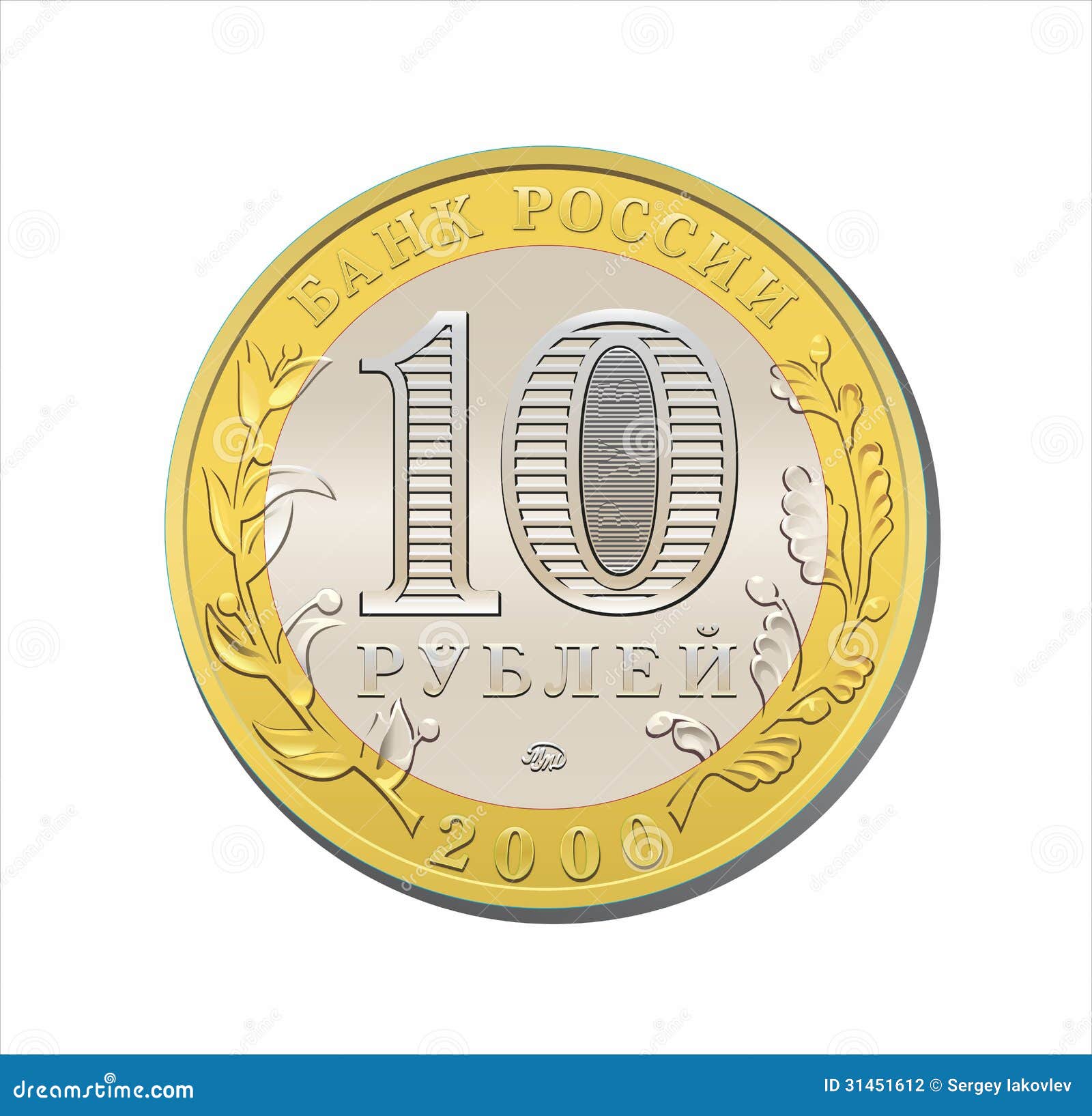
There are much older examples of latent image technology on coins, for example Russian 10 ruble circa year 2000 (look at the middle area of the '0' character): https://thumbs.dreamstime.com/z/coin-rubles-russian-commemor...
That's staggering.
Reminds me of the Indian Rupee 2000 'gps feature'
I think everybody should just accept and use counterfeit coins, if they look like the coins issued by the central bank.