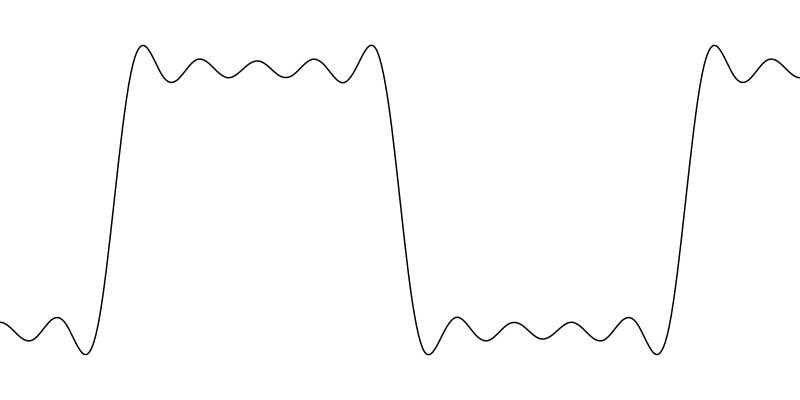
In the case of your second link, the problem is inappropriately applying a low-pass filter. This makes the edge of the square non-sharp, and adds distortion effects multiple pixels away.
This portion of signal theory only applies to a world made entirely out of frequencies. This causes problems when you try to apply it to realistic shapes. It's great for audio, not so great for rendering. The use of point samples does not automatically imply you should be using it.
If you don't like supersampling, that's fine. But you need to pick an antialiasing method that's compatible with the concept of 'edges'.
Edit:
You added "You NEED to apply a true low-pass filter before rasterizing to completely eliminate Moiré patterns."
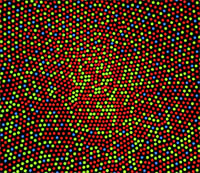
I don't think that's right. It should look fine if you use brute force to calculate how much of every texel on every polygon shows up in every pixel. And it should look fine with much more efficient approximations of that. At no point should it be necessary to use filters that can cause ring effects multiple pixels away.