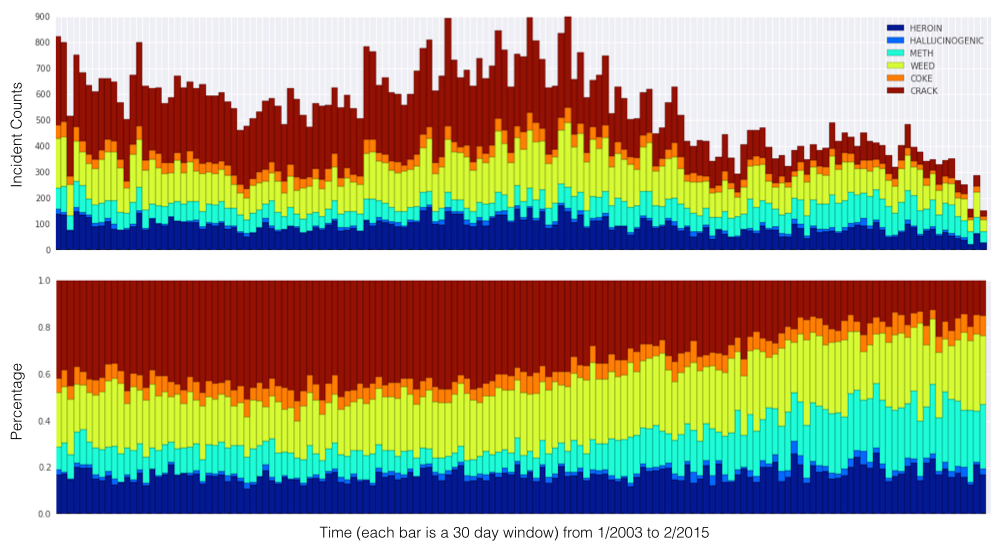
Looking at this chart and being a bit assumptive, is it safe to say crack use has declined and meth has increased?
Maybe meth isn't really a new epidemic with a new user group, crack users just transferred to meth. Basically, those looking for cheap escapist drugs targeted at the very poor have moved onto a new product.
I'm curious which one is worse for society and the users?
Now, don't go trying to convert meth-heads to doing crack. They're both very harmful.
Source?
Meth is an amphetamine like Adderall. I'm pretty sure using a strong stimulant just increases the negative (and positive) attributes already in people.
This sounds like the nonsense about bath salts making people murderers.
People love conflating mental health issues with the drugs people take.
*Not that I'm defending meth users, but I doubt that needs to be said.
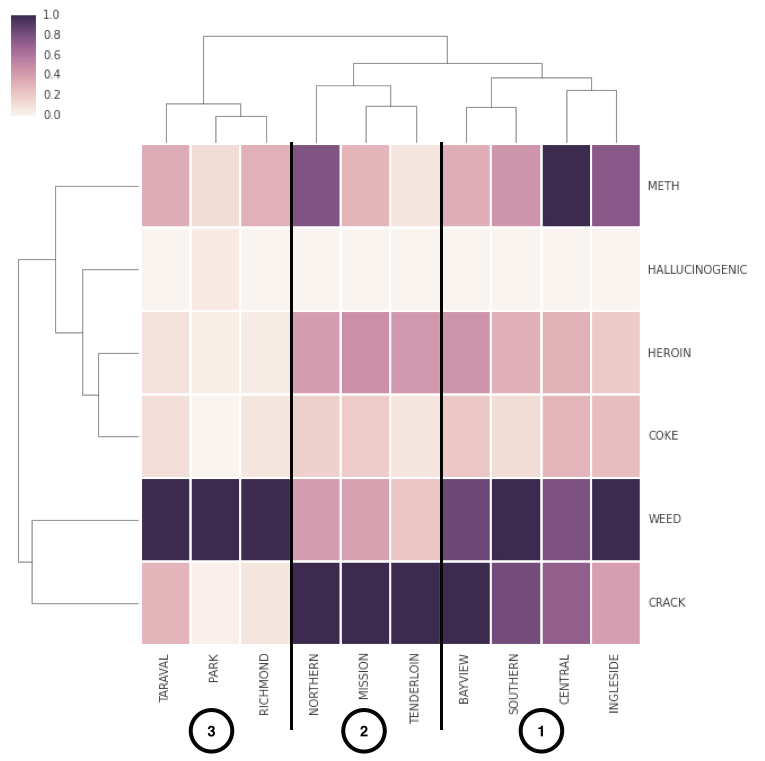
What exactly do the colors mean? And what do those brackets at the top and at the side mean?
The brackets are presumably an explanation of how the "clustering" was done, though with such a small data set it could have been done manually.
If I wanted to be picky about statistics (I generally do), I'd note:
1. Equating enforcement-related statistics with usage-related statistics is a dangerous thing to do. For example:
a. The rate of non-CRACK incidents in TENDERLOIN is probably low (disproportionate with actual use) due to the focus limited police resources put on crack.
b. I would bet that the high rate of WEED incidents in INGLESIDE / BAYVIEW vs, say, MISSION, is due to police using weed enforcement as a weapon against gangs (and minorities). I mean, people smoke a lot of weed in the Mission.
2. Putting "AMPHETAMINE"-related crimes under "METH" is inaccurate, as is putting "OPIUM"/"OPIATE"-related crimes under "HALLUCINOGENIC".
I wonder what this same study would look like across the bay, in Oakland.
My guess would be that San Francisco's marijuana and cocaine consumption is at a per capita all-time high, even as police incidents decline.