This is not what the future was supposed to be about. The future was supposed to bring us infinite possibilities through the means of technology. It was meant to be awesome.
It was not meant to be artificially limited through the means of technology which could have been used to make our lives better instead.
Where did we go wrong?
That’s probably the real reason they don’t use money on Star Trek. Not so much because they eliminated scarcity (which they obviously did, with numerous planets to choose from) but because giving everyone the basic means to sustain themselves was such a small fraction of the economy that it became dehumanizing to force people to work so much when society could provide for all within the percentage of a rounding error.
This concept’s relevance for coffee makers: what’s a coffee maker without coffee? Anyone can brew coffee by pouring hot water through a sock (as it’s done in much of the developing world) and I can say from experience that it’s both more convenient and can even make a better cup. So the key is the coffee, not the machine. It’s not really surprising that Keurig wants to cement itself as a middleman, and since coffee is everywhere, it was probably inevitable that they’d turn to a DRM solution.
Hydroponics, fabless photovoltaics and big data medicine are going to be what take us into the future, not some kitchen gismo. In fact, the more I witness “progress” in my lifetime, the more I see that the really revolutionary stuff like the internet is generally free and shared by all. Otherwise it just makes some guy rich. I want to be rich too, but I’ve spent half my life chasing a goal that wouldn’t even be necessary if I was off the grid and could just get left the heck alone.
Ehhh. I guess that's basically true, but people would probably read the wrong idea into it if you phrase it this way.
An economist would rather phrase it as "a dollar spent on something is a vote for there to be one dollar more of something." But it can be flipped around to your line of thinking as "a dollar spent is a representation of one dollar's worth of dissatisfaction or unmet need that someone has." If everyone has exactly what they want, then market velocity goes to zero. Money doesn't cease to exist; it just ceases to be moved around. (Inflation is, partly, a disincentive for ever letting this happen.)
Either way, even in a post-scarce utopia, capitalism would still survive; it has useful emergent information-redistribution properties beyond its use in plain survival. For example, an "everyone gets a basic income and spends it in a market" system thoroughly beats a central-allocation system when it comes to figuring out what crops need to be grown, what factories need to be built, etc.
It's not about efficiency or inefficiency. You can't alone create everything. Food, water, power, maybe. But what about designing something great and complex?
You could argue people would do this for free, but that's not right. A designer isn't an emoting artist seeking to express some particular vision. A designer solves humanity's problems. There's usually lots of things we want to express, but we don't have time to express them all. The way we select the problem to solve is by evaluating the economic potential of it.
In other words, money makes people solve problems other people care about. It's the fitness function of technological evolution.
"Because money" is sufficient justification for actions in business that would otherwise be classified as sociopathic. This is fairly light in the grand scheme of things.
We first must fix the problem of authority.
If Keurig coffee was somehow astoundingly good out of their machine, with their pods, would we have less of a problem with what they are doing?
What Keurig is doing also doesn't prevent another manufacturer from competing with an unencumbered alternative. Shouldn't we expect such a system to compete in the marketplace on its merits?
Not sure if this fits the definition of irony, but Keurig is the company that came up with the unencumbered 1.0 coffee pod standard. The original DRM was the idea that a scoop of ground coffee beans was incompatible with the pod brewer. 2.0 is exactly the same, but with the RFID (I'm assuming. I haven't cared to look into it) "protection". I'd imagine 3.0 will have some kind of boolean logic much like inkjet cartridges have these days that will make the thing complain that the pod has already been used.
Though, I entirely agree with you. This DRM is only present because Keurig wants to protect it's brand. It came up with the pod brewer concept, much like Apple came up with the iPhone and it's app store. Rejecting what it deems to be inferior or competitive to it's goals is it's objective. I'd wish everything was more open and available for interoperability, but it's their product up until I purchase it, so the design is out of my control.
Fantastic line of discussion! Glad you're bringing it up.
We went wrong when we said, "We can have infinite possibilities, but only through >ME<."
And then we cemented the deal when we went along with the "guy" who said, "You can only have infinite possibilities through >ME<."
And we let it get worse when we rationalize the Keurig with bullshit like "Having a pot of coffee around is unsafe because of the burner, etc."
Technology is a stand-in for relationships - what you would do for someone if you were there, but conveniently you've duplicated yourself via machine. We went wrong when we said, "Well, if I was there, I would prevent you from having coffee from a convenient machine." In reality you wouldn't - you would share as much as possible. However, when we replace ourselves with machines designed by greedy committees, we write ourselves out of the equation.
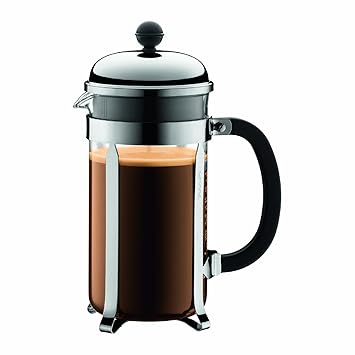
Plus Keurig tastes like a cup of monkey-poo. French press is the way to go (or iced coffee).
Seriously: analogue for analogue things folks.
I mean people pay over $1 for a Christmas card and the justification for that is "someone has to come up with the designs!"
Had unreasonable expectations?
It has never complained to me about anything.
I'm not saying that it's bad, simply that you cannot compare the two, they don't produce the same coffee.
Apart from that, what Keurig is doing (Nespresso is doing the same in Europe) is just plain wrong and should be prevented on a legal level. In France we have this "interop" law that allows us, for the sake of interoperability, to reverse-engineer a patented system to use with non-standard consumables. We have these capsule-based espresso cups, but anybody can sell the capsules.
If you want a real espresso, though, one that doesn't lock you up in a franchise and DRM-ed capsules, just buy a normal espresso machine.
Some people will use the new Keurig and its DRMed cups because it provides them with enough value. I will completely bypass this nonsense and make a DRM-free cup of dirt cheap coffee that stimulates my senses, as outlined in another comment. I suggest that you do the same.
Costs about 20-30$ and makes great coffee A simple yet effective solution to my coffee needs :)
It may take up more time to prepare and clean, but that's an opportunity cost for good coffee every morning.
The advertising practically writes itself, works with all k-cups, the "universal k-cup koffee maker"
Its not the best coffee, but its fast and good enough. I have a press which is good for coffee; also awesome for making ginger tea; and a Bonavita for when friends are here and a pot will work.
Fortunately with 1.0 machines the refillable works fine and EkoBrew makes a very simple and great refillable
My work recently got a new machine, not sure if it has DRM, but the cup holder you have to remove to use the Keurig branded refillable brew basket has 2 tabs that block you from inserting the refillable one.
Hard to get a consistent roast, but the result is very, very fresh. And you get to enjoy coffee roasting smoke!
1. Bring water to boil in a pot
2. Add 2 tbsp ground coffee per cup of water
3. Kill the heat, cover for 5 mins
4. Pour into cup through fine colander or cheese cloth
Seriously it's delicious and you already have the tools you need in your kitchen.
"But I want Hot Tea" "But I want vanilla frappa-bullshit" "But I want Hot Cocoa" "Your coffee is too strong" "Your coffee is too weak"
It's the expensive convenient machine that shuts everyone the fuck up. What's the price on that?
I can't understand the current fascination with single cup makers, but I grew up in a family that went through several pots a day at home. Perhaps as a starbucks replacement the economics work out.
:next morning:
Remove apparatus and filter containing coffee. Heat coffee for 1 minute in microwave. Significantly less bitter, delicious cold-brewed coffee.
http://ecx.images-amazon.com/images/I/61DFW0RJVxL._SY355_.jp...
To filter the coffee, I had a large mason jar in which I arranged four chopsticks sticking out in an upside-down pyramid, on top of which I cradled the bottom of a half-gallon milk jug in which I had punched several holes. The coffee filter went in the milk jug and the weight of the assembly pressed on the chopsticks, which then levered against the rim of the jar and braced against the side, creating quite a stable setup.
Yeah, too lazy to go buy a pot.
You get a little bit of super-fine dust through it, but it's reusable for years and lets all the yummy oils through.
There's absolutely no correlation between how expensive your coffee making process is and how good it tastes.
1. The consumer purphases product A (here the coffee maker) on the normal consumer market we're all familiar with.
2. Doing so forces the consumer to purchase product B (here K-cups) on a different market.
Keurig's goal is to control the second market. By making having all the market power, they can jack up prices to the consumer's detriment.
The reason you see companies like this invoking the DMCA or using DRM is because they have no actual competitive advantage in that second market. They are at a disadvantage because they burned money selling product A at a loss to get people into their market.
Often market forces put us here. Locked, subsidized cell phones with contracts or DRM printers are sold to get people into the market; they wouldn't buy it at full rate.
I don't want to be part of that deal so I buy the unlocked cell phone and DRM-free coffee machine. The alternative is very nearly theft.
When you buy a thing, you own the thing. The manufacturer may have sold the thing to you at a loss, because statistically this works out for them in the long run, but it's not your responsibility as the consumer to ensure that that deal works out for them.
Take another example: suppose I want to buy a cheap printer to hack up for some kind of robotics project. Can we seriously propose that this would be "very nearly theft"?
Or another: several cruise lines are really inexpensive because the cruise line expects to make most of their money from alcohol and gambling. I don't particularly enjoy alcohol and gambling. Am I stealing from the cruise line if I cruise with them?
Examples:
- Aluminium foil and cling film are both in the market for flexible food wrapping materials
- Aluminium foil and aluminium rulers are _not_ in the same market, as they are not substitutes (alternatives)
In cases where it's not clear whether two items are in the same market (e.g. tea bags and instant coffee powder could be considered substitutes) competition regulators will use historical price data to estimate the XED (cross-elasticity of demand) between two products. If XED is high (e.g. a reduction in the price of tea bags significantly reduces demand for instant coffee powder) then the two goods are substitutes, and are deemed to be in the same market.
Now, apply this to your coffee pod/machine and pen/ink examples.
I figure one simple scheme would be to 'burn' the key after it is read. i.e. physically disable the DRM ink by heat/perforation/other ink, so that once used, the signature ink cannot be reused. Curious what other HN-ers would come up with. And hoping Keurig doesn't get any ideas from this. ;)
[0] http://www.theverge.com/2014/6/30/5857030/keurig-digital-rig...
The authentication scheme is there to prevent mass-manufacturing counterfeit cups. Hipsters who modify devices are below noise level on their bottom line (them bragging about sticking it to the Man is free advertisement for the brand so even if there were a loss on a machine it's hard to tell if there is a net loss or profit).
Cut power to the heat source/declaw the perforator/plug up the ink jet. I have physical access, after all.
Keurig is in the position that they can attach a number to each one of their coffee cups, and the machine will refuse to brew if the number doesn't prove the cup is authentic. If they give all the cups the same number, as they apparently have chosen here, than all anyone has to do is present that number again, and voila, the coffeemaker will execute whatever cup they feed it.
Maybe they get smart and give each and every cup a different password. Of course the machines have to recognize these passwords, so they have to start with a known list of length N, where N is the total number coffee cups they ever expect to sell for this line of machines. They put all these passwords through their favorite one-way function, stuff the hashes in a newline-delimited text file, and hope it fits in a few gigabytes. Now once the machine encounters a matching password, it brews one cup, but "crosses off" that password and won't brew for it again.
A laser would burn part of a strip for each credit used.
http://technologyandarchives.blogspot.co.uk/2011/05/how-bt-p...
(There must be better descriptions of them out there).
If Keurig wanted to they could get plenty of ideas from the consumer printer industry, where cartridges have embedded chips in them. Apparently the latest models include some form of crypto too; the older ones were just an EEPROM and were fairly easy to defeat (http://eddiem.com/photo/CIS/inkchip/chip.html) But they should also keep in mind that despite all these countermeasures, plenty of refill kits/aftermarket cartridges/chip resetters/etc. continue to be available, so they're fighting a losing war.
The Aeropress is better than all of those hands down.
http://i.imgur.com/1wWxu37.jpg
With this I can customize the temperature and use PWM on the pump to adjust pressure/flow. :D
If I had to use that 2.0 model I'd just lobotomize it right out of the box.
Also if you are planning to stick with the cone but miss the convenience of nespresso, please check out our ground coffee pack product for pour over. We take high end 90+ rated beans, roast them to order and grind for your brew method. The hermetically sealed pack keeps it fresh for 2-3 months in our tests. Use FREEPACK coupon for the free sample bag.
HTTPS://www.hilinecoffee.com
I have many Nespresso machines and never had a problem with degrading taste. Usually something else breaks like the milk frother on the Lattissima.
Keurig even sells their own reusable cups.[2]
[1]http://www.amazon.com/Brew-Save-Refillable-Single-cup-Brewer...
[2] http://www.amazon.com/Keurig-K-Cup-Reusable-Coffee-Filter/dp...
The coffee machine is real (we've got one in my office), the DRM is real (it won't brew 3rd party cups), the hack works (we did it the first day).
Despite it's Onion-iness it's completely true. That's just where the world is.
An example is the German startup Bonaverde (http://www.bonaverde.com), which manufactures a coffee machine that not only grinds but also roasts your coffee beans. To make sure that you use only their certified (and pricey) coffee beans they include an RFID chip with each package that you have to scan in order to start the brewing process. No tag, no coffee.
There is also a Gizmodo article that nicely sums up the Bonaverde story:
http://gizmodo.com/kickstarter-project-finds-exciting-new-wa...
My general thoughts about companies trying to implement DRM is that there's always some stupidly simple hack around it. Like this Keurig hack. I guarantee that within a week or two of this coming out someone will just find another way to hack around the DRM.
Better mousetraps just breed cleverer mice.
I have a feeling if it's successful, it's going to give Keurig some headaches.
There's already a pretty competitive bean-to-cup coffee machine market, and $300 price point usually gets you a machine that grinds, brews, dispenses and sometimes froths - very poorly, and requires maintenance.
Heck, even a good, “real” espresso machine and grinder (like a Rancilio Silvia and Bartza Vario, entry level coffee geek favourites) combo will set you back around $1k.
It's a pipe dream.
The ZPM Nocturn was supposed to be a $400 espresso machine that used a fancy thermoblock instead of a boiler to save costs (cheap espresso machines use thermoblocks, but the kickstarter claimed that their design was better enough to compete with a boiler).
This is straight from their kickstarter page: [1]
> There are basically two kinds of home espresso machines on the market today. The affordable models have no good mechanism of temperature or pressure control. These machines can’t pull consistent shots. So if you're serious about espresso, you’ll need one of the higher-end machines - they make great coffee, but they also start around $700.
> [...]
> Our machine will retail for around $400, but it's available to you guys on Kickstarter for only $200!
That was in 2012. Today, they still seem to be at the preorder stage, but their machine is now $800. [2]
[1] https://www.kickstarter.com/projects/zpmespresso/pid-control...
[2] http://store.zpmespresso.com/collections/frontpage/products/...
The Arist makes espresso drinks and will cost at least $400 whereas the Keurig costs less than $150 and makes drip coffee.
The Arist looks great, but there is probably very little crossover between the two sets of customers.
That's pretty clearly satire...
"Step 5: Attacker closes the Keurig, and is able to brew coffee using the non-genuine K-Cup."
THE ATTACKER IS BREWING COFFEE.
Love it
Sucks to be anyone who bought more than a box before their machine broke.
[1] https://www.gourmet-coffee.com/Keurig-DRM-Freedom-Clip.html
> This video contains content from SME.
https://i.imgur.com/4wlnL22.png
This has happened multiple times to me, today, all from SME. So many things in life require scissors, tape, and hacks to qualify for "decent" to me now.
The most annoying thing to me is that they require you to be logged in to disable Annotations and other settings. And...even if I do choose to login, it conveniently "forgets" to disable Annotations for some reason.
Their weak DRM certainly serves as a deterrent to the average consumer, but even more so to the mainstream coffee distributors that have been selling "knock off" cups up to this point.
Community Coffee, which is a major roaster/distributor in the deep south, just caved and penned a licensing agreement with Keurig:
http://theadvocate.com/news/acadiana/10981551-123/community-...
Prior to the (negative) publicity surrounding the 2.0 launch, I didn't pay enough attention to notice that the Community Coffee K-cups I've bought (exclusively and in bulk at Sam's Club) for the three or four years that I've owned the machine weren't bonafide Keurig cups, but I think a typical consumer (and retailers, too) would likely be put off if the pods came with instructions for cutting the lid off an authentic Keurig cup and taping them onto the machine.
I'm betting every region has their version of Community Coffee and that Keurig will succeed in converting many of them into licensees. There might be negative publicity that is seen by those of us who care about such things, but on average, Keurig will come out ahead -- maybe without filing a lawsuit.
Instead, they shipped rootkits on music CDs. In hindsight, banning markers would have made too much sense.
I wonder what Keurig 3.0 DRM will look like. Would it have some sort of chemical tagging ability which are only found in Keurig coffee? I'm surprised there isn't any public backslash over such predatory practices.
What's next? A bed that farts because you didn't buy the same brand of blankets and pillow? A toilet that won't flush because you didn't use their brand of cleaner?
The second problem was: They didn't sell or get rid of said Keurig.
The third problem was: They tried to polish a turd. It's still a turd, just a bit now covered up.
Also, Aeropress doesn't have all that not so eco friendly waste that Keurig's K-Cups have.
There is no DRM on Aeropress.
In this very discussion, I have seen people describe the way they make their own coffee, and it is almost identical to the way U.S.A.-C.S.A. civil war soldiers made theirs in camp. And I have seen people describe their heavily-modded robotic coffee makers, using consumables pre-processed in bulk by industrial-scale machinery to provide a more consistent product.
And this makes me think that Keurig is not just pissing into the wind, but directing their little stream against a waterfall. The coffee market is huge, and more ancient by far than most other product markets. It is also thoroughly commoditized. There is simply no way for any company to enjoy pricing power in it without an improbably vast cartel or some strictly policed patents and trademarks.
Why should the collective society of coffee-drinkers indulge Keurig's attempt to achieve economic profits (positive returns when considering opportunity cost) by allowing them to differentiate their sub-market to the point where they enjoy pricing power in it? Is their coffee that much better than all available alternatives? I have similar questions about Starbucks. How do they manage to charge more than the basic commodity price?
It almost seems as though the coffee itself is not the whole product, but it also includes the ritual and ceremony of preparing it. It also looks quite a bit like the market for wines and beers, where the price that the market will bear is determined mostly by the printing on the label.
Given those assumptions, my analysis is that Keurig is approaching their problem from the worst possible angle. Inserting technical countermeasures into the hardware will never work (as repeatedly demonstrated by pwn-your-own-device hackers). They should instead pour that cash into advertising and reward-based psychology. Institute some form of intermittent reward system for using genuine, trademark-branded consumables.
You cannot ever employ enough clever engineers to defeat the legion of people with physical possession of the item and a desire to make it do what its owner desires, instead of obeying its pre-programmed manufacturer directives. Annoying your customers simply does not add value to your product.
Build products for consumers, not against them.
Although, on second thought, I guess I was never going to buy a Keurig in the first place; producing a ton of trash in exchange for expensive mediocre coffee was enough to convince me it was a bad idea?
http://www.cbc.ca/news/business/keurig-s-coffee-supremacy-ch...
Fun that they hacked this DRM with plain tape
Jokes aside, this is a neat hack but I wonder if it would be possible to remove the DRM check from the electronics side itself. I don't have a Keurig machine myself, so I wouldn't dare opening up one (after making a cup) to see what you could hack at.
I expect them to sell more because of it.
Just use a good old ibrik. It costs $3 to $10 depending on size and where you buy it from. The more expensive ones will probably cost $30?