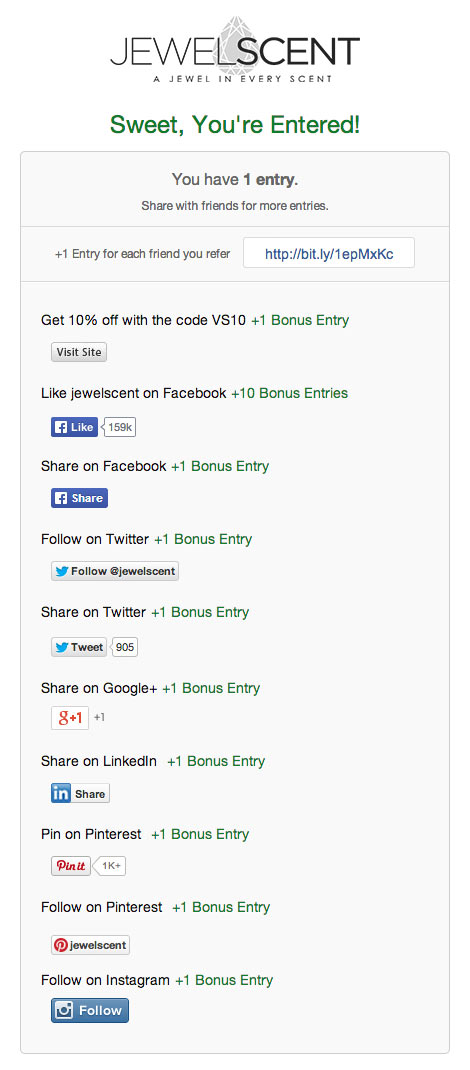
I don't know this industry niche well, but I'm guessing Rafflecopter is a chief competitor. I think if they see this blog post, it'll rattle their knees a little :)
The flip side, of course, is they also don't guesstimate future revenue from new customers attracted by likes generated by the promotion, or from increased engagement (or revenue lost because people made purchases they were going to make anyway but at a 10% discount, or because they were annoyed by the promotion and unsubscribed). Even direct marketing often is more data alchemy than data science :)
https://developers.facebook.com/docs/guides/policy/examples_...
"our policies prohibit directly tying incentives to the use of our Social Channels"
We are compliant with this.
Based on the screenshot, you're doing the Like rewarding in the non-compliant manner, not the compliant one - doesn't appear that pre-existing likes get the 10 entries.
And after say look how many likes we have (cuz many people only gave a shit because of the ~free stuff)
If you're interested in trying a different solution, you could try using LeadBoxes - https://blog.leadpages.net/announcing-leadboxes/
FD: I work for LeadPages.
I tried this experiment in the summer of last year. Did not work out well in my case, but may be someone will use this idea to execute better.
It starts with this - http://orgasms.org/promotion where to enter a promotion, you need to enter email address. Once u entered, you get in a queue like this - http://orgasms.org/promotion-status?email=johndoe%40example.... which tells you that you are Nth in the list of applied and current winning entry is 10th. So if you just applied, for you to get closer to 10th position you need to share it with you friends so they get applied too :)
There were no anti-fraud anything implemented, since it was just an experiment, but in real-world situation comprehensive IP/Cookies/etc detection of same user submission will be required obviously.