Rent is generally very cheap, 250EU/mo for a central apartment (12mo lease). I am staying here only a month however, so am paying a lot more.
Eating out, beer etc is very cheap. Numbeo gets it about right.
Amusingly, most Bulgarians I speak to ask why I would want to come to Bulgaria of all places. I guess it's like many places: great fun to visit or live for a few months but painful for long-term residents.
Upsides apart from cheap living: it's a fun, walkable city with a lot of excellent parks and very little traffic.
Downsides of living here: shockingly corrupt bureaucracy.
That said, I'll head to Romania when my month here is up. I lived in Istanbul previously, so let me know if you want to hear about that too.
That being said, hit me up if you're in Bucharest :)
I'll email you around the 20th, it would be great to have a beer and talk shop.
Istanbul is a massive city split by the Bosphorus straight (?) into a European and Asian side. The euro side is where most of the tourist, nightlife and business stuff is. The asian side is a bit more like suburbia.
In my experience rent was more expensive in Istanbul than Sofia. Around 400+ Euro per month on the euro side. You'd expect cheaper on asian side.
Food costs were quite low when eating out, but very low when market shopping. At best, around 1USD per kilo of the best peaches on the planet. Like drinking sweetened peach juice. Cherries and grapes the same.
I used to live on the european side and commute to asia to do my market shopping. :D (Better produce).
Sorry for rambling.
Upsides of Istanbul: farmers street-market lifestyle - get incredible produce super cheap. Very happening city full of new experiences. Crossing the bosphorus on a ferry as part of your daily commute.
Downsides: crazy traffic, quite dirty (think HCMC), byzantine bureaucracy, not much english around if you're living like a Turk.
If you go to Istanbul, use my app to navigate the public transport:
https://itunes.apple.com/en/app/transportist/id644276437?mt=...
PM or email or whatever if you want a contact for a livable apartment block right near the centre in a gypsy slum.
It's a really amazing place. As the parent says, Turks are incredibly friendly. Having said that, corruption is fairly rife and people will constantly try to rip you off in business transactions. It's not unusual in some jobs to forget being paid your last month's salary (or indeed several months of salary leading up to it) and taxi drivers are mostly the scum of the earth (although it is improving).
There's been a big influx of poorer, less educated and more islamic-oriented people from the east of Turkey for several years and while they may be nice people they're culturally very different to the "white turks" of Istanbul. Taksim's fine, but Cihangir, Galata, Besiktas, Ortakoy and Etiler are (in no order) where I would look to live if I wanted to stay somewhere permanent.
Oh and it goes without saying that the Istanbul police force are not your friends.
Oh yeah? Since Brazilian's president's father is bulgarian, I know where did she learn now.
- Zero taxes. You nearly double your income!
- Low cost of living for a city of its caliber. Rent: <$1k/mo. Food: if you cook, less than $0.5k/mo. Cheap gas/petrol. Lots of fun stuff (indoor ski, etc.) You can live comfortably on <$2k/month.
- Easy to get a freelancer visa. You get freelancer visa by setting up a company in a free zone, and issuing a work visa to yourself. This can cost about $5-$7k yearly. Unlike most countries, there are no nonsensical visa rules, or caps (ahem, H1-Bs) -- you're pretty much guaranteed to get one if you apply, no questions asked.
[The classic straw man argument against Dubai is that it's in a restrictive non-free country with ultra-orthodox Islamic and what not. This is not really true. It's one of the nicest places in the Middle East, and has a very diverse populace with the vast majority being foreign-born.]
I've visited Dubai before, and actually really really liked it. The fact that there was so much diversity was interesting. Seems to be a lot of cool things happening as well - Startup Weekends, Make hub, etc. Food was great as well.
I also looked into getting a visa. The $5-7k for the freelance visa - is that with the Dubai Internet City free zone? Technically you can't work from home with those, or do business with non free zone companies right?
AED 38k translates to $10,345/year, or $862/month. He had to hunt a lot for this apartment though. It's not easy to find, and if you're unfamiliar with Dubai it's especially easy to end up paying Manhattan-esque rents.
With regard to the freelance visa -- I haven't gotten myself one (yet), so I'm no expert. But I don't think working from home will be a problem. You're right that you can't do business with non-free zone companies. But if you're a freelance programmer or web designer, you can basically work out of your home, and bill your client for you work as you normally would anywhere else. And you'd get the full amount, since the UAE has no income taxes.
As far as I know, you do approach a free zone company like DMTFZA. I've actually spoken to a rep at another free zone (RAKFTZ). The reason it costs $5k is because you can't just register a company with a free zone -- you also have to pay at least some office rent. With RAKFTZ, I basically explained my situation -- that I'd be freelancing, and that I was looking for the cheapest option (in terms of visas), to stay in the country. They said the cheapest options was a "Flex" plan, where I am allowed to use one of the meeting rooms in the RAK Free Zone building for up to X hours a week (X < 20). This plan (which includes company registration and what not), would set me back ~$5000/year (converting from AED here). A visa, valid for 3 years, would cost another $2k.
So you're looking at $7k the first year, $5k the next two years, $7k again, and so on -- which is not bad, considering you're not paying taxes (assuming you're making at least $5k/mo). The Dubai free zone authority probably charges, but I most likely not too much more (in order to stay competitive). As a side note; Gulf News, a local English daily in the UAE, had a piece where they described how freelancer visas costs around AED 25,000/year (~$6.8k/yr), and how this was exorbitant and what not. Note: most foreigners in the UAE earn a lot less than first-world country wages. I would wager a guess that the median income of a resident of the UAE was between USD 15k to 20k (i.e. quite close to the US poverty line). The wealth distribution in the UAE is sadly, quite uneven.
FTFY. Also, infinity pools.
Eh, I suppose you can call that cheap if you compare it with NYC and San Francisco...
Even in Tokyo you can get a 1BR for <$1k/month, and you can spend <$300 on food if you cook (some people claim they spend half of that).
It's not the cheapest place in Europe, you'll find cheaper locations in Eastern Europe admittedly. Still, you can find a nice 1BR appartment for €400-500/mo in Las Palmas City near the beach or share an appartment for somewhere around €200/mo for a room.
The weather is really really nice throughout the whole year with lots of sun and there's no real winter. Temp. in the city during the winter can be approx. 18º Celsius. The summers are not extremely hot, rather nice temperatures around 25º.
There's some co-working places where you can get a desk for €100/mo (half days) or €150/mo (full days).
There's a lot of activities that you can do almost throughout the entire year: surfing, boadyboarding, scuba diving, swimming, biking, hiking, climbing and any other outdoor activity.
There's plenty of bars and clubs and the nightlife is very lively.
Please leave a comment if you want to know more.
Child care or kindergarten is pretty affordable, around €300/mo. If you're a legal citizen (e.g. European or w/ work permit) public schools are free, you just pay for the food, which is around €50/mo, buy materials and uniform.
If you want to pay special attention to their education regarding foreign languages and having higher chances to move elsewhere after school or at some point during school age, there are British, American, German and French schools. All of them are private or semi-private and cost up to €500/mo.
If you're considering moving here in the mid/long term, the biggest issue is work. The job market here very bad at the moment, with really high rates of unemployment.
You shouldn't care about this if you're able to work/freelance remotely. In this case, working for UK/Germany/Northern Europe/USA clients will leave margins better than any job you'll find locally and you'll be able to make a good living.
I run a company employing 8 people in total (incl. founders) and we have clients from Spain, Germany, USA. We've been doing this for 8 years.
If you or your partner are looking for a job in the local market, the biggest areas are tourism (many million visitors / year) but you can also make a good living teaching English lessons if you're native and stuff like that.
Oh, my kid speaks Russian and Spanish natively and they teach German and English in school. Will best me by 1 language when out of high school.
I'm from there, but part of the reason why I keep coming back is cause its affordable to rent, even in the hip districts (600-700 EUR for 1br) + a great city to live + good bunch of startups + cheap for flying in/out. Prague is similar.
Also heard great things about Sofia, but haven't lived there (yet). And Berlin is of course a good option as well.
I suppose that during the winter pogroms over them are not out of the question. Actually we had just today a national beaten almost to dead because he is of the Turkish minority and the skinheads mistook him for immigrant.
The situation is not nice.
I am now living in Chania, Greece and it's quite cheap to live, has a beautiful old town, nice beaches and fantastic mountains around. The only drawbacks are that there is only a small Linux user group, but the next hacker space is about 3 hours by bus in Iraklio and that it's only cheap as long as you don't have too pay to much taxes.
Budapest is quite nice too, strong expat community, strong programmers and generally nice people. Bitch of a language though, very contrived.
If you like a little bigger city then Lisbon, Portugal is also an option.
Bremen was a harbor and shipyard town 30 years ago. Now most shipyards are bankrupt, and the harbor seldom sees big ships.
Rentals are really cheap, e.g. I'm paying Euro208 warm (including heating, water, waste, etc - excluding electricity 64Euros and internet SDSL+Cable ~ 50Euro) for two small rooms plus a big kitchen. So I can smoke at my computer, sleep in a room where I dont smoke and host guests at the kitchen. Houses are also cheap, sometimes only Euro40k.
Bremen is a medium size (500k inhabitants) green city with parks everywhere, and gardens around the houses. You can ride bicycle everywhere. We have a good public transport. Its long and narrow. So regardless where you live, you are in walking distance to the river, and in walking distance to the rural. It basically feels like a suburb, but with good transport, and bicycle lanes.
Internet is cheap and available, e.g. 30mbit cable for Euro30/month or 100mbit cable for Euro40/month. Ryan air is at our airport, so you can fly within Europe for Euro19, if you pick the right time at night for ordering a ticket.
Bremen is a free Hanse city and friendly to foreigners. One of our mottos are "Am nettesten sind die Zugereisten" (the nicest people here are from outside). Citizen here are traditional left wing, so neo-nazi's have a very hard stand, and are seldom seen in public.
Bremen has a friendly police, and a sane drug policy. You can smoke marijuana at the dike, and the police will greet you while riding bicycle, and its usual that junkies are sitting in a small park behind the police station. Especially Bremen-Nord (north part of Bremen) has a very friendly small tax office, with great newbie support, and public servants who care for your business.
The drawbacks are high unemployment, low wages, and its nearly impossible to get a developers job outside of the military industrial complex. Also others claim that we are cold. Its hard to learn new people in a pub, but thats easier if you are from outside Germany. But we prefer to gather in clubs (e.g. we have 2 hacker spaces). We have several sport clubs, that are affordable, e.g. most working class sailing clubs costs Euro100/year for adults with own yachts. We often joke that Bremen has always good weather: In winter its warm and rainy, and in summer its raining and warm, thanks to gulf stream.
thanks.
There is an equivalent to green card in Germany, but thats only for wage slaves.
Most Americans I know came as GI's and married a woman to become resident. oh well Its also common to Africans to buy a marriages. We have lots of unemployed people who sell this service.
Yes, winters are an issue for much of Europe and especially for the northern part where much of software industry resides.
If that is important for you, then try the cheaper parts near Mediterranean - say, Slovenia is quite nice.
True about taxes. There are almost no taxes (fixed 9%) for IT companies especially comparing to western countries. But, there are:
1. No shipment from amazon, ebay.
2. Startup culture is in really early stage. People talking about startups, but there are only few of them who have really achieved something
3. Most of European citizens need to have visa (not sure about price) to get there.
4. Coworking/hacker spaces are at the same stage as startup culture.
Hope these things will get sorted out in a few years :) However, if someone decides to go work from Minsk - send me note, I will show you around.
After Istanbul, Munich seems like a dead village to me. I still can't get used to that streets are totally empty after 9-10 pm.
Istanbul is an amazing city. And a lots of job opportunities there. Better climate than Germany. You can't earn as much as Germany but you can still catch the same life standards.
Just as you say, after Istanbul every city feels empty and lifeless!
You should try Zurich (higher for both: salaries and rent) ;)
[1] http://www.numbeo.com/cost-of-living/compare_cities.jsp?coun...
For cheaper city alternatives, I've heard a lot of positives about Wroclaw, but I honestly don't know much about it.
Disclaimer: I'm locally patriotic, but that said I sincerely believe Warsaw is the place to be, YMMV.
> I would recommend against a country using the Euro.
https://en.wikipedia.org/wiki/Eurozone
Dude, 17 out 27 EU member states use the € with Latvia joining 1 Jan 2014 and Lithuania 1 Jan 2015. Population of Eurozone: 330 million. Good luck coming to Europe and avoiding the Eurozone: Austria, Belgium, Cyprus, Estonia, Finland, France, Germany, Greece, Ireland, Italy, Luxembourg, Malta, the Netherlands, Portugal, Slovakia, Slovenia, and Spain.
Some of these places are really really cheap to live in and work in, and life on the ground varies drastically _within_ countries as well, especially bigger countries like Germany - witness Munich versus Berlin. Yours is the most bizarre advice I've heard in a long long while.
For the interested check out the variation in GDP per capita by region:
https://en.wikipedia.org/wiki/List_of_European_regions_by_GD...
Goes from ~ €80,000 to ~ €7,000
10 countries don't use it. That still leaves you with quite a lot of choice. And as I said I was just speaking from personal experience that goods Euro using countries tend to be more expensive. This probably doesn't apply to every one of those countries but it has in every one I've visited.
https://encrypted.google.com/search?q=budapest&tbm=isch
Nice downtown apartments are $300 USD/mo.
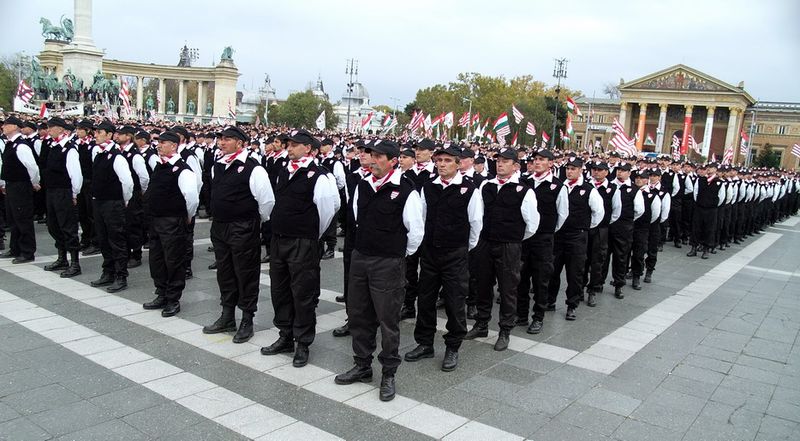
Yet, there is an incredible amount of gifted people, who are the exact opposite of these jerks. I guess a lot of people here admire undertakings like Prezi, LogMeIn, ArchiCAD/Graphisoft, or Ustream, all coming from Budapest.
[1] http://en.wikipedia.org/wiki/Hungarian_Guard [2] http://www.maszol.ro/uploads/files/userfiles/images/kulfold/... [3] http://en.wikipedia.org/wiki/Jobbik
I understand and speak a bit of hungarian now and I keep getting worse service in bars/clubs/shops/restaurants than I got years ago as a broke exchange student speaking broken english.
EDIT:
mind you, I still think the city has a lot of pros, and could be a great place to live in cheaply while working on your project.
http://www.irs.gov/Individuals/International-Taxpayers/Forei...
Some countries of the world (notably the United States of America) require its citizens and permanent residents to pay income tax on foreign earned income as well (in some cases). No EU member states have such requirement.
https://www.airbnb.com/s/Europe?checkin=12%2F01%2F2013&check...
The weather is very good, 30°-35°C in the summer, and 10°-15°C in winter. And you have a wide variety of beaches along the coast (you will be in the Costa del Sol)
There are very good connections with the rest of European cities via its airport, and you can get cheap flights with RyanAir.
I tried to get things going when I was there, particularly at the Málaga tech park.
I'd love to know what's going on.
When I visited Budapest the police acted as Stasi and on the local metro they only asks foreigners for valid tickets. Very unfriendly. I would never recommend anyone going there.
I have no firsthand experiences like that (traveled for a few days through there 2 years ago, no such observations) - but can locals elaborate, is it really so or just media exaggeration?
Rent is about 180-400 EU/mo. Weather is good, not too hot, not too cold. Sun/rain ratio is nice. Cities is not too big, so during season bicycling is preferable. Also public transport is ok. Food for 2 person family is about 150 EU/mo. Streets is safe for foreigners.
And Internet is super fast and super cheap here.
And there is nice and informative video clip http://www.youtube.com/watch?v=RPO4tbV4UHk
Yes, I could answer his question (and the OP could answer your questions), but I prefer not to. I want to hear about all the options.
The OP might prefer a warm climate, but he might be willing to tolerate colder weather if he's told it's super cheap or has city-wide free wifi. He might be a freelancer but might change his objective if he heard that a particular country was granting easy visas for startup founders.
I know you're trying to be helpful by asking the OP to give a precise spec on what he wants, but this entire discussion would have been far less interesting if he had done so!
Cheap:
* Cheap rent. 500eu should get you a decent flat in the city centre without much research
* Cheap cabs. Cabs that take you around will rarely cost more than 3-4eu
* Cheap transportation options with Ryanair and Wizzair
* Cheap internet and communications
Not many other places will offer this great quality of life for ~1500eu/month. Obviously, you can get around much much cheaper, but I'd say that 1500 - 2000 eu/month is the sweet spot
Good:
* Fastest internet in Europe. Seriously
* People speak english. Everyone under 30 will be able to speak english to you. Might be a little harder to communicate to the older folk without knowing lithuanian/russian
* Growing tech community. Regular meetups for ruby / php / js / java / .net usergroups + the biggest developer conference in the Baltics is coming very soon - http://buildstuff.lt/
* Great dinning options. Lunch in my favorite places, some of which have award-winning chef's, will start at 5eu (you can find lunch deals from 3eu). Evening dinning options are great too
* One of the largest old-town's in Northern Europe. Very cozy
* Funs bars. Can't speak about clubs too much, but there are plenty of bars with cheap beer and great crowd
* Lots of interesting stuff to explore within 100km radius - old castles, gorgeous lakes, mighty forests
Winters can get a bit cold and dark, especially if you are used to southern climates. Best weather from April to October.
Some pictures - http://curiouseggs.com/beautiful-lithuania-25-wonderful-phot...
Probably going to migrate south to the Algarve in Portugal for the winter -- northern european rain, wind, cold are not my cup of tea...
Socialism: spending money you don't have...
- Northern countries (Scandinavia, Baltics): good/moderate startup activities (ask me, I'm from there), high costs and also revenues (except Baltics which is vice versa), low corruption, e-services (eg. Estonia: open company in 15 min online). Can manage in English mostly (less in Baltics but still). My key problem: long winter
- East Europe: low costs and revenues, high corruption (paperwork/tax pain), problems with English except in small startup enclaves, need local friends (especially bigger countries like Poland, Czech Rep, Romania). If you can cope with this a bit Asian/Russian lifestyle, I'd skip it and go to Istanbul already, you'd have not only pain but also gain of this mess.
- South-West Europe - each country is quite different, but generally medium costs and revenues, need to know local language or friend (spanish, italian, french, greek), ton of culture which tends to bring also bureaucracy (expect months to your paper processing) , high living quality.
the downside of istanbul is that it's insanely huge and crowded. the traffic is a big pain in the ass but that's changing since many people are starting to use public transportation and the municipality is expanding transportation options. by 2023 things will be way more different.
You can live cheaply and well. It may not be the cheapest cheapest in Europe, but is good value for money. For example at a restaurant opposite our office for only 5€ you can have a freshly grilled Sea Bass or a steak. Office rents are cheap as well. Expect to pay from 6€ to 10€ per m3. So you can out source the cooking and even the driving cheaply. A taxi to the airport will set you back just 8€.
Somebody I know just rented a two bed apartment in the centre of town for 440€ per month.
There is a vibrant Start Up Community. Some really good people.
For us the decision was more than just cost, but also standard of living.
You can find more details here in why we decided to open an office here: http://blog.webnographer.com/2010/10/an-rd-office-in-lisbon/
A story, that had been told to my brothers, and me since we where small, also helps explains my strong connections to Portugal: In the 1960′s my father, a journalist, was in the Congo covering the war after it’s independence from Belgium. The car he was driving had skidded off the road, and turned over. United Nation’s troops passed him by without stopping, but suddenly out of nowhere a bunch of Portuguese cigarette smugglers appeared. They dragged him out of the car into their car, then sped him across the border, and dropped him of at a hotel…
My rescuers bought me a large South African brandy at the bar, gave 500 Rothmans [cigarettes], checked my wallet to see I had enough cash, then left me, delivered back to my native culture, never to see them again. It was the first time I had met Portuguese knowingly – and my first encounter, not only with their extraordinary reaching-out to a stranger in need, but with their blend of bravado, honour, ingenuity and poise.
Extract from The First Global Village: How Portugal Changed the World, by Martin Page
Upside = Best weather in Europe, English speaking, 100Mb/s fiber, cheap ryanair flights to most of Europe, cheap rent compared to Northern Europe - luxury 3 bed flat around 800 Euro.
Downside = Extremely conservative and religious state run by the church (abortion is illegal even if mothers life is at risk - WTF). 10 year prison sentences for possession of Marijauana. Extremely narrow minded people. Ugly, very dry, dirty polluted beaches, lots of rock and very little green. Very poor standard of food at restaurants and even supermarkets.
I'm leaving for the Netherlands, can't wait!
Hope you like it as much as me ;)
You might be interested in reading some of the posts people have contributed so far.
Link: http://www.istorical.com
I'd recommend Prague: http://www.istorical.com/cities/prague/experiences/127
[Are you able to afford a better standard of living in Prague than in other places you've lived, or able to afford less?]
"Money certainly goes a lot farther here. For one thing, the shops are terrible, so there's nowhere to indulge yourself if you want to go crazy with your credit card. Parking in the city centre is next to impossible but the public transportation system here is safe, clean and a pleasure to use so there's no need to drive a car. The rent compared to other European cities is pretty cheap although times are changing and costs are going up in general. When I first visited Prague, a beer was less than a euro and you only needed to work three days a week to live like a king. But just like anywhere else, you can either pay through the nose for an apartment or get one really cheap by developing the right contacts.
The drugs and clothes are more expensive and much poorer quality than in the UK but everything else is generally much cheaper.
We live right in the centre of the city so I'm not sure how that compares to the outer edges of the city but we pay 18,000.00 CZK = 698.377 EUR for 90, sq meter apartment with 1 large bedroom, kitchen and living room plus a decent-sized balcony that looks out over the street. That price includes all janitor services, wi-fi and cable TV. This is way more expensive than what I was paying for a three-bedroom house on the outskirts of London but hey, it's Prague."
- Berlin: It's the perfect combination of cheap living costs and OKish (growing) tech community
- As mentioned pretty much everything from Paris to Kiev gets really dark & cold in winter, and not in a NY/Chicago cool way.
- More and more people (especially British) move to Spain, mostly Barcelona. Not as good in terms of startup community as Berlin, but at least equally cheap & decent regarding arts.
Personal bottom line if you want to spend the whole year in Europe: Barcelona in Winter, Berlin in summer, and using LCC fares to get to London for interesting meetups etc.
Plus I like the funny language and (some of) the people. Do take a trip to some sunny destination in the middle of the winter though, because it can get really dark during winter...
No one will ever expect you to learn Slovenian too, it's such a complicated language that unless you were a native speaker, it's next to impossible to speak correctly.
You just need to avoid the too touristic places.
Best spot for flying to all european cities. Best weather, beaches with nice water temperature. Organization, cleanness, respectful people and multicultural: you will hear a lot of english as well other dozens of languages.
Life in Barcelona is not so cheap, but compared to other cities it's a dream.
I'm living here since 2001 and I will never leave this place I guess.
This is an old comment I've submitted to HN telling my expenses in Barcelona https://news.ycombinator.com/item?id=6618033