And to answer your question, no, the chips cannot be repurposed for anything else.
I doubt the ASICs can be retargeted. Although the cabinets and power supplies etc could (in theory) so you could turn around and re-populate it with SHA1 ASICs or something and start passwords or something with the boxes (would need new boards and programming though)
My mining pools just throws in namecoins for me. I guess they can check the same hash against both systems.
ASIC BTC mining hardware, I don't think can be re-purposed.
Hence there will be an end to mining.
For example, if an attacker wanted to attack Bitcoin, they would have to get funding today, develop or acquire an ASIC design, build and develop a ~150 meggawatt datacenter, all within the next 6 months, to have a chance to attack the network.
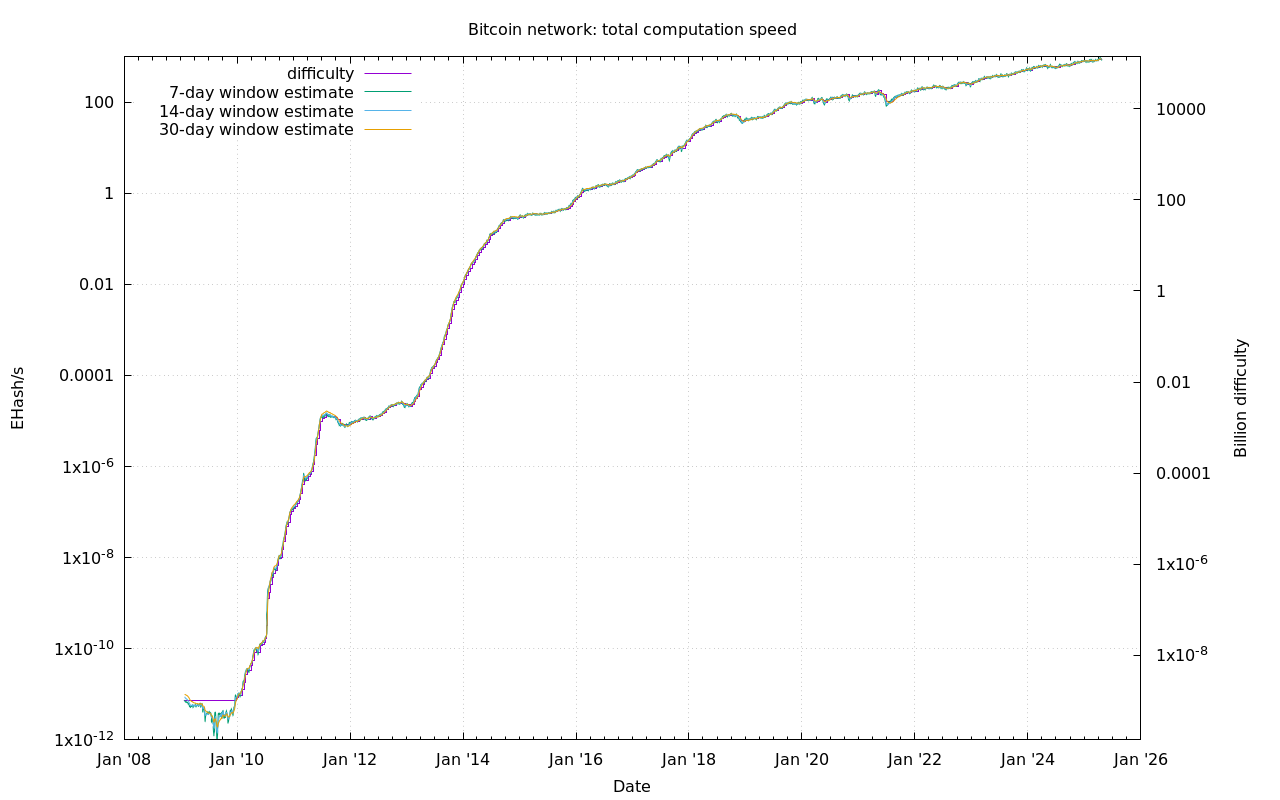
Details: at 2.2 Phash/s today, 6 months from now we should be around 2.2 * 2^6 = ~150 Phash/s. The best ASICs, 28nm KncMiner, are approximately 100 ~Ghash/s and 100 Watt each. So the attacker would have to build 150 Phash/s of these to clearly outperform the network: that is 1.5 million chips at 150 meggawatt total. And to plan for a potential delay of 30 days, the attacker would have to build not 150 Phash/s but 300 Phash/s of ASICs to attack the network. 3 million chips. 300 meggawatt datacenter. For comparison, Facebook spent $210 million on their 28 meggawatt Prinevill datacenter. So a 300 meggawatt datacenter would probably cost $2 billion. Therefore I doubt such an attack against Bitcoin would be even within NSA's capabilities. They can't even get their Utah datacenter to run correctly and it has been delayed by more than 1 year: http://www.pcworld.com/article/2052960/nsa-data-center-suffe...
Once 28nm bitcoin ASICs are widely distributed, the bitcoin network will be safe from a 51% attack even from governments.
I think you need to assert that there never will be any superior technology...
Couldn't someone develop better ASICs, long after mining has ended, to launch a 51% attack? Granted it would be expensive, wouldn't that expense decrease continuously?
This is true even after the last "coin" has been mined. Coins are incentive to jump-start the economy when there isn't much activity, the end-game is all in mining blocks to get transaction fees, at which point it pretty much self-balances. Miners continue mining as long as it's profitable, and transaction fees maintain a level which keeps it that way (but not too profitable, or there would be more miners competing for them).
Going into the future, when difficulty is high enough or all Bitcoins are mined, would some of this computing power shut down?
No, because the payer can decide the fee to pay, and the miner can decide the minimum he will accept. So the free market will take care of the fees for the miners.