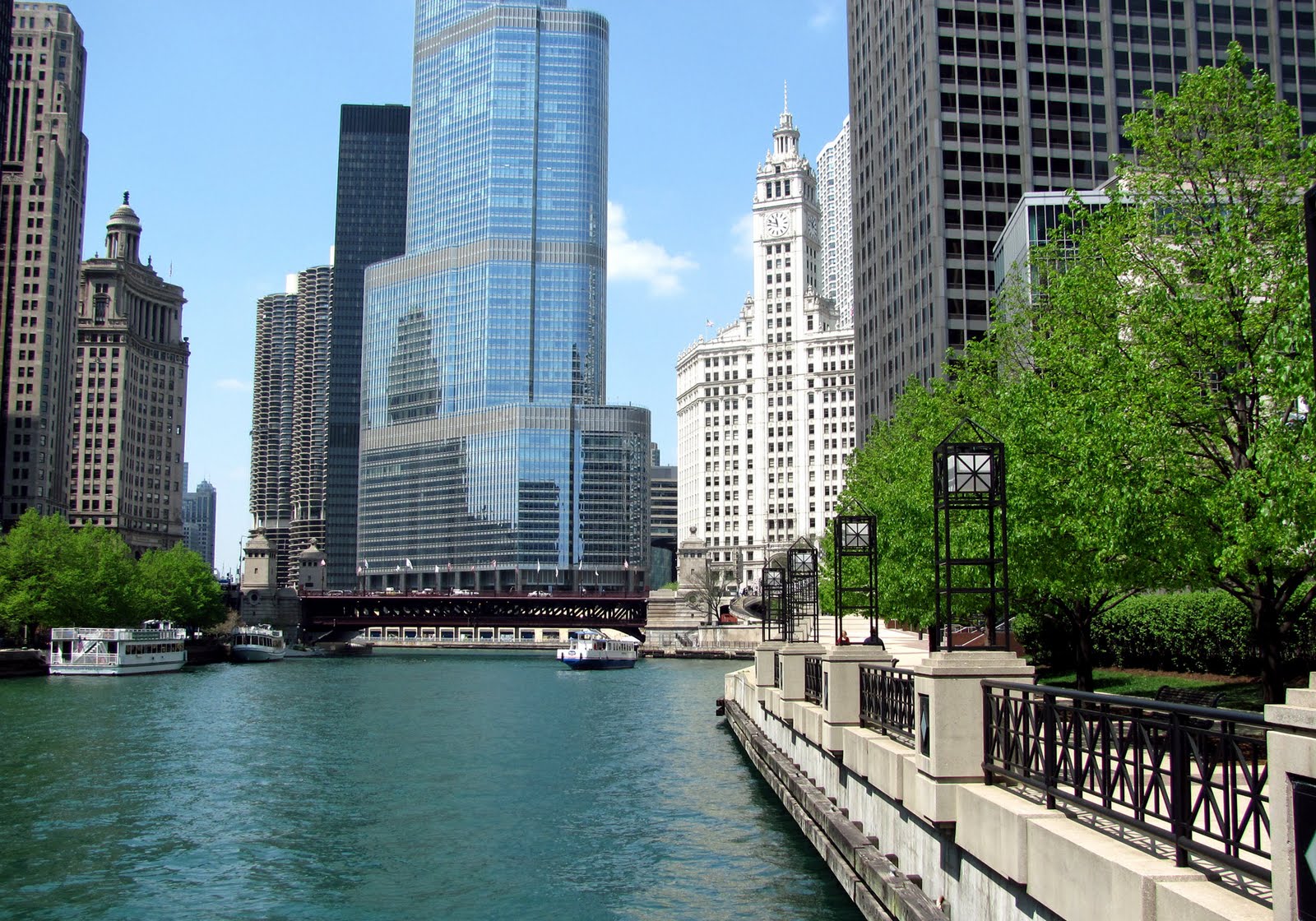
Height is beautiful: http://1.bp.blogspot.com/_3nsDtd8zatQ/S9382uGLh6I/AAAAAAAAAh...
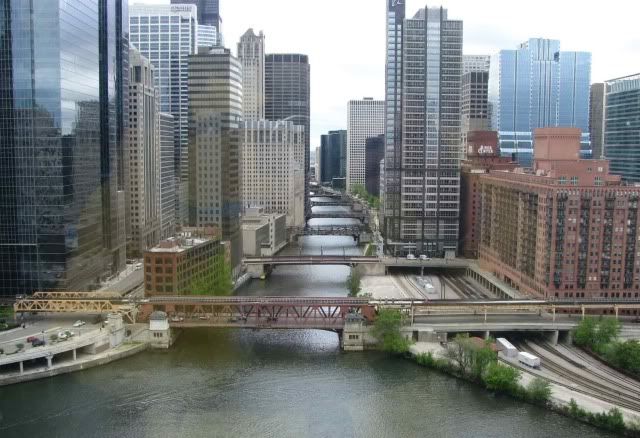
http://img.photobucket.com/albums/v171/lugnuts/Bridges/IMG_5...
http://www.thewrigleybuilding.com/images/about-top.jpg
Also, the growth of D.C. is something I intensely dislike. It reminds me of Trantor in the Foundation series. It's all fueled by federal spending. The city has no finance industry, not a lot of technology besides defense contractors, no manufacturing, nothing that would justify the growth other than lots of highly-paid federal workers.
I'm actually a proponent of a robust federal government, but I hate the fact that it's concentrated in D.C. I think we need to spend money on say the SEC or the EPA, but we should push the work of these organizations down to local field offices, so the incidental benefits of federal jobs and contracts go back into the communities that pay the taxes to support them. Moreover, local siting makes federal offices much more sensitive to the local culture and concerns.
A good example of this is the Mormon temple in Salt Lake City. It appeared prominent and even formidable when it was built in the 18th century but modern construction has surrounded it on all sides and it's not even really part of the skyline anymore[1]. That's ok, but we have to decide whether the loss of emphasis on history is worth it.
[1] http://www.deseretnews.com/images/article/midres/315661/3156... (You can just see the six spires over an office building in the left-hand side of the frame).
We can build tall buildings now. Some of those will become historic, if we build them. Many of them will be very nice-looking, like the new WTC towers. Don't let old building methods stand in the way of progress. I'm not one of those growth-at-all-costs people, but there's a lot of benefit in finding ways to put a large number of people in a small space comfortably.
Most of the monuments are within 0.5 miles north or south of Constitution Ave, while the business district centers around K street a mile north of that. In fact, I think it would look quite amazing, the way Central Park does in Manhattan.
Also, DC has a decently sized tech community and industry, a lot of which is not related to the federal government. I'd venture to say it's the largest in the country after SF, NYC and Chicago.
I'm not saying that's what the WaPo is trying to do. I think they just didn't put in the time to do a good job creating a hypothetical new DC with realistic buildings of varying heights. However, if you support increased heights for buildings, their mock-ups make something you consider positive look bad. I mean, I'd hate to live in a city with imposing concrete blocks with no windows. It would look like some dystopian future world. But the photos of what I think is Chicago that were linked to don't look oppressive and don't have uniformity of height - there's plenty of sky that you can see through the buildings since they aren't connected beige blobs. Now, one can still dislike tall buildings (they can change the nature of the area), but they wouldn't have the same oppressive feeling.
So, the mockups from WaPo look oppressive (on purpose or on accident) while proponents of eased height restrictions would insist that it would look a lot more like the Chicago photos than some concrete dystopia.
The purpose was to show that regardless of raised height, you'd still be able to see the US capitol, and the tall monuments/government buildings will remain as iconic as they are today in the skyline.
Right, because that gives a place substance...
Cities grow! The choice here is between upward and outward. You can keep buildings unnaturally short, which forces the city to spread out, increasing commute times (and a whole lot more). Or you can let things grow, and let the place be more livable for the people that actually live there.
In fact the new financial district off to the side with its skyscrapers and, I imagine, no height limit, while modern and fancy, just doesn't feel as city-like as the rest of Paris. It feels like a dead place where people only come to work.
I've only spent a good week in Paris, so it might feel different when you're living there for a long time. But not-tall cities are totally cool.
On that note, parts of Toronto like that feel the exact same way.
I don't understand why this formula is so hard for urban planners to accept. You see it in every thriving city. It simply should not be allowed to make a 5+ story building that is purely housing and is recessed from the sidewalk. When it is allowed you get the alienating Corbusier style housing project vibe. This crap has been thrown up all over the DC area in recent years.
The reason DC has gotten nicer lately isn't the sprawl. It's because it's become a major target for young professionals, which have driven the poor people out of many parts of the city.
Please.
There is space right across Anacostia river in the South East. Metro goes there pretty fast.
Build the buildings there, just make sure to hire more police to make it safer for workers.
Now I know that the approach of moving Anacostia people away has this problem: ultimately these people will have to go somewhere and the vicious circle will start again but at least we don't know that all these people will go to the same location, so these problems can be spread and be solved by different communities.
When you restrict supply, the folks with money win.
Lobbyists can live anywhere (I'm sure many/most live outside DC proper) and, if anything, I would argue that it's increasingly less important for a lobbying firm to physically be on K St or the Hill.
The cities of Arlington and Alexandria now occupy the portion of the original diamond that is west of the Potomac. When standing in Georgetown, you look across the river and see 20 story office buildings. Arlington and Alexandria act as quasi-DC, in the sense that they are dense, are connected via DC's subway system (Metro) and separated from DC only by a relatively narrow river.
Lifting the height limit, I think, would be a great thing for DC. It is an overly suburbanized metro area due to the height restrictions.
Key issues to consider: infrastructure (power, water, sewage, gas, internet, transit, roads) traffic impact walkability of neighborhood (are there food options, etc.)
I think pushing sprawl outward is the LAST thing DC needs, traffic there is already horrible (not as bad as mexico city or sao paulo, but awful by US standards).