IMO, the current 2+GB caps are not that bad, raise that to 20GB and you can watch a fair amount of hulu for example (~50+hours) without a problem.
Has not been my experience at all here in Sweden. Data caps have been lowered across the board over the past year as data speeds and availability has improved.
They will innovate.
Marketing aside, the tech might have merit in its own right though. I think the Ka band isn't available for use in my country though...
So? Its still entirely dead. More than that...they falsely claimed 4G and made millions off it. Yes its still means something from a technical point of view, but the concept in its true form is dead to the world - though very profitable.
>the trademark was not acquired in time
How do you propose trademarking a two character term that refers to a multiple of the gravitational constant? (It doesn't but in a courtroom many things are possible...)
http://news.cnet.com/8301-30686_3-57408432-266/is-the-at-t-i...
As for the article linked - I wouldn't even call that "fooled by". That implies that there was a plausible case & the journalist was deceived via some active plot. If the reporter had done even vague research as to what 4G is (the topic of his article [lol]) then he/she would have smelled a rat. That to me is a straight up failure as a journalist, rather than "fooled by".
Edit: According to https://en.wikipedia.org/wiki/Ka_band this band is used for satellite communications, but it very susceptible to attenuation in rain. So it's very cool that a new antenna tech could improve on satellite downlinks, but it still doesn't seem practical for a cell phone.
This could be useful to a telecom if they implement an expensive design that uses obstructions to their advantage. Essentially blast the radio waves down streets as if they are isolated tunnels. That would reduce interference to almost nothing, but require many more access points than they currently have. They would also still have the problem of penetration indoors.
I'm going to wait until field trials in actual units are underway before becoming excited about this one.
if anything, i'd like better latency and coverage.
Translation: "The theoretical numbers we sold LTE with are a good target, maybe this technology lets us deliver that in the real world to all the users who want it."
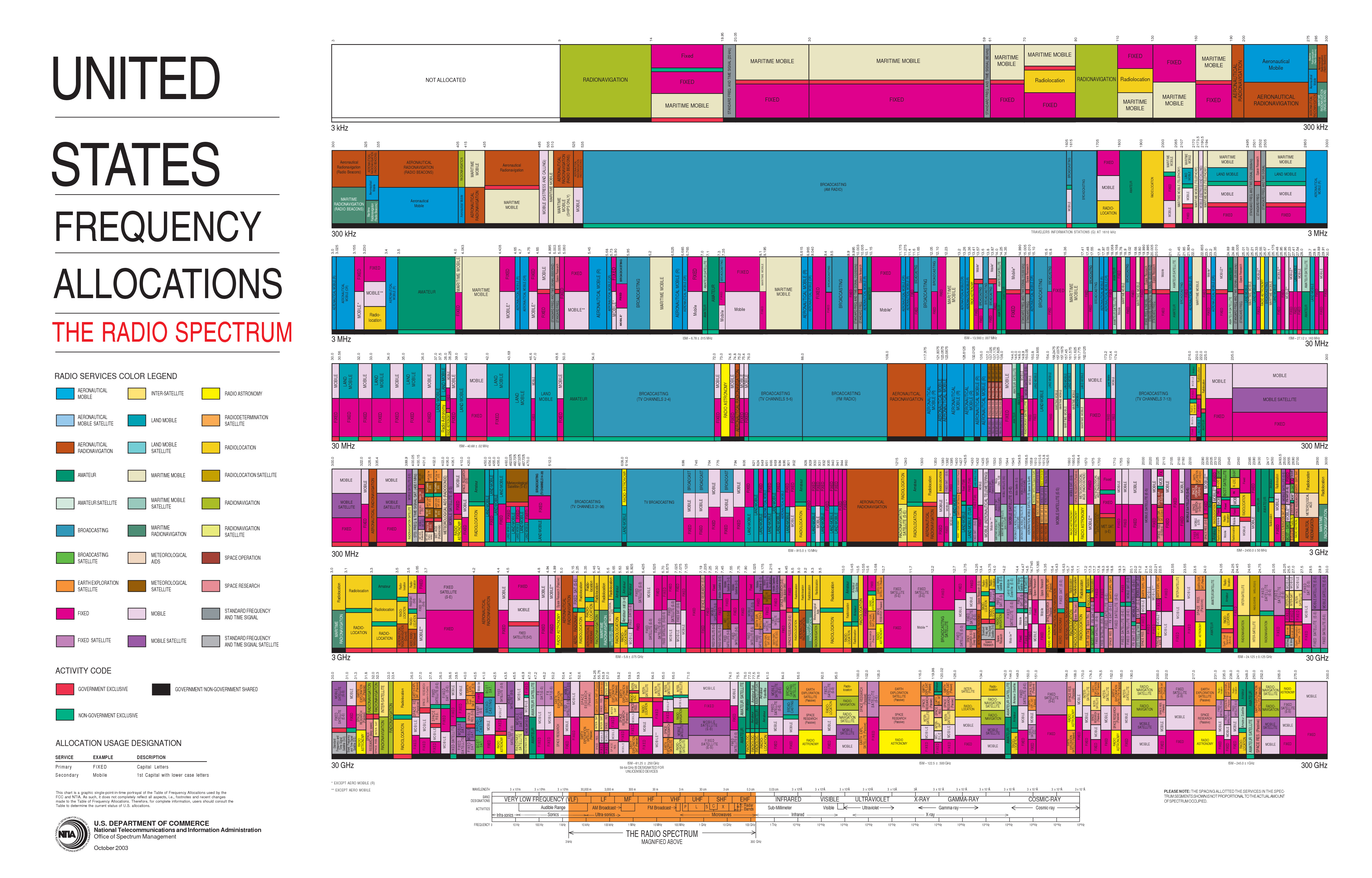
From what I can tell, this technology isn't about making spectrum more efficient, but opening up new parts of the spectrum (10+GHz) that weren't usable before. edit: nice map of radio spectrum. Being able to use 28GHz seems like a massive leap. http://www.telecomcircle.com/wp-content/uploads/2009/11/Spec...
The short-term solution is to open up more spectrum to mobile use, but things are looking pretty congested. http://siliconangle.com/files/2011/03/spectrum_map1.jpg