> In the long term, space-based AI is obviously the only way to scale.
In the long term - all mass and energy available is outside of Earth - what is here is not even a rounding error. If you wish to continue scaling compute it then becomes a question of time before you'd want to go off planet. Personally I'm quite keen to see near term space based compute explored, as it could end up becoming a much better trade-off than allocating ever more ground to power and operate terrestrial compute which directly conflict with the biosphere.
SpaceX started the Starlink design phase in 2015 - started launching Starlink satellites in 2019 - and they now have the most dominant satellite constellation ever deployed by a large factor. They have their own launch systems, launch sites, satellite bus, communication stack - both in-house designed and built.
What is really going to be that difficult with space-based compute? Radiation hardening and cooling? These are clear engineering challenges that can be simulated, tested with earth analogs, and then rapidly iterated across design generations. There's napkin math all over the internet on this, but it really seems like small challenges compared to the other engineering SpaceX have already sorted.
Beyond radiation / cooling / servicing - it seems like the biggest hurdle is to crack the scaling of designing / scaling the necessary amount of compute they will need to scale space based compute according to the laid out plans.
In case anyone is wondering how Tesla’s stock price remain wildly detached from its business reality, keep these four words in mind. If you can convince people that anything about you and your business has to be evaluated on a literally astronomical timescale, you can justify any valuation you desire, because your believers will give you infinite time to realize their investment returns. It has nothing to do with business. They are selling you a vision — which can also come in a pill form, labeled "salvia" and sold at gas stations.
I still see people say the cybertruck is built for mars environments, conveniently ignoring the vast technological and economical barriers stopping us from driving commercially produced vehicles on mars. This space data center thing is the same deal. It doesn't matter how long it will take to solve the technical issues with cooling, radiation, maintenance. It doesn't matter if it will make economical sense or not. It doesn't matter if spacex will be the one to actually do it. You just have to believe, and give them some time — a lot of time, so much time that a monkey can type out Hamlet and type it out again backwards.
See also the buffoonery coming out of Bay Area "effective altruist" and "longtermism" communities.
Technical concerns aside, the main risk is financial. Success is based on the premise that we need this enough that the costs are justified but the costs are going to be much higher. That is totally unproven on any financial modelling scenario I've seen. In fact there's likely no actual ROI on what has been spent so far and no qualification of demand. With geopolitical problems on the table, no one is going to fund this.
The idea is completely dead before the first node leaves the planet.
So in the long term, what do you think is cheaper and easier to maintain, upgrade, handle etc.?
A Space operation on which you need to send compute hardware constantly upwoards or a fiber connection to some more 'remote/dessert' like area which has a lot of energy available?
Starlink is not a game changer at all. It has 8-10 Million customers, from which plenty of peopple just use it for holidays, or upping there already existing internet line or because its faster to deploy than a cable.
Our planet is already very well connected. Putting lines in the ground is necessary anyway because you still need energy / powerlines.
Of course this can be done, thats NOT the question. The only question is, if its worth it and its not.
Sending some servers up in space is margins more expensive than sending some servers on trucks (you need anyway) to another earth location.
Almost correct, yes.
Starlink is different, it makes sense. Covering the entire Earth, including the oceans with cell towers for global internet connectivity is harder than having a satellite constellation. The opposite situation from datacenters.
Manufacturing capabilities are quite lacking, though, in the short and medium terms, so this doesn't seem all that relevant.
Maybe a self-contained, modular solar panel / radiator / compute unit could be built, but it will be manufactured on Earth. (Where the fabs are.)
And it still seems easier to put solar panels and batteries near the data centers that SpaceX is already building on Earth.
Define “long term”. Nuclear energy is practically unlimited, plus fusion (if it ever works).
Stopping some random rogue nation blowing it up.
Why put them in space? Power? We have that on earth.
Seems more like a grift to me, after the car grift and the Mars grift didn't pan out.
you also shrug off cooling. this is not a solved problem in any way. its not even approachable as of yet. the vast size of the radiators will be hilarious regardless.
you ignore power generation. solar is not an option. so we also need nuclear reactors for these orbital data centers. thats cool spacex can just branch out into nuclear too! love the idea of unmanned nuclear orbiting behemoths.
speaking of orbital.. what is their orbit? do they go out to Lagrange points? hilariously far? or do they stay close? hilariously fuel intensive to stay out of the atmosphere for such massive structures?
but hey, maybe we distribute spaceX-AI gpu's across starlinks. a couple solar panels and a tesla battery per gpu. all launched there by spacex
'all mass and energy available is outside of earth' Yeah, and out of range for compute data connections too.
I don't agree with the feasibility or ANY sort of practicality to this whatsoever. Im all for going for it, but I wish everyone could just admit that we're doing it because it's cool, not because it's useful. I get why Elon wont say that, but not us.
They can. But in Elons case, its going to be his style of sending failure after failure up in the space, getting something working part time, lying about it and exaggerating how good it is, and then making fun of others for not using his inferior product.
Pretty much like everything else he has done.
yawn, people keep making this excuse on behalf of the South African investor with poor technical expertise.
Instead of wasting huge amounts of land to farming, restaurants and transportation of food it would be so much better if everyone just had a Star-Trek style food replicator in their house.
None of the tech exists but fuck it. Why bother with realities of life?
I am raising 200 Trillion Dollars for AI Space FoodX. Who is in?
tbf, a 'sane' person wouldn't have started a rocket company and an ev company, at the same time, in a recession.
He has never been sane. and that has made all the difference.
This "space datacenters is more important than colonizing the universe" thing is just to deflect from what would be an inevitable failure because if they do this pivot, they can push out the timeline for that further than the original 2026 on Mars goal that they are about to wildly overshoot.
I think if fusion is real, it might not be so advantageous until space mining is a thing.
In other words good old fashioned plausibly deniable securities fraud.
We're simply out things we can profitably send to space so SpaceX and others are trying to come up with ideas to induce demand.
My understanding is that Starlink mostly grew out of the same need to justify scaling up rocket production.
Other than the occasional GNSS, weather, scientific, broadcast and surveillance satellite, there's not all that much worth sending into space.
I can only assume "too easy to track" is part of the logic.
Ditto for kinetic strikes. That was super hyped up.
IDK I think plenty of people will want to go to space or even cut 24 hour flights across the world to 90 minutes.
As for experience - it's going to be pricy, but look how many multi-million dollar yachts are out there, parked, doing nothing. People do have money for such experiences.
Not that I think we'll end up increasing our total launch payload throughput by over 3000x within 3 years like he suggests.
-George Bernard Shaw
in the very broad shoulders of long term, he's probably right.. its why the concept of a dysonsphere is around. you can get uninterrupted 24/7 free energy.
but yeah, the tech is a long way away.
*Edit: lol My estimate is that within 2 to 3 years, the lowest cost way to generate AI compute will be in space.
i think 2-3 years is a very unlikely outcome.
Freeman Dyson invented the concept as a joke against SETI, especially designing it to sound quasi-plausible.
In reality, there is no way to create a stable structure of this size, it would be like trying to balance a building on the top of a pinhead - except the pinhead is a chaotic, unpredictable star. And the amount of energy required to displace multiple planets worth of mass, manufacture some amount of it into complex satellites, and then displace this amount again to a "stable" Solar orbit simply doesn't exist in the Solar system, on any plausible time scale (it would take many thousands if not millions of years worth of solar power to do so).
But 2 to 3 years?! Seems crazy
We used to eliminate Nazis, not invest in them.
US history is more complicated than that, and aside from those four years of hot war, more ambiguous.
Henry Ford was a big Nazi sympathizer, and the Apollo program was led by an actual card-carrying Nazi engineer with a history of overseeing slave labor in a concentration camp.
Which is not meant to defend Nazis, just correct the myth that the US was once somehow morally pure in this regard.
Still waiting on these 2014 fully self driving cars, back when Uber promised to buy every single model S they could produce.
Now he's late on his mars promises so he's pushing some new bullshit timeline.
For all the lies, bad behavior, and broken promises, SpaceX's achievements and reliability record is still incredible, X/Twitter hasn't crashed and burned after all the layoffs and drama, and Tesla (until recently due to his meddling) had a lock on the leading the car industry's direction & doing a lot to drive practical electrification globally.
Hell, it would be cheaper to figure out how to build them on the ocean.
https://www.chaotropy.com/why-jeff-bezos-is-probably-wrong-p...
Its to the point where anything he says is guaranteed to be wrong just on the merit that its coming out of his mouth.
Will we get to Mars soon? Hell no. But we may end up with a world-leading launch provider based in the US and that's a clear win for the country.
At least he has B.Sc. in physics and got admitted into Stanford.
I think what Elon says is better explained not as a promise what would happen, but rather as a goal which they're going to aspire to. It kinda supports the idea "we're in business of converting impossible into late". If Elon will start offering more "realistic" schedules, the pace of SpaceX will slow down, perhaps considerably. So, yes, it's "Elon time", which historically isn't particularly precise, but still useful.
How much did he bring in that timeline?
Chronic over-promise, underdelivery.
Where was the nearly 3T of fraud he said he'd uncover in the US government, again? Was that a clear win for the country?
But hey at least he's effective at getting people to give him money, I guess, which is an indistinguishable "skill" from that of someone who is able to convince people to buy an online course on how to make money online.
He just does it at a bigger scale so people are quick to suck him off. How we are still falling into the "money = smart/competent" trap in <<current year>> is beyond me.
I have immense appreciation for what SpaceX has done for humanity. I’m not being dramatic. Reusable rockets alone is an incredible achievement. But he’s lost the plot. He needs to drop his right wing bullshit and stardom chasing if he wants to be taken seriously again. The dude won’t even acknowledge his own kid because of his politics. I will never trust someone who makes that decision, personally. His judgment is beyond clouded.
The Elon bros will be mad but whatever. One day he’ll maybe remember why folks liked him. Hitching his wagon to Trump was a dumb move.
He has to be the biggest richest idiot on the planet.
It should be a lot cheaper to just buy massive solar (wait, couldn't he just make them himself with his tesla roofs?) and batteries (which Tesla also makes) and put Datacenter in some dessert and put fiber to that place...
But it seems he needs some angle to push all this necessary investment into something?
Are we now in the phase of 'lets play scifi' just because we can't come up with anything else?
Btw. Starlink is already 'cheap', with only 8-10 Million customers and doesn't scale easily. So that will not just be able to keep up with his mars stuff...
Do you have aerospace engineering background? what are your arguments?
I don't know how all of these turn out to be, but when you keep repeat the same arguments, without anything to back it up, you should have some reflection.
[0] https://news.cgtn.com/news/2026-01-29/China-unveils-space-am...
[1] https://www.reuters.com/science/google-spacex-talks-explore-...
[2] https://research.google/blog/exploring-a-space-based-scalabl...
[3] https://spacenews.com/blue-origins-surprise-terawave-constel...
Google has so much money, I don't know why they are doing this, perhaps because they can, because the people in their lab would like to shoot something up, but thats not the core selling point of Google.
Blue Origin, you are referencing, is doing Terawave its a Starlink competitor. Which is not a AI DC in Space.
But yes I mean either idiot or duplicitous for marketing/stock boosting reasons.
I wish there was a Kalshi market for TeraFLOPs in orbit by X date
So my bet would be that just ordering a bunch of sodium batteries and a bunch of solar panels (or you know using a source of energy that is constant) is cheaper then going threw all the effort of putting things into space.
I have been following everything space for decades, and not once have I thought, wow putting super complex engineering things into space so easy and you should do it for things that have an easy alternative on earth.
Also hard radiation is not something transistors like.
The more power you consume, the more power you need to dissipate. These constelations wouldn't be small at all. It would also take a interesting solution to be able to move this heat from very small very intense areas to very big cooling areas. How?
And space is not easy. Space is very very cold which puts a lot of stress on materials. It has radiation. And it has A LOT of microasteroids. Stuff in Space breaks down due to this. You would need to replace all of this stuff regularly with resources from the planet earth.
You would basically just spend a lot of resources throwing a lot of resources out into space. You can't even recycle all of this.
Its still lunatic at our current state of our current system. There is so so much space on our planet. Its ridicoulous
The only reason Musk is saying stuff like this is because he knows there is no market and he needs to keep his system alive
In the end in like 10-15 years when others land on the moon and build amazing new things maybe just maybe there will be a realization that playing scifi doesn't produce results.
See https://www.youtube.com/watch?v=jbp3kdJZ1_A and specifically for the economics of AI vs surveillance - https://www.youtube.com/watch?v=mA-S1JGzph4
I do wonder if shielding the multi-billion transistor GPUs will be a difficult.
Elon Musk on the other hand has a construct of multiply billion dollar companies he has to feed and keep alive:
xAI investment burns one Billion per month. Space X makes 8 Billion per year. X cost him 40 Billion when he bought it but is not profitable. Tesla struggles to grow, had the very costly Cybertruck, and has a lot more opposition than 10 years ago.
I do not understand at all what his endgame is. His finances are hidden enough. But his motivation is for sure selling his story.
his story is the future and it doesn't matter very much if its doable or not or usefull. Tesla as a company is still overevaluated for years now. If Tesla would drop to what its worth, Musk might need to pay back a lot of loans and other stuff and he might just be gone. He said often enough in public that it was very close etc.
If Space-X and Tesla wouljd just be good running companies with profits in the billions, he wouldn't need to be that weird but it could just be that he believes in it here are plenty of interviews showing him not knowing that much about his technology.
He is not the expert, he is the pusher and unblocker
Best case all the Martians get eaten alive by their own skin fungus and/or bacteria in a generation or two. There'll be a collapse in the personal or macro biome - biological systems have Kalmagorov complexity in a vertical like direction.
Shorter term, drawing from actual ISS problems, you get really weird and durable "biofilm" ecosystems sometimes literally exploding since there's nothing up there eating any of the material shedding from the crew and their food and poop and whatever else. Staphylococcus and Corynebacterium (skin commensals) and Bacillus species dominate surfaces. Aspergillus, Penicillium, Cladosporium, and Rhodotorula are some of the fungi. The Japanese Kibo module sampling found communities that shifted noticeably year over year. Thicker biofilms with novel "column-and-canopy" architectures not seen on Earth; probably related, E. coli and Salmonella studies showed increased virulence gene expression in microgravity. There's a Russian paper documenting 234 species recovered from Mir, including fungi actively degrading polymer materials. And this is on an orbital station after a few decades, constantly supplied, wiped down with sterilizers and lysol regularly, with individuals able to deorbit when they feel like it.
The history of human spaceflight is pretty much: Problem -> Difficult to find solution -> Solution leads to better spaceflight -> Solution leads to better life for humans on Earth. Then repeat that cycle for each new problem.
Think of the new medicine and hospital protocols that are waiting to be developed as biologists explore the solution to this problem.
> The book was written by married couple Kelly Weinersmith, an adjunct professor at Rice University in the BioSciences Department, and Zach Weinersmith, a cartoonist known for the webcomic Saturday Morning Breakfast Cereal.
But there are a few who have bothered. Here is one of the better ones: https://planetocracy.org/p/review-of-a-city-on-mars-part-i
Humans gestate at 1g and only 1g. Try doing it elsewhere and you’ll have horrible problems.
I'm a big space fan, don't get me wrong. But your exuberance uh, needs tempering.
More or less those things you mentioned have solutions and they are getting better.
Right now, the greatest threat to our survival and prosperity is humanity itself.
What if expanding helps us coexist peacefully? Maybe being in a crab bucket with no frontier is part of the issue.
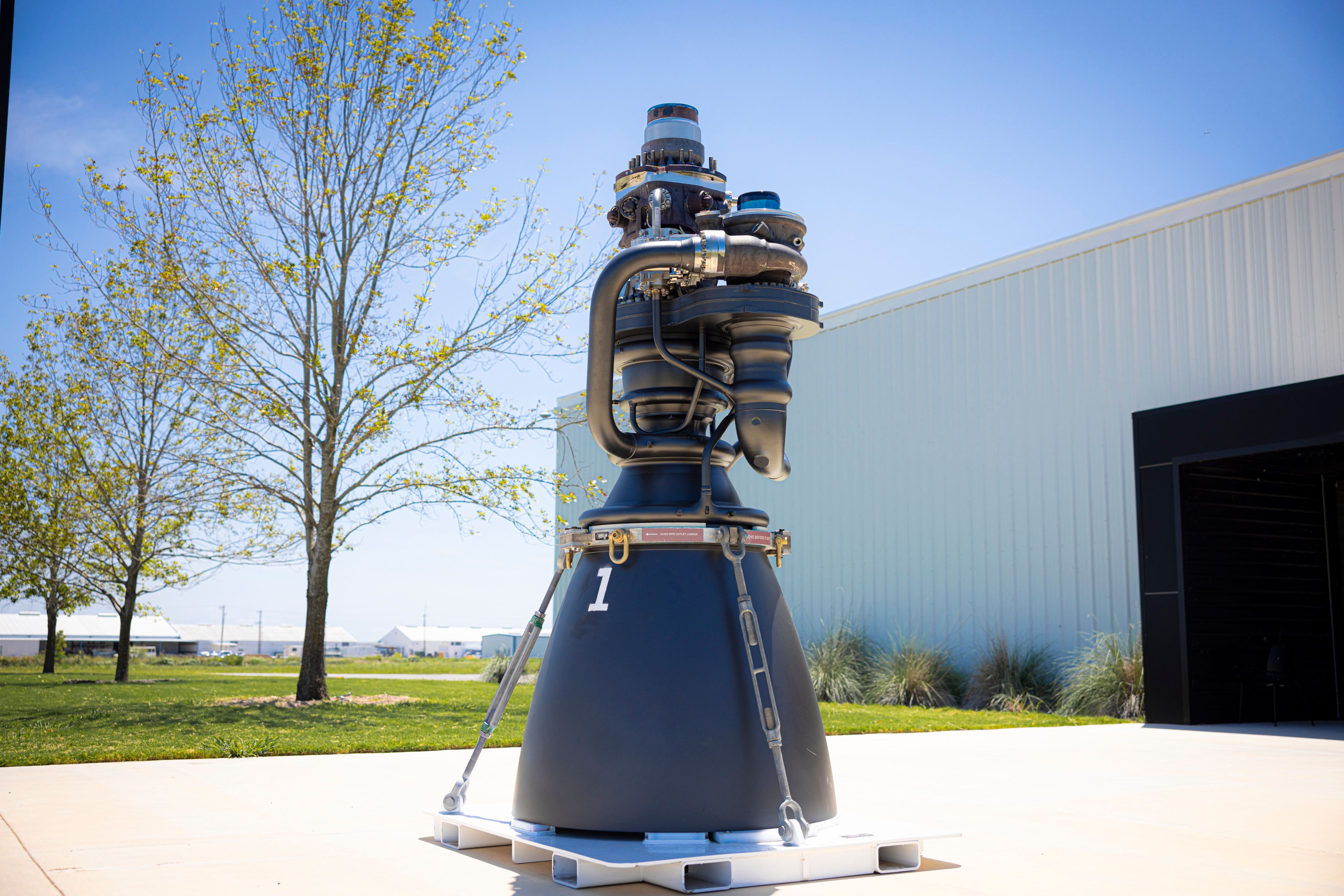
V3 is their first Starship family big upgrade, containing lots of learnings from previous tests, and the big engine upgrades. V3 engines are the first iteration of a production engine, with lots of sensors and auxiliary systems integrated into the engine itself. Besides the improvements in thrust, they've streamlined the production, moved a lot of stuff "inside" the engine (the first iterations looked like something out of the steampunk era), and they've simplified lots of fire/heat protection.
The Booster and Ship also got some major redesigns in the way they're handling fuel, the "thrust puck" (the area where the engines get mounted) and so on. It's also a bit taller, helped by the engine upgrades. TWR has also improved, with estimates at 1.6. This should be visibly faster to clear the tower and "jump" the launch.
They are also adding ~44tons of simlinks (starlink simulators, dumb payloads). So they seem to have improved the margins for orbital payload a lot. New this launch will be a few sats that have comms & cameras on them. Hopefully we'll get to see outside shots of Starship from these things, on orbit. They've filed FCC paperwork for this, and they'll likely use it to inspect the health of the heatshield on orbit.
They've also updated the launch tower, with a flame deflector, and a new deluge system.
This flight will be still suborbital, testing payload deployment, booster return to a fixed point somewhere in the coastal waters, and the ship aiming for somewhere in the Indian Ocean. They've also removed some parts of hte heatshield, to test how it handles that. (on a previous flight the ship still nailed its simulated landing with huge gaps in it, from multiple tiles missing intentionally).
If everything works on this flight, the next one is planned to be orbital.
The level that they managed to fit everything inside of a simple-looking package was so high that the CEO of ULA (the Boeing/Lockheed Martin rocket company) thought they were lying when they first showed pictures [1].
[1] https://www.benzinga.com/news/24/08/40279896/spacex-presiden...
I'm not some kind of insider, though.
So much insane engineering just to make this launch pad work. The pad is more complex then the rocket. To make something that survives repeatedly the insane power of Starship is a actually insane.
That they managed to do a full duration static fire and it seems the pad is ok is a huge achievement.
Is that confirmed ? Will be truly amazing to see.
> The Starship upper stage will target multiple in-space and reentry objectives, including the deployment of 22 Starlink simulators, similar in size to next-generation Starlink satellites. The last two satellites deployed will scan Starship’s heat shield and transmit imagery down to operators to test methods of analyzing Starship’s heat shield readiness for return to launch site on future missions. Several tiles on Starship have been painted white to simulate missing tiles and serve as imaging targets in the test. The Starlink simulators will be on the same suborbital trajectory as Starship.
This is from the dedicated flight 12 page, not this article. https://www.spacex.com/launches/starship-flight-12
The Russians were really good at aerospace. It's a testament to their engineering that it took this long to advance past where they were in the 1970s. I love this video describing the development from the Russian RD270 all the way to Raptor: https://x.com/Erdayastronaut/status/1204179086823825408.
Competition does improve products.
If you are Dutch, just take a one-hour flight to Copenhagen to see how a city can be absolutely plastered with national flags.
If Poland or France were introducing a new nationally produced rocket, they would certainly show their national flags around it as well. They definitely do so when displaying new weapons. So does Ukraine etc.
Accidentally, I remember the Dutch colors on every package of Dutch cheese I ever bought.
The rise of moralization of everything is really killing online discourse. It's gotten to the point where people will now mostly criticize and support ideas based on who proposed them, and not based on their merits. Tribalism at its worst.
I think religion helped reduce tribalism, at a societal level, by making evil/demons/bad acts as the "them" and everyone that went to church on sunday (it was the whole town previously) was the "us". Now, without religion, and the physical/social bringing together it brought, that hardware in our brain still tries to segment a clear "us"/"them", but with much less guidance.
Whatever good Musk has accomplished with SpaceX will be offset by the harm he has done to biomedical research in the final accounting.
NASA has been propaganda since Operation Paperclip, sadly. It's hard to politicize something that's always been political, even if Musk gives Peenemünde optics a run for it's money.
The only problem that "data centers in space" solves is the problem of trying to scale a rocket company where the potential demand for rocket launches is simply not that big.
There are a lot of problems that can be solved by creating 20 other, much bigger, problems.
So the money we are saving is commodity solar, commodity steel and community battery (or any other form of power).
And instead of those things we add, insane engineering complexity, insane complex heating, insanely complex maintenance or standing backup, insanely expensive transportation and insanely complex operations and insanely complex communications?
I guess the focus is going to be on getting stuff up, rather than back down. Thus the Starlink and data center plays, not human space exploration.
But the heat shield is just not mentioned in this article. They actually made significant changes to it in the new version. They added added new seals between the tiles, improved attachment points, and redesigned the shielding in specific areas.
A big problem with their work on the heat shield is that they lost the ship before reentry multiple times for various reasons. They were making changes to the heat shield on previous versions, but couldn't test them as they were repeatedly losing the ship before the heat shield was actually used.
Also, from their description of the planned launch of Starship V3:
> The Starship upper stage will target multiple in-space and reentry objectives, including the deployment of 22 Starlink simulators, similar in size to next-generation Starlink satellites. The last two satellites deployed will scan Starship’s heat shield and transmit imagery down to operators to test methods of analyzing Starship’s heat shield readiness for return to launch site on future missions. Several tiles on Starship have been painted white to simulate missing tiles and serve as imaging targets in the test.
> For Starship entry, a single heat shield tile has been intentionally removed to measure the aerodynamic load differences on adjacent tiles when there is a tile missing.
https://www.spacex.com/launches/starship-flight-12
So they're still working on the heat shield. Things like space data centers may be economical only if Starship is fully reusable, otherwise the idea is dead on arrival.
If they needed land a payload, they could stuff a dragon capsule in the starship, but the point is building something new.
Losing a tile on the most damage sensible area of the shuttle.
Soooo, how much did he put on that outcome on polymarket?
If I'm building a warehouse and I say "this warehouse is going to house the worlds supply of x", am I risking the future of the company if that fails and I pivot to housing y instead?
It's a difficult engineering challenge but physically possible, and Elon is no stranger to engineering challenges.
Some numbers: assume an emissivity of 0.85, assume no absorption from the sun, assume heat rejected from both sides of a panel, a 1m^2 panel will reject 1.45kW/m^2 @ 350K.
At 900K its 62 kW/m^2. Not a trivial amount of heat.
This is first and foremost an engineering problem as you need to design a system that will both tolerate high heat and be able to pump even more heat to the radiators. The high temperature seems to be the primary objective to design for unless launch costs become absurdly low.
"Rockets should land themselves" is not a grand theory of physics. He had money and told smarter people to do it.
Of course, there are still a lot of unknowns, any of which could prove fatal to the concept but I'm no longer comfortable just dismissing it as "obviously ridiculous."
On a more serious note, the Cape Canaveral area / Kennedy Space Center has a large amount of empty land to build space infrastructure. The island has been dedicated to space facilities since the 1960s. Both SpaceX and Blue Origin have facilities there.
Its clearly stating real numbers and I do make a clear point:
Space is a 700 Billion dollar business split between building the stuff you want to send up, the 'sending up' part, and the operations part. Space-X 'magic' evaluation is between 800 Billion and 2 Trillion.
snicker
And this doesn't even calculate in, that if Space would really become interesting and profitable as another big disruptive market, everyone else will join.
Or lets say they are joining already anyway.
Unless it manages to massively eat into mobile network market share (pretty unlikely in my view) growing past $100bn (yearly revenue) or so seems unrealistic to me.
Even with cheaper launch costs, it is not clear to me that Starlink would ever be interested in offering service for like $80/year (=> price competitive with mobile carriers in low income nations).
Several mobile carriers are already using them for backend of remote towers.
They’ll be vague about capacity for a few years, and they’ll be building and acquiring data centers on earth “just while we wait for <breakthrough> that will unlock overnight massive scaling of the space data centers”. The timeline will always be “in the next year”, but no real workloads will run on the space GPUs for a decade. Then, finally, maybe, it’ll happen. Or maybe not, just like FSD. Always around the corner, never quite here.
And it’ll work for meme stock purposes, just like his other companies.
Obviously it’s very late, but Tesla now have vehicles in multiple YS cities taxing people with nobody in the front seats.
It’s coming.
I suspect the answer is because they're being remotely monitored and operated 24/7, and they don't have the staff to tend to them.
But only Tesla knows, and they've spent the last few years absolutely destroying their reputation. They lie constantly, they show flagrant disregard for the lives of their customers, and I trust nothing that they say.
EDIT: lol, looks like I was exactly right. These fucking clowns: https://www.wired.com/story/tesla-says-its-robotaxis-are-som...
> Liftoff will occur at 6:30 p.m. ET on Monday (May 19)
https://www.space.com/space-exploration/launches-spacecraft/...
You are watching the slave grid being erected over your head
https://www.youtube.com/watch?v=jbp3kdJZ1_A See 1:38:00
I imagine at least some of the reason to chase the AI datacenters in space thing is because Starship is "too capable" if it succeeds. It makes available a technology that does not have a short-term utility that people will pay for. Starlink was something that's been useful as telecoms but perhaps that market is saturating. It makes sense to pursue what is currently high-utility but is not being met because of terrestrial constraints.
Well, good luck to him. A lot of smart people are chasing this idea and I can't seem how it could work, but I was honestly surprised that Tesla hit its production goals, and I was honest surprised that SpaceX hit success so fast, and I was honestly surprised by the rise of LLMs, so the truth is there are lots of paradigm shifts I just miss: BEVs, cheap space, AI.
Someone once tweeted something like:
> Less intelligent people perceive more intelligent people as incredibly lucky. They always make inscrutably stupid decisions, unjustified by visible information, and somehow fate rewards them for this.
But also, I'm just hoping that a new era of space exploration will open up in my lifetime. That sounds incredibly cool! And I dare say there are many people like me in the US at least judging by the popular baby names of this era, which have seen spikes in Aurora, Nova, and Luna - and in the one my daughter has: Astra.
I can think of all sorts of successful decisions that would definitely be stupid for a normal person to try, due to lack of connections, access to money, high risk, etc.
And maybe to expose my own lack of intelligence, I've always thought eg Robinhood was incredibly dumb. I never in a million years would have thought of the idea of creating an investing app, since there are already many of them, from far more reliable and trustworthy sources. And yet Robinhood has made its founders billions.
[1]: https://macintoshgarden.org/apps/neuromancer-count-zero-mona...