Court didn’t agree, probably rightfully so. But Franklin was a fun place to work. It survived for years after the court decision and pivoted to making handheld gadgets. Their electronic Bible was apparently really popular in some circles.
Unfortunately for Franklin, that also meant that full compatibility comes hand and hand with trademark & copyright violations. I find it more "sad" than "upsetting" as the original author implies in this piece.
Personally, I love cloned hardware and software. I seek out clones when I can and even make my own (for fun, not profit.) I have a few Atari 2600 hardware clones I designed and built along with eprom cloning software and burning hardware. Not for any real reason, just because I like figuring out how hardware and software works and cloning is often a means to that end.
http://pnylab.com/products/bible/main.html
Very interesting read and a neat product from a technical perspective. I'd like to know the specifics of the data structure used to compress and index the text.
The whole article is a framed as some kind of denunciation, but when I read it, it just seemed like a charming piece of computer history.
Bob Applegate's blog is also charming, but a bit difficult to navigate to find the good bits.
Competition is great for everyone except Apple shareholders.
The whole project started because this guy changed the design of his HDMI encoder to move the microcontroller off the board and into another board he sells that provides an alternative BIOS for the Xbox. Meaning instead of paying $60 for one board, you now pay $50 for the neutered board plus $100 for his other board. Someone released a barebones board that had the same microcontroller (running his firmware) on it that could be connected to this neutered board and this guy sent a DMCA takedown notice to a site hosting the instructions on how to build it. A lot of people in the original Xbox modding community got upset so some people were looking for ways to build open source HDMI encoders as a means to kick the proprietary junk from the community. I took it a step further and just built a clone.
Let’s not forget, IBM themselves used Charlie Chaplin’s “Little Tramp” [0][1][2] in their home computer ads for quite a while back then, so this isn’t that different.
0: https://old.reddit.com/r/vintagecomputing/comments/1o2y2gs/m...
1: https://www.youtube.com/watch?v=Ru4qPlTbJG4
2: https://www.ejumpcut.org/archive/onlinessays/JC35folder/IBMt...
As others have noted, it was far from a slam-dunk case that what Franklin did was illegal or unethical. "You could even pull a card out of an Apple and plug it in" is not exactly the rhetorical death blow that the author of this article was aiming for.
Building a functional equivalent is one thing, making a direct copy in a different case is another.
My God, such an Architecture might have become an Industry Standard!
https://en.wikipedia.org/wiki/Industry_Standard_Architecture
> The ISA term was coined as a retronym by IBM PC clone manufacturers in the late 1980s or early 1990s as a reaction to IBM attempts to replace the AT bus with its new and incompatible Micro Channel architecture.
Which was kind of the point? If I remember correctly Woz had patents related to the video generation hardware which Franklin did change to try to avoid infringing but I can’t remember if the court agreed that it did it successfully.
How many kids who's parents couldn't afford an apple computer got a franklin instead allowing that kid to grow up and invent great things both open and closed source.
Both are fine.
If you look at the source code of this page, you'll be even more shocked: looks like it's simply a MS Word document saved as HTML, it's overly complicated and contains lots of "Mso*" classes. And no, it's not unstyled either, it's just that on computers that don't have Times New Roman installed, the browser falls back to the same serif font that is used for unstyled text (and if you have it installed, it's probably the default serif font or indistinguishable from it).
Wikipedia article: https://en.wikipedia.org/wiki/Franklin_Electronic_Publishers
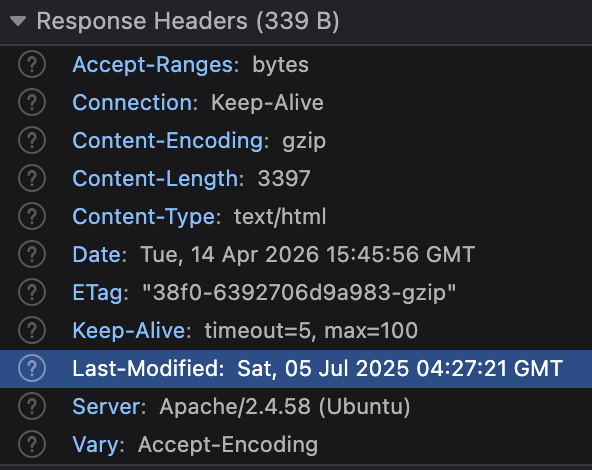
The "Last-Modified" HTML header suggests it was last updated on "Sat, 05 Jul 2025 04:27:21 GMT": https://celsoazevedo.com/files/2026/franklin-mod.png
There is a truly fascinating, and even inspiring, book about the company and the sale of FrontPage to Microsoft: https://www.amazon.com/High-Stakes-No-Prisoners-Internet/dp/...
I remember this phrase from a stage play, The Agony and the Ecstasy of Steve Jobs, but Google shows this source:
https://www.theregister.com/1998/11/06/were_talking_about_kn...
The play doesn't even have its own wiki.
https://en.wikipedia.org/wiki/Mike_Daisey#The_Agony_and_the_...
He also put a stop to the clone PowerMacs when he returned to Apple in the 90s.
https://www.folklore.org/MacBasic.html
and the PowerMac clones weren't doing anything interesting and were simply cannibalizing Mac sales, cutting into Apple's profits --- really wish at least one of them had made a tablet unit w/ a Wacom digitizer, but that was too small a market as Axiotron found when they did the ModBook (which I still regret not buying).
Years later I'm working for a small business out on LI who never threw anything out. I got really lucky and obtained a full Franklin Ace 1200 with Sakata, Mits Altair 8800b and an IBM System 23. All in boxes. All manuals and software. Crazy. I took the whole haul home. I need to setup a museum/computer room one day.
Not to discount the awesomeness of the others, but that's a real prize. Talk about a strange artifact of its time and place!
"Intellectual property" is doing a lot of work in this sentence, in that it's a legal-sounding blanket term which somehow fails to mention which actual law Franklin broke. It's implying something is illegal without actually making the case. The cancerous growth of the vague concept of "intellectual property" leads to things like the DMCA, where formerly legal acts are outlawed in a kind of "penumbra" or "emanation" from acts which are concretely illegal, because they're getting "too close" to the imaginary line.
Franklin even won the initial case.
https://en.wikipedia.org/wiki/Apple_Computer,_Inc._v._Frankl....
I remember the text Games Apples Play and typing the code manually in from the pages on that machine in Basic. Some of them were pretty fun. https://archive.org/details/gapa2
The Apple II series (except for the later //c) all had quality switching power supplies built-in. That was already something Apple was doing to set it apart from Commodore, Atari and Tandy.
I hope the courts will stamp out these Intellectual Property thieves quickly or they will become a real threat to computing.
Citizen made the REX and they sold it on to Xircom, so it wasn't as if Franklin did much apart from to add their peculiar style of marketing to it.
It most definitely contains ads since it is about ads.
* Under Construction * anyone???