At a certain point, even WSL becomes a more viable deployment platform.
If they made an M4 on a card that supported all the same standards and was price competitive, though, that might be a good option.
Although personally I am more of the Windows/Linux VM workstation laptop kind.
~$1000 for the Pro B70, if Microcenter is to be believed:
https://www.microcenter.com/product/709007/intel-arc-pro-b70...
https://www.microcenter.com/product/708790/asrock-intel-arc-...
https://www.bhphotovideo.com/c/product/1959142-REG/intel_33p...
When 32GB NVIDIA cards seem to start at around $4000 that's a big enough gap to be motivating for a bunch of applications.
So it's closer to half the speed than a tenth. Intel also seems to be positioning this card against the RTX PRO 4000 Blackwell, not the 5090, and that one gets more like 300 INT8 TOPS. It also has less memory but at a slightly higher bandwidth. The 5090 is much faster and IIRC priced similarly to the PRO 4000, but is also decidedly a consumer product which, especially for Nvidia, comes with limitations (e.g. no server-friendly form factor cards available, and there are or used to be driver license restrictions that prevented using a consumer card in a data center setup).
Intel is not looking in the future. If they released Arc Pro B70 with 512GB base RAM, now that could be interesting.
32GB? Meh.
I was initially confused what packages were needed (backports kernel + ubuntu kobuk team ppa worksforme). After getting that right I'm now running vllm mostly without issues (though I don't run it 24/7).
At first had major issues with model quality but the vllm xpu guys fixed it fast.
Software capability not as good as nvidia yet (i.e. no fp8 kv cache support last I checked) but with this price difference I don't care. I can basically run a small fp8 local model with almost 100k token context and that's what I wanted.
Would not fit Qwen3.5 27B would it? That's the SOTA
just add a little bit:
linus requested the card be intel as well.
To be fair, that might be due to still running Windows 10 or due to not having reset the PC in 4 years. It's going to be moved over to Linux soon, I'm just being lazy.
WTF?
The news that Celestial is basically canceled already hit the HN front page, as well as Druid has been canceled before tapeout.
Celestial will only be issued in the variant that comes in budget/industrial embedded Intel platforms that have a combined IO+GPU tile, but the performance big boy desktop/laptop parts that have a dedicated graphics tile will ship an Nvidia-produced tile.
There will be no Celestial DGPU variant, nor dedicated tile variant. Drivers will be ceasing support for DGPUs of all flavors, and no new bug fixes will happen for B series GPUs (as there is no B series IGPUs; A series IGPUs will remain unaffected).
They signed the deal like 2-3 months ago to cancel GPUs in favor of Nvidia. The other end of this deal is the Nvidia SBCs in the future will be shipping as big-boy variants with Xeon CPUs, Rubin (replacing Blackwell) for the GPU, Vera (replacing Grace) for the on-SBC GPU babysitter, and newest gen Xeons to do the non-inference tasks that Grace can't handle.
There is also talk that this deal may lead to Nvidia moving to Intel Foundry, away from TSMC. There is also talk that Nvidia may just buy Intel entirely.
For further information, see Moore's Law Is Dead's coverage off and on over the past year.
It is crazy to me that a world newly craving GPU architecture for AI, and gamers being largely neglected, that Intel would abandon an established product line.
You still need to fab it somewhere. Intel's fabs have been plagued with issues for years, the AI grifters have bought up a lot of TSMCs allotments and what remains got bought up by Apple for their iOS and macOS lineups, and Samsung's fabs are busy doing Samsung SoCs.
And that unfortunately may explain why Intel yanked everything. What use is a product line that can't be sold because you can't get it produced?
Yet another item on my long list of "why I want to see the AI grift industry burn and the major participants rotting in a prison cell".
Probably 160 GB for $4,000.
I want to spend $1500 for a card that can run a proper large model, even if it only can do 25 tk/s.
Intel is squandering a golden opportunity to knee-cap AMD and Nvdia, under the totally delusional pretense that intel enterprise cards still have a fighting chance.
Announce all you want, if you don't ever ship anything I could buy, who gives a shit.
They let people have the B50 but only released the B60 late in the cycle.
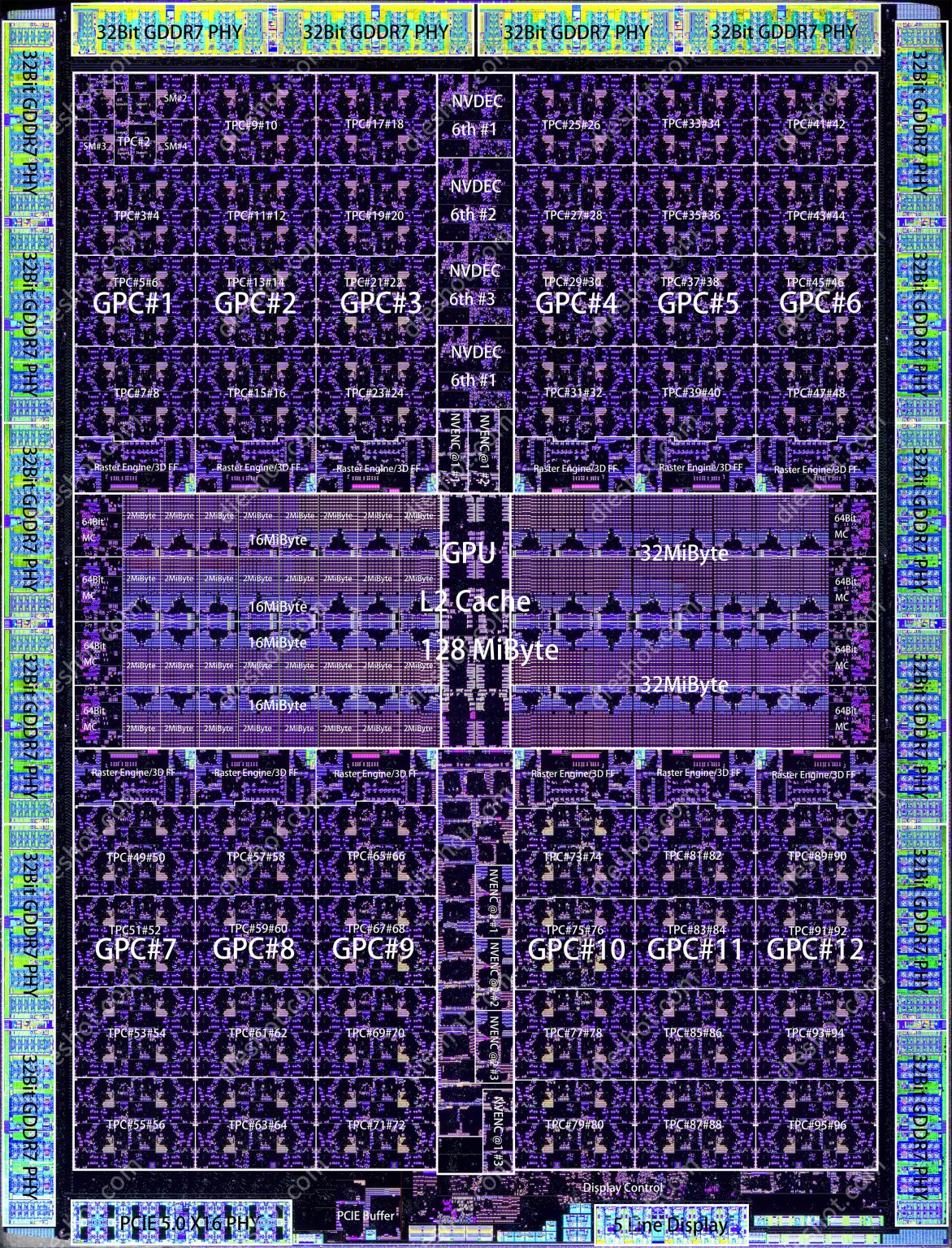
Take a look at the die shot of a 5090:
http://dieshot.com/wp-content/uploads/2025/03/Dieshot-GB202-...
It has 32gb of RAM and memory controllers are about 10% of the the total area. What would you have to do for 1024gb of RAM?
Not to mention the price would be astronomical.
intel support has been mild to non existent in the VR space unfortunately. Given the very finicky latency + engine support i wouldn’t bet on a great experience, but hope for the best for more competition in this market. (even amd has a lot of caveats comparing to nvidia)
Footnotes:
* critical "as low as it can be" low latency support on intel XE is still not as mature as nvidia, amd was lagging behind until recently.
* Not sure about "multiprojection" rendering support on intel, lack of support can kill vr performance or make it incompatible. (the optimized vr games often rely on it)
Good for most people but if you need that fuctiobality and they dont have it, go somewhere else.
Now can we have a 64gb B70 that’s worldwide available and not marked to unicorns like the Maxsun B60 Dual model has been?
> Intel will provide certified drivers for Windows 11, Windows 10, and Linux.
Windows 11, OK. Linux, OK. But why Windows 10 for a new product?!