Most likely it was a deliberate technical limitation. After all, dialog windows themselves were already overlapped. I remember well what a headache it was to program and render graphical elements on those old machines (PC AT 80286 with 256 KB of RAM).
While it's demonstrated to be likely incorrect here, it's not a wild theory. Apple and Microsoft spent a lot of time in court over the "Look and Feel" cases regarding the windowing UI Apple felt Microsoft had stolen. The lawsuit was first filed in '88 and was widely reported on in tech and mainstream press etc, dragging on throughout the 90s.
https://en.wikipedia.org/wiki/Apple_Computer,_Inc._v._Micros....
> The likelihood of any legal restriction was probably close to zero - it’s only from today’s era of hyper-regulation that we might even imagine something like that.
Normally I'd agree with a statement like this. Except this is a very specific case.
Apple sued Digital Research and later Microsoft when they enabled overlapping windows for windows 2.0.
Also lol a 286 with 256kb of ram - that is a very very weird combination you would never see in a desktop. Generally early IBM PC compatibles might have just 512KB of ram but around 1985 and later 640KB really became the norm even on 8088 and 8086 based systems. I am not counting stuff that really didn't get anywhere like the PCjr and that thing was much earlier in 1983.
286 based systems once they became more common started a 1mb RAM.
How is regulation involved? The OP's idea was that Microsoft feared being sued by other companies over IP. If there is some increase in lawsuits between companies, I'd like to see evidence.
Also, my understanding is that there was a lot more regulation in the 1970s and extending into the 1980s, though it was probably declining by then.
At the time I remember reading that was kind of the issue. I thought the article said something like "when Gates saw the Xerox machine, the display had no overlapping windows". So M/S cloned it as he saw it.
Once M/S W1.0 was developed he saw the demo again and was surprised the windows overlapped. So they rushed 2.0 to fix it.
But funny, with all people on Linux using tiling window managers these days, it seems Windows 1.0 was ahead of its time :)
Microsoft had Apple Lisa's in-house, and Charles Simonyi in person direct from Xerox PARC, and worked on pre-release Macintoshes in coordination with Apple to develop Microsoft Word for the Mac, all well in advance of any MSWindows development. There is no way the story is as simple as the above.
And tiling still largely doesn't work with small windows.
The default is just left, right, and top, bottom but if you install Power Toys and use Fancy Zones you can customize the zones https://learn.microsoft.com/en-us/windows/powertoys/fancyzon....
There’s also Crop and Lock which can help you cut out extraneous parts of certain windows
https://learn.microsoft.com/en-us/windows/powertoys/crop-and...
The main use-case was multiplexing terminals and, after tmux provided a solution that was usable by normal users, it seduced people away.
Also, mouse-first tiling was introduced on Windows so nowadays it is almost universal to have a degree of tiling.
They are nice for terminals and browsing properly-written web pages but for anything with an aspect ratio or a fixed size they are clumsy.
Modern tiling-wms often have a floating mode so the distinction is more keyboard-wm vs mouse-wm.
The day the Mac shipped in January 1984, Gates told McGregor to run out and buy a Mac for the Windows developers.
"Reverse engineer it," Gates told him. "I have applications like BASIC and Multiplan that we've hacked out for the Mac, and we're working on other Mac applications like Word with a graphical user interface. I want to run all those Mac applications on Windows." Apparently, Gates didn't see a conflict of interest with this strategy.
...
"How are they different?" Gates snapped back. "They both draw fucking lines on the screen, right? They both put things in windows, right? Mac wrote a windows thing, you wrote a windows thing, they ought to be able to run the same stuff together."
(this was around IRQ13, IIRC,right?)
But it was amazing for those of us used to black and white/green/amber screens in DOS. You could put an image as your background. And it stayed there, lurking behind your word processor or spreadsheet, to spring back into your vision whenever you finished up your work.
One of the very first things I always do in any OS is to set the desktop background to solid color, usually black. I almost never ever will see it, coz there's always going to be a window on top of it, except upon startup for some brief period of time or if I accidentally minimize everything.
I work with full screen windows. Always (tiny number of exceptional cases maybe). I switch between windows with Alt+Tab when necessary. I also have a relatively small screen, both for work and personal stuff (14" for at least 10 years now).
You do you of course.
I remember the launch parties for 95. I remember thinking to myself how strange it was to go to all of that expense to promote an OS.
There were OS improvements too, but I have forgot what. The real improvements came with Win2K - one of the best versions of Windows ever.
They might have made better choices from the palette, but the limitations were severe.
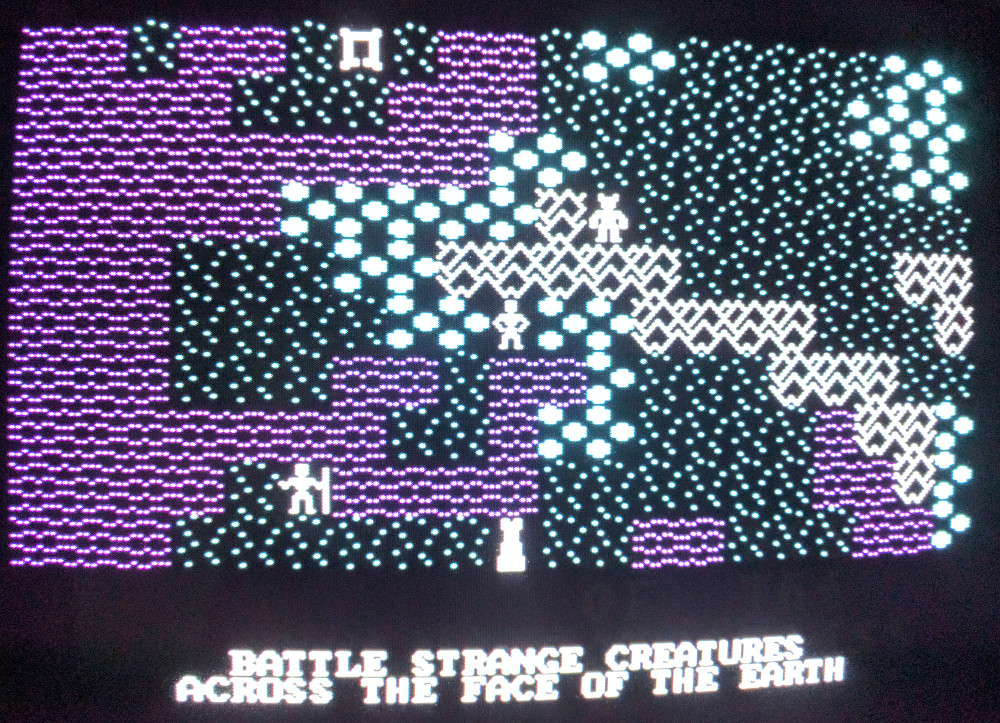
If you really want to stab your eyes out, CGA had a mode with white, bright pink, light blue and black. I remember playing Keen on it. I've never seen that mode used for anything nice.
https://www.pixsoriginadventures.co.uk/wp-content/uploads/20...
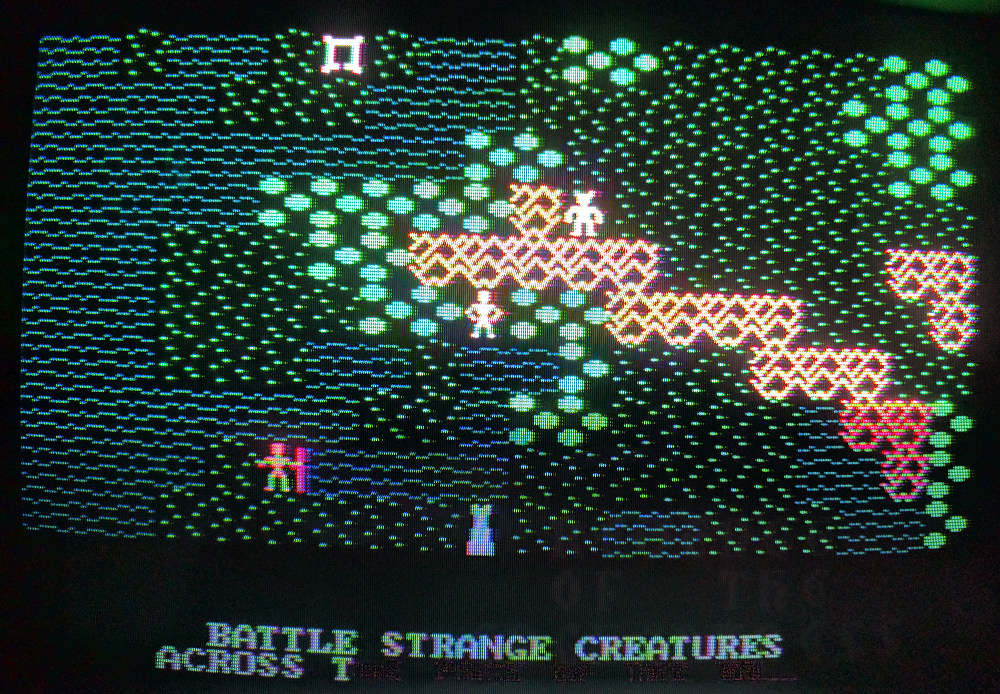
...and here's the same screen viewed on a composite monitor:
https://www.pixsoriginadventures.co.uk/wp-content/uploads/20...
These images come from this page:
https://www.pixsoriginadventures.co.uk/cga-composite-graphic...
If this isn't enough it seems to be possible to coax ~1000 colours out of these cards as well:
https://int10h.org/blog/2015/04/cga-in-1024-colors-new-mode-...
This is magenta/cyan mode is essentially the proto-cyberpunk aesthetic.
But personally, I enjoyed NT 3.1 more. Built-in PPP so I could dial up to CompuServe and get on the Net. Not the web, which barely existed yet, but the Internet. Grab my email at the same time as I downloaded some files over FTP and grabbed the latest from my newsgroups.
At the same time, I had all of MS Office open, and a few command prompts, and a connection to the big office VAX watching that it was happy...
I enjoyed taunting Amiga owners about Real Multitasking on Windows. :-D I was about 25 at the time, in my defence.
For me the revelation was that I have never said "Oh boy I sure am glad this window partially overlaps this other window" I either want one full screen windows or a few windows side by side. Why do I have to handle this myself? and went to the dark side, a tiling window manager. To the point that it really chafes now when I use stacking windows, It feels like I spend most of the time shuffling windows around.
To ease the overlapping window pain many linux window managers have a feature where the focused window does not have to be the top window and this makes things a lot better, you can be looking at the top window and typing/clicking on the partially obscured bottom window.
Another feature that gets a lot of flack from some Linux users is desktop icons. This is something else that a lot of UIs screwed up (maybe stemming from Windows 95? I'm not sure). The classic Mac UI let you drag whatever files you were currently working on to the desktop and do whatever you needed to do. Then when you were done with the files, you could highlight them and select "Put Away" and they'd all get moved back to their original locations. The desktop was a temporary space for what you were actively working on, not a giant catch-all storage location like how modern UIs treat it.
(At one moment, I used to work on a single desktop with around 20 windows, no dock, just windows, on my 14in MacBook with 125% DPI. Too much but possible. Now I keep only 6-7 windows.)
This is not to say that dynamic window management is worse. Far from it. But it excels at this: dynamic, rapidly changing environments, where at almost any given moment something is either opening, closing, or changing its dimensions. This is usually the case with specialized programs like web browsers or IDE, but not with the main system WM.
The main problem is that overlapping windows and automatic window management are incompatible. The former assumes that user sets the dimensions and is always right, which makes the latter powerless to follow any efficient algorithm. To give an example, if you manage your windows with a dock and “maximize” button, they’d break overlapping patterns.
> I either want one full screen windows or a few windows side by side.
You’re not wrong to work like this, but it may be a byproduct of modern hybrid systems making it harder to fully internalize the overlapping windows concept.
Also, stereo sound and nice visuals but that's not the point here.
https://modarchive.org/index.php?request=view_by_moduleid&qu...
To note, the hardware required to get OS/2 running would have added 1 000 euro more in today's money.
A couple of years later Comodore was gone and the history has been racounted endless times.
Still we don't give up keeping it alive somehow.
I was in the latter camp!
Apple Lisa and Macintosh are widely credited with the first practical, commercial implementation of overlapping windows in a Graphical User Interface.
Although Xerox PARC developed early prototypes, Apple engineer Bill Atkinson is credited with creating the code that made functional, rapid-rendering overlapping windows possible.
I find it hard to understand why they never saw the potential.
Computing just wasn't in their DNA and those people at Xerox who did see the potential in PARC never had the leverage to reorient the company to take advantage. This is almost always the result when a for profit corporation invests in fundamental research that is not intimately related to their primary revenue source.
This isn't really new information to the Stack Exchange question and answers, but it's kind of fun coincidental coverage of the topic.
[1] https://adventofcomputing.libsyn.com/episode-150-starting-wi...
[2] https://podscripts.co/podcasts/advent-of-computing/episode-1...

#/media/File:Gem_11_Desktop.png)
#/media/File:Gem20about.png)