For the past 15-20 years, november thru february are basically a writeoff due for me due to seasonal affective disorder. Cold showers, exercise, no alcohol, strict sleeping rituals. Vitamin d. I can still sleep 11 hours and feel like reheated cat shit.
Enter citalopram. "It will take up to six weeks to dial in" they said. Within four days I felt like the inside of my head was designed by Apple in their glory days. My mind became an orderly, well lit, tastefully designed space... instead of a dimly lit crack den. I'm more emotionally available, no longer tired, less cranky. I felt cozy. I could cry with joy because I could finally understand emotionally why people like the Christmas season.
I won the SSRI lottery I guess, the side effect are sweaty feet, vivid dreams and a dry mouth. That's all.
This just goes to show that for me, they're extremely effective.
It's like if we took sleeping pills every time we had trouble sleeping. Having said that, I just realised I have the impression that's exactly what people do in the USA?
Luckily, sertraline was an almost instant cure.
I can come off it for periods, but it tends to reoccur after a while. So, it does mean I have to take a drug indefinitely, but is that really a problem? It turns my life into one worth living.
The reason we can't take sleeping pills daily is because they stop working in fairly short order. But if, like antidepressants (typically), they didn't lose their effectiveness over time, would there even be a problem with using sleeping pills if you had trouble sleeping?
Chemistry trumps psychology. Good enough chemistry enables cognitive treatments. But to fix the wrong chemistry you need chemistry.
Source: multiple friends, family and forums (while researching how to help friends & family get off of various SSRIs).
Not that my personal experience is actually a statistically significant sample, but I don't know anybody who takes sleeping pills. Or maybe I do, but they haven't told me. I've also never heard heavy sleeping pill use is one of the stereotypes about Americans. There are an estimated 342 million people in the United States, so impressions aren't always meaningful.
Doctors of all countries have been under a lot of pressure by patients and health administrators to "fix the issue and quick". The last thing that your doctor wants is giving you pills so you go away, but that's what the context very strongly incentivize. You want doctors to stop abusing pills, stop asking them for immediate fix. Give them less patients, more time and more resources to deal with the health of the population. Also, prevention.
I don’t know how rampant that problem actually is, but I don’t think you should discount the impact of social stigma when it comes to mental health. It is only in the past 10 to 15 years, at least in the US, that mental health has entered the public dialogue in any meaningful sense. Historically it has been a source of massive shame with people expressing embarrassment at their loved ones suffering from mental health crises. And now we have a whole generation of influencers and politicians who are trying to tell people to pour out all their medications, reject doctors wholesale, take their specific brand of colloidal silver, and be free.
I just think this is a lot more complicated than “psychiatrists abuse the diagnosis.”
It's not a great idea to make general assumptions about such a large and diverse country. Some drugs may be over prescribed, I have no idea if Ambien is one of them, but trying to fit 340 million people across 50 states into the same box isn't going to be very accurate.
I can't speak for USA but in parts of Europe a lot of people have PTSD that prevents normal sleep, so they end up on these pills, and then they end up with PTSD and worse insomnia caused by long term use of sleep meds.
I think it's just incentives. Easier to take a pill than to deal with horrible trauma. And that probably stays true forever.
Yes, that's normal in the US. I have multiple family members who take Ambien (zolpidem) before bed every night.
But that’s exactly what many claim. Even this article is trying to claim that Vitamin D has 4.5X higher effect size than antidepressants (e.g. that they don’t work)
> It's like if we took sleeping pills every time we had trouble sleeping. Having said that, I just realised I have the impression that's exactly what people do in the USA?
USA is actually not the world leader in over medication in this domain, even though it’s popular and safe to hate on Americans. The rates of benzodiazepine and Z-drug prescription in some countries like France are substantially higher than the USA.
I wish people would stop saying this.
Our understanding of the brain is not sufficiently sophisticated to allow us to identify the "root cause" (whatever that means) of depression in most people. Indeed we have no reason to believe that there even is a root cause to most people's depression.
If you take antidepressants, go to therapy (or meditate or exercise or whatever), then go off them and still feel good, that's great.
And if you take antidepressants indefinitely because doing so improves your life, that's also great! Your life is improved! This isn't an "abuse" of the drugs.
No psychiatrist is making you do anything. They're advising you based on their clinical judgement and experience, but ultimately it's your decision to take the pills or not. If your goal is to go on antidepressants temporarily, any decent psychiatrist will support you in that (because, again, they understand that they can't make you take the pills one day longer than you want to).
I've been on Lexapro and done evidence-based therapy for years. They both have been helpful, but if I had to pick one, I'd immediately pick Lexapro. For me it is a miracle drug. And the miracle is, I can choose how I feel.
(I also added a small dose of Buspar to help with the sexual side-effects.)
If you're on the fence about trying an antidepressant, I really encourage you to talk to a psychiatrist. If you try it and hate it, then you can stop. But a lot of people try it and love it. And I think a lot more people would be willing to try it if the notion that this is somehow "wrong" were gone.
For further reading I recommend https://lorienpsych.com/2021/06/05/depression/. I don't agree with everything Scott Alexander says, but his writing about mental health specifically has been useful to me.
Frankly, I see this as similar to telling diabetics that they should use just enough insulin to get them to learn to stop being diabetic. That’s possible for a few type 2 diabetics who could make lifestyle changes that got them back into good ranges. It’s completely useless for type 1 diabetics, or type 2 who can no longer go back.
I’m neither diabetic nor depressed. I don’t have a dog in this hunt. I’m just always astonished at “have you tried not being depressed?” Some people can “snap out of it”. Many times that number of people cannot.
It's actually like statins. Ideally, a doctor will recommend diet changes in addition to the pills. However, relying on lifestyle interventions almost never is effective, And the more we learn about it, the more we realize that cholesterol is mostly genetic based rather than diet based anyway. So the most effective thing they can do is say "here, take these indefinitely". And thank God they do because it saves thousands of lives annually.
For many people with depression, a neurochemical imbalance is the root cause. Just like with statins, addressing it means taking some pills.
This has been true across two countries (Scotland, Hong Kong) and multiple doctors, with a third country's (China) doctor suggesting I try out sleeping tablets for a few weeks - and only giving me a very limited supply of them - to try out instead.
I wonder if the "here take these" is a predominantly American phenomenon due to the weird incentives around health care costs (I'm being genuine here - maybe it's predominant in other countries too, I honestly don't know!)
How would you have formed that impression? Whatever media and culture you’re consuming, or how you are interpreting it, is leading you to incorrect conclusions. You should examine that.
We all live in a cultural bubble but any time you find yourself thinking that millions of people somewhere else do something crazy, you should probably talk to someone from there.
Sleeping meds might be prescribed at a higher rate in the US, that wouldn’t surprise me due to the specific incentives in our health care system. But that’s a far cry from your impression.
I know this road leads to SSRIs at the very least, so I always reply in the negative.
The parent comment hints to me that this might be a mistake. I do not want to become accustomed to an antidepressant, so perhaps my course of action was correct.
I was measured low on Vitamin D, which I've hopefully corrected, and I haven't always eaten fish regularly. Perhaps I should pay more attention to that.
I'm not sure if it is common but I've definitely taken my fair share of my dog's trazodone.
Well that but also they have poorly understood long term effects even after being discontinued (in some people, not others) and they don't work for everyone. The latter is probably most of the reason they get hated on. I don't recall the source but a given antidepressant only works for something like 1/3 or less of the population. So take a person not in a great place emotionally, who is also statistically not in a great place in life overall, subject them to an insufferable bureaucratic process, give them a drug that doesn't end up working for them, add in some pretty wild side effects, sprinkle on a few long term effects that persist after they discontinue the thing that didn't work to begin with, and of course you end up with a bad reputation.
The tl;dr is that our understanding of the brain and mood disorders kind of sucks.
And when you question this approach, the famous lecture comes: "but diabetes patients take insulin for life. You realize depression is a real condition and need to be treated right?"
From reading internet comments you’d think so, but your experience is more typical than anything.
Depression is deceptively common. As a consequence, SSRI use over a lifetime is also more common than most would assume. Any drug will come with negative side effects for some portion of its users. Multiply that by the high number of people who have ever taken an SSRI and it starts to become obvious why there are so many Internet anecdotes about SSRIs not working.
Meanwhile, most people who take SSRIs successfully aren’t going around and advertising the fact that they’re on psychiatric medications. There is less stigma now than there was in the past, but it’s still not something most people like to broadcast to the world. For patients on long term SSRIs in stable states, the SSRI is just a routine thing they take in the background and don’t really think about. There’s no reason for it to come up in conversation.
I have started taking SSRI after a harder-than-usual body collapse, and after no matter what I did my mood hasn't improved for a month. Regular running, meditating, writing, crafting, coding etc were my antidote to my mood swings but this time it didn't work. Started taking SSRI and continue doing all this things, and I was reborn.
My therapist said that a big chunk of why i am feeling better is also because I kept doing things that are good for me. That she sees with a lot of her patients that they think a pill will magically change the situation. It doesn't work on itself, you need to show up and do things that release serotonin in your body.
But seriously, unbelievable, years of frustration and friction in my life disappeared and I have never felt better.
I didn't even know I had it, but when I was diagnosed, my psychiatrist was very concerned and made a point of encouraging me to keep in touch, making sure I worked through things and engaged with the problem. I initially thought something like "I'm fine, just a little down here and there, I wonder if this person is inventing work for themselves?"
Same with anxiety. I would have told you something like "I'm not an anxious person at all. I don't even know what that's like, though I can sympathize with people who suffer with it". As it turned out, I was suffering pretty severe anxiety. In retrospect it's as clear as day, but at the time it was just... The way life was.
The thing is, all of my assessments remarked that I demonstrated relatively high self awareness and openness. My experience being diagnosed with ADHD and depression made me seriously concerned for people who 1) can't afford this process and support, and 2) will just continue to grind like I was, living half-dead without knowing it can be any other way.
I suspect there are a ton of these people—I think I notice them quite often—and I was arguably accidentally pulled from that stupor and would likely still be there, unaware, if it weren't for a chance encounter that caused me to think slightly differently about the possibility of having ADHD.
I did mention the following at the end of the "antidepressants" section, but reading your comment convinced me to move it further up. The intro now reads:
> The "standardised effect size" of antidepressants on depression, vs placebo, is around 0.4. (On average; some people respond much better or much worse.)
Also, I wasn't expecting my article to do well on Hacker News; thank you everyone for the comments & critiques! I'll edit the blog post as I go along, to refine it in response to your comments.
Don't take it as criticism, more of a personal take on figuring out what antidepressants do for me. Furthermore, since posting that parent comment I've converted my vit. D dose to IUs and I realised i'm only taking 800 IUs daily. So a thank you for clueing me in on that, and who knows what happens if I up that. Maybe you were right all along and all i DID need was a heroic dose of vitamin D. (... thats what she said)
About a week ago, there was a reddit post claiming it's actually geographically impossible for anyone where I live to produce enough Vitamin D naturally from the sun alone, due to the shorter days and lower angles throughout the day. I had no idea.
I had a very similar experience, except it killed my libido, so I chose to endure the suffering of Winter rather than live with emotional numbness.
Still, I strongly recommend it for people flirting with the abyss. It was life-changing for me while I was raising an autistic 2yo during the pandemic.
Did you, as well as the other people seconding this, have any libido left in the first place? I got on Sertraline because I was depressed, and it actually brought my libido back, by virtue of just bringing me back to a better emotional baseline.
All to say, if it had affected my libido, it'd have been a NOOP anyway in my case.
Edit: this was the blog that gave me the idea, it comes up on hacker news a lot. https://www.benkuhn.net/lux/
When I hear people say "it killed my libido" I always think about the fact that hyper-sexuality can be a trauma response, and if your body is healing the hyper-sexuality is most likely also reduced.
It's like when you have a disease and then read the side effects of a medication and notice that a lot of the side effects are basically also something that can happen when your overall condition is improving but still some people report them as adverse effects and then these are added as side effects to the package label.
For example you take antibiotics but bacteria can have toxins in their body, and when the bacteria disintegrate you get more sick from the released toxins. It's called the Herxheimer effect: https://en.wikipedia.org/wiki/Jarisch%E2%80%93Herxheimer_rea...
When I started methyl-B12 supplementation I also had inflammation in sinuses for weeks but it was just from my immune system starting up again and being able to attack long-standing inflammation. Someone else would've put "fever", "headache" and "stuffed nose" onto the side effects medication label of methyl-B12.
Similar experience. Apparently pretty much ubiquitous with SSRIs
I had an old gf receive two different drugs each with terrible side effects. To me it looked as poison.
I decided that I would rather hurt myself myself than fuck with my brain chemistry this way.
During the dark northern Winters I lack vitamin D (your doctor can measure this using a blood test). The symptoms are some physical issues and probably something that can be described as light depression which goes away if I remember to take the vitamins.
We are all different. Some people might need anti-depressants. I just need some vitamins.
IMO it's pretty clear that depression is a symptom of many independent issues, so it's really lame that we don't have a more accurate way of diagnosing it.
Thats why they are eventually tapered and discontinued once you are able to be on your own.
I finally went and got diagnosed at age 46 for what had been an childhood-onset issue in retrospect. All the signs were there: inability to start work until enough challenge or novelty or a state of crisis had come about, etc. When I spoke to friends about considering treatment, they said they thought of me as a hyperfocus kind of person. But they didn't see how many support systems I had put in place to function normally, how I saw others around me just doing things while I had to work myself up to start and then keep checking and double-checking for the silly inattentive mistakes I knew from experience I would keep making.
I've had a meditation practice for a long time and it has helped with anxiety but it hasn't really helped with getting started on tasks, especially those perceived as boring. I even had to psych myself up to sit down and start meditating, even though I knew I would enjoy it.
I didn't know until a year or two ago that non-stimulant medication existed to treat ADHD. I always thought it was only Adderall and the like, and I couldn't risk anything that would ramp my anxiety up, or take additional treatment for the anxiety with SSRIs because I have severe hemophilia and any additional risk of bleeding from SSRIs was an untenable proposition.
After sitting on the idea for some time and just hoping that I could fix it with more meditation, I finally decided to see a psychiatrist. The doctor suggested Atomoxetine, but said it doesn't work for most people and even then takes 3-4 weeks to take full effect. I started on the absurdly low dose of 10mg/day for the first month to be sure it wouldn't cause additional bleeds. By day 3 I could see a huge improvement in my working memory and ability to perform tasks. It gave me insomnia for a bit but I would wake up at 3 AM, sit down happily to work and write the best code I've written in years. I could not believe the difference it made. There were quite a few side effects initially but I was willing to put up with them because of how smoothly my brain was functioning. I became a nicer person to deal with. I felt this sense of possibility and freedom that I haven't felt since my 20s. My only regret is not having done this sooner.
So yeah, please don't avoid medication based on internet reading.
More recently I was on a vacation where I took mushrooms and had a nice trip. Two days later at work I felt very relaxed driving in and sat at my desk BUT something was wrong, my head was dead quiet (the GP explained this exactly like I would.) So quiet that for a second I had a bit of panic as I thought something was wrong. Then something wonderful happened: I realized I was able to just do my work. There was no stress, no worry, no nothing. Just a calm quiet confidence to get the job done. Best day of my life.
After that I called a mental health center and connected with an ADHD specialist who has been working with me. I am also on Atomoxetine myself and while it has not brought me back to that zen head space it brings me close enough. My only gripe is at a higher dose it gives me sensations in my head. However, I learned that eating a proper breakfast helps a lot as I was taking it on a near empty stomach. Overall my life has been slowly improving and I feel more confident at work.
> So yeah, please don't avoid medication based on internet reading.
This - 100%
I do wonder if being highly functional and feeling capable is normal though, like as a species it seems almost dysfunctional to happily plow through 8 hour workdays and bills and appointments and all the little bureaucracies we have to navigate. Sometimes a little voice screams "Run to the woods!" when I sit down and look at a long todo list for the day, but with Adderall I can generate some semblance of enjoyment from ticking off the boxes.
Granted our world is what it is, and we are mostly helpless to enact large changes. Finding some kind of peace with reality is probably better than bashing your head against why you don't fit into it well.
I am an intermediate metabolized for the first three and the ones I was on most long. It did not suit me and made my orgasms go from ‘wtf’ to ‘that’s it?’ And they are still not normal 2 years after discontinuation.
I am still depressed and anxious to the point of serious consideration of these medicines to save myself, but you can save yourself the experimentation by doing a simple test and avoiding those medicines.
Anxiety depression panic attacks are something I wish more people studied along with sexual health.
Getting on them can be a ball ache (or entirely painless; escitalopram was easy on and easy off, Wellbutrin was a nightmare to get on, but also easy off), but entirely worth a shot for anyone symptomatic.
I'm sure they have their problems too on occasion, but for me the decision to start taking Escitalopram was one of the best things I've ever done.
The side effects were totally negligible compared to the benefits.
I've stopped taking it a year ago or so and... it's basically cured me.
I'm not saying antidepressant are a literal pharmaceutical cure for depression, but in my case it simply put me in a position mentally to change habits and patterns of thinking in a sustainable way.
My only regret is not doing this 10 years earlier; the poor reputation contributed to that.
SSRIs are known to induce a
https://en.wikipedia.org/wiki/Mixed_affective_state
I seriously messed up my life early on by not being able to recognize the difference between being happy and manic.
One of those manic symptoms was often feeling like crying out of joy, and another was feeling way more cognitively capable that I was.
[0] https://www.alexcrompton.com/blog/2017/05/26/hard-is-not-def...
I feel like I speedrun Maslow's hierarchy of needs.
No anhedonia so far this year and my creative output is at all-time high. Hope that helps someone get over their own biases about prescriptions.
I am not so convinced. Perhaps your case was simpler, but people can feel chronic depression. They may take some drugs to modify that, but what if the external factors won't change? You can see this issue for some people who have a disease that only gets progressively worse. I think we can not unify all this as "dislike on antidepressants" as a one-size-fits-all formula.
Plus, most of the more serious side effects take a lot more time to manifest than the typical length any given patient remained in the older clinical trials that secured FDA approval and grounded the official manufacturer literature.
I am glad we have these tools, but I suspect they are vastly overused, and patients not well informed.
You can get them for $50… they dry out my shoes which makes them last a lot longer before they get so smelly I have to throw them away. Plus, who doesn’t like warm shoes in the morning?
That, and there are some creams called Sweat Block or whatever you can rub on your feet which reduce sweating. Those work as well.
When you're depressed, you're in a hole that's too deep to get out of.
The SSRI basically shovels stuff from the top of the hole to the bottom of the hole so your head is above ground level. You are still in the hole though and you need to climb out of it.
I had a friend on SSRIs not tell us they were on them when they hit a DMT vape pen at a party years ago and they got serotonin syndrome. Had I known I would have warned them not to.
So I ended up spending $300 on LED bulbs, both corn bulbs and 200W equivalent, bought some 7-Way splitters for my ceiling fan so it’s holding 28 light bulbs (people have joked I have a “biblically accurate ceiling fan” because it’s so bizarre looking, like a weird glowing biblical angel), and get about 10,000 lux in my home office now. As a bonus, I don’t have to run a space heater in my home office (since I only need it in winter, I’d have been using that electricity anyway via a space heater). Solved the issue completely for me.
Such a great book. Highly recommended.
I feel like doing those three things would make me feel like reheated cat shit, regardless of the weather outside.
And I hate strict rules and rituals, I love chaos. So that also gets me down. I often stay up till 6am (the parties I mentioned above only start at midnight)
So yah it might make some people better but for me the times I break it are the ones that are exceptionally good.
I'm not saying it's a bad.
But I'm also saying there are no magic pills...!
Yes, you did. Had the same medication and got tremors and stiffness so bad I thought I had early-onset Parkinson. Could hardly unlock the door without dropping the keys five or six times. Fortunately, it ceased when I stopped the SSRI.
Took a while longer to get the dose right so that my anxiety also mostly disappeared, but the difference in quality of life it made for me is hard to put into words.
(Roughly equivalent to Lexapro 15mg/day; Saffron 30 mg/day if Crocin+Safranal properly standardized)
I'm a small, generally sensitive guy so ymmv...
To cherry-pick a quote from a review of SSRI studies:
>the magnitude of symptom reduction was about 40% with antidepressants and about 30% with placebo.
That tells me that antidepressants have some effectiveness, but placebos work shockingly well. You can give someone a sugar pill with no medical properties whatsoever, and a good portion of people will recover, likely crediting the pill for their recovery.
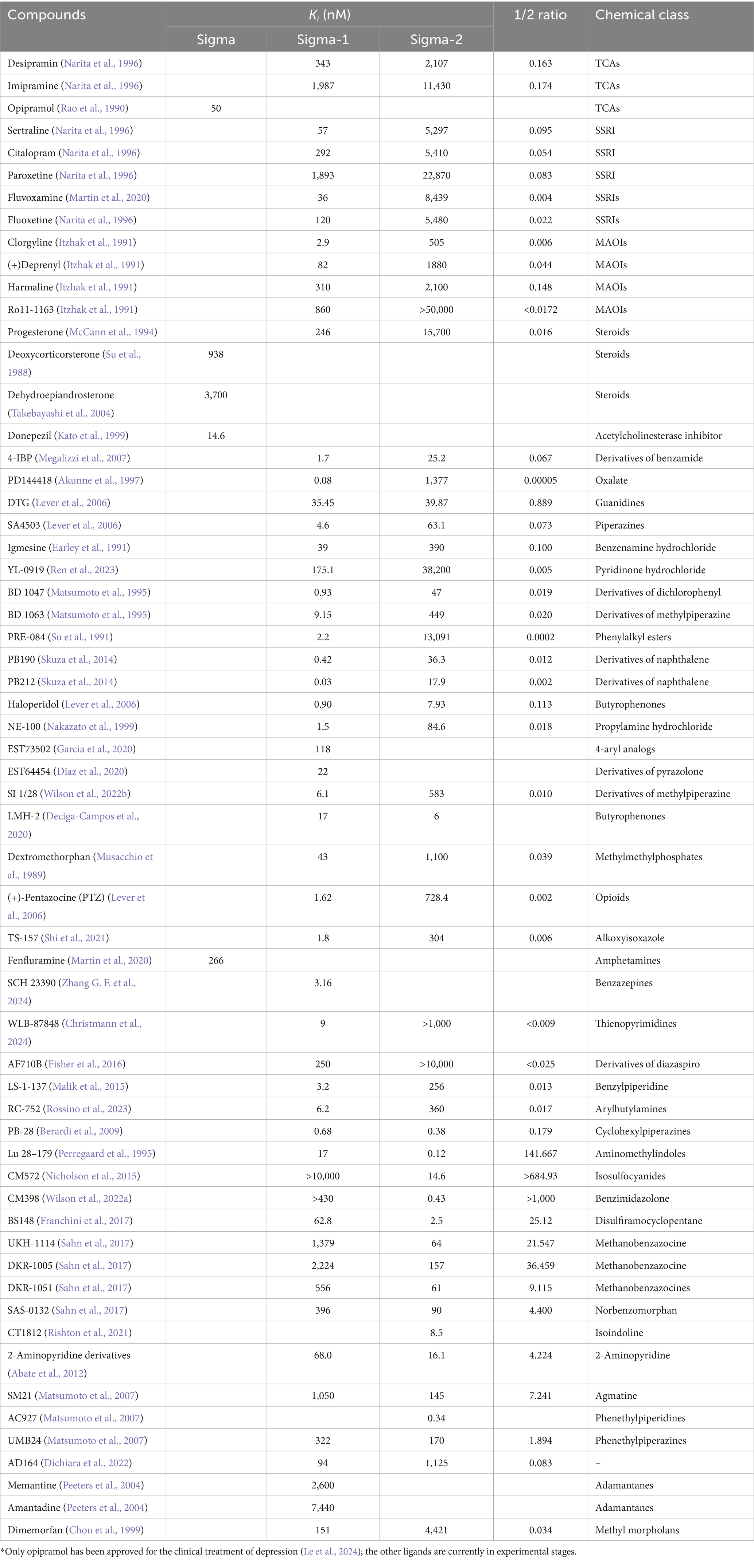
However, citalopram specifically has a big effect on the histaminegma the sigma-1 receptor. I will focus on the sigma-1 receptor:
https://www.sciencedirect.com/science/article/pii/S134786131...
Never heard of it? Yeah, don't be ashamed, it is the biggest secret in depression. In fact they are finding that many "SSRIs" are sigma-1 agonists, even prozac.
https://www.frontiersin.org/files/Articles/1691987/fnins-19-...
It tunrs out that Sigma receptors modulate glutamatergic dysfunction in depression, and glutamate, being excitatory, well, you can. make your assumptions from there.
https://www.frontiersin.org/journals/neuroscience/articles/1...
It seems the main function of the Sigma-1 receptor is Calcium release. And calcium ion channels are one of the most studies ion channels in mood disorders. By increasing calcium release you increase neuronal activity, hence, the uplifted mood.
It is too bad that the sigma-1 receptor is just starting to be studied and there is limited evidence of how omega-3 and Vitamin D effect it. But I do know that Vitamin D has a huge effect on SLC6A4 (SERT).
https://www.nature.com/articles/s41598-020-79388-7
I have Schizoaffective Disorder Bipolar Type (disabled) and have been on no less than 14 types of meds. I knwo how they work better than my psychiatrists, which I why I no longer take them. I also know my genetics which gave me clues to what is happening in my body. Now I eat a mostly seafood diet and my needs for meds has mostly vanished. I am still an odd old fellow, but at least I am not ranting in the streets or trying to kill myself anymore.
Meds saved my life, but a diet high in Omega 3, D, and a bunch of other things has removed so much suffering from my life, more than any medication has.
(Also, if you want to get into the weeds of depression, you might wat to look at ATP and depression https://onlinelibrary.wiley.com/doi/full/10.1111/cns.14536)
There are some forms of depression that you cannot think or act your way out of. If you haven’t experienced that, I promise that you do not understand what it is like. You cannot really understand unless you have experienced it. Your opinion on it is irrelevant, and frequently offensive.
The same is true for people that say that antidepressants are mostly placebo. They are not. When people say that antidepressants saved their life, they aren’t joking or exaggerating in the least.
Yes, I understand that other therapies are also effective, and that some people are non-responsive to some drugs.
Keep your pet theories to yourself if you are not a subject matter expert or someone who has experienced it first hand.
Edit: I understand that the placebo effect is still an effect. My point is that there are a lot of people being incredibly dismissive of real lived experiences and outcomes on a VERY serious issue.
A particular point he makes about depression in it is insightful: Although depression is conventionally viewed as a medical illness, research studies indicate that genetic influences appear to account for only about 16% of depression. For many individuals, life influences appear to be the most important causes.
I'm not saying it's the same thing as depression or regular anxiety, but it gave me tremendous perspective on how bad these conditions can be and you just don't have the ability to "shake it off" when things are unbalanced.
Maybe that's how my wife feels when she's off the meds. Shit. Now imagine having a douchebag by your side second-guessing your pain. Never again.
In fairness, anti-depressants are a lot of drugs. The article gives a list. 23 of them seemed to be better than placebo, 19 of them were much less clear.
> When people say that antidepressants saved their life, they aren’t joking or exaggerating in the least.
Placebos can also save people's lives.
Disclaimer: I'm not a doctor, but saw 4 seasons of dr. House. Moreover, few hours of Huberman Lab on sleep and light and most importantly, this episode of Additude Mag Podcast on curing SAD and ADHD day-rhytm shifting with light glasses: https://www.youtube.com/watch?v=fu4mLgkNc6I
What happens in the seasonal affective disorder season is the sunlight pattern diverges from 6-18 that we evolved with. Without daily reminder of getting enough sun (or sun-like) light at the 6 o'clock⁰, your body clock will drift.
It can start by feeling groggy instead of refreshed in the morning, even if you've slept enough. And can escalate into loosing the will to do anything or even live.
No wonder. You're still an animal. You need to be fed, put to bed, etc. at a specific time. If you try to make your body sleep during the day, and eat and work during what body expects to be night, you won't really sleep and won't really live/work. Enough of not really sleeping and not really living - you mess up your body, your gut biome, your hormonal balance and your brain chemistry. You kind of should get depressed when you do it.
You can steer your body clock with light. Most of us do it, by exposing ourselves to strong (strong enough it won't matter if it includes blue wavelength or not).
But you can do it consciously (and in a way good for you) by putting on light therapy glasses (I'm using Lumiere 3¹, and they are not the only ones, find your own) at 6⁰ everyday, or right after you wake up if you're trying to readjust your rhythm. Or if you have time and want to save $200, use a stationary lamp and just sit in front of it doing nothing. I don't have the time. When readjusting, small doses of melatonin (0.5mg) 1h before sleep will accelerate body clock shift.
But don't listen to me, if you have SAD, you should really listen to that ADHD experts episode.
I feel for you, struggling with that stuff for a long time. Vit D, fish oil (lot of). All lights at home set to reduce intensity after 18. Strict going to bed routine. Still sleep poorly once in a while, but can do things in winter again. Hope it will help :)
0: choose whatever suits you. With small doses of melatonin and discipline in using light glasses you can even flip day and night. Just stay consistent, good farmer always feeds his cows at the same time.
1: at the time of buying ( fall '25 ) they were cheapest and best overall in norway. Solid build, ok battery, can have them on during yoga using attached rubbers and kind of can have them over glasses. Mine are very large and have blue light filter, but I manage 20min without eyeglasses. Medical certificate. Few leds, holo strip, battery and some plastic - my inner Scrooge says it's not worth $285, but everything else was worse and more expensive.
Pause for a moment and consider the mere plausibility of the claims in the first few paragraphs: The effect size for antidepressants is 0.4, but the effect size for Vitamin D is 1.8? Are we to believe that Vitamin D supplements have an effect size 4.5X larger than antidepressant drugs, and nobody noticed this massive discrepancy until now?
Effect size is also a favorite metric in this vein of supplement-over-pharma writing because it’s so commonly misunderstood and it’s so easy to find small supplement studies that have outlier effect sizes.
To put it in context, even common OTC pain meds can have effect sizes lower than 0.4 depending on the study. Have you ever taken Tylenol or Ibuprofen and had a headache or other pain reduced? Well you’ve experience what a drug with a small effect size on paper can do for you.
Please be very careful when someone tries to tell you that supplements are miraculous and pharmaceutical drugs don’t work at all. I know too many people who delayed trialing SSRIs for years due to internet driven fears and lost many years of their lives to depression based on content like this. People with cabinets full of dozens of supplement bottles that were chosen based on studies, too. Then they finally decided to try real antidepressant medications and wished they’d done it sooner.
As much as I wish we could all just cure depression by taking a simple Vitamin D supplement that has 4.5X higher effect size than antidepressant drugs, this claim just isn’t passable.
Hiking has the biggest effect though.
I think maybe the problem is that therapists are diagnosing people, and psychiatrists are prescribing pills based on those diagnoses, but neither are ordering bloodwork to check for deficiencies. Which leads to a lot of people suffering from lack of basic health, and treating the symptoms with SSRIs that have withdrawl symptoms a million times worse than most of the problems they treat.
Now to your point, I seriously doubt that vitamin D will hold up against anti-depressants and therapy if we control for other health and quality of life issues. I just think there is a ton of misdiagnosis, and lack of root cause analysis in the mental health field, and health care in general.
Keeping the mind busy with beautiful things and being physically exhausted can heal a lot of things.
Its like surfing on a big day - you are just too tired to be depressive afterwards. It feels like a weight blanket.
I remember reading that pine trees give off a chemical that is a natural human bronchodilator.
One thought of why people love hiking, especially in piney woods, is that the chemical allows humans to process more oxygen which in turn helps them feel more "energized".
I point this out for two reasons:
1. It's a fascinating bit of trivie
2. It highlights that there are MANY confounding variables so it will always be tough to figure out the isolated impact.
A few months ago I tried walking with a weighted vest, and my body and brain got completely shocked in a really good way. Wakes up everything. So that is in my mix now.
Walking with 20 then 40 lbs was a lot easier than I expected, and the results were much greater.
I can definitely tell that the Adderall I was prescribed had an immediate, huge benefit. Not sure about the vitamin D.
But I really appreciated that he took a wide angle look at my health.
That statement is broadly true for most outcomes studied, but specifically for depression the larger study results are pretty mixed.
VITAL (the heavily cited metastudy) shows no effect. https://pubmed.ncbi.nlm.nih.gov/32749491/
But there are other large metastudies like this one for Vit D (https://pubmed.ncbi.nlm.nih.gov/39552387/) and this one for Omega 3 (https://pubmed.ncbi.nlm.nih.gov/31383846/) that do show robust moderate effects.
Either way, the conclusion to this whole debate is incredibly simple: get a blood panel done and go from there - it might not even be one of these that ails you.
What the article states, then fails to take into account, is that is the mean effect size, and there is huge variation.
Anti-depressants are notorious for producing different effects for different people.
What that high variance means in practice, is for any anti-depressant, the people who get good results are getting a much higher effect than 0.4. And the other people move on to try something else.
So to keep comparing 0.4 directly to the effect of Vitamin D and Omega-3 directly is very misleading.
If antidepressants cost less than $4/1000 and acted as an antiinflammatory as their only common side effect then sure I'd consider replacing Ibuprofen as my pain placebo of choice.
> Please be very careful when someone tries to tell you that supplements are miraculous and pharmaceutical drugs don’t work at all.
I'll concede I unintentionally gave the tone that one should replace antidepressants with supplements, even though the conclusion specifically writes: "(Don't quit your existing antidepressants if they're net-positive for you!) you may also want to ask your doctor about Amitriptyline, or those other best-effect-size antidepressants."
I have now edited the intro to more explicitly say "you can take these supplements alongside traditional antidepressants! You can stack interventions!"
===
> and nobody noticed this massive discrepancy until now?
Researchers have noticed it for 13 years! From the linked Ghaemi et al 2024 meta-analysis ( https://pmc.ncbi.nlm.nih.gov/articles/PMC11650176/ ):
> Several meta-analyses of epidemiological studies have suggested a positive relationship between vitamin D deficiency and risk of developing depression (Anglin et al., 2013; Ju, Lee, & Jeong, 2013).
> Although some review studies have presented suggestions of a beneficial effect of vitamin D supplementation on depressive symptoms (Anglin et al., 2013; Cheng, Huang, & Huang, 2020; Mikola et al., 2023; Shaffer et al., 2014; Xie et al., 2022), none of these reviews have examined the potential dose-dependent effects of vitamin D supplementation on depressive symptoms to determine the optimum dose of intervention. Some of the available reviews, owing to the limited number of trials and methodological biases, were of low quality (Anglin et al., 2013; Cheng et al., 2020; Li et al., 2014; Shaffer et al., 2014). Considering these uncertainties, we aimed to fill this gap by conducting a systematic review and dose–response meta-analysis of randomized control trials (RCTs) to determine the optimum dose and shape of the effects of vitamin D supplementation on depression and anxiety symptoms in adults regardless of their health status.
===
> even common OTC pain meds can have effect sizes lower than 0.4 depending on the study. Have you ever taken Tylenol or Ibuprofen and had a headache or other pain reduced? Well you’ve experience what a drug with a small effect size on paper can do for you.
I must push back: that's an effect of 0.4 plus placebo effect and time.
There's now RCTs of open-label placebos (where subjects are told it's placebo), which show even open-label placebos are still powerful for pain management. So, I stand by 0.4 being a small effect; even if you took a placebo you know to be placebo, you'd feel a noticeable reduction in pain/headache.
EDIT: Here's a systematic review of Open-Label Placebos, published in Nature in 2021: https://www.nature.com/articles/s41598-021-83148-6.pdf
> We found a significant overall effect (standardized mean difference = 0.72, 95% Cl 0.39–1.05, p < 0.0001, I2 = 76%) of OLP.
In other words, if the effect on antidepressants vs placebo is ~0.4, and the effect of a placebo vs no placebo (just time) is ~0.7, that means the majority of the effect of antidepressants & OTC pain meds is due to placebo.
(I don't mean this in an insulting way; the fact that placebo alone has a "large" effect is a big deal, still under-valued, and means something important for how mood/cognition can directly impact physical health!)
You’re cherry picking papers. Others have already shared other studies showing no significant effects of Vitamin D intervention.
For any popular supplement you can find someone publishing papers with miraculous results, showing huge effect sizes and significant outcomes. This has been going on for decades.
With Omega-3s the larger the trial size, the smaller the outcome. The largest trials have shown very little to no detectable effect.
I think a lot of people are skeptical about pharmaceuticals because they see the profit motive, but they let their guard down when researchers and supplement pushers who have their own motives start pushing flawed studies and cherry picked results.
> In other words, if the effect on antidepressants vs placebo is ~0.4, and the effect of a placebo vs no placebo (just time) is ~0.7, that means the majority of the effect of antidepressants & OTC pain meds is due to placebo.
You keep getting closer to understanding why these effect size studies are so popular with alternative medicine and supplement sellers: They’re so easy to misinterpret or to take out of context.
According your numbers, taking Tylenol would be worse than placebo alone! 0.4 vs 0.7
Does this make any sense to you? It should make you pause and think that maybe this is more complicated than picking singular numbers and comparing them.
In this domain of cherry picking studies and comparing effect sizes, you’ve reached a conclusion where Vitamin D is far and away more effective than anything, placebo is better than OTC pain medicines, and OTC pain meds are worse than placebo.
It’s time for a reality check that maybe this methodology isn’t actually representative of reality. You’re writing at length as if these studies you picked are definitive and your numeric comparisons tell the whole story, but I don’t think you’ve stopped to consider if this is even realistic.
If a minority of patients benefit hugely and most get no benefit, then you get a modest effect size.
This is probably why this discussion always has a lot of people saying “yeah, it didn’t help me at all” and a few saying “it changed my life.”
I believe we should be focusing on more relevant statistical methods for assessing this hypothesis formally. Basically, using mean differences is GIGO if you assume you’re comparing a bimodal or highly skewed distribution to a bell curve.
People constantly say you should do three things if you are depressed. Go outside (vitamin D), exercise and socialize.
Often times exercising occurs outside as well.
Here's the thing - if you click a button and pay a dollar your supplement will be there at your door in hours.
Getting a SSRI is a whole damn thing
Lot of drugs - mental health, low cholesterol, low blood pressure -- a lot of drugs along the lines of "take them rest of your life" -- ought to be OTC you ask me. Of course medicine would hate that because the red tape of going in, checking a box, and getting a script, is a nice little profit center. Not as much as racket as say spine surgeries, but a bread & butter small time racket. Here's a question, has anyone tried making these OTC and measuring risk & reward, deaths vs lives saved? Or measure healthcare costs? Because I'm willing to venture lots of lives would be helped, families whole, at a much lower cost.
Doing this has had a massive positive effect for me, and combined with decent nutrition and daily exercise, has been wonderful.
All of these likely got better due to the overall effect of decreased anxiety and not making ADHD worse. I'm not myself when on caffeine. Nikola Tesla quit all caffeine/other stimulants for a reason.
Going to argue here, this is wildly bad advice. Decaf practically has no caffeine, it has 2-7 mg from what I can tell which is less then chocolate. 2-7mg is like impossible to notice and might aswell be water with how little there is.
I'd add that my ability to sleep naturally was negatively affected as side effect of medication. I tried a various combos to induce sleep and found the best solution to just be... exercise.
No caffeine, exercise, sleep lead to a significantly reduced anxiety and more.
I tried doing this for almost a full year, and while the improved sleep and generally improved mood was fantastic, and even toward the end it was so much harder to get any focused work done.
Im on week 3 of no coffee now, I will maybe give it a month or two more to make a judgement call if I want to continue with coffee or not.
It is unfortunate as I really enjoy coffee, but it causes some issues for me with anxiety and stomach problems.
Those are two different things. Cutting out caffeine can help with anxiety but not ADHD. It's the opposite for ADHD, stimulates help significantly.
I’m quite sensitive to caffeine, yet I can drink green tea all day without noticing much effect, while even a light coffee or a caffeine pill is clearly noticeable. I can also drink tea before going to sleep without any problems.
Can you describe what else you tried? Other supplements? Any other non-food/supplement techniques like journaling, breathing, etc.? Any therapy and other similar human interventions?
After all those - is it / was it still the case that cutting caffeine drove the best outcome?
I gave it maybe 2-3 months and decided it's not worth it.
Tempted to give it another shot!
> A single, optimal sun exposure session might produce the equivalent of 10,000 to 25,000 IU from a supplement, but it will not keep increasing with more time in the sun. That's your max per session.
I'm not stating the dosage is wrong. Looks like it is anyway.
Also, be careful taking 5000 IU/day of Vitamin D. I did this for a few months and it was enough to send my blood levels over the top of the range, even in winter.
Too much Vitamin D is not good for you. The supplement fans have gone too far in recommending too high of dosages. My doctor said she’s seeing a lot of people with excessively high Vitamin D levels now that it has become popular.
EDIT: Wow, the HN-local doctors at it again. Imagine getting downvoted for sharing information from newspaper article (and honestly labeling that info as such), that probably was written by someone consulting medical professionals. But hey HN will know better!
Just a simple look at the side effects of high dosages:
Safety and side effects
Taken in typical doses, vitamin D is thought to be mainly safe.
But taking too much vitamin D in the form of supplements can be harmful and even deadly. Taking more than 4,000 IU a day of vitamin D might cause:
    Upset stomach and vomiting.
    Weight loss and not wanting to eat.
    Muscle weakness.
    Not being able to think clearly or quickly.
    Heart rhythm issues.
    Kidney stones and kidney damage.
You might be depressed because you life objectively sucks. Then you symptoms are good and healthy and a signal to make changes in your circumstances.
You might actually have a good life but still feel depressed because there is a chemical imbalance in your brain. (Very simplified). That is when drugs come in.
It might be just a seasonal thing and you need to go outside more and take some supplements.
You might have some other undiagnosed issue. You might have ADHD, autism and other things that cause you to struggle and develop depression as a side effect.
So find out what works and what doesn't work for you.
The problem with this that to a bad situation different people react differently - some trying to do what they can to improve the situation or at least don't make it worse and some give up and let situation to slip and become worse and worse (becoming a self fulfilling prophesy). It's not a choose one makes I think (it's likely a biological predisposition) but the difference is still exists.
People prone to depression genuinely believe the main (only) reason for a depression that the life sucks and as a result they avoid medical help and don't do anything which could help them.
And each of those things can be caused by physiological issues as well. You might feel stressed because you don't sleep well. You might sleep poorly because you suffer from e.g. sleep Apnea. Which in turn might be because of a mix of physiological and other reasons (diet, weight, alcohol abuse, etc.).
Or you might be working too hard, which makes you stressed and causes you to lose a lot of sleep. Different causes that have similar results. Including long term physiological results. Your brain can actually get damaged if you chronically abuse it or neglect it. Many "between the ears" type problems are actually physiological.
Root causing your issues enables you to deal with them properly instead of fighting the symptoms.
Anyway, I take vitamin D and a few other things. Getting yourself checked out regularly once you hit middle age is a good idea. There's a lot of stuff that is long term lethal that a checkup can detect early. And some of it is fixable. I have the usual cardio vascular challenges that many people struggle with because of a combination of genetics, age, and life style. And indeed a vitamin D deficit.
I was also recommended to consume more omega-3 as well. Eat salmon. Work some flax/chia seeds in your breakfast. I put flax seeds in my yogurt and use it as a thickener in sauces as well. You have to grind it to dust for it to get absorbed properly. Dirt cheap and it doesn't mess with flavor/texture too much. I keep a jar of ground flax seeds in my fridge. Takes 2 minutes to top it up every 1-2 weeks or so with some freshly ground seeds.
But I'm also aware that me being a stressed startup founder has health consequences that a few pills and suplements won't fix for me. I need to actively make sure I get my rest and sleep. I deal a lot better with stressful situations when I'm well rested. And I seem to be better at avoiding getting in to those as well. And I feel happier. Sometimes the best thing I can do for my company is having a proper weekend or going to bed early enough that I can get my 8 hours of sleep. You can survive on 4 hours (been there done that), for a while. But most people are not at their peak performance if they do that. And it's not good for you to work yourself to exhaustion all the time.
Pinpointing problems in your life as the cause of your depression is a trap.
For example: if your life objectively sucks, why aren't you doing anything about it? Some people whose lives suck fix their lives, and other people get depressed and do nothing; what's the difference? And: all of us know somebody who appears to have a good life and therefore their depression is presumably a chemical imbalance thing but if you're being honest the vibes in their life are a bit off, actually, like you can tell they're not really getting everything they need out of it, that they're clearly good at masking (for example people who are clearly not thriving in their relationships) .... in which case sure medication could help but you can't shake the feeling that facing the reality of their life would help a lot more.
However! Questioning this stuff becomes a bit of a moral minefield. "Believing" in the chemical imbalance theory is part of why it's medically helpful. If your life has sucked for years and you could find no way of fixing it and then SSRIs helped, then you basically need to believe that it really was a chemical imbalance, because believing that it might not be threatens to take away the thing that's making your life work. So much so that I would bet at this point there are already readers of this comment who are ready to angrily reply to my preceding paragraphs, because the model I just described threatens their existence. (If so, wait a sec and read the rest...)
On the flip side, for some people not believing in the chemical imbalance model for some particular case might be important. Maybe they want to feel responsible for their life being bad, so they will be motivated to do something about it, and being happy due to drugs would make them feel complacent and okay with years passing by at a shitty job or something. Or picture someone whose parent has gone their whole life unable to take them seriously as an adult, which as a result means the child and parent have a bad relationship, and then picture the parent complaining about depression and taking medication for it. This can be really infuriating: the child thinks about the parent, "your life sucks because of the tension created by not treating people around you with respect, and you're so incapable of recognizing this even when it's told to your face regularly that you're taking drugs to feel better despite not fixing the problem". Now ascribing depression to medical problems seems like avoidance, and having people write off your frustrations and say that you're just depressed and need to take a drug for it is frustrating.
Just saying: the two narratives really get tangled up. I don't really know what to do about it, but I do think that some harm is done by harping on the concept of a "chemical imbalance". A lot of the issue is avoided if you just think of the drugs as helpful but don't choose any model (with its moral implications) for what exactly it is they're helping with. Just treat them as a tool for making you feel better.
Also, I suspect that people who have an intuitive aversion to mental health drugs are probably way overindexing on that intuition. I definitely did this for a long time, as did some friends I knew growing up. Turns out whatever your issues you can sometimes just deal with them sooner than later if you accept that doctors might be onto something. (Actually I think the reason people get stuck avoiding medication for so long is precisely that they feel like they're not allowed to be skeptical of them... which makes them kinda plant their feet in the ground and refuse to be open to it. That's kinda why I'm typing this long comment, to tell anyone reading that it is a reasonable thing to feel. And now that you know that maybe try them anyway..?)
Disclaimer, not saying vegans should stop being vegans, just make sure you find a good supplement, and make sure you understand the difference between EPA/DHA Omega 3.
Fortunately today’s vegan communities are much more aware of this so I started taking these supplements right up front and all my blood markers improved dramatically since when I consumed meat/dairy.
It’s annoying to hear some push back against this when it’s as simple as taking relatively safe supplements (just make sure you talk to a doctor, and not a social media influencer, about how much you should take, and if you get a chance to regularly check your bloodwork don’t miss out).
I would bet that 95% of that improvement or more was due to the exercise.
Your anecdote is common: People start taking Vitamin D or fish oil as part of a bigger plan to have a healthier lifestyle and then they attribute success to the pills, not the lifestyle changes.
I see your disclaimer, but just for more context, vegans can get Omega 3 without taking pills per se. Flax seeds are an excellent source. I often add a spoonful to a bowl of oatmeal or as a pancake topping along with fruit sauce and granola.
(As an aside, Cohen would be the person not to tell you to assign qualitative values to effect sizes. They are as arbitrary as any other threshold used by working statisticians.)
[1] https://www.cambridge.org/core/journals/psychological-medici...
EDIT – that is, please don't draw the conclusion that you can substitute supplements for antidepressants. The meta-analyses don't seem designed to examine that hypothesis, and I doubt anyone would ever participate in a such a trial. In general (and as a working biostatistician), I would be very, very, very cautious applying estimates of average effect to myself, you, or any other individual person in a field as murky as psychiatry. That's why even the stingiest American health insurance plans still have an incredibly large range of antidepressants in their formularies.
> many studies in the Vitamin D meta-analysis enrolled patients already taking antidepressants.
Yes, and that's even more encouraging, that there's still effects of Vitamin D on major depression even if already on antidepressants! This suggests we can "stack" the interventions.
Table 1 of the meta-analysis ( https://pmc.ncbi.nlm.nih.gov/articles/PMC11650176/ ) shows the raw sub-group analysis. There were 9 studies on patients using antidepressants, 13 on patients who weren't, the rest were Mixed or Not Reported (...how do 6 studies just not report that?) Anyway,
Effect size of Vit D for people on antidepressants: −0.54 (−0.85, −0.23)
Effect size of Vit D for people NOT on antidepressants: −0.28 (−0.40, −0.16)
Both negative. Weirdly, the effect of Vit D seems to be a bit stronger for people on antidepressants, but the difference isn't statistically significant at the p<0.05 level (P subgroup difference is 0.23)
(As for why those effect sizes, -0.54 & -0.28, are lower than what I (and that meta-analysis itself) report, -1.82, that's because the majority of RCTs for any group used far less than 5000 IU. Table 2 in that paper shows the effect (with 95% CI) for various dosages.)
I'll lightly edit my blog post to emphasize stack them, don't substitute. Thanks again for your comment!
You are however correct about population being important (which is a big reason meta analyses can be very useful).
I know first-hand that low energy-levels and lacking energy production mechanically lead to depression.
Also, look at how people (children also) experience the world and their relationships and their stresses when they are tired (or even just hungry) compared to when they are fit...
Fix those, and the depression might be gone.
This is not bashing against anti-depressants, they play their role to. But in some cases, energy-management is key.
The main problem with ALA is that to have the good effects attributed to omega-3s, it must be converted by a limited supply of enzymes into EPA and DHA. As a result, only a small fraction of it has omega-3's effects — 10%–15%, maybe less. The remaining 85%–90% gets burned up as energy or metabolized in other ways. So in terms of omega-3 "power," a tablespoon of flaxseed oil is worth about 700 milligrams (mg) of EPA and DHA. That's still more than the 300 mg of EPA and DHA in many 1-gram fish oil capsules, but far less than what the 7 grams listed on the label might imply.
https://www.health.harvard.edu/heart-health/why-not-flaxseed...
Also, beware of omega 6 fats. Seed oils (corn, soy, canola) used in commercial food products are incredibly omega 6 dominant in terms of polyunsaturated fat content. Consequently, the ratio of omega 3 to omega 6 fats we consume has plummeted as food production has industrialized. Omega 3 fats are precursors to generally anti-inflammatory signaling compounds, whereas omega 6 fats are precursors to pro-inflammatory signaling compounds. The bias in fat intake leads to more pro-inflammatory signaling in the body, and a lot of alt health types have alleged this is a major causative factor in the obesity epidemic.
This is important for depression, because chronic brain inflammation as a cause of depression was one of the going hypotheses at least a decade ago when I last looked into all of this. Upping omega 3 intake is an intervention that can address chronic inflammation, which is potentially why it improves some cases of depression.
Pretty much nobody in the west needs more omega 6s these days. I hear even farmed salmon eat primarily corn and soy based feeds these days, meaning their fat ratio is skewed much more heavily toward omega 6 than wild salmon and fish.
First, when taking omega 3 supplements, you generally care about increasing the ratio of omega 3 to omega 6. Hemp hearts have much more omega 6 than omega 3, so they're not very effective for improving the ratio.
Second, hemp hearts contain ALA, while what you generally want to improve is EPA and DHA (this is also covered in TFA). The body can convert ALA to EPA and DHA, but it's not efficient.
So all in all, if Omega 3 for the article's stated benefits is what you want, this is not the way. I recommend looking into eating more fish, or if you want a vegan route, algae-based supplements. [0] is a decent source from the NIH about foods and their Omega 3 content, split by ALA/EPA/DHA.
[0]: https://ods.od.nih.gov/factsheets/Omega3FattyAcids-HealthPro...
Do be aware that not all vitamin E supplements actually contain the dosage that they are labeled at, and that inclues both no-name brands and some big name brands. I'm having trouble finding a good reference on google due to AI and SEO pollution. But I recall Nature Made was labelled accurately and that is what I buy.
My wife on the other hand has struggled with life-long anxiety/depression even when living in Atlanta. For her a fairly low dose of lexapro enables her to live her life like a normal person. We wish we could get her mother to give it a shot for a few weeks, as she now can see a lot of similarities in both their personality traits that were affected by a life of untreated anxiety.
We also have cat that would probably have been put down for fear-biting of people and attacking our mild and mellow dog until we got his aggression under control with kitty prozac. I kid you not, it's a transdermal fluoxetine cream we put in his ear each day. Without the constant anxiety stimulus in the way, his real personality came through and he is actually very sweet. To me at least. Still bites my wife, but not hard anymore, just enough to keep her alert.
or society in its current incarnation. its an underexpressed opinion that maybe depression is a justified reaction to ... life, as humans across a lot of earth in 2026.
I did a blood test for vit D metabolites (oh 25 or something). It turned out I was deficient.
The doc gave me 8k units as a prescription drug. In theory weaker. After 2 months I was no longer defiecient (kinda borderline). After 4 months the doc decided to go down to 4k iu.
Now I wonder why some experts are telling people to take 10k iu? Is it because the supplements are crap and contain 10% of what they claim? (I've been taking vit K as well)
Too much Vitamin D3 can be toxic, so doctors are reluctant to tell you to go over published guidelines. but if you don't have other issues, and stick to what you can get OTC from a normal vitamin brand and follow the instructions, you're probably safe. There was a story a while ago about a woman who died from too much D3, but it turned out she was taking a whole bottle's worth every day for years.
Taking 10K per day is a bad idea. I went into the excess Vitamin D range with half that dose even in winter with an indoor job.
More is not always better.
Toxic levels of vitamin D can be life threatening, so do keep your levels in check, but you won't get there unless you really try, so if you can't get out of the bed to have your blood tested just start taking it and check it after 3 months when things get hopefully easier for you. Just make sure to get the number of zeros in the dose right.
Y'all called me MAHA and down voted me into the negatives. Please, insult your own analytical ability by doing the same here. This time I'll just revel in your ideologically confined science denial this time.
[0] https://scitechdaily.com/simple-three-nutrient-blend-rapidly...
The main instigator of depression is still societal as the postmodern era is pushing everyone into seclusion and addicting them to constant individualized dopamine hits, increasing the miserable effect on one's chronic mood and exacerbating one's self-consciousness about it.
eg just to paint the picture: you're depressed so you don't get out of bed, therefore you don't go do your workout, therefore you lack endorphins and look in the mirror and see squishy, you're sad about how squishy you are and so you get more depressed. You're more depressed so you also don't do your dishes, when you do get out of bed you are depressed you feel like a slob and you're squishy, so you get more depressed...
Whereas adding anti-depressants, and other virtuous cycle things like vitD/O3, exercise et al. Give the boost necessary to _make your life less depressing_ ...
So if you know someone who's depressed, it might be helpful to help them make their life less depressing too. (in addition to all the best medical advice!)
[1]- he's a real Dr... Dr. Alok Kanojia (Dr. K), a Harvard-trained psychiatrist (MD, MPH) specializing in modern mental health
Careful, he is also a believer in Ayurveda[1]. Which basically basically categorizes people into different elements like fire and water and then tries to change their diet and habits to match their elemental style or something. You can hear him talking about it here [2]. Kinda reminds me of Humorism [3]. Dr. K seems like a nice enough guy but don't get too lured in by the "Harvard-trained" credentialism.
[1] https://en.wikipedia.org/wiki/Ayurveda [2] https://www.youtube.com/watch?v=rQ2xnThRGPg [3] https://en.wikipedia.org/wiki/Humorism
> Some of the available reviews, owing to the limited number of trials and methodological biases, were of low quality (Anglin et al., 2013; Cheng et al., 2020; Li et al., 2014; Shaffer et al., 2014).
Vitamin D is toxic (and ultimately fatal) at high doses, which is why the 'suggested' dosages of between 400IU and 1000IU are so conservative. You may need more, but you should get a blood test.
Getting Vitamin D from food is a fools errand, and since sunscreen and protective clothing slow vitamin D from the sun drastically, it's in most people's best interest to get it tested.
Do keep your levels in check though.
The effect after taking the Vitamin longer than 24 is not significant anymore.
That's not what I was doing in my other comments that you replied to. If you have a knot, and imagine all the possible things you can do with your hands and body and tools in the universe and notice that to a first approximation none of them will untie the knot. Not hitting it with a spoon, not stroking your chin, not jazz hands, way more than 99.999% of possible movements will not untie it. Some of the things which won't work also include pulling yourself up by your bootstraps, "not being weak", "toughing it out". "just get over it". All those are no more effective than any other of the 99.999...% of things which won't work.
The things which will work are in a tiny space of things involving fingernails, needles, knot-eye-hand-feedback-loop and some understanding of rope and tangles. Or fire.
Just because fire will have a useful effect doesn't mean the knot is caused by an imbalance of fire and so you should keep burning your fingers for the rest of your life as "the cure" for knots. The way to untangle a knot is to develop the focused, pointed, targeted skills of untangling knots. And (I argue) the way to untangle negative thoughts is not by powering through them, toughing them out, positive mental attitude, fortitude, being strong, manifestation, dreaming big, just getting over it, or crowbarring your mood up with sledgehammer drugs to an 80-billion neuron network for the rest of your life, or anything else of the millions of other concepts one could do or imagine doing - except the focused, pointed, feedback-loop skills of untangling negative thoughts wielded by a particularly good therapist or by yourself.
Whether you develop such a thing by therapy training, meditation, prayer, Stoicism, biofeedback systems, luck, intuition... I suspect there are multiple ways which are effective that can be developed through multiple approaches, but not many. And "I tried thinking my bad thoughts away and it didn't work so it must be genetic" is not one of them.
I'm usually able to reason or force my way through depression and the like, but have had a few deep bouts in my life. The medications have ranged from ineffective to building a tolerance quickly, to just plain worse than the symptoms being treated. Nothing like missing your highway exit multiple times back and forth because you get lost "in" the drive on medication, or having 140 browser tabs open and losing 5 hours of work time.
Everyone is different. I am amazed at how much western society has so many hormonal issues that come down to the lack of quality or appropriate fatty acid intake and a lack of something as simple as more outdoor/sun time. I think the "low fat/cholesterol" advice for most of the past half century combined with the increase in snacking and junk foods have been massive disservices to humanity as a whole. I wouldn't be surprised if some of the effects are multi-generational in the making either.
After an absurd amount of trial and error with every over-the-counter, trendy supplement over the last couple of decades (and lord only knows how much money), these are the only ones that seem to make a subjective difference on my quality of life and an objective difference in my bloodwork.
recent evidence [0] suggests there's not much of a link between serotonin and depression, and therefore the effects of SSRIs are either placebo or an as of yet unexplained mechanism of action. IMHO it seems much more likely that modern lifestyles (excessive screen time, poor diet, lack of socialization, no connection to nature, no spirituality, etc) have more of an effect than serotonin levels.
I remember a similar case with levelsio who was advocating people to take melatonin and discussing how much grams is good vs bad. When I said that people shouldn't take medical device from someone who was successful in building web apps, he blocked me.
https://examine.com/supplements/magnesium/research/#nutrient
Dai (2018): Magnesium status and supplementation influence vitamin D status and metabolism: results from a randomized trial https://pubmed.ncbi.nlm.nih.gov/30541089/ "Our findings suggest that optimal magnesium status may be important for optimizing 25(OH)D status. "
So it might well be that general deficiency in Vitamin D is caused by the deficiency in magnesium status. This would also be an explanation why we see Vitamin D deficiency in sunny Africa: https://theconversation.com/think-vitamin-d-deficiency-is-no...
Within my peer group of people on the spectrum (which very often comes with a depression, which is logical) we've discussed Vitamin D studies for years. And multiple of us decided to give it a try for a couple of months. And neither those who tried it INSTEAD of an SSRI, nor those that took both (SSRI + D) could report any measurable difference.
I have a theory on why is that: It is known that low levels of Vitamin D is one likely cause for depression - in Northern Europe, where during winter time people do not get enough sunlight, that correlates very clearly with the suffering of depression.
But potentially it simply does not work the other way round: I moved to near the equator, and I therefore basically have sunlight shining out of my butt, but still am depressed. It makes sense that in this case Vitamin D makes no difference at all.
In summary my theory would be: Vitamin D only has an effect on a depression that was caused by a lack of Vitamin D.
"Evidence does not support the use of vitamin D supplementation for the prevention of cancer, respiratory infections or rheumatoid arthritis. Similarly, evidence does not support vitamin D supplementation for the treatment of multiple sclerosis and rheumatoid arthritis or for improving depression/mental well-being."
https://pmc.ncbi.nlm.nih.gov/articles/PMC4907952/#:~:text=Bo...
That's not to suggest that exercise etc isn't great, just that society has come a long way in destigmatizing mental health and just being like "oh just take fish oil" to someone dealing with that kind of depression, either through shitty genes or childhood trauma or whatever, can be really harmful.
It's processed into (7-DHC), the same compound in human skin.
7-DHC is bombarded with UV light, triggering a chemical reaction that creates Vitamin D3.
(The STAR-D had a cumulative remission rate of 67%, I don't know how to convert that to the format he used)
Otherwise I agree that vit D and omega 3 are underrated for depression, it would be interesting to see if they have a cumulative effect with antidepressants.
I became pretty suspicious of most supplement brands last year. Many omega-3 capsules are rancid (which can have adverse effects and can easily go unnoticed with a capsule), and the vitamin D brands I tried didn‘t seem to do anything for me at all.
I switched to cod liver oil instead. It‘s a staple in Scandinavian cultures, so there are several well-controlled brands available that taste neutral (or are lightly flavored, e.g. lemon). It’s a combined substance containing omega 3, vitamins D, E, and A, and appears to be much more bioavailable than many capsule-based supplements, especially given the oxidation issues. Don’t want to prime anyone - try it yourself - but many people, myself included, report fairly immediate effects. I am not talking about the capsules, they are a fairly recent invention, I mean the plain oil on a spoon like in the old days.
Alongside magnesium, it’s currently my only „supplement“.
Unlike the commenter, I didn’t suddenly turn into a chess grandmaster, but I did notice that my winter blues didn’t show up this year, the first time in a decade!
Edit: This may also be of interest: https://en.wikipedia.org/wiki/Orthomolecular_psychiatry
The effect after taking the Vitamin longer than 24 weeks is not significant anymore.
Based on the test I was just a tad under where I should be and so now I am taking 800 IU per day. I may stop in the summer when I get more sun.
I read somewhere that too much vitamin D has similar effects as too little (permanent hair loss, anemia, etc) but that may have just been on a blog similar to the linked blog on this submission.
This curio bothered me as well. I didn't yet get a fully satisfying explanation for this either.
There's this diagram, showing for example the full pathway of how linoleic acid catabolizes: https://commons.wikimedia.org/wiki/File:Linoleic_acid_beta_o...
It shows dependencies of the process onto several very specific molecular machines we call enzymes.
(main pathway, handling saturated fatty acids)
   ° Acyl CoA dehydrogenase -- removes 2 hydrogens from carbons immediately after the carboxylic head, forming a π-bond (double-bond) between the α-β carbons;
   ° Enoyl CoA hydratase -- adds water as H-OH to that α-β carbons π-bond;
   ° 3-hydroxyacyl CoA dehydrogenase -- converts the added -OH hydroxyl group to =O keto group;
   ° β-ketothiolase -- grabs the two keto groups, and snips off 2 carbons from the chain, carrying them off in bound form as a molecule of acyl-CoA;
   ° Dienoyl CoA reductase -- collapses two neighboring π-bonds into one;
   ° Enoyl CoA isomerase -- converts cis- to trans- variants, making them compatible with Enoyl CoA hydratase. Pathway continues from there.
Besides catalysis (combustion of the acids for energy), the two other paths for consumed fatty acids are excretion, and laying them into cell walls and membranes. These two paths aren't selective; they mostly don't care about the length of the chain, and where which π-bonds occur in it, if any.
So this must imply, that the "quirk of evolution" lives somewhere on the anabolic (synthesis/production) side of fatty acids; definitely not on the catabolic side.
I read this years ago and it's fascinating. Looks like it's been updated for a second edition last year.
It is depressing ... :(
(Note: my own real therapy is to do what is fun. That is, humour. This can occur via social interaction; it can also happen to some extent by studying human behaviour via ... youtube videos! There are some surstromming videos that are just epic display of human behaviour. If aliens ever arrive here, I'll show them the Top 3 videos there. Either they will laugh too - or flee from this strange planet.)
Each human being is unique, as is the recipe for sustained positive metal health.
I think it’s helpful to consider and experiment with different ideas and strategies.
I strongly disagree there is one single solution that can provide significant lift for a large population.
Does that mean vitamin D treats depression in general?
When most people talk of depression they aren't even using talking about major depression.
We live in a world that in many ways is comfortable but crushing. Is that depression? Or just harmful levels of understandable unhappiness? Are they different?
This is the referenced meta-analysis: https://www.cambridge.org/core/journals/psychological-medici...
The largest N study (N=18,353; more than half of the entire 31 study sample) included is https://jamanetwork.com/journals/jama/fullarticle/2768978, which found: "Risk of depression or clinically relevant depressive symptoms was not significantly different between the vitamin D3 group...and the placebo group."
The highest dose study (100,000 IU/week) included is https://pubmed.ncbi.nlm.nih.gov/30532541/, which found: "...the treatment response or BDI scores did not differ significantly between groups."
The paper/supplementary materials doesn't include a simple table of the depression outcomes for the 31 included studies, which is a glaring omission.
I think someone just messed up here. Maybe missed a decimal place?
For a more realistic perspective, here's another careful meta-analysis of RCTs of Vitamin D for depression that found null result: https://www.sciencedirect.com/science/article/abs/pii/S08999... (granted, 2015). And another from 2025 that found a .36 effect size, which is plausible and still fantastic: https://www.frontiersin.org/journals/psychiatry/articles/10....
I don't mean to dissuade people from trying these given the low risk profile, just don't expect to go from a C to an A.
There are studies that show this is an effective intervention.
It is fat soluble vitamin, together with A, E and K. That in itself makes in more risky in terms of overdose. I didn't hear of any cases outside kids eating jars of vitamin gummies but it does happen.
> Zolpidem (“Ambien”) has effect size around 0.39 for getting you to sleep faster. Ibuprofen (“Advil”, “Motrin”) has effect sizes between from about 0.20 (for surgical pain) to 0.42 (for arthritis). All of these are around the 0.30 effect size of antidepressants.
...
> Some of our favorite medications, including statins, anticholinergics, and bisphosphonates, don’t reach the 0.50 level. And many more, including triptans, benzodiazepines (!), and Ritalin (!!) don’t reach 0.875.
As for why, read his essay I guess. But I wouldn't take at face value the interpretation of effect sizes in the original article.
(I also couldn't say why the effect size of vit D and Omega-3's is so large, although per Scott Alexander's article if fewer people drop out of the treatment group, that should increase the effect size, so maybe the relative tolerability of the treatments is part of the story?)
Honestly, Costco supplements are hard to beat since they're both USP certified and are usually the cheapest.
Why you being mean to latin? ;)
Not to say they don’t help, but it’s asinine to state that nutrients are a replacement for selective serotonin reuptake inhibitors, whose sole purpose is to help with depression, and has been designed by an army of scientists, researchers, psychologists, psychiatrists.
- I believe this crucial bit is missing from TLDR