I gotta aim and peck some bullshit or open up some app with a QR code instead. Give me T9
I can kind of understand how we got here - a fractured system of various vendors, TV makers, and customized android implementations led us to apps having their own keyboards, even if the TV offers a native on-screen keyboard, and for some reason most of those are laid out in a keypad style with A in the top-left which goes against everything the majority of users have known, even back to typewriters.
I know my comment got longwinded, it’s just…things could have and should have gotten better by now, but I’ll be arsed if I’m gonna pull out my phone to type the four letters needed to scroll to the movie I’m looking for.
Always kind of saddened me there weren't more games that did interesting things with it, even things like scrolling around an overworld map.
For example, if you try to search for a title and one of the words in your search is entered "223", then either "ace" or "bad" can be in that position, and if there is a title with "ace" matching in that position and a title with "bad" matching in that position, both are displayed.
So, this variant is you enter the entire title (or a substring of the title) first before it predicts what words you meant. After it is entered then all results are displayed, with a number next to each one, and then you must push the number corresponding to the one that you want.
maybe streamio + unified remote?
I guess I got busy with other things
The main word pairs that this often fails for are "me/of" and "no/on" (edit: other super-common words are "go/in", "he/if", and "up/us"; "am/an" isn't a problem since you usually write "I'm"); prefixes that can end with "-er" or "-es" are also ambiguous. For those you need to press the arrows to select a possibility manually. If there's an ambiguity for longer words (usually, if the word you're looking for is not in the dictionary), you might have to use the arrows ahead of time and then keep typing before the space; it will try to complete suffixes that go after that prefix.
There are only around 2000 ambiguous digit sequences after excluding the -er/-es pair, and for most of those at most one is likely to be used in texting even if they're "common" in English.
The most ambiguous sets, with 6-8 "common" "words", are:
  2253 able bake bald bale cake calf
  22537 abler bake[rs] balds bales cakes calfs
  2273 acre bard bare base cape card care case
  22737 acres bards bare[rs] base[rs] cape[rs] cards cares cases
  24337 aides bides cheep cheer chefs cider
  269 any bow box boy cow cox coy
  4663 gone good goof home hone hood hoof
  46637 goner goods goofs homes hones hoods hoofs inner
  7243 page paid rage raid sage said
  727733 parred parsed passed rapped rasped sapped
  7277464 parring parsing passing rapping rasping sapping
  729 paw pay raw ray saw say
  7327 pear peas reap rear sear seas
  74337 ride[rs] rifer sheds sheep sheer sides
  7627 roar robs snap soap soar sobs
  7673 pope pore pose rope rose sore
  (no +7 since "popes" isn't common)
  78337 puffs queer ruder ruffs steep steer
  7867 pump puns rump rums runs stop sums suns
  787433 purged pushed rushed stride strife surged
Nope, one key per letter. T9 uses an internal dictionary to figure which word you meant, with some memory for preferred words when there's multiple matches and adding custom words.
The great thing about T9 (certainly on the Nokia 3210 and 8210) back in the day was you could type messages fast with few k/s without looking. As long as you had enough experience to know the word combos.
Ive never found a t9 system as good as the Nokia implementation. In some respects its better than qwerty for short messages. And don’t get me started on apples fundamentally broken auto correct system. People dont know any better these days. There’s actual adults walking today that have never typed on a real keyboard.
What about those reading the headline and deciding whether to follow the link or not?
I don't think I ever really knew what it was, other than "that thing that made typing difficult". I doubt any phone shipped with a Slovene dictionary for T9, so it was probably just doing its best trying to map my seemingly nonsensical keypresses onto English words.
Sadly the Apple Watch doesn't do proper external text input. You can connect a bluetooth keyboard, but it works by sending all input via the VoiceOver accessibility feature, which is slow and fidgety.
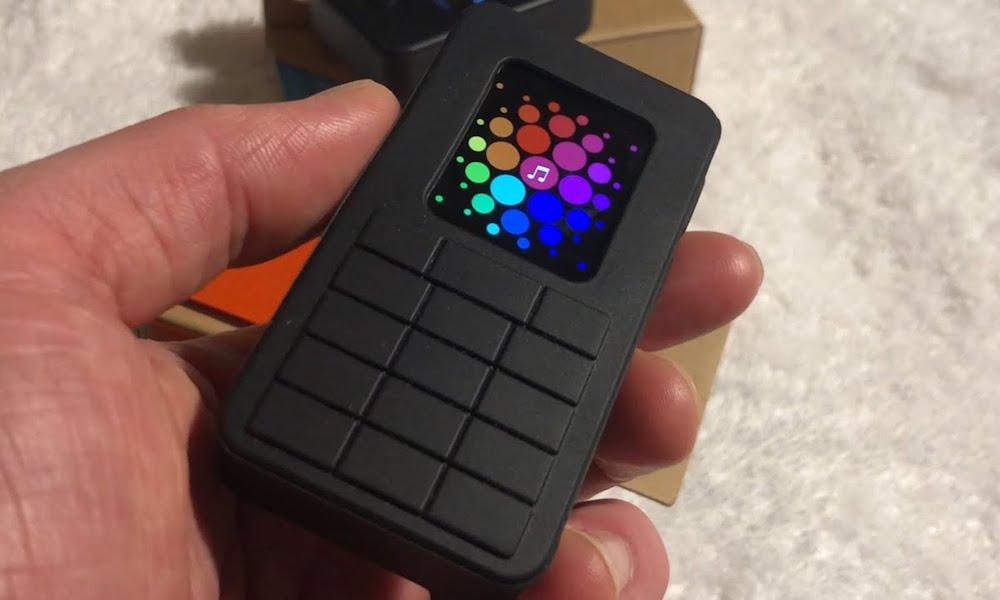
[0]https://cdn.idropnews.com/wp-content/uploads/2021/06/1509254...
Although I appreciate the effort, I see a couple of issues with this implementation:
* The demo doesn't seem to work properly, the first thing I tried to type was "hello world", but it didn't recognize "hello" and I got "43556" instead.
* The word list is generated generated C code, which makes it hard to use other dictionaries (languages) or to add words during use (you can't add all place and people names to the list, but people are going to want to reference a handful of them many times). Loading from and appending to a plain text word list would make more sense, and maybe additionally use a custom binary format for the trie structure for fast loading into memory once a word list is imported on first use (hardware that would benefit from T9 might not be fast enough for conversion to be "instant")
* Non-latin script support would be nice. Although I have no knowledge whether Greek or Cyrillic languages used a T9 mechanism, it would be a minor change to define. Korean 12-key typing is also very cool, but I don't know whether that counts as T9.