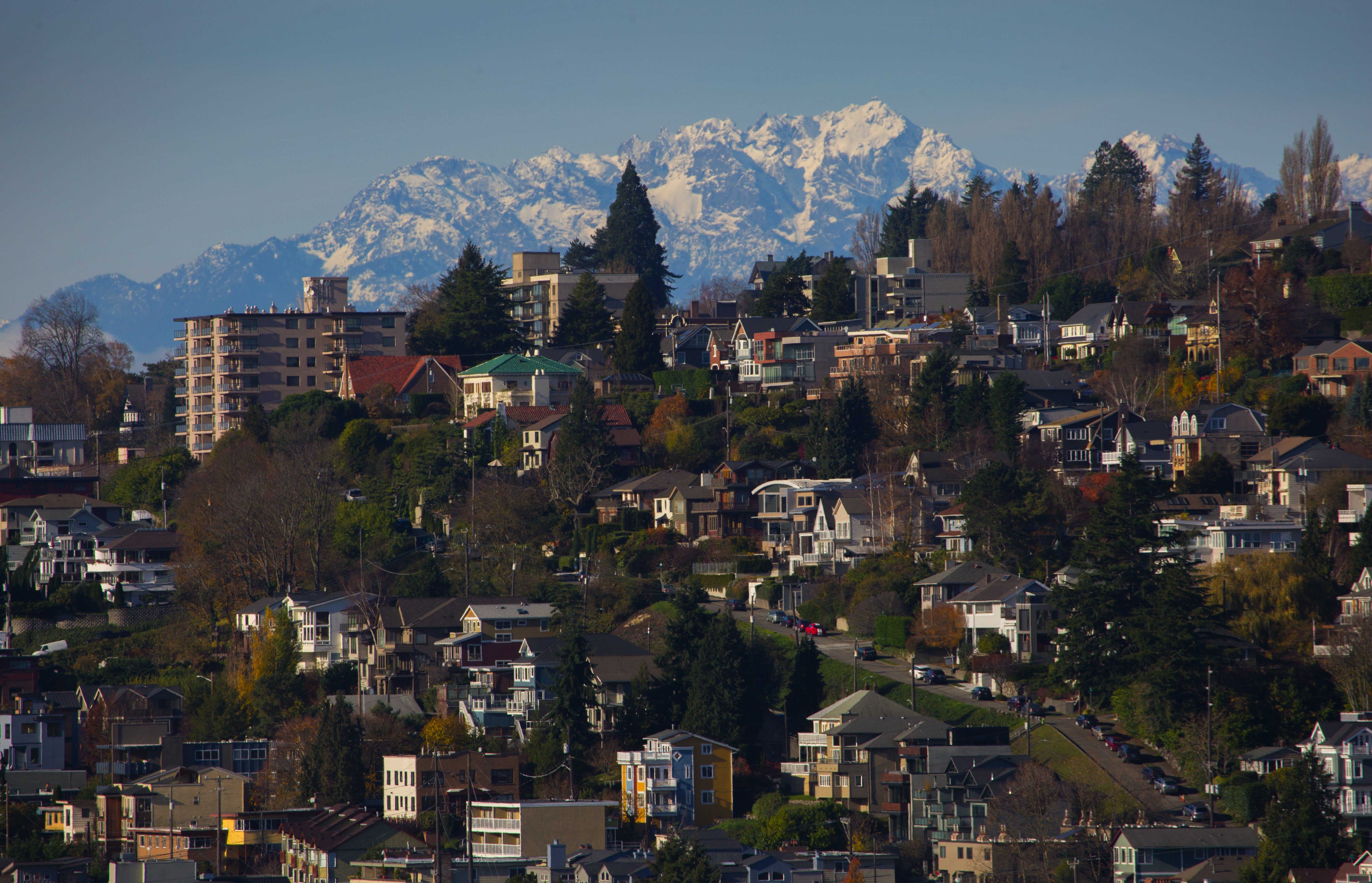
Wrong. Seattle, Oakland and Los Angeles are mostly built on much flatter parts of those areas. California entire geography is about "Hey, check out these massive valleys or coastal land we can build in." Same thing with Washington State, Seattle is in between Cascades and Olympics where there is all this flat land to build on. Yes, they running out of land and building into mountains now. That problem is like having FAANG scaling problems. It sucks but it's good/manageable problem to have and you have massive checkbooks to help solve it.
Have you been to Appalachia? It's not on the coast and does not have these benefits. If you want to compare it to West Coast areas, it's more like Sierra Nevada. Inland Mountains with only small valleys to build infrastructure in.
[1] https://upload.wikimedia.org/wikipedia/commons/e/e0/Sausalit...
[2] https://images.seattletimes.com/wp-content/uploads/2016/03/9...
Cumberland, MD vs San Francisco. Wow, when I overlay urban areas of Bay Area, it's heavily built up in much flatter areas and gets much less dense as elevation change gets steeper. Not to mention, sea access gives you massive advantage since you are not having to move as much over really tall mountains.
Cumberland, MD has none of these. It's in a valley between two larger ridges of mountains but is heavily constrained. Also, not having sea access means transporting goods there is much more difficult and requires more infrastructure. And since we are one nation, you could just move west to much flatter Ohio and Great Lakes or East to flat parts of Maryland and Chesapeake Bay.
Sure, Bay area built up with creating really excellent schools that created really high paying industries but thinking it was "We lifted ourselves up by our bootstraps" and instead "Our geography and World War with Navy on our coast desperate to win really did help us."
Seattle was MADE flat by literally using fire hoses to flatten hills and mountains [0].
That said, I disagree with the role geography has with developing a tech industry - most of it can be directly related to investment put during WW2 and the 1950s into innovation clusters.
For example, Seattle and aerospace (Boeing), Bay Area and computers+electronics+nukes (HP, IBM Almaden, LLNL, LLBL, Los Alamos managed by UCB), San Diego and Biotech+Defense Tech (Salk Lab, Navy), Portland and electronics (INL, PNNL, Tektronics, Intel), etc
The Bay Area really benefits from Stanford and Berkeley being there. You need a steady stream of educated new grads to grow from.