Strictly for possible typos: if the author is alive, ask them, otherwise leave it.
> Sometimes a book is completely accurate at the time of publication, but becomes factually inaccurate over time, giving the wrong dates for the beginning of daylight saving time or an incorrect planetary status for Pluto.
> Should we fix these factual errors? Do we need the author’s input? What if the author is dead, the agent is retired, and the editor has left the company? Should we fix them silently or with some kind of editorial note?
> Then there’s the case where the content of a book is not incorrect, per se, but may have become outmoded or offensive.... What do you do here? Do you update the language that’s incidental to the content of the book? Does it matter who you think is buying this — whether it’s people who want the diet advice or people who are researching the historic participation of Asian Americans in diet programs?
No. A book should capture an author's intent/concept/idea at the time it was written and those intents/concepts/ideas should be frozen.
My latin was too rusty to be able to read Meditations on First Philosophy as it was written. ( https://www.gutenberg.org/ebooks/23306 ).
A translation from Latin to English ( https://en.wikisource.org/wiki/Meditations_on_First_Philosop... ) necessarily changes those intents/concepts/ideas into those that the reader is more familiar with.
A translation from English of 1000 AD to 2000 AD has the same necessary changes http://www.hieronymus.us.com/latinweb/Mediaevum/Beowulf.htm
Is it ok to read Liu Cixin's work 三体 as Ken Liu's translation known to the English speaking word as The Three-Body Problem? Or should I learn Chinese and immerse myself in the culture of China in order to read it with those intents / concepts / ideas as things frozen on paper?
There are two problems - the book captured at its time may not be accessible anymore. Secondly, even if you can read the words it may be that the words those concepts map to in today's language are not the concepts that the author intended.
So... how short of a time frame is not not acceptable to read the work in translation?
I hold that a translation across time is not really any different than a translation of a modern work across languages and cultures.
The translation is a new work.
The original work in the original language stays frozen.
Incidentally, the translation is treated the same and is frozen in the same manner.
> Should we fix these factual errors? Do we need the author’s input? What if the author is dead, the agent is retired, and the editor has left the company? Should we fix them silently or with some kind of editorial note?
I think it's bizarre to call the "factual errors" at all. Would you alter a book from 1958 that "incorrectly" refers to Eisenhower as the current U.S. President? Such "fixes" would be a defacement of the historical record, flattening all of time into a perpetual now.
If it is a novel, then clearly not. A fact-book, that lists the current heads-of-state of all world nations, then possibly yes.
It's ultimately a decision for the author/publisher for each book. Is this a living text that should be kept up-to-date, or a historical record - after all, a book which lists all of the heads-of-state in 1958 is also valuable for different contexts.
Perhaps more importantly - if a book says something dangerous - like a cook-book saying "add a few flakes of cyanide for flavour" is that grounds for an update, or editors note in an otherwise historical record text?
Given that we're talking about ebooks, whose readers generally have some kind of navigation system, I think it would be reasonable to include a footnote. If a book says Pluto is a planet, I wouldn't mind a [1] linking to a note that says "Pluto has not been considered a planet since $year. $LinkToWikipedia".
I agree that actually changing the content is a bad idea, but I do think it would be valuable to link to up-to-date information in a non-intrusive manner.
What you want doesn't necessitate changes to anything except maybe the reader software. Annotation and commentary has been around for millennia. What you want is for the reader to inline the commentary. That's fine.
Anything else is fundamentally underhanded.
In a print book, you can make corrections or revisions in a new edition, but the old edition is still potentially out there, in libraries and private collections, preserving its own history.
In a digital publication, if you make a revision, the old edition disappears by default; older versions are only preserved if someone does so deliberately.
At the very least, the reader should be informed of the initial publication date as well as the dates of any revisions, which I believe is already standard practice in the print world. This is essential context for the reader.
When a text revised in 2024 purports to be [entirely] from 1948: bad. When a revised text mostly written in 1948 purports to be [entirely] from 2024: also bad. To me, this is way more important than the question of whether or not to make revisions per se.
This doesn't suit the concept of all books, particularly non-fiction references. The article name-drops _The Joy of Cooking_, which is a suitable example of a book that strives to be useful and that benefits from new editions gently reworked to be correct and current.
> I think we agree at this point that a nationality is not a super-cool Halloween costume, but I’m not clear on whether Clarissa’s putting on yellowface or has just borrowed her mother’s lipstick. And so how do we handle this? This is not Huckleberry Finn — it’s not a book about race, where we talk about the history and the controversy. Should we be concerned with this type of incidental racism in an ebook that we’re selling today, one that looks just like the new, and hopefully more enlightened, children’s ebooks we’re publishing in 2015?
That's something I never understood: rewriting books from the past to match recent cultural trends. What happened happened, whether you like it or not. (I also don't really get the Halloween costume controversy, but I acknowledge there's something to debate there, unlike with the history-rewriting topic which is just dumb).
Or is that a "recent cultural trend" where you can understand why publishers followed the trend and made a change?
Because once someone admits that change was okay, it's no longer a question of principles and just a series of judgment calls that different people will make differently.
Publishers make changes to ensure books keep selling.
They are human and don't always make the right decision. But they aren't doing it for any reason other than profit.
My daughters are Asian I wouldn't buy them a children's book where "be Chinese" is considered an acceptable Halloween costume.
The publishers would probably prefer I consider purchasing it.
But removing nigger from Huckleberry Finn would greatly destroy the purpose and means of that work - someone has to make that decision and weigh it.
You mean 1940. (Its original publication in the US.)
> Because once someone admits that change was okay
You seem to be going with the assumption that everyone is on board—that they agree that that change was okay (had it actually happened, that is).
Famously, Christie set out to deliberately write her most technically challenging book, having ten people murdered on an island in a manner in keeping with the poem, whilst still keeping the reader guessing whodunnit. Most readers agree it was her best book by far.
The idea that the book is racist simply because of it's title is a rather modern phenomena (not to mention changing the title and poem somewhat hides her original challenge).
There also exist people who would rather avoid buying books where the publisher changed the content in 1984 style to appease the woke moaners.
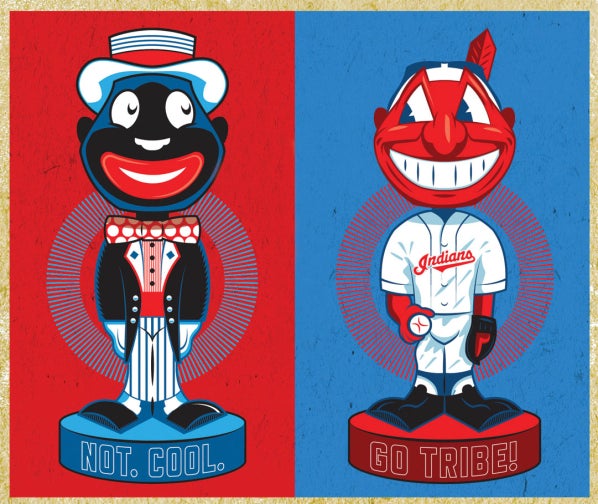
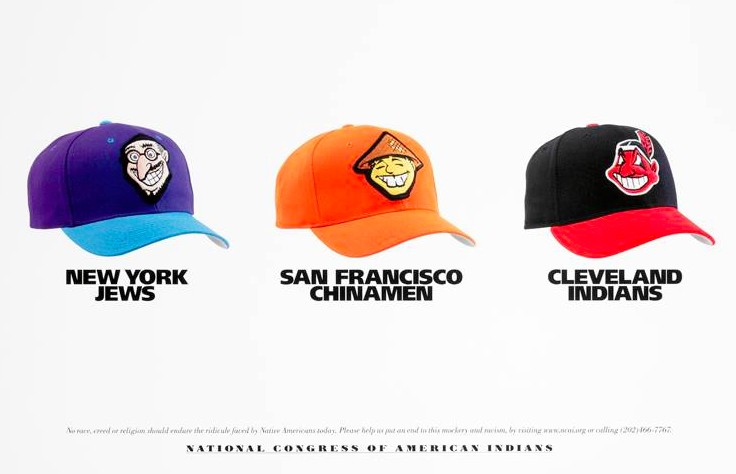
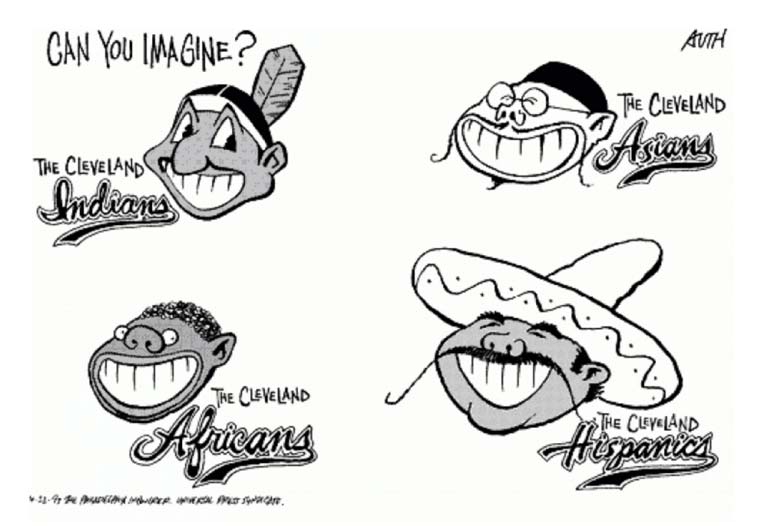
See these examples
https://www.culturalsurvival.org/sites/default/files/nmai-sp...
http://www.slate.com/content/dam/slate/blogs/browbeat/2013/1...
https://risetowin.org/assets/img/what-we-do/educate/resource...
Of course, this isn't foolproof because your descendants or heirs might also be willing to bowdlerize your work or even take it out of print altogether. So another option would be to just release all of your copyrighted works into the public domain upon your death allowing anybody who cares to publish uncensored copies.
This is a thing for self-published authors as well, only we tend to take a more optimistic view on the backlist: a large backlist is more of a benefit than a challenge. It is necessary to keep putting out new books of course to get new visibility, but income stability comes not from readers buying your shiny new book - it comes from them buying _all of your other books_ after they read and enjoy the shiny new book. The backlist is generally considered king for a sustainable self-publishing career.
It does come with maintenance, however. As the post mentions, my early books are just not very good. Heck my new books are not very good either, but they're better than my early books. Likewise, covers and blurbs go out of date and need to be refreshed once in a while. It is work - but a large backlist is in the end what keeps you afloat.
Why? The reader understand that they are from another time.
Hyperlinks are a particularly challenging area.
Disable TTS? Can you please fucking not?? E-books were such a huge step forward for accessibility, now lawyers are here to ruin it all...