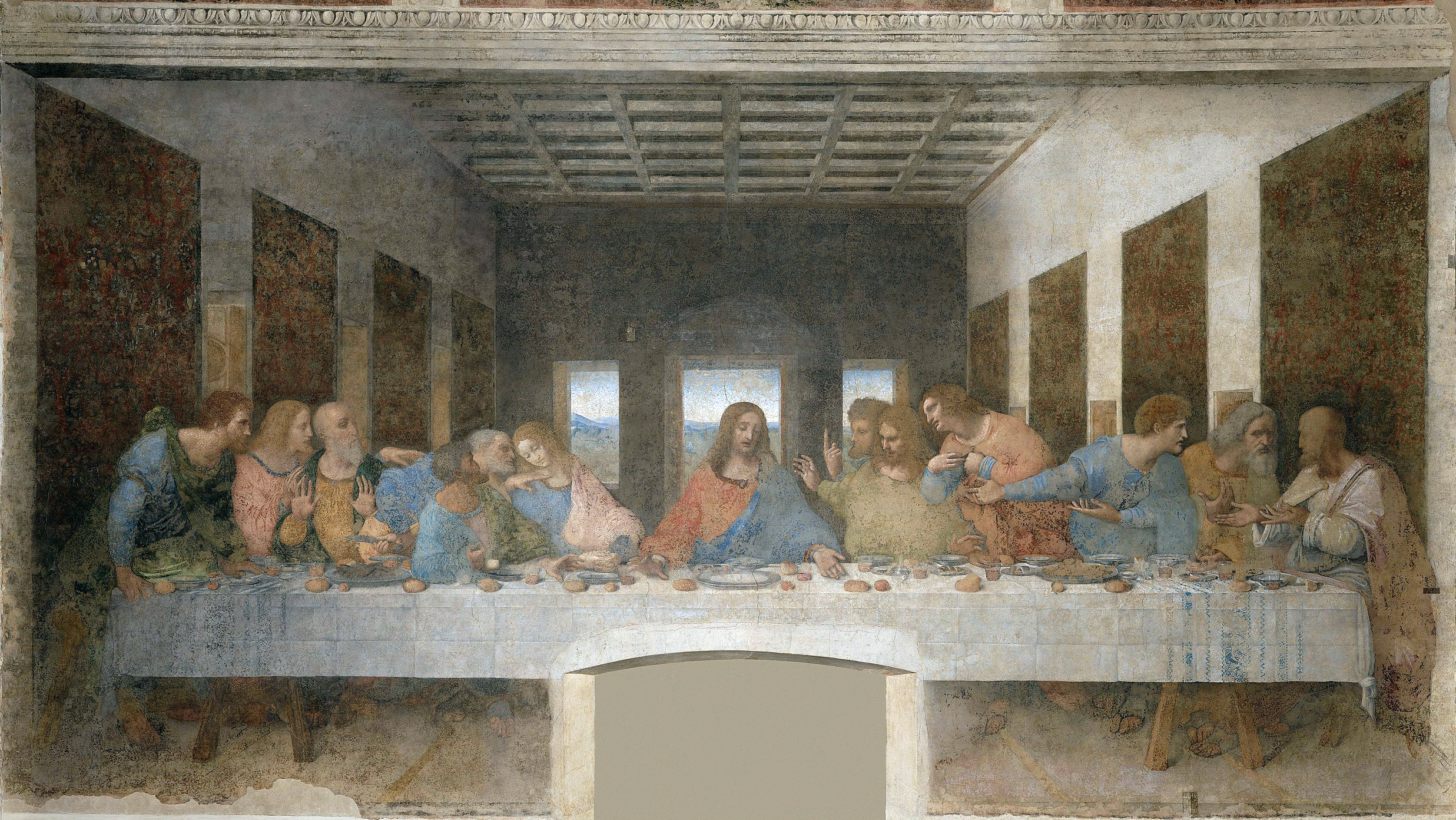
This sentence concluded a very short paragraph that apparently aimed to explore whether the hand sign could have a Masonic meaning. But instead of giving any explanation for their conclusion, the authors merely postulate the above without any given reasoning. I’m surprised to find this in what appears to aim to be a scientific analysis. Even more so would it surprise me if any conscious reader found this conclusion satisfactory.
Any thoughts?
However, there were numerous other fraternities and secret societies during that era, although they were typically gender-specific. Seeing both men and women using the same hand signals suggests these were likely common societal practices of the time. And since, presumably the hand positions are secret, they're not going to be immortalized in a painting.
I wouldn't bet on it. Performative secrecy is very common in esotericism.
Would you actually be able to say it if they were?
> And since, ..
No, the meaning is the secret :) Oh dear.
And after cursorily dismissing them they just say "therefore, it's an aesthetic meme. This is just what perfect hands look like, sorry."
A hypothesis that was not considered, for example: 'We asked people at school to imagine that they were going to be sitting still for the next three hours on a stool, and to sit on it in a way that was perfectly relaxed. We then prompted them "remember, in old times you'd have had to sit here for three hours, really relax." Finally, we then picked up their left wrist, turned it, and placed it on their chests saying "great, now can you just hold this hand here," and took a photograph. In 30% of these photographs we also see, even without syndactyly, that the two fingers get forced together just by the process of having your wrist twisted by an artist and then the fingers having to conform to the contours of the chest.'
I don't know what that percentage is, but I'd be surprised if it were 0%, right?
I'd also personally not be surprised if hermetic symbolism cropped up around the Medici-adjacent artists in particular, given the Medicis' proximity to Pico della Mirandola who was fairly important in bringing together this new mix of christian, jewish, gnostic and neoplatonist mysticism.
Is it really unnatural? Interestingly, as a right-handed, the two middle fingers of my right hand tend to effortlessly group together; this feels noticeably less true on my left hand, but still observable if I try to relax it.
The peculiar "mission tile" (half-cylindrical) flexibility of the palm region, encouraged by writing for example, may foster this grouping.
It's a bit surprising for the article not to address potential anatomical causes.
So I interpret this position as simply the most difficult hand position to maintain, thus indicating some intention, practice, or awareness -- and thus self-control, which was considered the master virtue classically.
Your example of writing makes sense too. Perhaps because writers were a more exclusive club then, prominently showing your subject’s hand with that finger grouping was a message in itself.
It takes a tiny bit of intent to splay my fingers out.
Portrait artists constantly study people very closely and are likely attuned to thousands of little nuanced details that go unnoticed by most people. This is probably one.
Now I’m going to start looking at people’s hands to check their finger positions. That might have been a good exercise for the authors of the paper to determine if this is a natural hand position.
I’m also surprised the paper (?) doesn’t go into simple behavioural explanations for this.
A few examples:
https://i2.wp.com/catholicism.org/wp-content/blogs.dir/1/fil...
https://jimmyakin.com/wp-content/uploads/st-augustine-and-fo...
https://en.m.wikipedia.org/wiki/Pope_Urban_VIII#/media/File%...
It shows up in formal photographs of the Pope in the 20th century:
https://4.bp.blogspot.com/-ch3pBw3dBY0/WeG5Oo9_k1I/AAAAAAAAC...
And the TV series The Young Pope even included this gesture as a detail: https://youngpopesart.wordpress.com/wp-content/uploads/2017/...
At Disney employee training they taught me to point with index and middle finger (or my whole hand) too.
Tldr: they're not pointing upwards, they're pointing to someone's head (the viewer of the painting/photography most likely)
I bet when they used one finger people were asking "me?" and then looked behind them to see if there is someone else. If priest uses two fingers it's obvious he's not pointing at you or someone behind you. It also helps if he points it little bit higher not just right between your eyes like a gun.
The Catholic Church has had quite a few years to solidify and formalize their rituals. Nothing a priest does during mass is accidental or coincidental. They go to school for these things.
Do you know of research on this? I have two gay friends with feminine speech and both are adamant that they don't choose to have this and would prefer not to. Each has their own theory as to why they have it. One suspects it might be (epi)genetic while another suspects its influenced by being raised by women. I can't buy the latter since many very masculine straight men were raised exclusively by women.
https://en.wikipedia.org/wiki/Gay_male_speech
The guy at 4:04 articulates exactly the same idea as I did above
Basically, aggressive feminist groups use a hand gesture as a disrespect against men (or misogynists), but the gesture is so general and anti-feminism is so large in Korea, that a lot of people mistook the otherwise normal picture in anime/games as a hidden attack against men. It caused riots and several people lost their jobs or sometimes the entire projects/companies went down.
I think it's not a good idea to associate a very natural gesture with horrible intentions...
[0] https://edition.cnn.com/2021/10/02/business/south-korea-busi... [1] https://www.youtube.com/watch?v=-Im4YAMWK74
I imagine it's a very good idea, if you have horrible intentions.
https://www.independent.co.uk/news/world/americas/ok-sign-wh...
> It has become an extremist meme, according to the Anti-Defamation League.
The ADL maintains a "glossary" of every random meme and inside joke from 4chan and claims that they are all somehow connected with Nazis.
The ADL itself is in fact considered a hate organization by many people.
>Under the guise of fighting hate speech, the ADL has a long history of wielding its moral authority to attack Arabs, blacks, and queers.
https://www.bostonreview.net/articles/emmaia-gelman-anti-def...
The article helpfully rules out a third explanation, an "epidemic of syndactyly", but doesn't make a strong decision between the other two. It seems to lean towards this being a quirk of the artists, but it could do with a quantitative study: if artist A painted subject A like this, what happened when artist A portrayed other subjects, or other artists portrayed A?
Fingers spread evenly is artistically uninteresting — naive even. Fingers all joined is also rather dull — suggests a rigidity in fact.
The overall effect is quite pleasing to the eye, which may account for it having caught on to the point where it became a trend. I see this as the Occam's Razor of explanations.
Would have been interesting to see a disclosure for a pharma company working on syndactyly or a disclosure that the authors belong to some secret society.
leading to a local joke:
Q. How can you spot a forester on a Saturday night?
A. (while making sign above) 5 beers, please!
https://duckduckgo.com/?q=Hitler+portrait+by+Heinrich+Knirr&...
Huh, I had always assumed the reason that they were featured in renaissance art was the trend of depicting subjects with a sort of realism, combined with hands tending to be a more difficult feature for artists to master; so a good depiction of hands showcases the skill of the artist and enhances the work’s merit as a status symbol for its owner.
I guess both could be true. Hands are an important focus of attraction in the modern day tbf.
https://cdn.kastatic.org/ka-perseus-images/82e1c6954dc87273a...
Lagniappe: https://www.youtube.com/watch?v=Lngmx0v3aOs&t=25s
(Presumably he developed it in order to travel back to the best day of his life, the day he messed around and got a triple double, and then later used it to travel back to the 16th century and influence the late Renaissance... but here I am speculating)
The text on the floor that she is pointing to reads 'solo Goya' (only Goya) and was not discovered until the painting was cleaned in modern times.
As to it's significance, draw your own conclusions.
Though there does not seem to be any connection of mudras with European paintings. There were cultural links between India and the Greco-Roman world in 2nd-1st century BCE around the time of Indo-Greek kingdom (northwest of the current India) but seems unlikely that would have such an influence centuries later.
https://themmnetwork.com/2010/03/18/the-great-mega-man-finge...
art historical texts are usually much more concerned with close reading of artworks to establish syncretic pathways of artistic convention. art writers are usually unconcerned with null hypothesis and burden of proof. the authors here had no real claim about history or any interesting reading of artwork. i couldn't imagine something like this being disseminated in an arts journal or publication-- there just isn't enough time spent with the methods of art history, i.e close readings of the examples presented, primary source inclusion, historiographic narrative, formal analysis, etc.
i wish i could provide a counterexample, but my work is on american conceptual sculpture, not renaissance art. i think the last very good text i read on the renaissance was james hall's book on michelangelo's anatomy published some years ago.
[0] https://en.wikipedia.org/wiki/Arnolfini_Portrait#Interpretat...
Isn’t there? Not including the thumb, it looks like the letter shin. Of course, the Vulcan salute also famously makes the shin letter (but, includes the thumb).
[Example painting is a Titian with a naked Mary Magdalene]
My favorite example is in the Flammarion engraving: https://en.wikipedia.org/wiki/Flammarion_engraving
https://en.wikipedia.org/wiki/Syndactyly
I thought maybe it was some sort of condition that caused finger to contract like that.
Also common advice for artists is to group the middle and ring fingers together. It just looks better and they kind of tend to do so naturally anyway.
But simple articles like this add to knowledge in a fun way. I hope this becomes more common with more open journals.
Not sure if Acta Biomed is open.
Well, that was tax money well spent. Is this actually considered science now? Is this what (art) historians actually do? Speculate a bit and then say “well, it probably was something”?
I mean, it's not like Corinthian style columns have a hidden meaning. They look nice and provide artists with a great default.
But for real, this seems like selection bias. Is combination of fingers touching actually any more or less common than any others?