Intel definitely seems to be doing all the right things on software support.
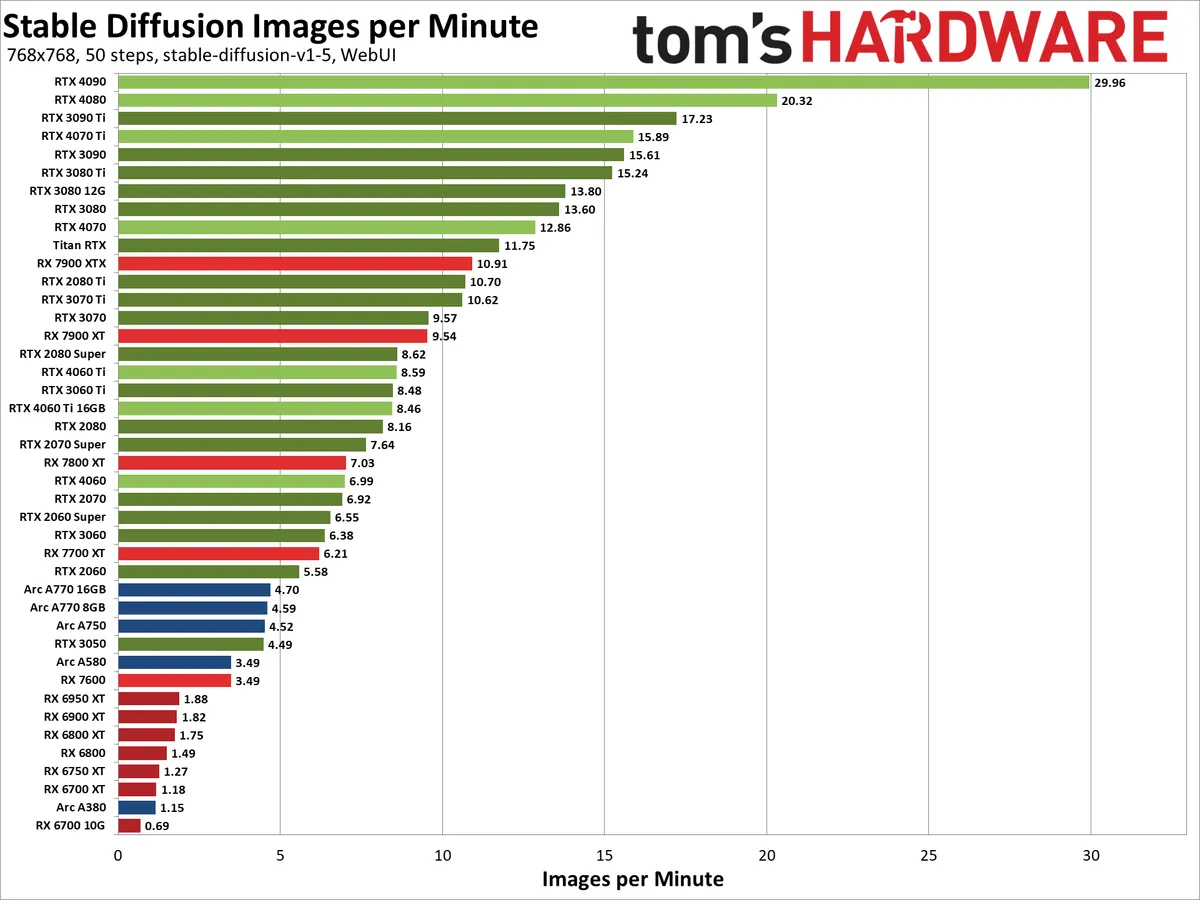
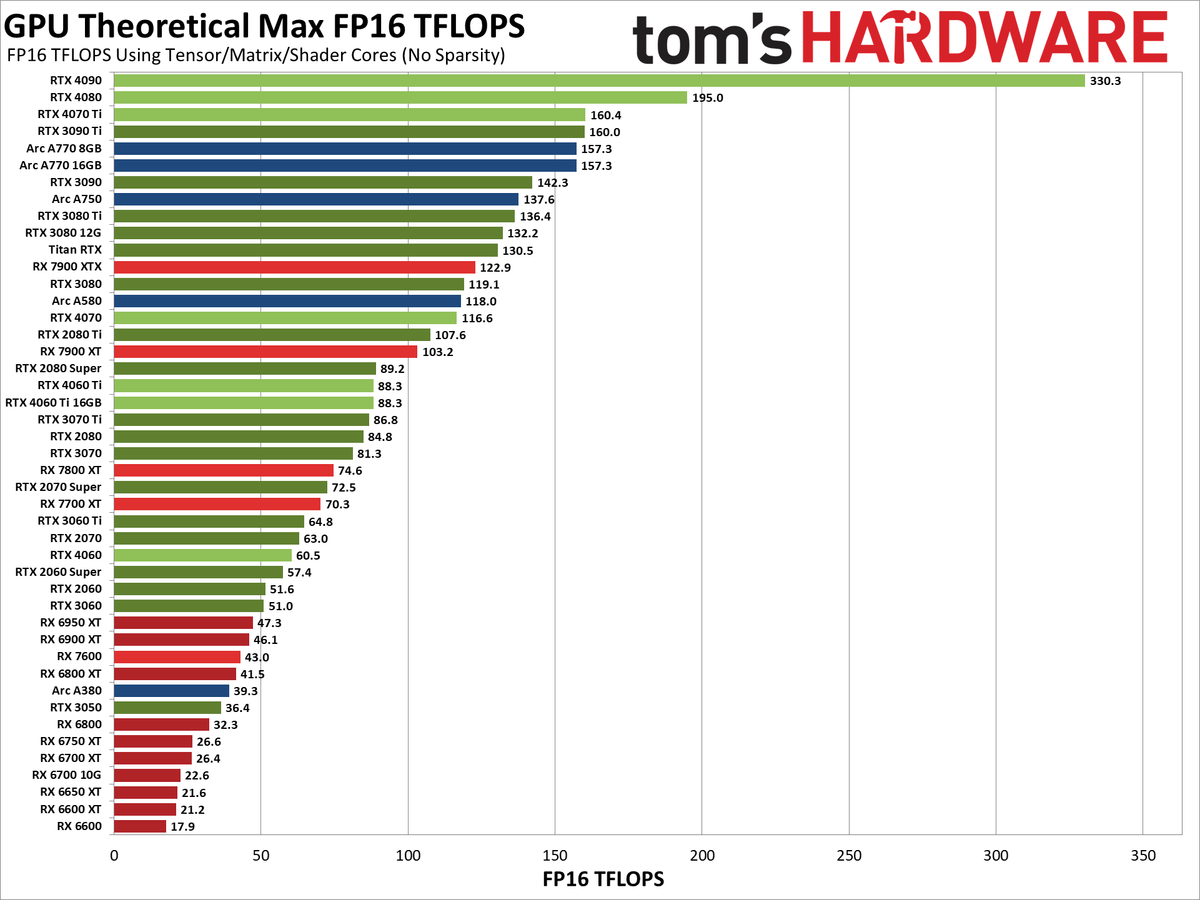
This is a huge problem because in theory the Arc A770 is faster! It's theoretical performance (TFLOPS) is more than twice as fast as an Nvidia 4060 (see: https://cdn.mos.cms.futurecdn.net/Q7WgNxqfgyjCJ5kk8apUQE-120... ). So why does it perform so poorly? Because everything AI-related has been developed and optimized to run on Nvidia's CUDA.
Mostly, this is a mindshare issue. If Intel offered a workstation GPU (i.e. not a ridiculously expensive "enterprise" monster) that developers could use that had something like 32GB or 64GB of VRAM it would sell! They'd sell zillions of them! In fact, I'd wager that they'd be so popular it'd be hard for consumers to even get their hands on one because it would sell out everywhere.
It doesn't even need to be the fastest card. It just needs to offer more VRAM than the competition. Right now, if you want to do things like training or video generation the lack of VRAM is a bigger bottleneck than the speed of the GPU. How does Intel not see this‽ They have the power to step up and take over a huge section of the market but instead they're just copying (poorly) what everyone else is doing.
Intel, screw everything else, just pack as much VRAM in those as you can. Build it and they will come.
It will be a niche product with poor sales.
Which I don't care too much about.
However, even 16->24GB is a big step, since a lot of the model are developed for 3090/4090-class hardware. 36GB would place it lose to the class of the fancy 40GB data center cards.
If Intel decided to push VRAM, it will definitely have a market. Critically, a lot of folks will also be incentivized to make software compatible, since it will be the cheapest way to run models.
I heard some Asrock motherboard BIOSes could set the VRAM up to 64GB on Ryzen5.
Doing some investigations with different AMD hardware atm.
The serious crypto and AI nuts are all using custom hardware. Crypto moved onto ASICs for anything power-efficient, and Nvidia's DGX systems aren't being cannibalized from the gaming market.
Seems like we just need consumer matrix math cards with literally no video out, and then a different set of requirements for those with a video out.
But then those pesky researchers and hackers figured out how to use the matmul hardware for non-gaming.
Right now, the best discriminator they have is that PC users are willing to put up with much smaller amounts of VRAM.
Can you elaborate on this? Intel's reputation for software support hasn't been stellar, what's changed?
16GB RAM and performance around a 4060ti or so, but for 65% of the price
You can pick them up in prebuilds from Dell and Supermicro: https://www.supermicro.com/en/accelerators/intel
Read more about them here: https://www.servethehome.com/intel-shows-gpu-max-1550-perfor...
- SYCL [1]
- Vulkan
- OpenCL
I don't own the hardware, but I imagine SYCL is more performant for ARC , because it's the one intel is pushing for their datacenter stuff
[1]: https://www.intel.com/content/www/us/en/developer/articles/t...