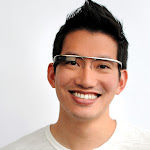
Edit: To expand a bit, take an autistic adult that wants to do something, like go to the movies. It's simple for us, we wash up, get dressed, go outside, go down the straight, hope on the 132 Bus for 3 stops, get off, walk 2 blocks, pay for tickets, and go into theater number 5. For someone with autism, they can struggle with things like this. These glasses provide them with visual cues base upon their location, so when they finally do get to the theater, the glasses can show them what to do next, and give them that visual cue.
Currently working on an app for tablets for this sort of things, but having it work in glasses would be simply amazing. God, what I wouldn't give to be apart of this.
I've loved this idea ever since I read about the glasses in Accelerando[1], and I can't wait for a project like this that gets to market, especially if it is open source.
[1] http://www.antipope.org/charlie/blog-static/fiction/accelera...
Am I just thinking of a different symptom, so to speak, of autism?
So, the first answer is "Yes, for the most part, they are routine dependent." However, this isn't always the case. My son, for example, isn't as routine dependent as others are. He's perfectly fine with a differing routine. So, while routine is a part of autism, this doesn't define autism.
However, this can still be resolved by preparing the autistic person with the routine. So again, they can prepare for the movies by watching the video of walking down the street, and the actual activities involved. Or, let's say, letting them see where they are going before they get there. See the insides, see what's there, what's involved.
Finally, even if it was a big hurdle, it's still a hurdle that needs to be overcome, and the task tool I'm referring to is there to help overcome that. Again, by preparing them, and then prompting them while they are going about their day, it helps to reassure them, and they become more independent.
Good question though. Thank you for asking it!
Get in touch with them!
Also, though cool, the video is probably a pretty inaccurate representation of what that tech would actually get used for. It shows some guy getting directions, scheduling events, and meeting friends. Nice enough, but the reality is that, like most mobiles, it's probably more likely to be used for Facebook addiction and sending pointless text messages.
[I guess the answer is "yes", I'm becoming a Luddite.]
This is akin to eating junk food. There is an innate tendency in us to consume this sort of garbage (burgers, email updates), and it seems nourishing and useful in the short term, but over a longer range it may well prove disastrous.
Just like we learned to keep our instincts in check and avoid junk food, we may have to learn to keep the trivia-hungry part of our brains in a leash, and once in a while, or perhaps several times a day, purposefully unplug from the data hive and let the mind soar, roam, wander, or whatever it is that it wants to do.
So, I'd say, the answer is "no", you're not a Luddite, you're pointing out an important issue.
For an example of real-world uses of AR (that don't involve hipsters or food trucks) check this out: http://www.popsci.com/technology/article/2009-10/augmented-r...
No doubt developers will do some amazing things with it when we finally get some practical hardware
I guess once you get used to talking with anyone, anywhere in the world, and with so much access to any information you want, anything less seems like isolation.
They forgot to show the "Ukulele $350" ad that pops up when he looks at the book. Also, "Monsieur Gayno Boxed Set - $24.95", "Feet hurt? Try walking shoes from Reebok!" and "John Smith for Mayor! I'll make the trains run on time."
Google does make a lot of money on advertising, but that's because it's impossible to not make money on advertising. Google could literally fire 99% of its employees and we would still make money on ads because it's that easy. You could probably start an ad company today and have a steady income next week. (You need a web server, someone with content to "monetize", and someone with an ad. Pretty simple.)
What's hard is figuring out how to make money once the easiest source of money dries up. (It's sort of like why we don't have solar-powered cars yet: because burning decomposed dinosaurs is so easy that any attempt to do something else seems impossible.) Future products you see from Google will be less about advertising and more about something else. That's why we have web browsers and open source projects and self-driving cars and space elevators. Try everything, see what makes us more money than advertising, then do more stuff like that.
But actually your scenario sounds plausible if Google was the most ignorant, narrow minded, child-like version of an ad network. If they have any smart people at all working at Google, I think that they would have a much wider, longer-term vision in which they can generate value from more than just bombarding you with ads in the most direct, obvious way possible. If they feel at all compelled to stay relevant and profitable for the longest amount of time possible, then they are working on that right now.
I can see that it would initially be relevant, than it would gradually stray and become increasingly flooded with obvious ad bombarding and irrelevancy, much like what Google did to search.
It's the cell-phone carriers (or OEMs) that want to sell you non-rooted devices, and that's a battle even Apple hasn't won.
Ugh. Google, you have so many cool ideas and so little business acumen.
Yeah, they became a 200 billion dollar company without business acumen.
How many women do you see with bluetooth headsets?
I remember when I got a Nexus One and tried showing off the Google Translate app to co-workers; one Japanese, one Portuguese, one Bosnian but it took so long to connect it was embarrassing. I managed to get some Japanese translated after about 10 minutes.
Now I have a Samsung Galaxy S 2 (translate still sucks) through my phone company it has HSPA+ (21Mbps) but I have yet to consistently get anything above 3Mbps, I tend to get 1Mbps.
Also imagine this in a movie theatre or some place where they claim everything is copyrighted place or even walking towards police in a country where taking video of police could get you arrested.
It seems simple enough but holy can of worms Batman!
That's a whole other can of worms for ya.
Coming up, put a Google chip on your brain and think like Google.
  A few years ago Google wanted to record a few seconds of sound from the homes of people using the microphones/speakers on their computers.

  I'm quite sure it was the computer speaker since not every computer has a microphone but most if not all have speakers and a speaker is really a just a reverse microphone.

People freaked out over that so I'd say recording live streams of video would be worse especially considering some things people may be looking at each day would be very private.This sounds like the kind of feature that some users would embrace, and could even become a selling point. Remember justin.tv?
I'm optimistic that Google realizes they aren't going to be able to get away with anything more invasive than what's considered "acceptable" behavior for a smartphone. Example: I don't have merchants sending me unsolicited SMS whenever I'm within 200 yards of their storefront.
How many people can you convince to wear glasses that do not normally?
What about sun glasses? Will I need two pair of Googgles (2)? One for day, one for night?
Do you really think young women (or men) are going to wear these things?
My bet is that this project goes no where with Google in its current form. If anyone has a chance, it's Apple. Apple is the only large company with enough style to make something like this cool/socially acceptable.
If you can make the Camera etc, invisible, then that's a whole different story.
1) http://www.aao.org/newsroom/press_kit/upload/Eye-Health-Stat...
2) my term
Probably the same number of people you can convince to buy and carry a metallic/plastic rectangle in their pockets everywhere. If it offers utility at an affordable price, people will embrace it.
My bet is that this project goes no where with Google in its current form. If anyone has a chance, it's Apple. Apple is the only large company with enough style to make something like this cool/socially acceptable.
Steve Jobs hired someone from MIT a few years ago who was a leading researcher in wearable computing (http://bits.blogs.nytimes.com/2010/03/16/apple-hires-wearabl...). Apple has likely been working on such a device for some time.
It makes sense for Google to work on something too. How far will Google Glass go? Who knows. This is a public unveiling of a research project, rather than something that'll be sold in stores tomorrow (maybe by year-end though). There's probably a lot left to go before you can buy one, at which point it'll be a good time to evaluate it if it's any good or not.
It's fashionable (on the wane) at the moment. Lots of people are wearing frames with plain glass lenses.
> What about sun glasses? Will I need two pair of Googgles (2)? One for day, one for night?
The article covers this point - there will be a version that fits on existing glasses.
> Do you really think young women (or men) are going to wear these things?
Define young, and who cares? People with the money would, if there was a use. Link these to certain professions and I could see people deliberately, just as annoying students wear their lab coats out of the labs.
PS: For some reason there's very little information about this one on the internet, I probably should check Xanadu instead.
Using "always on" eye-devices would allow them to become second nature. Name/face/voice association would be automatic, looking up a word definition would be accessing slow memory instead of an annoying context-switch. A lot of the difference is not in that you can do something with these glasses, it's that you will.
For those that don't know Clippy: http://en.wikipedia.org/wiki/Office_Assistant
Google have many brilliant sounding pie in the sky ideas, but when it comes down to it they have to really ask themselves, will people actually be able to use this? Is it really worth chasing after this or will they concentrate their efforts and resources on other more achievable things.
Just like the Google tablet mock-up video vs reality. Anyone can craft a mock-up video. Not everyone can execute on it, and in recent years Google isn't doing well on that score.
I keep thinking of this problem when I hear about things like heads-up contact lenses and so on. It is a tremendous eyestrain for me to focus on anything within a meter, and so I'm often relaxing my eyes by looking away from my laptop at distant things. Within 10-20 cm or so it is extremely difficult to focus on anything; within 10cm it is actively impossible.
So are they really using a lens that can make a 1cm-away display look like it's 100cm away?
uhmm, am I not in the moment when I walk the streets without popup notifications on my eyes?
I guess the flip side of that coin is the massive surveillance potential if these glasses are controlled by a third party like mobile phones are; they're even worse than mobile phones because they spend most of the day on your head rather than in your pocket.
https://lh6.googleusercontent.com/-A6pD_FWmYxg/T3xUSvVz8LI/A...
(Seriously, even if it's still pretty crude...)
http://www.ted.com/talks/pranav_mistry_the_thrilling_potenti...