Microsoft’s operating income in fiscal year 2005 was about $15B and in 2013 almost $27B. So you can kind see where the IRS is getting this number: if they believe that Microsoft evaded tax worth about 10-15% of its earnings before taxes, that’s how it would add up to this whopping sum.
It seems like Microsoft believes they can settle for something much lower. The stock price doesn’t seem to be hurting pre-market at all.
Big investors will have eyes and ears inside the IRS, so will have known for years about this already.
Sorry, just so I'm clear, you are claiming that major hedge funds have "moles" in the IRS that illegally funnel them the private tax information of major public companies?
What possible source do you have for this?
https://www.seattletimes.com/business/microsoft/microsoft-ir...
This has been going on since 2007. The IRS sued Microsoft in 2015 [1] and been publicly targeting them since 2020 [2].
[1] https://www.seattletimes.com/business/microsoft/microsoft-ir...
[2] https://www.propublica.org/article/the-irs-decided-to-get-to...
They could hire the best lawyers, accountants, lobbyists, etc in the world. Unless someone at microsoft did something criminal, it's likely they could knock a significant portion off the tax bill.
> The stock price doesn’t seem to be hurting pre-market at all.
Microsoft's market cap is $2.5 Trillion. The one-time tax bill amounts to about 1% of its 'total value'. It's like a one time $1000 special property tax on your $100K rental property. It sucks but it's not the end of the world. Besides, even if they had to pay $30 billion in back taxes, MSFT's customers are utlimately going to pay for it, not microsoft. It doesn't affect microsoft's market share in OS, Office, Servers, etc.
> Microsoft owes the Internal Revenue Service (IRS) $28.9 billion in back taxes, not including penalties and interest
This is almost CERTAINLY true. MSFT will be able to tie this up in court, and has tremendous motivation to do so.
Given the Stock Markets inability to predict the Twitter buyout despite public documents stating Elon Musk's contract to buy at $54.20/share throughout 2022, I'm pretty sure that stock market investors are literally illiterate, unable to read public documents.
Anyone who bought Twitter at $35/share after the contracts public disclosure knows what I'm talking about.
---------
AMC / APE for another example. Anyone who short sold AMC and bought long APE made bank this past year (before the AMC/APE stock ticker merge there were public documents in December 2022 stating AMCs intention to merge the two one-for-one)
I believe I saw an opportunity as wide as $8 for AMC and $1.50 for a legally equivalent APE a few months ago.
Literally public documents with public court signatures and everything, but so many people remaining ignorant for months, providing anyone 'who can read' an opportunity to make tons of nearly risk free money.
Start putting your money in the market and you won't be talking about easy money for "anyone who can read" for very long.
This is called "pairs trading", right? Is there any way it can blow up? Remember that this is AMC, which could be out of business in six months or could go up 3000% in another idiotic bubble.
I made a fair bit of money off Twitter because it was as simple as buying stock at the market rate. Anyone who reads the papers knew the price of Twitter to the penny and could have bought in with a phone call. The sort of trade you're talking about sounds harder to pull off safely. That's no excuse for the hedge funds, of course.
That doesn't make them "literally illiterate" though.
No wonder why they’re talking about charging for windows 12 features, has to come from somewhere!
https://finance.yahoo.com/quote/MSFT/cash-flow?p=MSFT
They could in effect write a check today for it.
It is not about how much money they make but about about a third party appropriating what a company that provides such a big value does because, hey, you are "stealing me because I exist"...
Now people will vote me negative, I know...
Losing a quarter of your cash reserves for no gain isn’t going to ruin today’s business but it sure will frustrate existing strategies for the future.
A comparable example might be Apple, where sales of my (american) app being sold from (american) servers somehow curiously involves the Republic of Ireland and their low corporate tax rates…
https://fortune.com/2017/10/31/trump-tax-reform-apple-multin...
There are other possible criticisms on corporate tax and Apple, but this isn't a valid one.
The only way it can be claimed to be invalid is by conflating legal with moral.
If Apple sells a copy of your app to an American customer the revenue from their royalty is booked to Apple Inc. (the U.S. company) and they would pay U.S. income tax on that sale.
The only time the sale would be booked to their Irish subsidiary is if the customer was located in Europe, or it would go to one of their other international subsidiaries depending on the specific location of the customer.
Also, the books for taxes and the books for securities regulators aren't precisely equivalent per jurisdiction based on how things are counted or not counted. For example, in general, Norwegian and US accounting practices tended to be/are vastly different in some areas... hence a need for local external auditors.
Corporate Inversions: Stanley Works and the Lure of Tax Havens (2002) https://www.hbs.edu/faculty/Pages/item.aspx?num=29288
(It also carries on these some of these functions in Ireland, as it happens, and pays a ton of tax at the relatively high income tax rates there.)
It's frankly curious to me when a multinational chooses to base itself anywhere less favourable.
Firstly, that's not Apple paying income tax, that's their employees.
Secondly, they don't pay much in the way of corporation or other taxes that usually apply because of a sweetheart deal (Google also has one IIRC), which is why much of the EU is up in arms about the Irish government's behaviour here, that effectively allows these multinationals to operate across the EU without paying the usual expected taxes, giving them an advantage over local businesses and depriving governments of income, and there have been various court cases about it.
In this case Microsoft is saying that some amount of their IP was developed by their overseas subsidiary and thus doesn't need to be included in the transfer pricing calculation, so in their process of making up imaginary amounts of money to charge themselves for their own products they also need to deduct that. If e.g. most of the Windows networking stack was created in Germany they need to figure out what percentage of the value of the overall Windows IP is added by the ability to connect to the internet.
Understandably, it's possible for reasonable observers to disagree on the values chosen here, this is not a case of black and white corporate misconduct (tax issues essentially never are).
there are nearly infinite permutations on how to form your business entities, what combinations of jurisdictions you use
and then you can structure which one does what operations where
additionally, all the countries compete for your business so are really competing against each other
most recognize that volume of transactions within their economy to many entities is more important than their passive taxation to one governmental entity, so they incentive the former
>As of September 30, 2023, we believe our allowances for income tax contingencies are adequate. We disagree with the proposed adjustments and will vigorously contest the NOPAs through the IRS’s administrative appeals office and, if necessary, judicial proceedings. We do not expect a final resolution of these issues in the next 12 months. Based on the information currently available, we do not anticipate a significant increase or decrease to our tax contingencies for these issues within the next 12 months.
Maybe it's because they won't face the music for at least a year.
It’s very simple, the market doesn’t expect that MSFT will have to pay $28.9B in back taxes.
Um...
It's a Western problem, not a Europe problem. It's more so in Europe but this contagion that big corporations are evil and governments are good is growing more and more in the US too.
well i need to talk to my accountant. btw, i see we have a detailed and exhaustive license audit scheduled for the IRS tomorrow...
But wait til you hear of Ugland House (https://en.wikipedia.org/wiki/Ugland_House) in the Caymans - 10,000 sq ft, 5 stories...
... and registered offices of 42,000 companies.
If EU doesn't like one country has too low tax rates, that's an EU matter.
All they have to do is find the agreement
Would love to see them
2004 is 19 years...
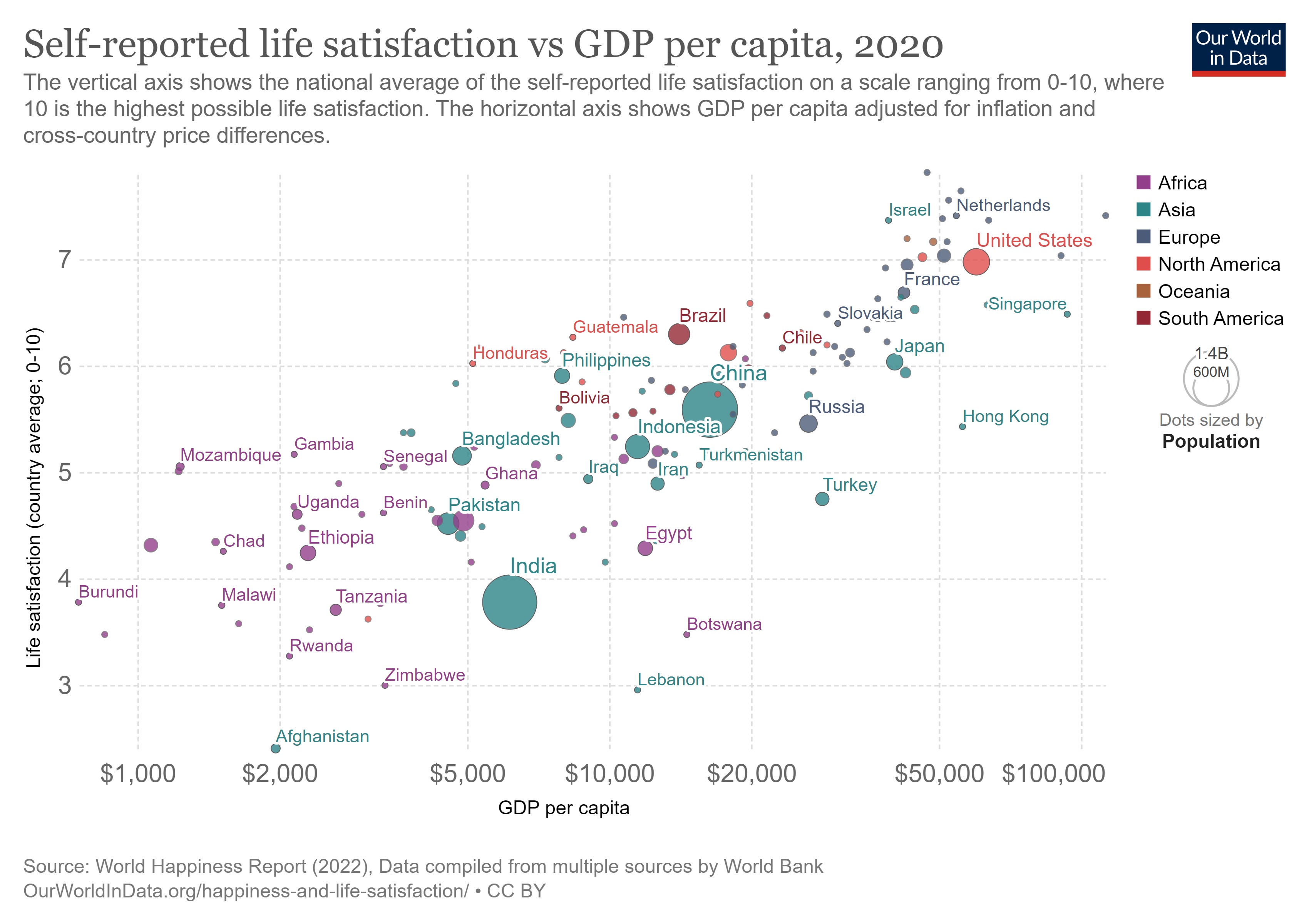
As an example, here's self-reported life satisfaction vs GDP per capita: https://substackcdn.com/image/fetch/f_auto,q_auto:good,fl_pr.... Similar graphs exist for life expectancy, years of education, calorie consumption, literacy rates, and so on.
If we want to increase government revenues we should focus on efficient taxes that minimize economic disruption.
https://www.washingtonpost.com/business/2020/12/23/tax-cuts-...
The IRS has been begging for the resources to go after big baddies for decades, but the Feds have been gun-shy at going after any large company since Enron.
"Microsoft on the Issues Blog – An update on our IRS tax audit"
Or:
Microsoft SEC 8-K: "IRS is seeking an additional tax payment of $28.9 billion"
(I've emailed mods to suggest these.)
I really don't know why they do this though.
[1] https://www.cnbc.com/2019/11/07/microsoft-apple-and-alphabet...
[2] https://www.macrotrends.net/stocks/charts/MSFT/microsoft/cas...
(They could also get around this by taking a loan out and using the cash held outside the US as collateral).
https://hn.algolia.com/?dateRange=last24h&page=0&prefix=true...
I'm told I owe low five figures from three of the last ten years.
California has no limit on how far they can go back.
I file taxes with common software. No crazy deductions and mostly W2.
I made someone mad or "they" are feeling the capital flight and looking to fill the treasury.
California has 4 years from the date you filed your return to issue an assessment. The only exceptions are for substantially underreported liability, which is considered fraud, or where a tax return was not filed. In such cases the statute of limitations is indefinite.
The part where you say "mostly W2" indicates that you had a number of non-W2 sources of income, which is probably where the underreporting arose. (A lot of people fail to properly report 1099 income. A lot of crypto traders fail to properly report crypto sales.)
> Not reflected in the proposed adjustments are taxes paid by Microsoft under the Tax Cuts and Jobs Act (TCJA), which could decrease the final tax owed under the audit by up to $10 billion.
I 100% believe that it was a good faith mistake, and it still is.
> Today, we’re sharing an update about our ongoing audit with the U.S. Internal Revenue Service (IRS), [… which has been investigating] how we allocated our income and expenses for tax years beginning as far back as 2004. […] The IRS says Microsoft owes an additional $28.9 billion in tax for 2004 to 2013, plus penalties and interest.
https://www.sec.gov/Archives/edgar/data/789019/0001193125232...
[1] https://blogs.microsoft.com/on-the-issues/2023/10/11/update-...
So MS income for 2023 was 211 BN, EBIT on that was 88BN. So being asked to give back 28.9BN is a big hit on anyone's scale, but it's "just" 3BN a year (2004-13) on annual profits of ~88BN - so it's not like it's their whole business model.
Intra-company transfers are a tricky way to move assets and liability around inside a firm - because it's not "really" selling there can be a lot of creativity. For example Starbucks was accused over many years of having foreign subsidiaries "purchase" coffee beans from Seattle at a price that co-incidentally matched the foreign subsidiaries operating profit - essentially meaning only the seattle firm made a profit and so only they had to pay tax.
Something similar is being suggested here. It's not clear what.
However it's worth noting that some years ago Biden announced major new funding for IRS to go after big firms. If this is part of that and if this comes to some agreement in a few years it will pay for that whole initiative several times over.
Interesting
(2020) https://www.propublica.org/article/the-irs-decided-to-get-to...
-Companies that operate internationally make revenue and incur costs in many different countries.
-As a result, they owe taxes to many different national authorities.
-Each national authority has rules for how costs and revenues are accounted across borders.
-These rules are necessarily complex, because it’s often not clear how costs and asset transfers should be accounted from simple first principles.
-This is particularly important when accounting costs across countries, because taxable income is often based on your costs.
-For example in the US, Federal taxable income equals gross income MINUS the cost of goods sold.
-In a multinational, one critical question in figuring out costs is how to value transfer prices of goods, intangibles, and services among enterprises under common ownership.
-That is, if the U.S. division of company A and a division of company A in another country exchange assets or services, the question of how they price those goods to one another becomes important for tax reasons.
-Typically there’s a lot of accountants with spreadsheets or a software system where all this is calculated, monitored, invoiced, booked, and reconciled.
-Accounting and services for this is typically called “transfer pricing.”
-To determine how to account for these costs, each national regulator has very specific rules.
-The question is whether Microsoft adhered to these rules in how it accounted for costs and revenues between its U.S. and international entities.
-These disputes go through a very long back and forth process that often culminates in litigation, which itself can last years, or settlement.
-Microsoft says, “Because our subsidiaries shared in the costs of developing certain intellectual property, under those IRS cost-sharing regulations, the subsidiaries were also entitled to the related profits.”
-So it looks like the dispute centers around how to account for “the costs of developing intellectual property”, which can be hard if you’re developing software globally.
-Finally, there’s one aspect to consider when you see these $XXB figures. At the size of certain very big corporations like Microsoft or Apple, money does not behave like it does for you, or me, or even Sequoia Capital.
-Microsoft’s market cap is $2.4T. At that scale, money enters a kind of different state of matter.
-Money’s purpose is primarily to coordinate economic activity, especially when you’re talking about non-negligible amounts for multinationals.
-So payments among the revenue agencies of various countries and their very large private multinationals are in kind of a closed loop where they mainly have complex macroeconomic effects.
-For example, the effect of increasing taxes via heightened transfer pricing scrutiny mostly moves production from one sector to another (e.g. from consumer tech to health and defense.)
-The policy and finance folks pulling the levers understand how that works, and often have their own complex set of motives.
Are there enough gamers on the planet for this?
How much is the sub for Windows 12 going to cost us now, and will that be enough to pay the IRS-piper?