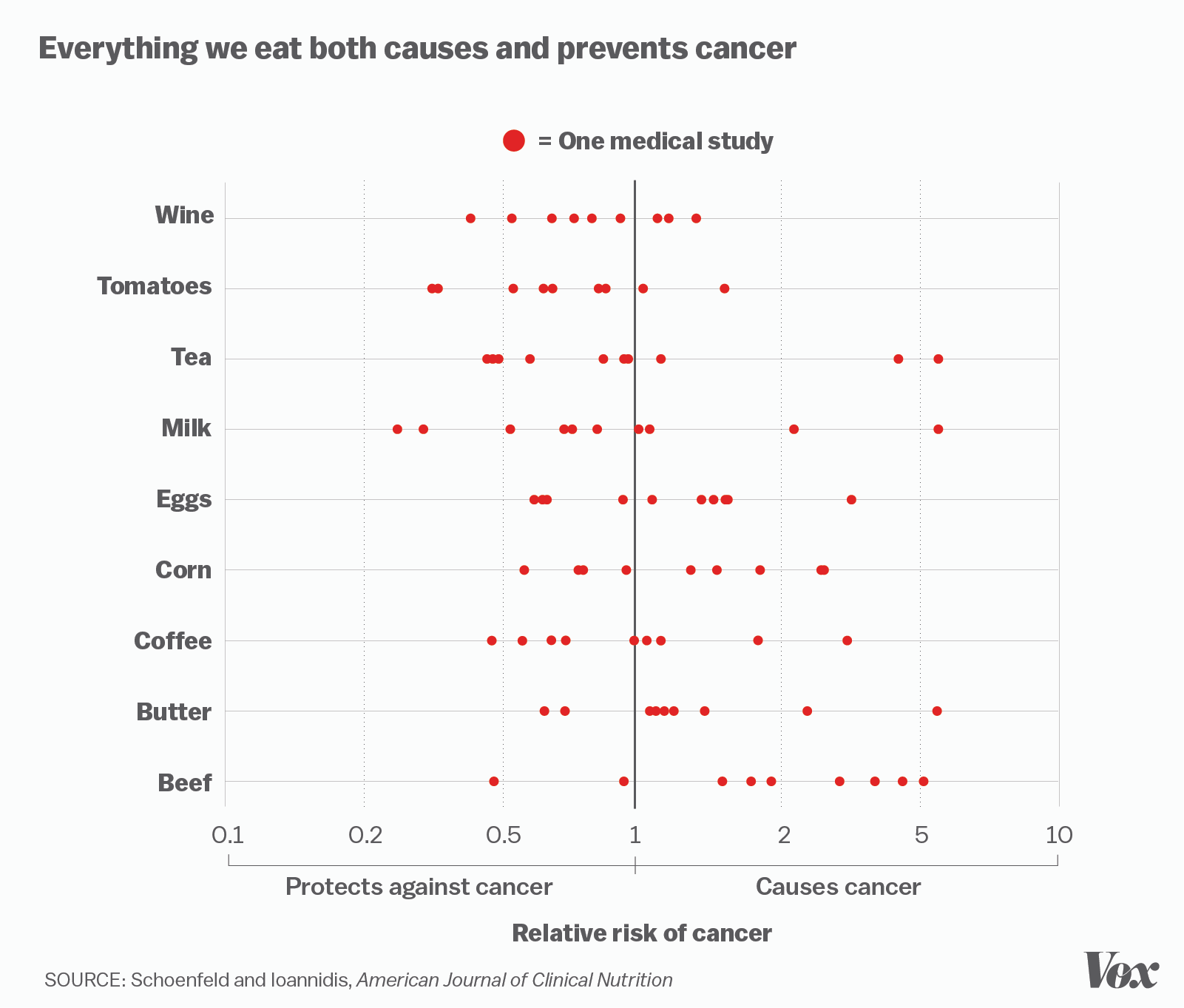
[1]: https://cdn.vox-cdn.com/uploads/chorus_asset/file/3523382/Me...
We need to tweak our process, because this is clearly not working.
https://oehha.ca.gov/media/downloads/proposition-65/p65chemi...
Funnily, Aspartame isn't on there but Aloe vera is... O.o
(my fav is wood dust)
Also, as a sibling notes, the stuff (chips and dust alike) can contribute to some really memorable conflagratory experiences.
Now all I can find is this partial list: https://www.anorak.co.uk/288298/tabloids/the-daily-mails-lis...
In my 30s I have cut my alcohol consumption down hugely but for my little rat brain the risk reward vs sweetness is a different balance.
I think one of the most valuable things through my quest to eat right was people challenging my behaviour vs my knowledge. I made a lot about the fact I quit sugary drinks after writing a lit review on their health effects. My friends pointed out that I had deliberately excluded artificial sweeteners from my lit review and my knowledge.
Then I was challenged about my love of dessert.
I think being called a hypocrite and told I was stupid and coming to agree with the underlying criticism has been a big part of my growth as a person.
But if drinking drinks sweetened with aspartame is your only vice then you're doing pretty well.
I know I’m not alone.
Sparkling water has become my go-to. It does satisfy my cravings, and I’m sure it’s immeasurably better for health than my previous go-to Diet Coke.
I drink soft drinks more often than alcohol. I hate artificial sweeteners not just because of the taste, but all my life I've heard the fact that those sweeteners are carcinogenic, especially the cheapest ones (like aspartame).
Honestly, it doesn't help that most studies that say artificial sweeteners are safe were funded by the drinks companies themselves and obviously they will be biased towards what makes them have most profit from it. I think adding the sweeteners to this list of potentially carcinogenic and asking for more neutral, unbiased studies is a step on the right direction.
If a soft drink contains sweeteners, I simply refuse to drink it. Honestly, I'd rather have a beer which tastes worse than a coca-cola, for example, than to have to drink diet cola.
It's not an academic conversation, nor is it meant to be one.
Seems to work on some subset of the population.
Car exhaust is a KNOWN carcinogen. So don't lecture me on beer until you've given up on fossil fuel.
One is really clearly signalled as “bad for you”, even if it is extremely common. The other one is basically seen as an inert implementation detail. I can totally see why people put more fear behind the evil they didn’t even know existed vs the evil they choose to ignore.
[0] https://www.fda.gov/food/food-additives-petitions/aspartame-....
I cannot easily express in words how stunningly false this is. Alcohol is signaled over and over and over and over across all forms of information as fun, relaxing, sexy, festive, appealing, exciting, luxurious, and sometimes even healthful in moderation. Any notion of it being bad for you is relegated to small print messages specifically about pregnancy and driving.
It just tastes wrong and you're ingesting chemicals you probably don't need.
A relative of mine who drank diet coke daily just had her bladder out due to cancer and she never really drank alcohol and took awesome care of herself. She suspected her diet-coke habit and in light of this news, she might be right. I get it, this is HN, I need numbers, not anecdotes, but it sure is curious.
> I get it ... I need numbers, not anecdotes, but it sure is curious.
No, it is not curious. The IARC finding found limited evidence linking aspartame to liver cancer alone[0], no other types. You have a 1/28 (male) or 1/91 (female) chance of developing bladder cancer in your lifetime[1].
Please do not post comments that sound like Tucker Carlson rhetoric.
0: https://www.cancer.org/cancer/risk-prevention/chemicals/aspa... 1: https://www.cancer.org/cancer/types/bladder-cancer/about/key...
That’s how I describe water. Unless I’m really thirsty, water is just … nothing. Diet Coke has crisp, light flavor. And the aspartame only tasted weird way way back when I switched from sugar soda.
On just taste alone I prefer Diet Coke to the regular kind and to Coke Zero.
I probably should reduce or eliminate it, but it’s just so good.
diet coke is highly caffeinated, this comes with pretty obvious physiological effects.
https://www.cancer.org/cancer/risk-prevention/understanding-...
Absolute definitions are hardly ever useful. Even for mundane things. How do you determine if something is ‘wet’?
For whether something is a carcinogen it's like asking if it's "humid", and we have very clear and precise ways to communicate that.
It seems expected for the WHO to have a list of things that experiments might indicate are carcinogens. They never recommended to stop consuming aspartame, or claimed it was definitely dangerous in the current consumed quantities.
[1] https://www.who.int/news/item/15-05-2023-who-advises-not-to-...
Drink in moderation is a much harder sell than don't drink at all. We suck at moderating anything without going cold turkey.
[edit to explain myself: the above was meant to critize the parent for using the same non-logic that the climate denier movement uses: requiring an impossily high standard of evidence)
No medical or scientific basis for this. I don’t really drink pop (once/year maybe?) with or without sugar or artificial sweeteners.
It was surprising the amount of concerned friends who were convinced the stuff would kill me. I really looked for any hint of evidence that it might, and aspartame keeps winning.
I'm off it now anyway, but it does seem to just be nicely flavored (slightly acidic) caffeine water.
When I was on a relatively strict ketogenic diet in the past, the recommendation was to test your blood sugar level after consuming a larger-than-average amount over the course of 1-2 hours to see if there were spikes or troughs from a hormonal response.
Unless you have type 2 diabetes, any problem from a sugar-free insulin spike would likely be hunger.
> If I had to guess we are going to get a big breakthrough study on diet pop that is going to link it to diabetes or something like that
The Twin Cycle Hypothesis[0] predicts that many common cases of type 2 diabetes are from fat accumulation in the liver spilling to the pancreas and interfering with beta cell production of insulin. I wouldn't anticipate artificial sweeteners, even triggering an insulin response, to be able to do that without sugars also being consumed in tandem.
> I remain skeptical that there is a free lunch here.
Sugar-free gummy bears have quite the reputation because of how the gut reacts when you have a large quantity of sugar alcohols.
It doesn't _have_ to be a cancer or a chronic illness. It can be more acute.
[0]: https://pubmed.ncbi.nlm.nih.gov/23075228/ (arbitrary first hit)
I try not to eat those. but its hard, its in everything.
Soda.
I was going to mention the Alcohol argument but then I realized I have better things to do with my life.
I seem to recall most xylitol gums also have aspartame, but Mentos is the only one I had handy to check.
Never looked back.
Because, if not, the question isn't between aspartame or some other interchangeable artificial sweetener, but between aspartame and HFCS or regular sweetener, which I strongly suspect contributes more deleteriously to health via obesity than aspartame does via possible carcinogenic affect.
The thing is, I'm okay with governmental bodies regulating substances (not necessarily the WHO, but that's a different story), but you need to balance different factors including substitution when you make a decision like this.
For example, the EU recently banned topical zinc as ZP in topical formulations (think head and shoulders) due to being a possible topical carcinogen (the evidence suggested it wasn't, but it is a non-topical carcinogen) because interchangeable formulations existed that also worked.
Given that it probably isn't possible to subject a substance to the same scrutiny as aspartame without many years of targeted and expensive effort, we're probably just stuck with this sweetener for the foreseeable future.
They also still contain calories that you're best off not ingesting.
I also found this study that says sugar alcohols cause blood and liver cancer.
https://www.ncbi.nlm.nih.gov/pmc/articles/PMC7072169/
Alcohols generally have been abundant in our evolutionary history and are still terrible for us.
According to whom? If people are suspectful of the must studied food substances, why would they trust something that's less studied?
That is all true, except there is a choice between sweetened drinks and unsweetened drinks.
Even high fructose corn syrup is better than aspartame when it comes to long-term health consequences. So, consider to avoid aspartame like a plague. If you are into soda than you may find stevia-based formulations which have no side effects.
FWIW, there are studies that a low calorie, low carbohydrate diet can reverse type ii diabetes (or rather, put it in remission)[0]. The underlying hypothesis came about I believe to explain why people who had a gastric reduction surgery would also sometimes see a remission in their diabetes.
I use a telemedicine[1] which was involved in one of these studies, and which I believe has started to see some insurance coverage because of the savings related to reduction in insulin used by patients. I'm personally maintaining pre-diabetic levels (but have never used insulin).
0: https://dom-pubs.onlinelibrary.wiley.com/doi/10.1002/doi2.00...
It is absolutely a lie that corn syrup is better for you than aspartame. That is absolutely 100% false.
The fact is that humans are bad at long term impact studies. When long term studies reveal something, it's very hard to take that stuff off market (not that we haven't done so. We have with done that with Talc, Asbestos). It's also possible that something is considered safe today but might be proven to be harmful decades later. We think that organizations like FDA are only thinking about health of people but that's not entirely true, they also need to think about economic impact of their actions. Declaring something carcinogen which is billion $ product, it's going to be very hard for them to do so.
So, my rule is to simply err on the side of caution.
If anything, entirely the opposite is true. Most things in the world are either inedible (in the sense that they're immediately mechanically harmful to eat) or toxic in some way or another, at least without some "artificial" processing.
True, but what they said was:
> it's most likely bad for my body while anything natural is most likely good or ok.
...as a guiding principal it is probably right.
Do not eat anything that your great grand aunt would not recognise as food.
Regarding artificial vs natural, looking for natural stuff can be a good rule of thumb, but the "appeal to nature" is a logical fallacy for a good reason. Lots of natural things are bad for us, and because we already live in a pretty artificial environment, other things need to be adjusted too, because natural ways sometimes only work in natural environments.
Substitutions, like diet coke, can also be a trap. When the premise is that I can just do away with harmful X, by substituting it with Y, and have basically the same thing, then I'm always watchful. Usually there's no free lunch.
Really it comes down to the media not being good at presenting science topics, which is pretty typical unfortunately.
In the end, I consider the WHO as having lost all credibility - it doesn't matter why articles based on WHO statements cannot be trusted (e.g. whether the WHO statements are factually wrong, or intentionally misleading, or being communicated in ways that media are likely to misinterpret without quickly following up when this happens), the result is that any article claiming "WHO says X" is best dismissed as likely misinformation.
I mean, sure, you can distrust WHO if you want because of this, but seems kind of a silly reason.
Journalism's job is to convey complex nuanced topics to the populace at large. If journalists aren't doing that, they're failing to do their job. I appreciate at this point that may be a quaint and archaic expectation though.
Their poor communication creates hype and hysteria while discrediting scientists everywhere.
A few years ago they said "Radiofrequency electromagnetic fields are possibly carcinogenic to humans (Group 2B)." https://publications.iarc.fr/126
The reasoning for this is on page 419. They classified radio as possibly carcinogenic because prior studies weren't as well controlled as they wanted, some analyses they wanted weren't done, and because one very small study that saw a minor correlation that isn't at all consistent with the population level data that we have (which says there's no association).
That's it. All of this hype for absolutely nothing.
IARC needs to be fixed.
So they are kind of right when they say that radiofrequency electromagnetic fields are possibly carcinogenic to humans. They are, but to a small degree for the most part.
I think you just answered your own question.
and there's no reason to believe this potency as a sweetener (how strong it binds to and activates very specific gpcrs on tongue) correlates to carcinogenicity
FDA says aspartame is safe, disagreeing with WHO finding - https://news.ycombinator.com/item?id=36728033 - July 2023 (145 comments)
WHO says soda sweetener aspartame may cause cancer, but it’s safe within limits - https://news.ycombinator.com/item?id=36717961 - July 2023 (10 comments)
Aspartame Is a Possible Cause of Cancer in Humans, a WHO Agency Says - https://news.ycombinator.com/item?id=36717553 - July 2023 (5 comments)
The WHO is about to declare aspartame can cause cancer - https://news.ycombinator.com/item?id=36644185 - July 2023 (26 comments)
Aspartame: Once More Unto the Breach - https://news.ycombinator.com/item?id=36562739 - July 2023 (199 comments)
Aspartame sweetener to be declared possible cancer risk by WHO, say reports - https://news.ycombinator.com/item?id=36519942 - June 2023 (565 comments)
I don’t drink alcohol, exercise for about an hour, each day, and try not to be too crazy in my diet.
But I live on Long Island, New York, and I drink a lot of tap water. Even filtered tap water is questionable.
That probably far outweighs any risk from asparatame.