IIRC that's when i registered rmt.org (my initials) using that method (for free!). used it for a couple of years but then moved to USA and at some point in the mid 90s i guess i had to start paying for it, i forgot -- and lost the domain to the UK union for Rail, Maritime and Transport Workers. a worthy successor!
well i guess they sold it because now the domain is owned by a trust that helps autistic children in the UK. another worthy successor!
anyway, thanks for the memory!!!
https://news.ycombinator.com/item?id=30379919
DonHopkins on Feb 17, 2022 | parent | context | favorite | on: Who is squatting IPv4 addresses?
I know a naughty person who decades ago hijacked a /8 IPV4 network block when the company that owned it went out of business, by registering their expired domain name and sending in an email from that domain, transferring ownership of the block to himself.
It was "hot" so he couldn't just squat on it or sell it in the open, but he laundered it by trading it to some shady company in exchange for free network services for life.
If I were him, I would have printed out all the addresses on little slips of paper and taken an "IPV4 Address Bath" like Huell's scene in Breaking Bad:
https://www.youtube.com/watch?v=7HrmD_vIMIk
>(sexy lip bite) ... "I gotta do it, man!" ... "Mexico, all's I'm sayin'!"
icedchai on Feb 17, 2022 [–]
Was it really an /8? I could believe a smaller block...
DonHopkins on Feb 17, 2022 | parent | context | favorite | on: Who is squatting IPv4 addresses?
Yep, it was a long time ago, and he was one of those "old net boys" who worked on the early ARPANET, but I won't say anything else that might identify him.
I have another naughty friend (not the same person) who worked at SRI-NIC implementing and maintaining the ARPANET TACACS database, and as a personal favor, he created our mutual friend Devon his own ARPANET TAC card.
So Devon's free vanity TACACS account was named "DEVON", while most other accounts like mine were something ugly like "DH32", using initials and numbers. One day his boss summoned him to his office and showed him a print-out of the TACACS accounts, with "DEVON" right at the top, and asked him who the hell that was. He sheepishly prevaricated that "DEVON" was actually a control code to turn the printer DEVice ON, which accidentally got printed at the beginning of the list because of a bug in his program missing an escape code, and he would fix it right away. And that's how Devon lost his TAC card. We still tease him about his name as a printer control code, and call him "DEVOFF" when he talks too much. I'm pretty sure his boss knew what was up, but just let it slide.
Network security was a lot different in those days. TAC cards only happened later when they finally put passwords on the dialup TACs/TIPs -- you originally could dial up and connect to any host on the ARPANET without a password, then you could ask nicely for a free tourist account at places like the MIT-AI Lab. It didn't even require any social engineering, just being polite and curious, reading documentation, and following instructions.
I asked BBN nicely about the TIP manual, and they helpfully mailed me a free hardcopy of the "Users Guide for the Terminal IMP", which documented how to take control of other people's sessions and even divert their output by prefixing @ commands by their terminal number! See "Section 5: Unusual uses of the TIP" page 5-7, "Setting Another Terminal's Parameters" and "The DIVERT OUTPUT Command":
https://usermanual.wiki/Document/ADA014398UsersGuidetotheTer...
The guy who originally wrote that TIP manual in 1971 was none other than Will Crowther, who also developed Colossal Cave Adventure with Don Woods! You're in a twisty little maze of IMPs, all different.
https://en.wikipedia.org/wiki/William_Crowther_(programmer)
https://en.wikipedia.org/wiki/Colossal_Cave_Adventure
ARPANET Psiber SPACE (circa 1986): This is the network of IMPs (Interface Message Processors) that comprised the ARPANET in 1986. The ARPANET is history now, but thanks to the magic of Pseudo-Scientific Visualization and the ScriptX language and class library from Kaleida Labs, you can now experience what it was like to be free ranging packet hopping around the ARPANET in 1986!
https://www.donhopkins.com/home/catalog/arpanet/index-large....
MIT AI Lab Tourist Policy
https://medium.com/@donhopkins/mit-ai-lab-tourist-policy-f73...
“The MIT machines were a nerd magnet for kids who had access to the ARPANET,”
https://news.ycombinator.com/item?id=15080221
Keith F. Lynch wrote up a fascinatingly detailed and accurate history of the ARPANET from his perspective:
http://keithlynch.net/history.net.html
Keith mentions that ARPANET TACACS passwords were installed in 1986, and even mentions how Jerry Pournelle got himself kicked off the ARPANET for being obnoxious in 1985, which I can conform with the email messages he mentioned. The first message is about TACACS, and explains how MILNET TACACS was implemented in 1984, before ARPANET TACACS (in 1986). It was addressed to the same DEVON, and HN's own GUMBY chimed in with some salty remarks:
https://www.donhopkins.com/home/catalog/text/pourne-smut.htm...
jacquesm on Feb 17, 2022 | root | parent [–]
Your text is garbled:
"then you could even anity TACACS account "
DonHopkins on Feb 18, 2022 | root | parent [–]
Thanks, fixed! The "Arpanet" episode of The Americans featured a classic scene with an academic computer science professor dude bullshitting about the ARPANET -- I'm sure we both know somebody exactly like that from that period, who made eloquent hand-waving metaphors about Virtual Spaces and Post Offices and God and Disembodied Brains, trying to explain to skeptical people how vast and important the ARPANET was (with its 8 enormous bits of address space). But he kinda had a point, calling the PDP-10 "The Beast".
https://www.youtube.com/watch?v=hVth6T3gMa0
But the thing The Americans "Arpanet" episode got wrong is that you didn't actually have to slap on a Frank Zappa Soul Patch and a Beatnik Wig, dress up like a janitor, and brutally murder an unlucky grad student to get on the ARPANET, you just had to ask the right people nicely! (But it's still one of the best episodes, with the scene about passing a lie detector test by clenching your anus.)
https://news.ycombinator.com/item?id=14178993
DonHopkins on April 23, 2017 | parent | context | favorite | on: How SSH got port number 22
Back in the "bad old days" of the simplex NCP protocol [1], before the full duplex TCP/IP protocol legalized same-sex network connections, connect and listen sockets had gender defined by their parity, and all connections were required to use sockets with different parity gender (one even and the other odd -- I can't remember which was which, or if it even mattered -- they just had to be different).
The act of trying to connect an even socket to another even socket, or an odd socket to another odd socket, was considered a "peculiar error" called "homosocketuality", which was strictly forbidden by internet protocols, and mandatory "heterosocketuality" was called the "Anita Bryant feature" [2].
http://www.saildart.org/IMPSER.DOC[SS,SYS]
When the error code is zero, the next 8 bit byte is the Stanford peculiar error code, followed by 72 bits of the ailing command returned. Here are the Stanford error codes. [...]
IGN 3 Illegal Gender (Anita Bryant feature--sockets must be heterosocketual, ie. odd to even and even to odd) [...]
Illegal gender in RFC, host hhh/iii, link 0
The host is trying to engage us in homosocketuality. Since this is against the laws of God and ARPA, we naturally refuse to consent to it.
http://www.saildart.org/FTP.NCP[S,NET]
    ; Try to initiate connection

    loginj:
            init log,17
            sixbit /IMP/
            0
            jrst noinit
            setzm conecb
            setom conecb+lsloc
            move ac3,hostno
            movem ac3,conecb+hloc
            setom conecb+wfloc
            movei ac3,40
            movem ac3,conecb+bsloc
            move ac3,consck
            trnn ac3,1
                jrst gayskt  ; only heterosocketuals can win!
             movem ac3,conecb+fsloc
             mtape log,[
                     =15
                     byte (6) 2,24,0,7,7
                     ]       ; Time out CLS, RFNM, RFC, and INPut

    [...]

    gayskt:    outstr [asciz/Homosocketuality is prohibited (the Anita Bryant feature)

    /]

        ife rsexec,<jrst rstart;>exit       1,
I have used a CDC 6600 and various 370s. PDP only from reading, I started with VAXen.
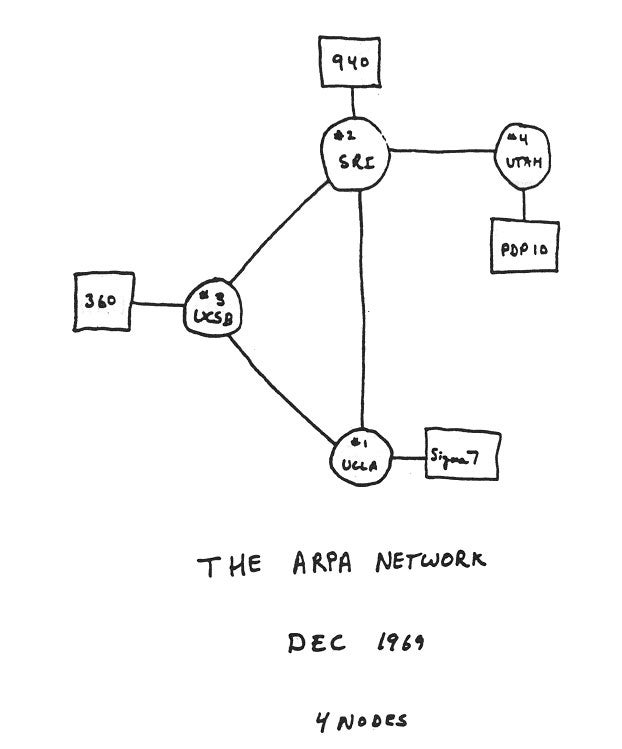
I wrote my first Lisp program on a 940 back in the 70s. IIRC, the Sigma series were the machines XDS built after the 940. I don't know they were super popular, but maybe you might have heard of them.