> The Norwegian company has developed an innovative and sustainable technology to separate rare earth metals that can compete with China's dominating production of these materials, the LKAB press release reads.
https://www.highnorthnews.com/en/norwegian-swedish-cooperati...
Also not all minerals are so evenly spread. For example, it's estimated that half of all cobalt reserves is in little old Democratic Republic of the Congo
Of course. Everyone knows that rare-earth metal extraction involves ugly, environmentally destructive strip mining, and the metals themselves are primarily used to build components for first-world toys and gadgets, such as electronics and batteries in mobile phones, computers, or electric cars.
In contrast, gold, silver, platinum and diamonds are extracted through perfectly ordinary environmentally destructive strip mining, and they have important applications such as jewelry, tax evasion and more jewelry, much of it critical to important industries such as the wedding industry.
So why would anyone want a "real" diamond these days? Engagement/wedding ring is just not the same if it's made without spilling some poor African's blood or something?
In what world? NGOs, academics, journalists, and non-profits have been speaking out about these and the blood diamond industries around them for decades at least
> Gold mining is one of the most destructive industries in the world. It can displace communities, contaminate drinking water, hurt workers, and destroy pristine environments
https://earthworks.org/issues/environmental-impacts-of-gold-...
> Most silver production results in large emissions of mercury to air, soil, and water. Where silver is extracted by small-scale miners, large quantities of mercury are used, resulting in large health and environmental damages.
http://www.env-health.org/IMG/pdf/silver_fact_sheet.pdf
> The mining, metal extraction and beneficiation phases are accompanied by air and water pollution, the generation of solid waste deposited on tailings dams and waste rock stockpiles, the abstraction of vast quantities of water and the use of huge quantities of energy
https://www.researchgate.net/publication/223232620_The_envir...
> Mineral resource exploitation also causes irreversible damage to the natural environment including deforestation, soil disturbance, air emissions, surface water pollution, groundwater contamination, dust, noise, workplace health and safety, and others.
http://www.imperial-consultants.co.uk/wp-content/uploads/202...
Criticizing gold and diamond mining isn't uncommon. A popular example coming to mind is the "Dirty Money" Netflix documentary series (https://www.imdb.com/title/tt11947154/). The existence of "Blood diamonds" is also a pretty commonly known fact.
> But somehow these days everyone likes to think that they know that rare earth metals are "the devil".
Many years ago people also thought smoking is healthy and asbestos are a great material to use in construction.
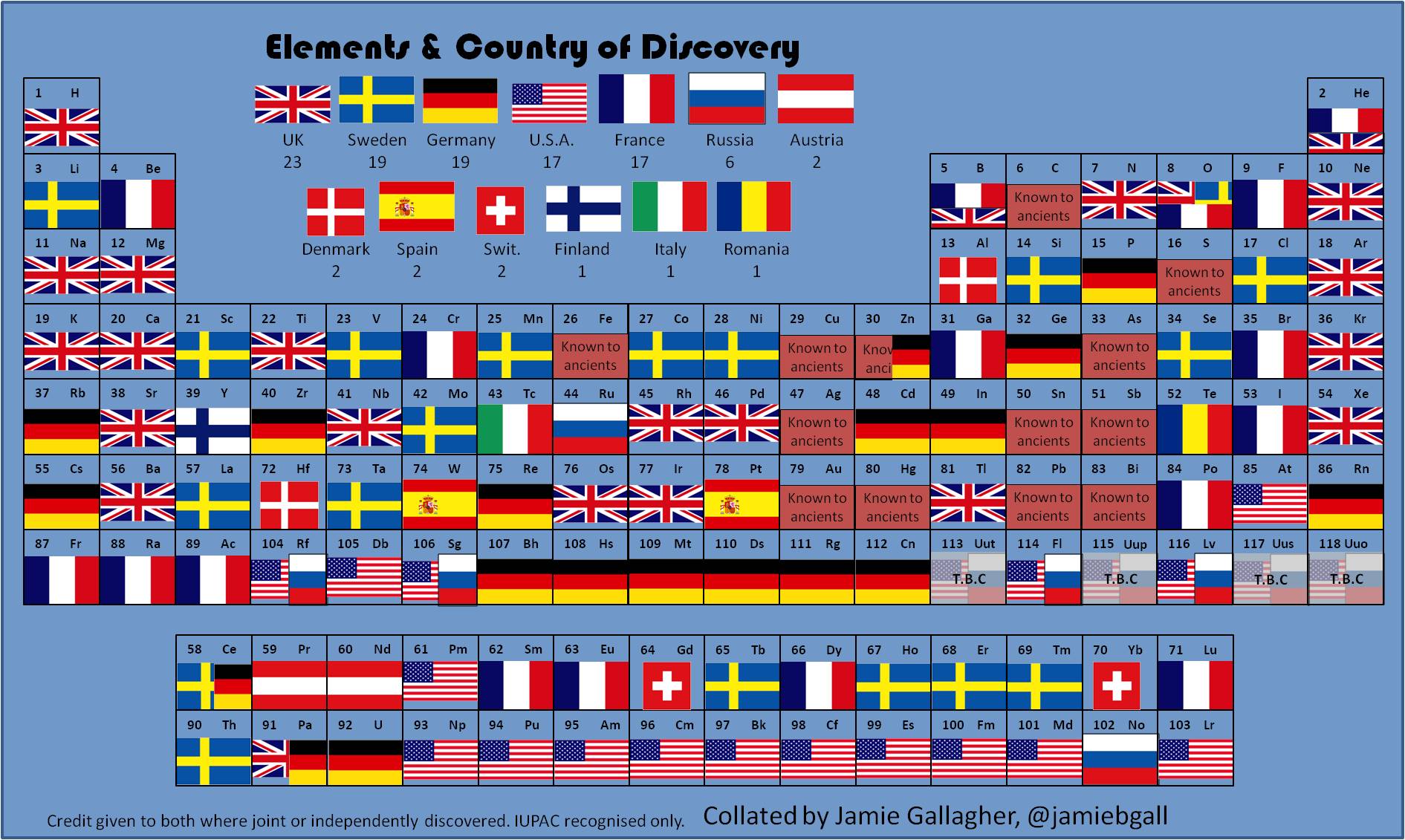
- Scandium from Scandinavia
- Yttrium, Terbium, Erbium and Ytterbium from the village of Ytterby
- Holmium from Stockholm
- Thulium from Thule
https://tf-cmsv2-smithsonianmag-media.s3.amazonaws.com/legac...
No wonder chemistry was in high regard there for quite some time.
Edit: I kinda know that because I have some weird passion about the elements of periodic table and because I'm reading "Periodic Tales: A Cultural History of The Elements From Arsenic To Zinc" which I really recommend!
No, this is not good news. Mining is one of the most polluting human activities there is. In addition, all those machines used for digging and pulverizing the minerals, they run on petrol.
In fact, the entire value chain from raw mineral to finished product, be it solar panels, wind turbine, or the latest iPhone, is totally dependent on fossil fuels: coal for making steel, petrol for the all the rest: mining, refining, transporting, installing.
This is the hard truth about so called "renewables" - they would not have existed without the use of fossil fuels. Anyone telling you otherwise is simply greenwashing. If we really care about our future a whole different approach is needed.
Basically your argument is circular: you're saying that renewable electrification can't happen because electricity is made from carbon. But as electrification proceeds that becomes untrue by definition.
It’s sort of like how you bootstrap a compiler: the first version of a new language tool chain needs to be implemented in some other language. But then you can make it “self-hosted” by implementing it in itself.
Is there any chance of this happening by, say, 2050? I don't think so. The whole "energy transition" idea is a fallacy. Today we burn more coal, petrol and gas than ever before. We simply don't know how to manufacture solar panels and wine turbines without fossil fuels.
Well yes, the current econony (and mining) mostly runs on fossil fuels, that doesn't mean it has to stay that way.
https://www.newscientist.com/article/2290944-how-electrifica...
But since there is no magic spell bringing them into existence just like that, yes, the transition is powered by fossil fuels. How else could it work?
Well, LKAB has partnered with some other local industrial giants to make the steel making process fossil free, called project HYBRIT. It will just take some 20 years. :)
I would like to know more about this different approach. I don't think we can make a change that doesn't involve using what we are currently using (fossil fuels) but diminishing over time.
If the goal is to stay in our "growth forever and ever and ever" scheme then yes
Unless it's doing nothing.
Great way to frame mining as eco-friendly haha. Is my take too skeptical? Are these very specific metals to eco-friendly production?
'"As you probably know, it is almost never possible to hide entire documents," she writes apologetically.' [0]
What's the alternative? If we want to electrify, it means more resource discovery and mining than we're already doing, plus likely mining more non-renewable fuels to power the intermediate infrastructure we will need to mine or recycle metals for renewables or EVs.
Degrowth, using less of everything, only keeping what we truly need instead of producing insane amount of next to useless junk, stop shipping bananas to the other side of the planet to have half of them end up in a trash anyways, &c. Basic common sense stuff that we won't do because we need that sweet sweet "growth" at all cost.
Permanent magnets can also be made without rare earths, but I expect the result would be a physically larger/heavier and/or less powerful motor. So, it's a trade-off.
Though it's a popular lie.
Also due execessive minig the whole town needed to be moved:
“In 2004, it was decided that the present centre of the municipality would have to be relocated to counter mining-related subsidence.[29] The relocation would be made gradually over the coming decade. On January 8, 2007, a new location was proposed, northwest to the foot of the Luossavaara mountain, by the lake of Luossajärvi.[30]“
[1] https://www.forbes.com/sites/davidnikel/2021/03/23/kiruna-a-...
We did it so we would not get bombed, rolled and smoked.
Sweden was dirt poor after the wars of 1600s. In the 1800s and early 1900s people emigrated to the USA as people where so poor and the government actually had to stop it for a while. It was only after WW2 we really started to prosper. First due to natural resources, still important exports for us, enabled us to renovate cities, but making the right choices, we also invested in a knowledge based society, government laid phone cables and fibre, had a tax programme for home computers in the 90s/early 00s, school was mandatory early on, collage was free from the start etc etc etc
We are a country of 10milion and we built 3 jets of our own design, JAS Gripen is one of the best currently flying, we design our own submarines, worldwide tech companies like Ericsson for phones, 3/4/5G, Software companies like Spotify, Gaming like Minecraft, Battlefield, Division, SAAB/Scania for trucks all over.
Imagine the city of New York doing that, cant imagine.
Churchill famously quipped when Sweden started to build atomic shelters during the 1950s something along the lines of - "why? who are you going to fight"
What you won't see for a few years yet is an industry standard Economic Feasibility Technical Report - which outlines over a thousand pages or so the model of the ore, the exploration techniques used to create that model, various alternative costed plans to extract that target ore (and the value of any other material also extracted) and the expected value of the ore over the lifetime of the mining operation.
The key to this report is whether or not it's actually worth while to extract or whether it would cost more in earth movin and processing than the value of the result.
As for the tonnage;
> In 2019, Kiruna produced 14.7Mt of iron ore products [1]
this is the adjacent current mine and the location from which a drift is being driven. Iron ore would be the co-product.
For comparison;
> Western Australia's iron ore output for 2020–21 was 838.7 million tonnes, the second-highest figure after 2017–18.
ie: big iron regions (all of WA iron mines are in the Pilbara) produce ~ 57x the mass.
Bear in mind that this million tonne of rare earth oxides would extracted over a decade or more, it's not going to be a fast hit all in a year.
https://investingnews.com/daily/resource-investing/critical-...
That's why all the early predictions for peak oil have failed, the proponents assumed "proven oil reserves" are all that's left, while we still continue to search and find more. US ratio of "proven reserves" to production is stable for around 100 years.
[0] - https://www.kitco.com/news/2022-02-07/Global-rare-earth-meta...
That doesn't really indicate how much is available in the ground, but only what's being actively mined.
Someone else wondered about concentrations of rare earth metals in the ground in this finding, and it's "unusually high: 0.18%"
My source is both paywalled and in Swedish, sorry about that, but here it is: https://www.dn.se/ekonomi/jattefynd-av-sallsynta-jordartsmet...
When it takes 15 years simply to get permission to do something, you know that your country will never be competitive globally.
Either the benefits outweigh the downsides, or vice versa. A group of 10 of the right experts ought to be able to decide that in a week.
Spending 15 years paper-pushing, doing court battles, public enquiries, etc. just delays the process. At the end of the day, you will end up either doing it or not doing it, and whatever you choose is best decided quickly (with the right expertise).
Perhaps we should adopt a system like for the choosing of popes - we lock the experts in a room till they come up with a consensus conclusion.
I think Sweden is quite competitive in general. Also, as others have said, it could have pretty big impact on various things. But I guess if Sweden was a dictatorship the government could just decide to start digging and not care about the people living there or the environment. 10-15 years sounds very long though, but a week.. I don’t know in which country that would happen.
Everything else is just details.
That doesn't just mean surveying and analysis, but may also involve such things as resettling people, planning new routes for existing rivers and other water, as well as figuring out externalities that will remain after mining is done, but still should be accounted for.
But making the decision whether those things should be done should not take long.
The reason we (in the west) don't mine much is that they are very dirty to refine. We don't want pools of toxic waste left over from refining all over the place but China etc will tolerate those.
Given the ore itself is (ironically) quite common, all the mining happens where the refining happens because why would you bother shipping tonnes of ore there when is so common.
The ore is initially drilled and blasted and the blasted ore is excavated and loaded on to trucks. The trucks transport the mined ore to the concentration plant located 1.5km away from the mine.
The ore at the concentration plant is crushed before being fed to the ball bill, after which it undergoes flotation. The flotation concentrate is thickened and filtered and the final concentrate is subsequently shipped to the east coast of Malaysia to the Lynas Advanced Materials Plant in Kuantan, where the concentrate is processed [2] to produce separated Rare Earths Oxide (REO) products.
Step [2] is the significantly nasty step and typically occurs awy from mine sites that produce concentrates for input.
For further overview, see (for example): Rare Earth Elements: Overview of Mining, Mineralogy, Uses, Sustainability and Environmental Impact [3]
[1] https://www.nsenergybusiness.com/projects/mt-weld-rare-earth...
[2] https://lynasrareearths.com/about-us/locations/kuantan-malay...
A larger strategic mistake would be having lots of very large and both military and natural disaster vulnerable tailings ponds everywhere in your country "just because there is the possibility of a strategic mistake if we don't mine stuff".
It doesn't take more that a dozen of those Tailings dam failures to completely ruin a small country.
https://pubs.usgs.gov/fs/2002/fs087-02/fs087-02.pdf
For all intents and purposes, they are in fact "rare"
("Rare-earths" are not, incidentally, needed for [edit:batteries], wind turbines, or solar panels, however much certain people wish they were, or confidently claim.)
What exactly does this mean? EVs use a ton more rare earth minerals than conventional cars
https://www.iea.org/data-and-statistics/charts/minerals-used...
Solar panels use silicon, indium, gallium, selenium, cadmium, and tellurium. Neodymium and dysprosium are mainly used in the permanent magnets of offshore wind turbines
the solar panels that used those cannot economically compete with silicon pv for utility-scale solar any more (perhaps that will change)
silicon is also not a rare earth element (and is not at all rare)
evs and wind turbines can use rare earth elements, it's true, but it's just a relatively minor engineering tradeoff not to use them
Current EVs use some lanthanides in magnets (soon to be displaced, as noted), but not in the batteries.
Permanent magnets are used mainly in the smallest wind turbines, where offshore turbines are the biggest.
You may ignore claims there that they are essential for batteries and wind turbines. But they are important in electric drones and robots.
We just have to hope that the "greens" don't stand in the way as they usually do.
Sweden's possibly the country most serious about the environment, but money talks.
When doing this, you get the know-how and research on how to do it properly and efficiently.
Plus, we want to - to the extent possible - rely more on metals than oil, so seems logical enough.
Meh ?
It would be unconstitutional for a Swedish government to meddle in individual decisions of its agencies (including courts), and they in turn are required to act impartially.
I'd be curious to compare with China, how long it took them to exploit their rare earths mines.
...other than the houses already transferred to the slopes of Luossavaara, I guess. :)
As some other comments have mentioned, the town is being moved as the mine follows the iron ore under the current town. It's a relatively small town (~22,0000 people) but it's still a huge project to move.
The new deposit is under the town's ski slope on Luossavaara, which is the site of a now-abandoned iron ore mine. Luossavaara is the "L" in the mining company's LKAB name (Fully, Luossavaara Kiruna AB), so good that it's going to be working again under that same played-out deposit. It's also almost directly under my sister-in-law's house--which means they're probably slated to move too!
Just so no-one gets the wrong idea: there was an additional 0 accidentally added there, the real number is ~22,000.
This is a little crazy fact I learnt today. Given how much we use, this news hits harder.
Currently the Congo and Chile are being torn apart with toxic dollar a day child labor extraction.
The Swedes will do a good job of mechanizing/sanitizing the process though.
I went to Kiruna once to see the northern lights but they didn't show up.
Maybe it's just a coincidence, or maybe there's something worth investigating for dang.
This means an interest in metals for electronics and suitable for climate related tech.
Ergo you'll see news about copper, rare earths, battery technology advances, hydrogen, etc all hit the front page and often rise.
It could be a coincidence of course, but I find it suspicious nonetheless.
Kiruna also has some of the largest mines in Europe, so the headline might catch some people's attention.
Of course multiple posts linking to a company press release might seem a bit curious.
A HN worthy comment might expand on why they're called 'rare' and why they're hard (in the sense of effort and resources) to extract and deliver in a ready to use state.
Any ideas?
Lot easier to publish/announce resources and most don’t go anywhere. (Been a mining/mech engineer for a while now)
It's an iron mine dating to pre-WWII so if they process the ore on site they're probably using either direct reduction or the newer electrolytic process. Neither of which have much in common with the liquid-liquid extraction process used for rare earth elements. It requires mixing the ore with an extractant (see D2EHPA or PC88A) into a nasty acidic slurry which is then separated into a aqueous layer containing the waste and a nonpolar solvent that strips the rare earth elements bound up with the extractant. All the different rare earth elements then have to be separated out of the nonpolar solvent.
The process resembles uranium mining far more than iron mining.
If we look at how other permit processes have worked within our industry, it will be at least 10-15 years before we can actually begin mining and deliver raw materials to the market.All this "studying" costs real money (as it involves drilling, chemistry experiments and so on) that needs to be raised first, too
Because we care about the environment a bit more in Europe and Scandinavia than we used to. Part of responsible planet ownership is foregoing short term gain for a nice planet to live on long term.
This Per Geijer deposite (already mined since the late 1800's) is close to the old and new Kiirunavaara mine.
https://www.researchgate.net/figure/Sketch-map-of-the-geolog...
#fuckcars, IMHO. Trains are nicer and bikes provide exercise, but the world seems to rely on two-ton vehicles for mostly one occupant, except for kei cars.
The article said biggest in Europe and also that currently Europe was at 0. How big an impact is expected/hoped for from this mine
The major iron ore deposits that are mined in the Kiruna area, Kirunavaara, Malmberget and so on are what are known as iron-oxide apatite deposits. These occur in other places in Sweden, including central Sweden, Grängesberg, Blötberget to name a couple, and in the world. They are rich in, well, iron, as well as the mineral apatite, which containes abundant phosphorus. Phosphate minerals like apatite have a habit of acting as sort of a vacuum for REEs, enriching them in thes iron ores. These deposits also contain other REE minerals, xenotime, monazite, allanite.
Now why do I suggest that this is greenwashing? Well REEs are a hot topic right now due to being metals that are critical in transitioning to green technology, as well as other high tech uses. The currently mined iron oxide apatite mines up right next door to this new ore body also are rich in REE. Not as rich, but they come out to be about 0.07 percent on average in these ores, but the sheer volume of ore means that the potential tonnage is high. But they aren't hailed in the media as a harbinger of European REE independance.
Now, apatite and its phosphorus is not wanted in iron, so when the iron ore is crushed and enriched on site, it produces a waste sand known as tailings, which are then dumped in ponds near to the mine. The tailings are enriched in the apatite and other REE rich minerals, as the iron has been taken out.
Just the tailings pond in Kiruna, which amount to 76 million tonnes of tailings (as of 2019) have been measured to contain 0.12% REE. Pretty close to what is reported from this new deposit. Combined with other tailings repositories in the area, it is potentially hundreds of thousands of tonnes of REE just sitting there, ready to go more or less, already mined and crushed. They could easily be exploiting that resource if they were serious about REE production. To be fair, there are projects working on it, but it is still small scale pilot projects.
But they don't get splashy international headlines because like I said, I doubt this is really about them hot to mine REE. It is because they want to get at the easy to extract, easy to process iron fast, so the Swedish government makes a big announcement, to sell this as an REE deposit and try and get mining it faster, and wrapping it up in a big green bow to try and make the environmentalists and the Sami keep quiet.