https://solar.lowtechmagazine.com/2020/04/fruit-trenches-cul...
The most relevant part of that article...
> “Progressive cold-hardening”
> Imported citrus varieties only survived in a few isolated points along the Black Sea coast, which enjoyed a particularly favourable microclimate. To better prepare citrus fruits for cold, Soviet citrologists followed a method called “progressive cold-hardening”. It allowed them to create new varieties which were adapted to local ecological conditions, a cultivation strategy which had originally been developed for apricot trees and grapes.
> The method consists of planting a seed of a highly valued tree a bit further north of its original location, and then waiting for it to give seeds. Those seeds are then planted a bit further north, and with the process repeated further, slowly but steadily pushing the citrus variety towards less hospitable climates. Using this method, apricot trees from Rostov could eventually be grown in Mitchurinsk, 650 km further up north, where they developed apricot seeds that were adapted to the local climate. On the other hand, directly planting the seed of the Rostov apricot tree in Mitchurinsk proved unsuccessful.
Off topic: I love this site, but it kills me how they could delete half a dozen CSS rules and HTML elements and make it actually readable. I use the following CSS:
    #bat_data { background: rgba(255, 235, 163, 0.5); }
    #battery { display: none; }
    #page-size { position: unset; }
    .entry-content img, .entry-content p.img { max-width: fit-content; }
    .entry-content .caption { max-width: 33rem; margin: 0 auto; }
Huh? I looked up
- Rostov 57°11′N 39°25′E
- Michurinsk 52°53′N 40°29′E
Looks like Rostov is further north than Michurinsk??
True in part because humans can't get their act together to do things known and proven to work, such as planting more trees in urban environments to mitigate heat island effect.
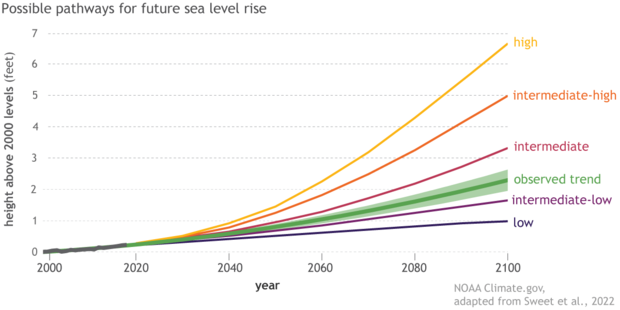
From a quick search, projected sea level rise is around 2 feet by 2100. If you're two feet from flooding, you're almost certainly experiencing flooding already, due to the occasional bad storm.