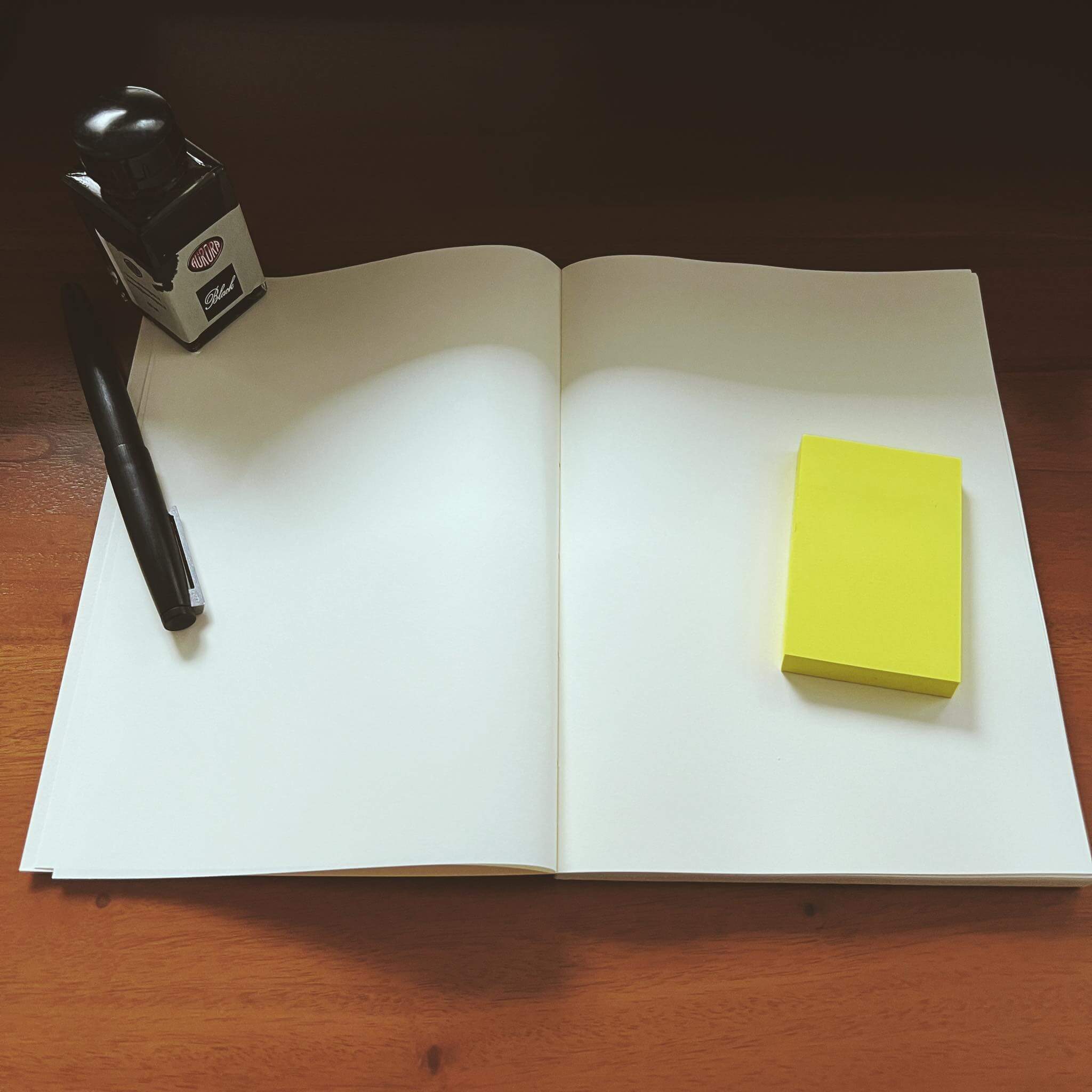
Seems like all these blog posts are, "I Started doing this yesterday, and I'm going to do it for the rest of my life... or tomorrow when I blog my next big thing I'm going to do forever."
I'm more interested in stuff people have stuck with and actually works for them when the novelty of the medium wears off.
I'm not saying pen and paper isn't great, but I'm more interested in the system that evolves if you actually use something over a long period of time.
One of the most productive people I know, took her lecture notes in the comment panel of PowerPoint in college, simply because _it's there_ when she open a lecture note. UI wise, it's probably worse than any note taking system that has ever showed up on HN. Nevertheless, she was a straight A student juggling 2 majors, 1 minor, and a lot of social life.
This is what I observed in hyper productive people: some of them have a unique, novel system of organizing their knowledge, but many of them don't. So, having such a system is probably not that important.
And even though I'm not a hyper productive person, this applies to what I'm good at doing as well. You can take away my favorite text editors/plugins/command line tools, and I can still competently write programs. I can code in notepad.exe if I have to. It won't be as convenient, but I can absolutely be productive.
It's the same for writing/reading/thinking. If you can already write, it's fine to try to perfect your workflow. If you can't write, it's not because you have the wrong pen.
Many of my most productive workflows have come from finding smoothness. There's a lot of stop/start in digital: something commanding your attention that is not the task, that needs immediate resolution. Often the "proper" way of dealing with it means stopping again, and the "improper" way blows up down the road. Deal with that a few times and suddenly I find myself browsing Twitter, because I've reached a "good stopping place." When that happens, it doesn't matter that it was "fast". I did one part of the actual thing fast, and then I wasted the rest of the time.
Hyper productive people who I have seen as well exhibit similar behavior. They just stick to tools that they are comfortable with and focus on the task at hand.
Also another anecdotal observation - some of the best chefs I have seen don't usually switch tools, be it knives or utensils. They mostly stick to the same tools for a very long time. So they invest in tools that can last and can be maintained. Not sure if the analogy holds true in other fields as well.
Pen and paper as a form of expressing streaming thoughts works for me as well. It also works because I write a lot slower than I can type. Ever since I have started writing pretty consistently over the last 4-5 months, the format of pen and paper doesn't really matter to me. I can write using any pen and any paper. I have found fountain pens to be particularly cumbersome to maintain and also my kids just take whatever pen is on my table and run off. As a result I just have a 100s pack of the same cheap pen. One went missing, pick up another one.
Now at 30, I'm not that productive, but there are many things I have to deal with regularly that I just haven't found very productive ways of operating with.
Right now, fwiw, writing my day out on pen and paper before I open my computer has lent me slightly increased levels of focus, but I think that for marginally more successful people, some of these gains were realized early on and happened to work for them, or they didn't need them.
I do think this extends somewhat to more general life circumstances like stable family life and not being so susceptible to distractions.
I also think that for some people who have the intellectual capability, juggling 2 majors and 1 minor might be just what they need to deal with the former.
I find that notepad has all the features I need, I generally only work on my own code so I don't need fancy tooling.
I do a lot of digital notetaking currently, along with more analog index card and sketchbook notetaking. I stopped drawing in 2018 due to work burnout, but hope to pick it back up soon!
https://publish.obsidian.md/manuel/ZK/Sketchbooks
https://publish.obsidian.md/manuel/Public/My+Obsidian+workfl...
Every few years I go through the last 12-20 notebooks and take pictures, then get rid of them. I don't go back through them that much, really, beyond things more than ~6 months old, but when I do I feel like it's a goldmine.
Paper sketchbooks are also really useful as temporal artifacts. Looking back at them, I know where I was, I discover things I have forgotten, they have different formats, they mix life with work with hobby. I don't think the digital notes will have the same nostalgia factor.
This is what I've found as well.
In high school, a gym teacher forced us to copy his slides for sex ed. At the time I thought it was completely stupid. But come test time, it was amazing how much I remembered. Like you, I've never felt the need to re-read my notes - just writing down the information has been enough.
I've carried the habit with me, and it's continued to work well for me.
Something about hand writing is just much more effective than typing. I wish it weren't so.
Unfortunately, I am in the middle of kicking an internet addiction and I have not had the same concentration as before.
But things are improving. I have dozens of books with ideas, doodles, solutions, architectures, code and what not, strewn across my house.
Finally, I keep a third notebook for travel. The idea being that I don’t want to lose my original, but I probably don’t want to lose my travel one anymore either, so…
Anyway, this can be a successful long term thing.
In summary, I kept reading about people who prefer paper, or why paper is better than digital, but I just can't get into it. I've tried, with nice tools and a daily commitment to using them, but it just doesn't work for me.
The best compromise I've found is a nice size Rocketbook that I can easily OCR into a notes app later.
I think that there's an issue of people being less likely to talk about their long running projects or processes because over time they forget the what and why behind it and/or their enthusiasm for it fades away. Accordingly, maybe we should pre-register our thoughts about a process or project at the outset and not publish it until later on, when we can retrospectively talk about our success with it.
But I've definitely had no issue sticking with digital notes. I've changed apps but the process is basically the same. But I'm an outlier in tech, with an extreme high tolerance for complex black box systems, and most techies seem to feel uncomfortable without that 1 to 1 feel paper or DIY coded digital gives.
Paper lovers seem to stick with paper for decades, very consistently, they'll pick up a pen multiple times a day for years.
Some don't seem to have any specific process, they have many notebooks and things for different purposes, and they constantly try new things. I almost wonder if people who really value direct experience and experimentation are drawn to paper more than people who value predictability and control.
I see them make quick notes on napkins, make little areas full of random bits of important information, bullet journal in a nice moleskine, etc.
It's kind of amazing to watch, since some of these things could cause multi hour inconvenience if lost, and they don't mind not having sync. They must have a pretty good memory.
It seems like the real "process" and "tool" is a constant state of flow and change that they move with. Paper use looks to me like a totally different lifestyle and way of relating to the world, information, and your own mind, that probably has dozens of subtle effects.
Like, all my notes are in Obsidian, which makes it almost a second brain.
Paper notes are stored in specific places and you can only access them if you physically have them, which means the only always-accessible thing is still your own mind, and your notes are a bit more distant from yourself.
Here's the one thing that's stuck with me:
I started carrying earplugs with me in 2002. I was forced into it by the Army, but I've kept it up all these years because of how great it is. They completely disappear into the pocket, and when you want them, you *really* want them.
But they're great, even when most people wouldn't think they "need" them. Here's some examples:
* Using power tools like a blender, mixer, or lawn mower. * Sleeping during the day, in a strange place, or around other people (e.g. on an airplane). * Working in a public space like the library, a coffee shop, a bus, or an airplane.
If you like going to shows or dancing, they're great to have in case you need them.
I think the benefit of earplugs has decreased for the average person since noise cancelling earbuds are so widely available, but in my experience earplugs both block more sound and they block different things. Of course the downside is, you can't listen to audio with them in. But the upside is you never have to worry about charging them.
In my experience, the reusable flange style earplugs are fine for light use, but they can sometimes be painful with extended wear (6+ hrs per day for months at a time). I went out and got a bulk pack of foamies, which I assume will last me the rest of my life. The only downside to the foam earplugs is, if you get them wet, you can reuse them.
I suspect they've worked particularly well for me because I think being bored for some amount of time during the day is healthy, and I find I get distracted by listening to music or podcasts.
The benefit:weight, volume, and price is absolutely amazing.
8 years ago I had impressions made of my ears and invested in some custom-fit earplugs that evenly attenuate the entire frequency spectrum and don't roll off excessive high-end like foam plugs.
They come in a tiny coin purse that fits anywhere and if I find myself in a public space where I'm at a risk of fatigue or hearing damage (concert, construction site, airplane, etc) I just pop them in.
That said, I'm a musician and audio engineer and thus highly protective of my hearing. But such events are so much more pleasing and sustainable with a quality pair of earplugs. Reducing the decibel level hitting my nervous system really helps to prevent anxiety and tensions that one might normally experience from the exposure to loud noises. It makes every experience so much more comfortable and I would replace them in a heartbeat, should they go missing.
I think most of us (especially those living in cities) take for granted just how loud these everyday environments actually are and the effect that it has on our mental well-being. Earplugs may not be a priority for most, but they are a simple, highly underrated remedy to the ambient soundscapes that many of us are exposed to every day.
Learned about it 25 years ago from history professor of all people
It works because I much prefer to think with pen and paper. I have a tendency to rush through things and this forces me to slow down. I can always take the results and make them digital, which I often do. Lately this has served as a useful way to re-acquaint myself with previous thoughts and connect them with newer thoughts. And I use Bear for that along with a good keyboard.
I do use apple notes for just about everything when I have my phone and no pencil/journal nearby.
I think most note taking systems being pushed by "productivity gurus" is compelling at first but then comes a realization that's not how we actually think.
There's merit to things like "building a second brain", but I think it has to start with analog notes.
I've also dove into the world of nice paper and fountain pens. I've always had hand cramps when writing, whether using a cheap Bic or a Pilot G7. With fountain pens, that's all gone, and writing is effortless. You can get started with this cheaply by getting a platinum preppy fine or extra-fine pen ($4), and a bottle of ink ($10). You want a fine or extra-fine nib, because anything else will feather and bleed on cheap paper, but fine or extra-fine works just fine on cheap paper.
Your pen can be converted into an "eye dropper" pen with a little bit of silicon grease and a small rubber gasket, and you'll rarely need to refill it.
Pentel Energel refills are very smooth, much more so than Pilot G7 cartridges (but not water-resistant). Zebra Sarasa refills are almost as smooth (and are water-resistant, which can be useful if you get caught in the rain).
I use both gel pens and fountain pens, with gel pens for quick notes and writing while on transit. I could comfortably get by with only gel pens—many people have, as I've seen forum posts by former mathematics and physics students who posted photographs of dozens of refills used up over their degrees. I still prefer fountain pens when I'm at a desk, though it's a pleasant luxury for the smoothness—any significant strain when handwriting for many pages went away when upgrading to higher-end gel pens.
It does depend on the ink, too. I have a Parker XF nib that will absolutely bleed through my notebook, which wasn't exactly cheap either. Not sure if it's supposed to be actually "good paper", though (Leichtturm), but I'm quite disappointed.
Diamine ink will take forever to dry on that paper and will be seen from the other side. And it's not even a particularly dark shade of blue. Regular supermarket-bought Parker ink (Quink washable blue) works much better.
I'm no expert, but my understanding is that more denser of paper (80 g/m^2 and up) take much better to fountain pen inks.
I swear by Clairefontaine and Rhodia notebooks and paper.
I don’t think I had bleed-through problems w Leichtturm (do recall drying/smudging issues though (Mont Blanc Royal Blue ink)), but my Midori “md notebook” has been treating me well.
It's a real shame
Please expand on this. I’m utterly confused as to what you mean and why you’d need it.
When ballpoints came into the picture and steamrolled fountain pens (as the utilitarian writing tool) the methods of creating a vessel to hold ink inside a fountain pen without creating a mess/leaking were pretty primitive/unreliable by todays standards. A common solution was to just fill the hollow body of the pen entirely up with ink and then put silicon grease on the threads where the nib screws in (it could leak out). The easiest way to fill a narrow, light cylinder with ink you REALLY dont want to spill is with an eyedropper type device, hence the name eyedropper.
People still do this with fountain pens, apparently fountain pens are decently popular in india and a lot of indian fountain pens are eyedropper pens.
Most fountain pens these days are what are called "cartridge converter" pens. The name is weird, but the original innovation over crude rubber sacs that you would squeeze to suck up ink (itself an improvement over eyedropper style filling) was to make plastic cartridges that could be filled with ink, sealed with wax and then inserted into the pen.
Another big innovation was piston filler fountain pens that have a piston on the inside of the pen body that can be moved in or out by rotating a knob at the end of the pen. Not only is this an improvement because you can stick the pen directly into the ink and just suck it up through the nib by retracting the piston, ink can be manually advanced out into the nib/feed if the pen was writing dry, and in the opposite sense there is always a bit of suction keeping the ink in that you can adjust. A fountain pen's "feed" is basically a big capillary force engine, and it is nice to have a counterforce with the piston that can be adjusted to either aid or inhibit it.
So then someone took the whole piston filler idea and minituarized it so it could slot into pens designed for cartridges, hence the name "cartridge converter" pens because these self contained piston fillers were called converters.
Eyedroppering pens is something people do for fun still, its an ok way to fill a pen if you dont care about the pen heating up as you hold it, creating a pressure differential and "burping" ink out onto the paper occasionally.... its actually far safer to keep an eyedropper pen mostly full so that there is less of bubble of air to heat up and cause this.
I had a pelikan souveran r800 that was refillable, but sadly I lost it on one of my return trips. Now I just travel with 3 leuchtturm notebooks (A6-grid, A5-grid, B5-lines-softcover) and a bunch of uniball pens.
At the same time I love physical media. As a math professor I defend a widespread preference for blackboards over soul-sucking whiteboards, imagining that musicians will still play grand pianos in a century, and they'll still snicker over Ryan Gosling playing a toy piano under the spotlight in that classic movie "La La Land".
I've hoarded Hagoromo chalk; I'm the one with the chalk attaché case in [1]. I've always carried multiple grades of drawing paper, and I've worked through many hundreds of artist grade felt tip pens, scanning all my math notes for thirty years.
Then, pandemic. Just as World War 2 accelerated women in the workplace, the pandemic has accelerated the uptake of digital tools for visual presentation. To teach over Zoom, we needed to embrace drawing on a tablet. I understand that the pandemic radically accelerated similar trends in architecture.
The algorithmic possibilities of drawing on a tablet are truly addictive; returning to paper feels like returning to a mechanical typewriter. For my purposes, Concepts offers the most involving algorithmic experience; I wrote [2] to support my note taking and diagrams for papers. However, Notability offers the least friction. I can have the same psychological relationship to taking notes on my tablet as I had with phyical paper, with the benefits of algorithmic reuse. (Pushing the envelope exposes how inconsistently Notability handles implicit layers, but one learns to draw around this.)
In a few decades, after all living mathematicians have drawn on tablets since birth, math will be far more visual, conveying ideas with far more immediacy. Math communication is now still largely constrained by its resemblance to typeset prose. Ever leave a startup because reading your coworkers' code put you in "Just kill me now!" territory? I did. Mathematicians write the equivalent of bad code, rarely actually machine-checked, to formalize their ideas. Other mathematicians try to decipher this code, to reverse-engineer the ideas. We declare people who can actually do this as having a gift for mathematics. As I learn to teach combinatorics more visually, my classes swell with students who share my frustration.
I've come to realize this summer that I pretty much despise mathematics. I can't wait for the visual revolution. This revolution didn't take hold on physical paper; one needs a digital accelerant.
[1] https://www.youtube.com/watch?v=PhNUjg9X4g8 [2] https://github.com/Syzygies/concepts-artboards
To this day it is a real mystery to me why people would prefer whiteboards over blackboards.
I vastly prefer whiteboards over blackboards. It's the physical sensation of writing for me.
Using markers is smooth, a bit like writing with a pen on paper. Writing with chalk is rough and technically difficult - there is a component of pressure one needs to master.
It's not obvious to me how the finished product is any better with a blackboard or a whiteboard (although I've heard several people try). Or how whiteboards are "soul-sucking". People who prefer blackboards seem like those who prefer vinyl over CDs, but with even fewer coherent arguments. Which is fine - everyone has a hobby - but maybe be a little less vitriolic about it?
Whiteboards do have the downside of staining over time, but using glass is a foolproof solution to that particular problem. It's amazing how inexpensively one can find very large, used, glass-covered picture or art frames.
Blackboards themselves also vary in quality; some ceramic surfaces can rival traditional slate. One can't really judge the experience starting with a cheap, dirty board and using institutional chalk and erasers.
I've enjoyed whiteboards in well-funded companies. In academics, it is profoundly embarrassing how often a speaker will have traveled for a lecture, only to find a dirty whiteboard and the local markers dried out. This is why speakers would rather lip-sync to PowerPoint slides. Were I using a whiteboard, I'd also bring my own tools.
Pad and paper is certainly easy, but artists brave serious messes to produce oil pastels for sale. In my case, students are carrying student loans half their lives. I prefer chalk over slides because it forces a live performance. I then share my Notability drawn notes, because they're better.
[1] https://www.amazon.com/HAGOROMO-Fulltouch-Color-Chalk-White/...
[2] https://www.amazon.com/Hagoromo-Fulltouch-72pieces-Yellow-Or...
I suspect actually it was simply more economical, and probably something to do with chalk dust. I don’t miss chalk dust.
- writing left-handed, whiteboards are somewhat easier to write on legibly without both erasing some of what you wrote and covering yourself with residue (which then transfers less to your clothing).
- The sound and feeling of chalk on a chalkboard makes my skin crawl.
(edit: amusingly enough, I find this near the end: "I also mentioned Zettelkasten many times in this post, but I don’t do that anymore–I just did a 1-month dry run and it felt tiring.")
Make lots of indexes, or "Maps Of Content".
An index can point to a other pages, including other MOCs. It can also have its own text.
There, that's 95% of it. I have a top-level "Index MOC" page that links to my "Work MOC" (which links to projects I'm working on), "Orders MOC" (that links to a bunch of pages for local restaurants and what my wife likes ordering from them), "Diablo MOC" (because I play a lot of Diablo 3 and keep notes on how to optimize characters), etc.
In short, it's a way to turn a mess of pages into a web of links that I can easily click through if I want to.
I never went all in on GTD, but some principles stuck with me: key is having a trusted system where I can capture things that will then SHOW me those things when I need to see them.
I used Omnifocus for a while, but eventually migrated to OrgMode as a better fit for my life (even though I'm not really an emacs person overall).
The related principle that sticks with me is, your mind is more for processing/doing things than for simply storing them.
https://news.ycombinator.com/item?id=32227826
Basically, over 90% of people invoking Zettelkasten do not know what it is. It's definitely not a tool suitable for most folks.
I find it productive, probably because it helps me collect the various ideas and notes from things I've read into a single place, and is a good mindfulness practice.
Taking the same approach to pen and paper, digital interface is extremely simple, a keyboard and a display. Your system: text files. It's liberating. You open your note.txt,
  ed note.txt
  ,
  my previous notes
  more notes
  ...
  my last notes
  a
  now just write you new notes down
  don't worry about anything
  don't even worry about editing previous lines
  just write
  and done
  .
  w
  q
> Taking the same approach to pen and paper, digital interface is extremely simple, a keyboard and a display. Your system: text files. It's liberating. You open your note.txt, <ed session snipped> And that's it.
Surely that's also intentionally making a digital interface simple? I mean, both kinds—all kinds—of interfaces can be made simpler or made more complex depending on the user's tastes. That fact itself doesn't, I think, speak to any virtue or lack thereof on the part of any interface paradigm.
…
EOF
I think the author might have chosen the traditional way of note-taking, because he just doesn't have the patience or the particular obsession to tailor the note-taking system. Which is fair, but it might do him a disservice if he ends up impatient with the system he is building now. There is a reason, after all, that so many people switched to digital. Even if the author prefers the romanticized way of old note-taking, it is undoubtedly inefficient. It's an experience akin to using ${Editor} over Vim.
Why, is there something wrong with them?
> I think the author might have chosen the traditional way of note-taking, because he just doesn't have the patience or the particular obsession to tailor the note-taking system.
Because nothing says "This is naturally the best way for humans to do something" as clearly as it requiring patience or a "particular obsession", right?
When I handwrite I absolutely write less. It's harder and slower. But for the types of things I use handwriting for I think that's a plus. I tend to put more thought into what I'm recording. In my personal experience the outcomes are better.
I type notes as well, very frequently, but for archival content. Things I want to be able to reference in the future.
Notebook, multicoloured pen, usually C or lisp syntax. Tends to be thinking through data structures. Kills the temptation to check my work by running it which forces me to think harder about the intended execution.
edit: used to use whiteboards for the same purpose but sadly don't have one at present
My handwriting is bad, because my hand doesn't "hover", it's firmly planted on the table, and I need to lift it and reposition it every few words.
All the videos I've seen make it seem so easy, but when I try to emulate those hand positions, my pen's nib doesn't even reach the paper. They glide effortlessly with the smallest two fingers lightly touching the table. I need to lower my hand so three fingers and the wrist are again very much on the table.
Take a pencil. A wooden one, not a mechanical one. Sharpen it. Then hold it so that the entire side of the exposed cone of graphite touches the paper, rather than the tip. Your thumb will be on one side of the pencil, with all four fingers in a row on the opposite side, rather than sort of clustered around the front of the pencil.
Now try to draw some lines. You will get very broad lines and probably have little control, because this grip forces you to keep your wrist still, and gives you very little room for your fingers to move the pencil either. It will feel very weird and awkward at first! You’ll have to make a bunch of big, broad motions because you’ve probably never tried to make fine motions like this with your arm in your entire life. It’s okay, you’ll get better!
A great way to get better: take a piece of paper, and draw a circle in the upper left corner, just barely touching the edges of the paper. Don’t worry about making a nice circle, don’t go over it multiple times, just make one simple sorta-circular gesture. Now move to the right and draw another circle, just touching the first one and the tip of the paper. Repeat for a whole row, then do another row that just touches the bottom of the previous row, until you’ve filled the whole page.
Your circles will probably look better by the end of the page. I did this every morning as a warm-up for one of my first animation jobs, and the circles got a lot better, and tighter, over the course of not much time.
Once you have learnt this, you can easily transfer this new control of your arm motions to tools held in other grips. I mostly work digitally, and have to address the tablet with the stylus’ tip for it to register, but I still move my arm with the fluidity learnt from this exercise.
As a bonus this is also a lot better for your arm. Keeping the Carpal Tunnel Syndrome Fairy away is very much a thing grizzled old animators wanted to teach the new kids coming in, they’d seen great careers cut short by injuries.
(You could also probably keep holding the pen in a more vertical fashion and use a wrist brace to keep your wrist from moving, if this is all too damn weird for you.)
As an unusual example, here[0] is something like Palmer script being written by an Indian. It's unique, the hand is positioned almost directly below the letter being written! The author claims they are using a 0.9 mm pencil, even though the writing looks like it was written with a pen. I think they flatten the lead to a bevel edge and use that for the downstrokes, while sliding the edge sideways for the thins. Exceptional motor control, I'm jealous.
+1 OMG Chemistry notebooks FTW. I was always a pencil person and when the professor literally made us cross out our mistakes it felt gross to see the wasted space for 'nonsense', so inefficient. Only later I come to realize that all creation is not for naught. Observations made and recorded for the record are invaluable when seen from a different time perspective. If DNA can have built in redundancy, then evolution is revealing a good lesson to replicate for note taking as well.
People's time horizons are too short when thinking about so called 'ultimate' note taking/brainstorming/productivity solutions. What system did Grace Hopper use? Feynmann?
I can take a trip to Mom's and fetch that chemistry notebook to retrieve that 1980s information. No retro hardware, searching for encryption keys, old floppy disk/zip drive media players, no defunct internet companies to contact about 'my' data, proprietary formats to parse, etc. Open that 40 year old notebook and read it.
To be sure, I own the iPads/android tablets, note apps, desktop apps, wikis, cloud services and other digital debris that in the end is/was wasted friction, $$$ and energy. Too many dependencies.
I stick with a low-end laptop with plain text on vim and emacs -nox and (mobile) self-made paper notebooks and enjoyable wonderful fountain pens [1] I'm really trying to look back toward memory like the ancients but that is the ultimate practice.[2]
Life is too short to conform to digital tools. Enjoy both! There is much forgotten freedom to be rediscovered with the analog hand.
[1] https://www.reddit.com/r/fountainpens/ [2] https://en.wikipedia.org/wiki/Method_of_loci
It is, and was a chain of evidence for me. One that saved my arse.
Type up your reports and spreadsheets, but raw data should always be kept in a proper hardbound paper lab notebook.... one that references the filenames of your typed up electronic data.
1. It appears the author hasn’t been doing this long, judging by their Twitter feed. I’m more interested when somebody’s been at something for a year or two. The whole “I’ve switched to $thing and it’s changed everything!” is always fun when it was written soon after the switch. Even funnier when you visit it a few months after and they’re back on the old thing. See also operating system switch posts.
2. “Most” notes systems aren’t using Zettelkasten. Most note takers don’t even know what it is.
3. I take handwritten notes and drawings all the time. Then I scan and OCR them into a PDF with my iPhone that goes into Obsidian via Shortcuts automations. This way it’s searchable and I always have them. I don’t have to remember to carry a handcrafted Midori/Moleskine around everywhere.
Not sure what you meant by the Twitter feed? Doing this since 2017 and it's still fun so far! Hope that helps :)
1. I've been handwriting notes for about 2 years now, after typing all my notes before that. I generally agree with the author's points. My take on it, which I think they sort of had their own spin on, is that "notes" is an unhelpfully broad category. You record different things for different reasons. A todo is very different from jotting down a novel idea. So I have an Obsidian vault and a notebook.
The notebook is for my ephemeral notes. That includes any information whose lifespan is less than ~1 week, so usually quick thoughts about imminent meetings or todos for the next day or so. It also includes any time I'm taking notes strictly for my sake when the information can be referenced later. For example, my own personal thoughts during a meeting that has shared notes. In my opinion handwriting is better for that sort of stuff: I think it focuses you, it slows down your thinking a little, and it makes you more likely to remember what you wrote.
Obsidian is for archival notes. Things I may need to reference in the future. That's where I keep any longer running todos/projects, as well as any more detailed/complex info that I might not remember but want to reference in the future. Not infrequently I'll take something I jotted down in my notebook and add it to Obsidian if it seems like it might be useful in the future.
I find this split to be very effective for me personally. YMMV!
2. Totally agree. I doubt most people need or benefit from actually getting into Zettelkasten.
3. That seems very reasonable. I think for me personally it would be a bit of a hassle given how rarely I have a need to go back through my written notes.
So yeah tl;dr would be: I think handwritten notes are the ideal way to record information that you're not going to need for more than a few days tops, but I'd hate to have to dig through my old notebooks looking for something.
A large part of day-job work doesn't deserve the pen and paper - We just need to track TODOs, links and some other bullet points for them. Digital tools are very good at these because it's optimized for them.
On the other hand, if a problem demands the flexibility and the visual capacity of the pen and paper, it's a good sign of the sufficiently large intellectual problem space it contains.
I use Notion. I also use paper.
I tried using "fancy writing equipment" that ended up too nice for me to scribble on. Because any momentary idea is garbage and not worthy of this nice acid-free, leather bound notebook.
So no I have a stack of very cheap legal notepads that I just put whatever I want on. Sometimes I'll rip the pages out. Sometimes I'll trash them. Eventually the good ideas take shape, and I'll move them to Notion
For everything else there is markdown.
1. https://ljvmiranda921.github.io/assets/png/pen-and-paper/bla...
Despite that, I find that in own writing, I always think I'm going to initiate it on paper, but then I start writing fragments on the computer, thinking about them, revising, etc. etc. I lay it aside & think about it, and then revise some more. In the end, I think it's about as creative as pen-and-paper.
I hope. I should try the pen again just to make sure.
Handwriting has also been useful for taking notes where diagrams and imagery was important, such as when researching what a good user interface could look like, for a web application. You could give it a try if you decide to write an article that analyzes or incorporates a significant amount of imagery, or has a lot of parts, like a lengthy script, fictional story, or in-depth report.
I used to strictly be a pencil and notebook person... to be mentally engaged fully (whether that is thinking, problem solving, planning, recalling, etc.) I had to use pencil and paper.
But improvements in text editors, and their convenience, lead to me using them more and more to capture ideas, lists, etc., and one day I realized I had switched.
Now I need to use sublime text to be mentally fully engaged.
If I could find something better I'd try switching again. Needs top-notch text editing integrated well with something like Apple Pencil. (Apple notes app is subpar when it comes to text, doesn't integrate text and pencil drawing/writing very well, and although I just want basic drawing/writing tools, it doesn't do that very well either.)
One of my kids uses OneNote from Microsoft. Their notebook / section / page metaphor seems too fiddly for me although I know some people like it.
1) Check if you are on the correct ribbon 2) Click the box icon (unless you have millions of shortcuts setup) 3) Drag and drop it 4) Maybe change the defaults which you don't like (colour, thickness etc) 5) If you are typing text in it, that rarely works out well without clicking other buttons
On paper: draw box and write text - simples.
Open paint software -> use stylus to draw square.
You mean paper with a grid of squares on it, right? Because all the DIN A-series paper formats are rectangular, not square (as I first misread your meaning).
If the LED is attached to the pen, the weight (of both the battery and light) will be significant and can tire you out for long writing periods. You would also have a better experience for the light to not move too much while writing, which will happen as you move the pen along the paper.
Initial notes are almost always on paper, in a good notebook, written with a fountain pen. I also almost always have a small notebook and pen on my person.
BUT once something becomes a real project I need to track, or if the notes are important enough that I want them searchable later, I transcribe and summarize into the appropriate Orgmode buffer.
I retain things written longhand better, but this act of review & summarization is like a turbocharger for that recollection. (Not for nothing, but one old-school study hack I read about back in the 80s was "type up your class notes". It dated from an era before computers, so it wasn't about search or indexing. It was about the act of review inherent in the transcription.)
I love my fountain pens and paper, but for permanence and immediacy reasons. It's really hard to put a file attachment for safe-keeping on your hardcover journal.
I love OneNote, but for ease of dumping screenshots, digital ink annotations, file attachments, and generally building up context around a bit of specific information reasons. It's really hard to put your sticker from your family-member's letter on your OneNote notebook.
And those are two different tasks, just like the desks example above.
What I really need is a great open source OCR and hand diagram to SVG tool.
I hunted to no avail. Anyone got good recs?
It's my proffered way to take notes, think through problems.
Writing in the reMarkable feels as analog as writing on paper does. I can convert my handwriting into digital text and email it to myself for editing and digital archiving right from the tablet.
I've also tried handwriting with ink in Moleskine notebooks and transcribing pages with the Google Translate API, which works surprisingly well.
I love the analog method. Yet I want to document my writing digitally for easy retrieval when editing and looking for content to publish.
What other methods are people using to digitize, transcribe, and archive "analog" handwriting?
In my experience observing my peers, aside from intellectual horsepower, thinking about topics from first principles is the best way to learn. This has nothing to do with Logseq, Obsidian, Zettels, paper, workflows, Literature notes, or any other fad.
Don't understand something? Go back a step and understand that. Even better if you have to explain it to someone else. Then see how you structure it into a latticework of knowledge, as Charlie Munger would say.
- pencil/paper is just so much quicker
- if you think it, you can draw it... quickly. It's more flexible.
- key advantage: when non-engineers (or even engineers) see higher fidelity mockups, it's very easy to get caught up on some of the details like where a button goes or how big the font is. With pencil/paper, everyone realizes that it's a rough sketch and that the final product isn't going to look this way.
After I write things up, I scan them with an app to a PDF file and then email that out (or attach to a ticket). Of course, pen/pencil isn't great for final designs... there's no substitute for a high-fidelity mockup of what somethings is supposed to look like. But I find it very useful to start with the UX and then work on things like CSS last.
Some key tools I use:
notepad: $5
pencil: $7 (I really splurged here for the pentel Orenz, my favorite mechanical pencil, but a $1-2 pencil will be 95% as good)
6" ruler: $1.76
1/2" binder (I like to keep my drawings): $4
I've thought about investing in a ReMarkable tablet, but I find it hard to justify the cost since pen/pencil work so well.
https://www.jsoftware.com/papers/tot.htm
Might be a different notation needed depending on the subject.
Thanks.