The idea behind prices in a market economy is that they're an information-carrying abstraction. They let producers at every stage of the value chain understand the relative costs that go into different alternate ways of producing a good, without needing to understand every single stage of the supply chain and all the decisions that their suppliers made. And it also gives them information about relative demand, so that producers which make things that nobody want go bankrupt and those make things that lots of people want rake in windfall prices.
The whole point of the Fed is to alter prices, on one hand to keep producers from raking in windfall prices (price stability) and on the other to prevent too many of them from going bankrupt all at once (full unemployment).
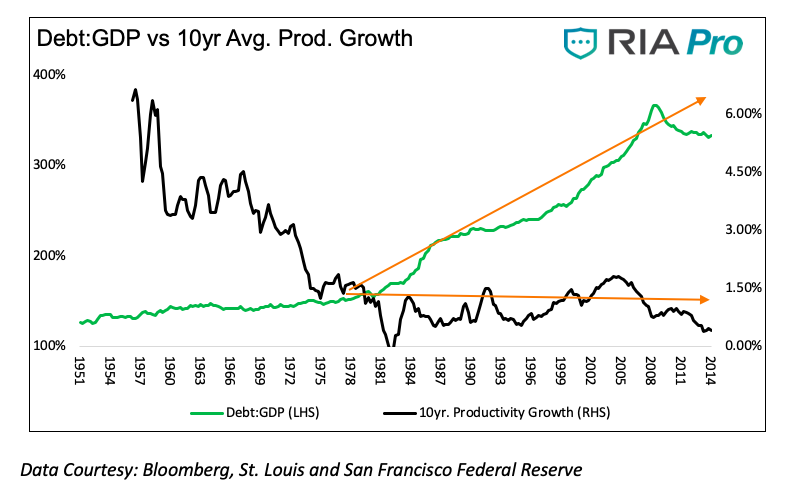
Problem is that when you do this too much, for too long, the biggest input to a firm's production decisions becomes the Fed funds rate. When it goes up, time to layoff people, because the cost of capital just went up and you can't do anything without capital. When it goes down, time to go on a hiring frenzy because if there's money for the taking and you're not the one taking it, you get outcompeted by the ones who are. Over time this begins to dominate all other signals that pricing normally provides, like producing goods efficiently and making things lots of people want. You get companies like Uber, which lose money on every transaction but make it up in fundraising.
In turn this increases sensitivity to the Fed's actions, which limits their freedom to take them. If the whole economy breaks when you raise rates to 1.5% (as happened in 2019), it becomes very hard to raise rates above 1.5%. So rates get pegged below the natural rate of interest (which equilibrates supply of savings with demand for productive investment), lots of economically dubious projects get funded, you inflate a perma-bubble, and you can't deflate it without taking down the whole economy.