But there must have been some kind of change between antiquity and middle ages that caused so much knowledge and international exchange to simply vanish.
I really wonder what exactly went on there.
There was also a major volcanic winter in the 500s that triggered global cooling and caused droughts and starvation.
There was also the Justinian plague in the 500s which was supposedly worse than the Bubonic plague.
https://en.m.wikipedia.org/wiki/Volcanic_winter_of_536
https://en.m.wikipedia.org/wiki/Plague_of_Justinian
Plagues and droughts have killed off more than a few civilizations, but seeing that these occurred in the wake of the collapse of the Roman empire, it probably accelerated the gradual decline that would have occurred and maybe prevented any sort of recovery.
At its peak it was a huge unified empire, it should be expected a lot of commerce and knowledge would move freely within its borders. The (slow) fall of the Roman Empire would be like watching the end of civilisation, a dystopian fiction of the survivor-apocalyptic kind.
The following centuries, all the way to our modern age, rulers tried to claim the title of Cæsar (Kaiser, Czar, ...), tried to claim a continuity of the empire (e.g. Nazi's III Reich) or even invoked past roman imagery (the roman eagle ["aquila"] is also present as a symbol of power in the USA [american eagle], in Russia [romanov coat of arms], in Germany [both the nazi's eagle and the bundestag's eagle]).
It's as if the world is still trying to "get over" the end of the Roman Empire.
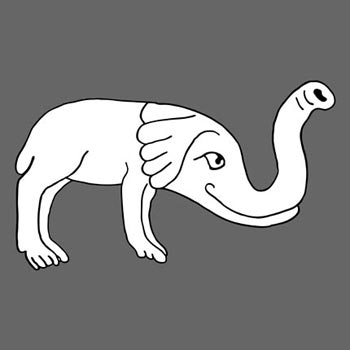
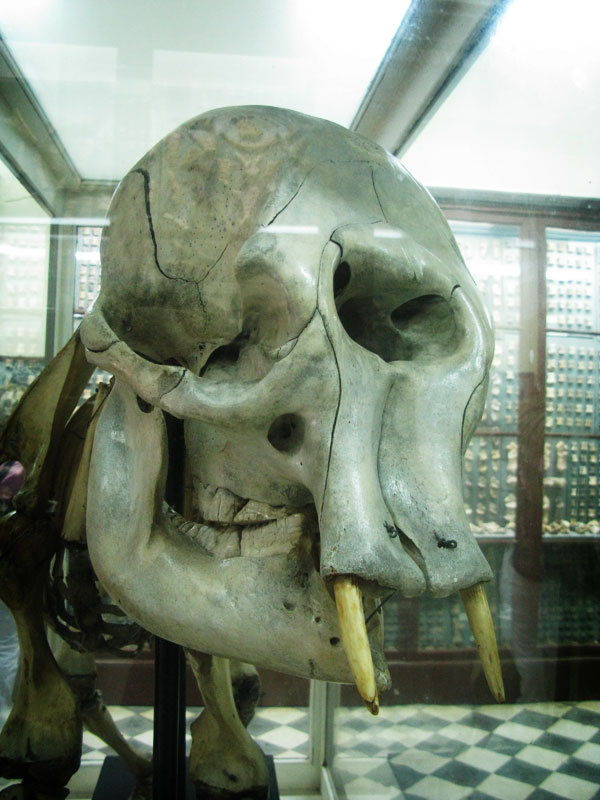
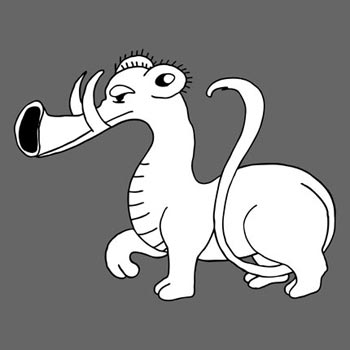
I wonder if one could define e.g. an "elephant horizon" - some point in time where, before, how an elephant looks was common knowledge (among the educated) and after which the knowledge was lost or replaced by myths so we got depictions like in the OP.
[1] https://en.m.wikipedia.org/wiki/Late_antiquity
> Precise boundaries for the period are a continuing matter of debate, but Brown proposes a period between the 3rd and 8th centuries AD.
[2] https://de.m.wikipedia.org/wiki/Ende_der_Antike (German only unfortunately)
Perhaps even more clearly than the adoption of the American bald eagle echoing the Roman eagle is the bronze fasces in the House rostrum, a direct replication of the Roman symbol of authority from which, also, Italian fascism derives its name.
The domestication of the horse keeps being challenged anyhow.
When I research something that's important to me, I take screenshots or save the source code because I know that the referenced web page is likely to disappear within a few years.
And it'd be nice to have a tool to automatically replace broken links with copies of your saved screenshots.
This here:
https://www.uliwestphal.de/elephas-anthropogenus/soloelephan...
Does not seem to be an elephant to me. Maybe a vomiting deer, or with a bad case of worms of serpentitis. (:
> Notes: The text refers to elephants; the miniature may be a misunderstanding or misinterpretation of the standard Bestiary image of the elephant battling a dragon.
Seems to be speculation that the artist saw an image like https://64.media.tumblr.com/07d4ec88f9250ff97d244dd316bd5e2e... or had it described to them, and didn't really understand it but knew it was called an elephant.
I wonder if the motif of elephants battling dragons comes out as a kind of origin story of how the elephant got its trunk.
- https://i.pinimg.com/originals/77/87/31/778731af0a982a047e7a...
> The octopus as a rule does not live the year out. It has a natural tendency to run off into liquid; for, if beaten and squeezed, it keeps losing substance and at last disappears.
Well, can't say that I won't do about the same if beaten and squeezed.
Also, another animal with plenty of wild depictions is the tiger. East-Asian paintings especially walk between hilarious and cool, and it's often clear that the artists didn't particularly want to see a real tiger close.
Itō Jakuchū: https://i.pinimg.com/736x/14/63/f8/1463f891232e00f9165d05809...
Marked as ‘Meiji’, so fairly recent, but I like it: https://i.pinimg.com/736x/9e/d1/6a/9ed16aad46e17fcbe521d68e0...