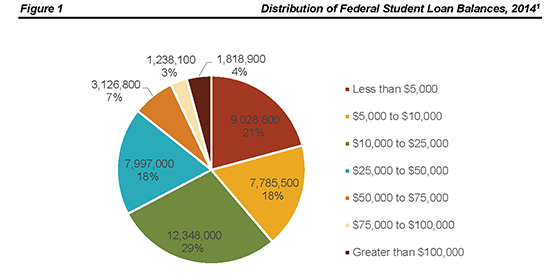
85% of graduates have less than $50,000 in student loans. Paid off over 20 years, that’s really not much. https://www.rclco.com/wp-content/uploads/advisory-student-de...
Additionally, those that have much higher loans are usually medical students who make $200,000/year at the entry level.
Plus, you're right that the interest rate is insane when banks are paying 1%.
The interest rate especially shocking when you consider that interest is supposed to pay for the creditor taking on the risk of default, which is almost impossible with student loans.
Meanwhile my wife only makes an appreciable dent in hers whenever she gets a gift from family members, and she's still paying $900 a month to not do much more than tread water. She did get it paid down a bit more thanks to the past two years of deferrals, but she still owes a lot more than I ever borrowed (two years of my school were paid for by a scholarship).
It's been a steady drag on our income since we've been together. At least mine is just about to go away, mine was $400/month as well... that $1300/month is almost as much as our mortgage payment.
I have multiple friends that have just given up on ever paying off their student loan debt in their lifetime and only pay enough to keep it where it is (or slowly increasing even). You wonder why people aren't buying homes and having children, there it is. I guess the solution to overpopulation is just saddle everyone with a bunch of debt, then.
> 85% of graduates have less than $50,000 in student loans. Paid off over 20 years, that’s really not much.
It is pretty terrifying that you manage to mentally justify going in debt for 20 years over your college education. I understand that given a good job it's easy to pay it back, but I never even borrowed even a tenth of that to complete my engineering degree and I've probably paid my education back several time in taxes to the government.
1. Efficiency. Canadian universities deliver similar/better products at much lower cost. Not just cost at point of use, but actual "amount of money spend annually to deliver education".
2. Financing model. Taxation allows you to fund things without paying interest to a middle man. If you pay off a set of loans whose principle is 50K, but with 5%-7% interest rates, then you're paying a lot more than 50K. So even if the products were equal in price, the taxation model might work out ahead.
Yes taxation is higher, but I still feel like we get a lot more bang for our bucks here.
One of those people can pay that loan off in two years. One of them is likely never going to pay it off without a career change.
Of course, we probably don't want loan officers picking what poor people can major in either.
I would not say that people should be denied based on their chosen major, but prospective students should be shown statistics on the average salaries, unemployment, and usage rates of the major they're interested in and compare it to the projected costs and resulting loan debt.