Property tax taxes two things -- the house, and the land. The portion of the tax that taxes the land is capitalized into the selling/renting price of the land, which is to say that causes it to cost less to buy the land and less to rent it. (The portion of property tax that taxes the building can actually be passed on to tenants (unlike the land portion of the tax) and serves to make building things more expensive, and that is bad, but since the majority of the price of houses in most urban areas is just land value, the land portion of the tax makes it a net gain).
Rent is not really tied to land in CA. If it were, a 1br in an apartment complex would be cheaper than a 1br detached unit since you are renting less physical land, and while much rarer, both 1brs tend to be about the same prices. Biggest factors influencing local variance in rents in California seem to be quality of neighborhood which is proxy for access to high paying jobs, fit and finish of the unit, and size of the unit.
In other words, the value of the land (which is to say, the value of the location). To be clear it's not the amount of land, it's the value of the land in particular places (especially urban land next to valuable jobs).
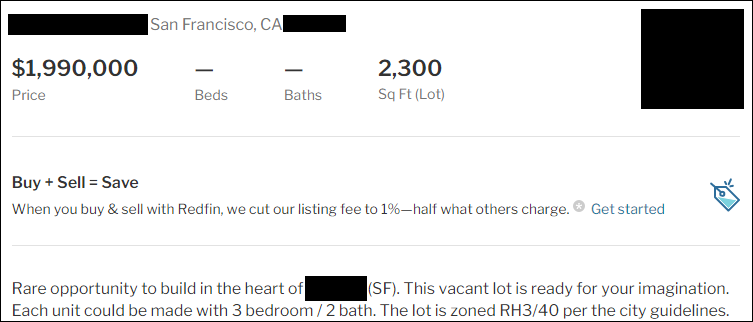
If you think land (location) isn't a big factor, perhaps you could explain why in the heart of San Francisco this 2,300 sq. foot EMPTY lot costs $2 million:
https://www.fortressofdoors.com/content/images/2021/08/image...
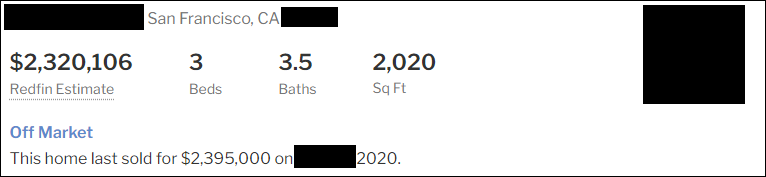
While this 2,020 sq. foot lot right next to it with 3 beds and 3.5 baths costs $2.3 million:
https://www.fortressofdoors.com/content/images/2021/08/image...
(found those on redfin, personal information redacted but you could find your own examples easily)
Here's a map of the land value share of real estate for the whole of the united states: https://www.aei.org/housing/land-price-indicators/
And if you don't trust the American Enterprise Institute, you should look at Larson (2015) who says much the same thing:
https://www.bea.gov/research/papers/2015/new-estimates-value...
When you tax land however, something different happens: underdeveloped land becomes a bad investment. If the taxes are the same on a single family house and a small apartment building, you're losing out on a sizable amount of money by not building the apartments (and the folks hodling vacant land are really losing out). So essentially the idea is that land taxes encourage landowners to extract as much value as they can from the land (and punish those who don't). In the Bay Area this most likely means building more housing, increasing competition, and driving down rents.
Of course, this is assuming that housing is legal to build in the Bay area, so this is most likely unrealistic