A quick search will show anyone the size of even the smallest Starlink receiver and common sense dictates that current generation phones cannot have any meaningful signal strength connecting to even an LEO satellite.
Dropping that to something that fits in an iPhone would be a very significant improvement, but it hardly breaks the laws of physics. Thus https://xkcd.com/2501/
https://www.iridium.com/wp-content/uploads/2021/07/mini3.jpg
Here it is with the case removed so you can see how big the helical antenna is.
https://fccid.io/img.php?id=1547768&img=bg1.png
Apple dumped a bunch of R&D money on a group of antenna experts years ago, so we'll see if they came up with a flat alternative to a helical antenna for satellite communications in the same way that the terrestrial cell phone networks did.
(and nobody cares if an obscure android device had it five years beforehand, Apple has wowed and brought many things into commonplace)
I would agree that there would typically be something obvious in the supply chain or a proof of concept before the iphone randomly has a significant improvement though
That’s dictated by basic physics and it’s not going in an iPhone effectively ever. Iridium satellites are in geo orbit though. You might be able to make a useful connection to something in LEO with a more compact antenna, but the satellites would have to be designed to support that. Current star link satellites have antennas designed to work with current star link base station antennas, not phone scale antennas. That could change though.
> [...] it couldn’t do what they were demonstrating without an insanely power hungry processor, it must have terrible battery life, etc. Imagine their surprise when they disassembled an iPhone for the first time and found that the phone was battery with a tiny logic board strapped to it. It was ridiculous, it was brilliant. [1]
I agree with you regarding the next iPhone not having satellite internet. But I don't think it represents "the sorry state of tech journalism" or lack of common sense. I can understand why some people would believe Apple is capable of doing the impossible: because they have seen Apple doing the "impossible" before.
[0] https://www.iphoneincanada.ca/news/rim-thought-the-2007-ipho...
[1] https://macdailynews.com/2010/12/27/rim_microsoft_were_in_de...
The issue isn't limited to tech journalism at all and in fact tech journalism may be the least affected by this issue of all.
But, frankly, I know my headline won't generate as many clicks or views and that's why they do it. Because we collectively react more to the sensational.
The fault, dear lanna, is not in our stars, but in ourselves.
That in itself is completely absurd. The iPhone was disruptive because it had a slick touch interface and thoughtful UX. There were phones doing vastly more (e.g. multitasking) than the iPhone years prior (Symbian, Windows CE), with a full day of battery life. It's no wonder RIM ended if they were that disconnected from the smartphone market.
That’s partly why people are so easily scammed by companies like Nikola and Theranos.
1. The iPhone 13 will have a new chip
2. The new chip is capable of additional bands licensed by Globalstar
3. Globalstar happens to be a satellite company.
Media thinks iPhone 13 can talk to satellites, when what it can really talk to is new 5G bands licensed by Globalstar.
Also see https://twitter.com/saschasegan/status/1432156621690576900
It will be X60 ( And if will have Touch ID ), does not support the band and it is as simple as that. And on the subject of Modem, I thought HN wanted Apple to get rid of Qualcomm?
So no, not clickbait. The conclusion of the article's author is that n53 band support is not for satellite connectivity but for terrestrial connections using that band.
Just mount Dishy and it’ll point to that big tower/building downtown.
Could you do it cheaper with existing wifi gear? In theory, but then you need someone to mount and aim it. This would be grab and go almost.
This isn't for an upcoming iPhone model, but more of a future indication. COSPAS-SARSAT return link is a feature undergoing testing today.
COSPAS SARSAT basically means Search And Rescue Satellite in both Russian and English. It's the international space-based search and rescue system. Today some Global positioning satellites (including GPS) are part of this programme as MEOSAR (Medium Earth Orbit Search and Rescue), looking down if they see a suitable digital beacon signal they will remember and, when able to see a ground station, relay their estimate of the beacon position and the beacon message (which may include a truncated GPS position from the beacon). The beacon might be a relatively bulky component on a ship, a handheld but still cumbersome personal beacon, or even an oversize wristwatch from Breitling, the Breitling Emergency isn't exactly a dainty piece of wrist jewellery, but it's not bigger than an iPhone.
Today that's a one way system, you activate your beacon and rescuers know which beacon it was, and where you are, and hopefully they come rescue you.
But return link is an upgrade so that beacons can receive a message back in the other direction e.g. "We see you" (which at least means you know the beacon worked) or maybe some day "We see you. Rescue team on foot to you. Stay nearby" which further improves morale. We know morale is very important in serious accidents. GPS birds are equipped to transmit of course, that's the whole purpose of them, so this is a relatively reasonable upgrade for them.
Thus today you can't get anywhere close to "Internet access" via this, it's even less practical than IP Over Avian Carrier. But in the future it's less of a stretch than you might imagine that a phone-sized device could in an emergency far from civilisation get some basic network access to find you assistance.
Maybe it will be used for connecting iPhones to wearable devices, as an alternative to Bluetooth? Or maybe Apple is planning on something like Amazon Sidewalk?
> As per GlobalStar, they are capable of up to 256kbps (32Kbps). This is with optimal, unobstructed conditions and high power and gain antennas.
For text messages, even 256 bps is more than enough, hell, even 2 bps is usable for that.
> The source of this rumor is from Ming Chi Kuo
Ignores that the linked article from Bloomberg does not rely on Ming Chi Kuo and is much more concrete than just "the modem supports a frequency".
> Globalstar believes that over half their revenue will come from terrestrial spectrum licencing.
...
> The most likely path forward, and the one that Globalstar proclaims themselves, is licensing this spectrum for use on a terrestrial basis
...
> The recent meteoric rise in Globalstar’s stock price is almost entirely unwarranted.
??? If you're claiming that the new frequency in Iphones is for terrestrial use, then that validates Globalstar’s own strategy, so how is it unwarranted?
From 2019:
>Apple Inc. has a secret team working on satellite technology that the iPhone maker could use to beam internet services directly to devices, bypassing wireless networks, according to people familiar with the work.
The Cupertino, California-based iPhone maker has about a dozen engineers from the aerospace, satellite and antenna design industries working on the project with the goal of deploying their results within five years
https://www.bloomberg.com/news/articles/2019-12-20/apple-has...
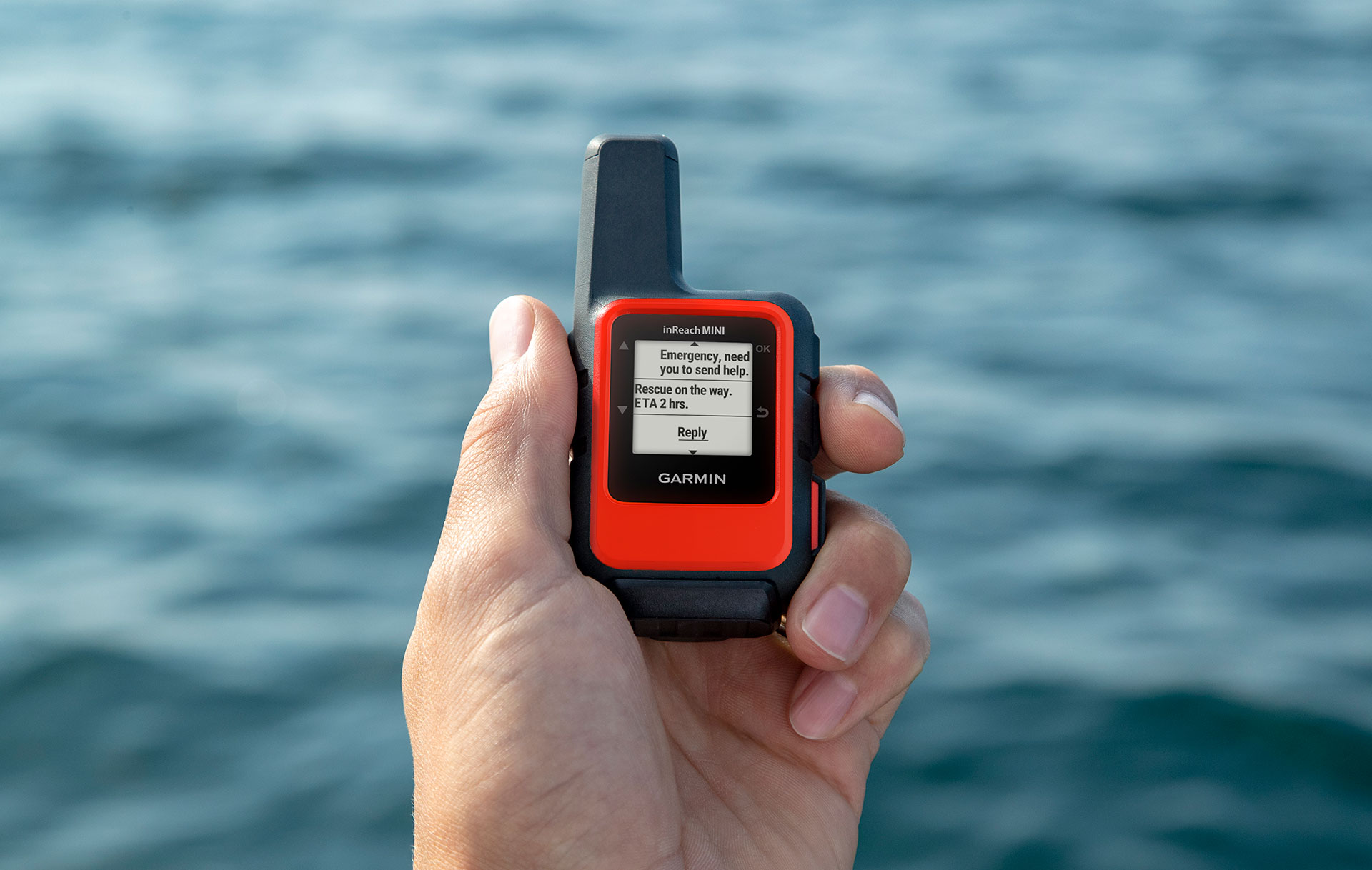
Gurman has the best sources inside Apple, and he is still saying that emergency satellite communications (as currently sold in tiny devices like the Garmin Inreach Mini) are actively being worked on.
>The rumored satellite features for future iPhones are reserved for emergency uses only, according to Bloomberg’s Mark Gurman. A few days ago, a report by well-known analyst Ming-Chi Kuo said the next iPhones will come with support for Low Earth Orbit satellite calls and messages. Gurman’s sources said, however, that Apple isn’t turning its devices into actual satellite phones, at least for now. Instead, the tech giant is reportedly developing at least two emergency-related features relying on satellite networks.
https://techcrunch.com/2021/08/31/apples-rumored-iphone-sate...
Kuo has the best sources inside Apple's supply chain, but we've seen him get the timeline wrong for components graduating from prototypes to mass production before.