You can get by knowing one or the other well. Perl's advantages to me are the CPAN, the tooling culture, the testing culture, and a very pragmatic approach to getting things done without the language or ecosystem dictating how.
Python's advantages are slightly cleaner defaults in Python 3 and the fact that all code looks basically the same. (I'm not sure I see that as an advantage, but other people do.)
I think Perl and Python have a lot more in common than differences when it comes to what they are good at. If you know one scripting language, you don't gain as much when you learn the next. My recommendation is to learn something different, C, Haskell, Lisp or Prolog for example. That would make you think in different ways.
Also, chromatic (a Perl developer) gives a very balanced answer in a sibling to my answer, so I won't repeat what he said.
Among other things it overloads the basic operators, so $a+$b will do the right thing, even if $a and %b are matrices/images, so it is very easy to "read" if you are a perl person already.
Perl has its own strengths. In order to win as scripting language on the UNIX environment a language will have to get some things right very well. Two of them namely 'Processes' and 'Files(text)'. UNIX is really about these two things heavily. That is why you will see UNIX by a vanilla installation has shipped with tools like sed, grep, awk, cut, tr, cat and other text processing tools for decades. Because a file can act as a pretty good representation for data, storage and problem representation use cases. Another area that the language will have to get right is 'DBMs'.
Speaking of Perl's merits as scripting languages alone, Perl offers a native way of interacting with all these things that I mentioned in the previous paragraph. Things like ``, system(), open(), close() , die(), chomp, while<FILEHANDLE>), split(), grep, !~ , ~= and regular expressions make text processing a breeze. In addition, Higher order parsing is very easy in Perl too, Regular expressions are first class objects. For more information on this you can read Mark Jason Dominus's Higher order Perl. Which is a free book.
Now coming to Perl's merits as general purpose scripting language. You have your usual language tool kit with data structures(usual numbers, strings), arrays, hashes. Flow control, functions, OO, functional programming features. But the plus and the biggest winner is the extension system. There is a huge repository of readily solved problems on the CPAN. You have language extension modules like Moose, Try::Tiny, etc etc.
In terms of the web development ecosystem, Perl has catalyst, DBIx::Class, Plack etc etc. You also have a good asynchronous programming framework.
In terms of documentation. Check out the amazing perldoc.perl.org. There is also Learning Perl, Programming Perl and recently Chromatic's beautiful book 'Modern Perl book'.
In terms of development practice and stability. Perl has a track record and battle tested for decades now, Its used to develop mission critical applications. For best practices you can read Damian Conway's Best practices book.
Also, Checkout enlightened Perl and Task::Kensho for the best of the breed modules.
As a plus and cherry on the cake, there is a new sister programming language called Perl 6 in the making. With great concepts, cleaner defaults and more pragmatic in the real world.
Perl 6 is usable today with Rakudo. Give it a whirl.
I would prefer to use Perl over bash/awk/sed since Perl is good at the same things and more and has alot more libraries.
Python is basically Perl but with different syntax, libraries, and community.
Perl has an emphasis on libraries. CPAN is the gold standard for the scripting languages. (To see what I mean -- search for signatures, Moose and Acme::Bleach on search.cpan.org. (+) )
Another good thing is the community of smart and laid back people.
I personally prefer to do Perl because it is fun.
The main disadvantage with the Perl "everything and the kitchen sink" attitude is if you are in a group without good coding standards... Perl also gets a tougher learning curve in the beginning, just from there being more to learn.
(+) Joke modules on CPAN generally start with Acme.
Edit: Huh, why down votes? Just a reflex by language trollers? :-)
Unlike Ruby or Python (or most other modern high-level programming languages), Perl does not come with an interactive REPL shell, which makes no sense at all, since, due to Perl's obscure syntax, someone trying out Perl would benefit at least twice as much from a REPL shell than someone learning Ruby or Python. Fortunately, the Devel::REPL package remedies this. Installing it is super-simple:
    $ sudo /usr/bin/perl -MCPAN -e shell
    > install Devel::REPL
$ re.pl
Doubt away.
I have never used that utility. Yet I have been programming Perl since the 90s, and am one of the top 10 posters on Perlmonks. (My nick there is tilly.)
Care to re-evaluate your criteria?
Yes, for you, I can :) My post was meant only to advocate interactive learning (which I came believe to be faster than the usual code/modify/run cycle). Few things (if any) can beat 15 years of intense experience. Most people, though, whom one is likely to encounter in the real world who claim to know Perl will only have used it for a year or two, probably in combination with something else.
shell> perl -de 1
This will take you into the perl debug shell (after evaluating the string "1" which is true).
   $ my $x = sub { my $x = shift; return sub { $x . shift } }
   $CODE1 = sub { # this is what is returned by Devel::REPL
           package Devel::REPL::Plugin::Packages::DefaultScratchpad;
           use warnings;
           use strict 'refs';
           my $x = shift @_;
           return sub {
             $x . shift(@_);
           }
           ;
         };

    $ $x->('hello ')->('world');
hello worldhttp://search.cpan.org/~apeiron/local-lib-1.008004/lib/local...
This very handily includes instructions on how to bootstrap its own installation.
also you can do this: $ perl -e 'print "Hello World!\n";'
It has been on my todo to try the REPL for a long time, but since Perl is the most powerful command line tool in bash, I've never seen a reason to use an interactive tool.
  alias p=perl
  p -e '...'
  p -ne '....'
  # etc.
Same applies to C++ and Vim.
So many single/double char operators which need to be memorised with Perl, before you can start comprehending the programs.
Not to mention Perl hackers used to pride themselves on super succinct code - in certain circles it use to be popular to include one liners to do complex stuff in email signatures.
(Not complaining though, Perl was the first language I used, and probably the simplest for text file processing in CGI's back in the day.)
Regarding other stuff, building good software requires understanding a lot of things which have nothing to do with Perl. Understanding concepts like recursion, closure, OO, functional programming concepts etc etc. These have to be first understood in theory. The Perl syntax is only a notation in which you express your ideas. Besides that designing good software requires people to understand design patterns, designing maintainable software requires people to work on large project under sound practices. Writing fast and efficient software requires people to learn Algorithms and data structures. And so on...
These principles remain the same regardless of the programming language you use. Then why is it that only in case of Perl people hold the language responsible for everything. To be frank, I have seen crappy code more often in other languages than in Perl. I have seen over abuse of certain element like XML in Java, and now these days Python.
The fact is if your technology community is huge you get a lot of crappy people along with your usual set of good people. This happens for various reasons, Everybody wants to learn something that is famous as it helps for Job reasons.
Perl's strength apart from your usual language kit is CPAN, language tools to produce highly useful rapid scripts in time. Heavy data lifting, data munging. A gentle glance at things like Moose, Modern Perl, Devel::Declare and all associated software with them(Catalyst, DBIx::Class), will show you the genius of Perl community in coming up such great stuff in time.
Nonsense. All you have to know is how to identify operators and how to use the documentation. The Modern Perl book covers that in a page or two.
One of my favorite examples of that was back when DVD John released DeCSS, and some Perl hackers turned it into a 7-line Perl script:
http://onyxneon.com/books/modern_perl/
The ebook/PDF edition is free! It's a great book for learning (modern) Perl basics if you're already familiar with programming concepts and another language like JavaScript (which is where I'm coming from).
Actually, I think the knowledge and best-practices gleaned from the book will help to make me a better programmer in a general sense (not just in terms of the Perl language). It's well written, a pleasure to read and I highly recommend it.
I've always wanted to give Perl a go but can't find something I want to use it for.
A brief explanation; perhaps someone here will be inspired or is thinking along similar lines:
I've been using an "object system" for JavaScript named Joose: http://joose.it/
Joose is amazing and is, roughly speaking, a port of the Moose object system for Perl to JavaScript. (Moose is mentioned in various comments below and many times in the "Modern Perl" book.)
The principal author/maintainer of Joose v3 (Nickolay Platonov) has developed an ecosystem of tools on top of Joose3 and for Joose-oriented distributions (github.com/SamuraiJack). Much of their design is inspired by popular distributions in Perl's CPAN (Nickolay has a strong background in Perl, obviously). And some of them are still tied into Perl libraries, not simply ports to JavaScript.
As node.js and its package manager NPM have evolved rapidly in the last 12 months, some of the Joose stuff is lagging behind and in need of an overhaul, e.g. Nickolay's "JSAN plugin" for Dist::Zilla.
I've been wanting to help, but it's difficult to hack on Perl code if you don't even know the syntax. Well, that's where chromatic's book has come to the rescue! To be honest, it's been a real eye-opener and, as I suggested earlier, I think this Perl learning-experience is actually going to be a big boon for me in the near term and into the future. It's already allowing me to view Joose and related libraries through new eyes.
If I were into serious application development I would probably try a project with Clojure before perl, but there are a lot of situations where that might not be desireable (eg you don't want to use the JVM).
I wrote a medium-sized project in Perl 5 two years ago. It is my day job right now to work on it. I have very little interest in rewriting it from scratch in any language, but if I did, it would probably be either Ruby or something on the JVM.
Once you've gotten through OReilly's beginner Perl books and "Programming Perl", if you truly want to learn how to scale Perl in the enterprise, read Damian Conway's Object Oriented Perl. Once you can write solid consistent OO Perl, read "Apache modules with Perl and C".
What does the Perl community mean to you? It must not include Sam.
Is it people who organize and participate in conferences and get indignant at the slightest negative comment?
"A bunch of new people started at work and we use a lot of Perl in our department. So I put together some information about Perl and I thought it might be worth sharing so here it is."
For that purpose, it is fine.
Because it's powerful, it's easy to start, it's flexible, it's productive, it's ubiquitous, and it has an unparalleled extension ecosystem devoted to quality and ease of use.
I hear about new Perl projects starting in large enterprises everyday!
Unless you are in the web programming domain(Somehow web developers think their's is the only software being written in the whole world) where your Python and Ruby frameworks seem to be famous. Perl is pretty big in the backend.
Perl is here to stay, and its simply too useful to be going away anytime soon.
It's undergoing major revision, and not a minute too soon.
I don't think Perl has a set container by default, but they can be added from CPAN, Python does, it's called a set ;) as does c++ where it, too, is called a set. Again, a key value based data structure, but in this case, the key is the value.
I know there's a site that does that (can't remember the name) but having it side by side with a great overview like this would be awesome.
Or perhaps Rosetta Code?
You can make the argument that if Perl 5 had had a better OO system not borrowed from Python, Moose might not exist now. That may be true in part, but I suspect significant pieces of Moose would still have to exist.
For those who learn Javascript, Perl object literal notation should be really easy to get and if you do some jQuery stuff, many things should come naturally to you somehow. Perl supports packages, closure, utf8 since many years whereas they are just coming to PHP (It's a real pain to go back to PHP for some projects... as it looks like a huge trash of functions in the global namespace with no cohesion at all... working with array_, mb_ or preg_* functions is such a pain... hopefully the doc helps in understanding the quirks of the language). The integration of regex as an operator is so nice. q[] or qq[] helps quite a lot and I quickly miss them... Controlling each instance of the program flow in code is very powerful too.
I guess the very minimalistic OOP system shipped with Perl did not help get Perl across the board of a wider range of company...
Obviously, this le/gend/ary image of unreadable code that one-liners, and to some extend sysadmin community, gave to the language has left a very bad taste in the mouth... and it is now very hard to get rid of.
when you look at http://mojolicio.us/ or http://perldancer.org/ for web development, Perl::Critic that analyzes your code for bad coding habits(JSLink like), perltidy that reformat your code to follow your conventions or Devel::NYTProf to profile every line of your code... I don't even talk about CPAN that has always get the job done for me in like 90% of the case...
I still have to find a language that offers such a powerful ecosystem.
And for those who wonder, Perl is very active here in Japan.
Considering the amount of legacy Perl scripts that I have had to rewrite since I got to Japan due to a lack of Perl developers that can mantain them, I'd think that Japan's Galapagos argument does not work so much in this case. I think that it is also losing strength around here.
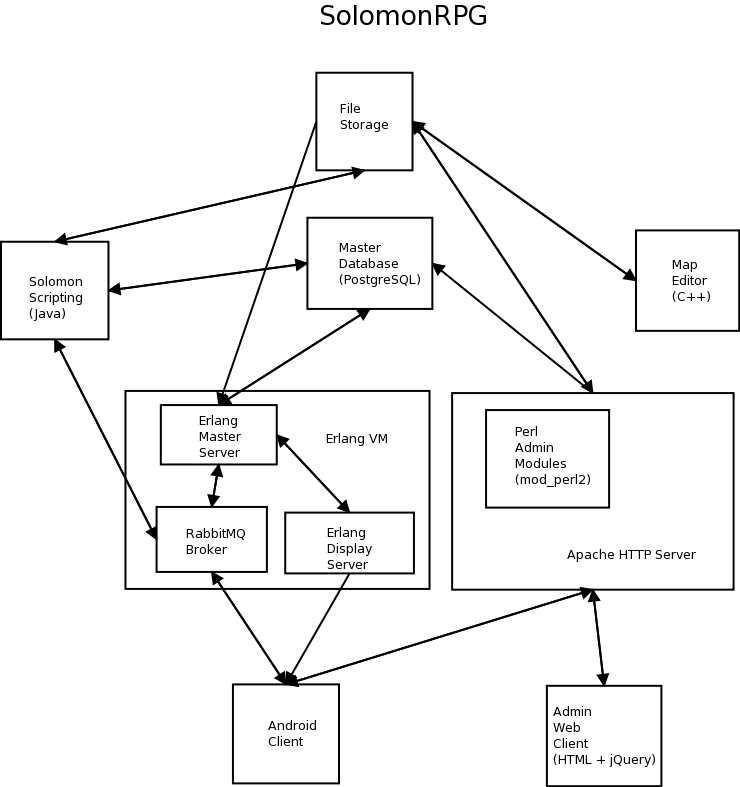
I built a 2D mmorpg using Perl and Erlang. The languages a lot of people whine about when it comes to syntax. Syntax is the LAST thing I had to worry. I'm really happy that I chose those two languages.