1. AMD and apple use different methods for measuring effect. So AMD 35W and apples 18W are not directly comparable.
2. Despite what HN top posts want you to believe newset Zen3 has a performance advantage over M1. Hence at this point it make sense to concentrate on reducing power usage.
3. AMD64 is basically internally a RISC.
4. Why does _any_ post on _anything_ quickly turns into praising apple? You are stealing attention from the real discussion.
> 3. AMD64 is basically internally a RISC.
They decode some rarely used instructions into multiple micro-ops, but these micro-ops can be very complex still. Example:
vfmadd231ps ymm1, ymm2, ymmword ptr [rsi + 4*rcx + 96]
More often the opposite happens, AMD64 instructions are merged into a single micro-op, this is called macro-op fusion.
There are plenty of things you could use such processor in.
Unless Apple decides and starts selling it's own silicon, their performance doesn't matter at all to people who need to source CPU to build whatever they are building.
You can't ship "but in benchmarks it beats competition"
The other problem is that "Apple Silicon" is just one slice of the market. When you think about how you didn't even mention ARM it kind of shows that you have very little confidence in ARM yet you still bash x86.
* will be based on the TSMC 7nm process node and will feature a monolithic design composed of the CPU, GPU, and I/O IPs
* includes the Zen 2 CPU and RDNA 2 GPU architectures
* Van Gogh APUs will feature a total TDP of around 7.5-15W
* designed for the FF3 socket which is a compact low power socket to compete against Tiger Lake-U
I am looking forward to more passively cooled high performance laptops in near future :)
1. Laptop ergonomics are really poor for taller people who need to hunch over to see a screen. Decoupling the screen from the compute unit would help here, while also enabling users to mix-and-match compute and display technologies, and upgrade them independently.
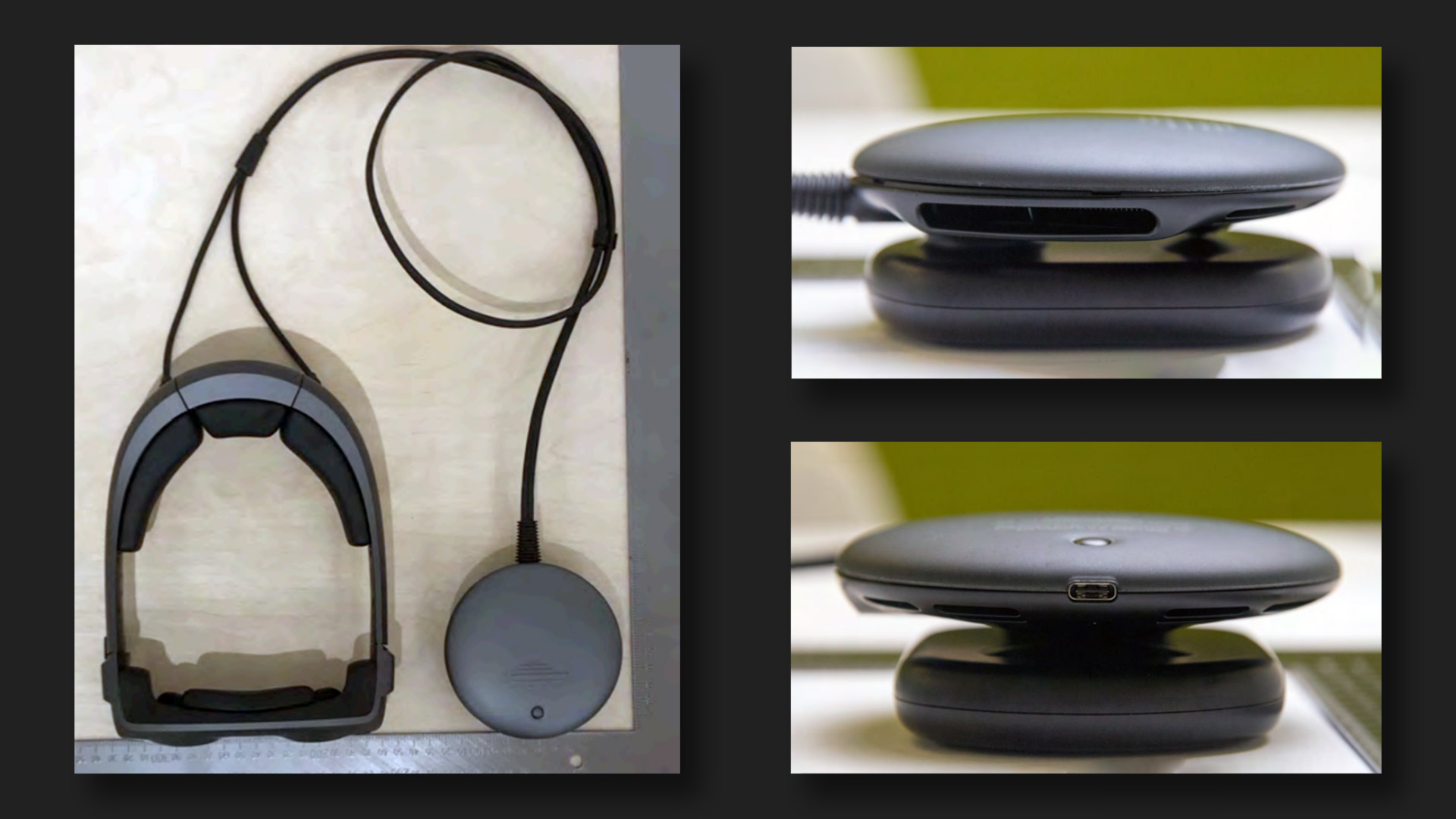
2. That same compute unit could also be paired with a VR headset, creating mobile VR not unlike what MagicLeap was doing with their compute units: https://www.roadtovr.com/wp-content/uploads/2018/07/magic-le...
When compared to something like the Quest 2, this would allow for a much more comfortable headset due to reduced weight and size, while providing a much more performant system.