Whats worse is diffusion of responsibility - someone could be on the critical path to essential suppliers for millions of people, but at the same time have no obligations to ensure their job is done, and perhaps not enough profit margin to plan for the shit time.
All it took was a sneeze and the whole thing falls apart.
But it didn’t fall apart. I’ve been able to get nearly everything I was getting before the pandemic. Prices of some stuff has increases and there are a few things that are harder to find, but the variety of goods available to me now is still way better than it was even just 20 years ago.
The system is stunningly resilient. Shortages of a few things doesn’t mean “the whole thing falls apart”. You’ll know if that happens because people will get really violent really fast when food or water stops.
Just as a little example, all my remaining orders on Amazon are delayed by months and it is impossible to get any info except what the original projected delivery date was. One product ordered last October has not arrived yet. As a consequence I basically stopped any online orders except a few via ebay and am now just waiting for the backlog to be processed. The complete lack of communication from Amazon does not help, neither does Amazon's slow transformation into a dropshipping AliExpress reseller, causing delivery times to behave as predictably as quantum states.
Something did break the last year i guess, that wasnt normal anywhere
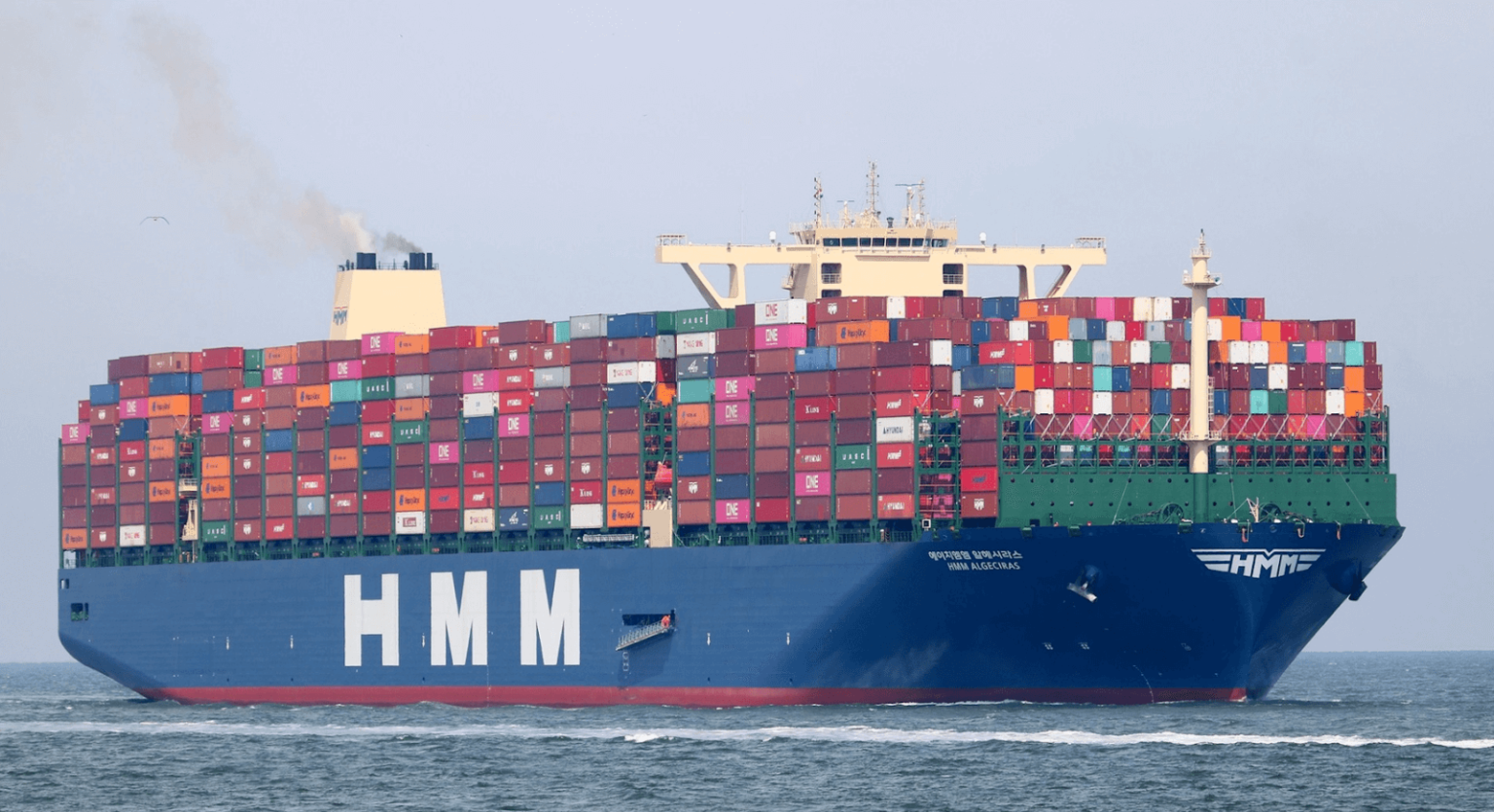
Barely. I mean... just look at what is going on in the Suez Canal, which is at the moment blocked by a mega freighter which had crashed into the walls and run aground: millions of dollars of damage and delays risking cascade effects in the harbors. Or how car factories all over the world are having issues because TSMC can't keep up with chip demands (and the car manufacturers having slashed orders during 'rona).
What makes it worse is that there are a number of conflicts that could escalate into open wars: the whole situation with China's aggressive imperialism (not just Taiwan), the powder keg Iran/Turkey/Syria/Israel, many countries in South America slowly or openly collapsing... at least some of these can drag the entire world's economy with them, one way or the other.
I don't think this is true anymore.
I find it silly to claim this or that should have been stockpiled with hindsight. There are just too many different things to stockpile. And the same people demanding that are probably the ones taking to the street protesting against wasteful living.
The last container shortage, which lasted quite a while, was in 2019. Because of paint used on containers. The old obe wasn't allowed anymore in the EU and, if memory serves well, the US. So whole fleets had to be repainted. In China, because it is cheaper. So once containers returned to Asia, they were removed from circulation for a while. We also had the Hanjin bankruptcy. This time is interesting, because COVID already screwed everything up in Q1 2020, these issues were still not really sorted out by now. European ports will be in for some funny times now, they will run try until the Suez is open again. And they will get swamped. It will be sorted out so, it might be worse than usual, but generally these things can also happen due to bad weather. This industry knows what to do. Still really interesting, I am kind of sad I missed the SCM operations on that.
We are already stockpiling ramen and water and now I guess we will start adding dog food into the mix as well.
Things have not fallen apart, but they have clearly changed.
http://www.msn.com/en-xl/northamerica/top-stories/the-world-...
We had grain elevators and other stockpiles of essentials. A country would save grain from summer to feed it through winter, and have months spare. This does not result in some imaginary 'wastefull living'.
Obviously you don't stockpile coffee and selfie sticks
Couldn’t, or wouldn’t.
If there is no way a reasonable person could make the item at that price point then you are living on borrowed time.
It was poorly defined, in the sense that nearly every single economic activity was "Essential" under the definitions set out by governments across the world.
If you provided any kind of service or product that was consumed by an essential business, you were also essential. My wife works in a small company that sets up tech conferences. They are... Essential (Despite not having any work for the past year. If nobody wants to pay you to do any work, I don't think you are essential, but I'm not the guy in charge...)
Looking at the definition of "essential" most places in the West, it was nearly everyone!
There are interesting parallels to unpaid volunteers maintaining open source projects.
A fire somewhere or a ship blocking one of the biggest shipping lanes for a few days or somebody getting trigger happy in a corner of the word.
If everyone masked/maintained hygiene/social distanced, then lockdowns can be lessened, but the best way to stop infections is to stop providing the environment were infections can occur.
Unless there are both effective and scalable treatment options, then some form of isolation is the only alternative.
Also, Texas recently lifted all the restrictions couple weeks ago, and number of cases and deaths is still falling.
I'm sure there are more examples like that.
I feel like your statement is essentially "no disease and no lockdown is preferable to disease and lockdown"
Of course, like any other disease there will be some death, particularly for old people and people with underlying condition but nothing that could cause problem as greater than mass lockdown.
My statement is essentially, some disease is preferable than mass lockdown.
Wanting to eradicate disease is good and I support it but not with something that caused massive problem that is worse than the disease.
That's a worrying prospect. Do you have a source linking the two?
"As the pandemic spread out from its Asian epicentre, countries implemented lockdowns, halting economic movements and production. Many factories closed temporarily, causing large numbers of containers to be stopped at ports"
You might have been radicalized...
It doesn't make sense to have solution that worse than the problem.
This makes sense, but at a macro level it can't have too large an effect on shipping rates: at worst, you need to pay for a round trip to bring back the empty container, instead of a one way journey. A 100% increase, which is a lot in most contexts, but oil prices (the other main marginal cost in shipping) fluctuate by that much three years out of ten.
Container shipping is so cheap these days that I don't see this effect killing the margins of many businesses.
1. Food prices are rising fast, I am literally spending double per month now of what I spent 8 months ago.
2. The shipping shortage led to a severe deficit of materials, my shop sell stuff to auto manufacturers, and one of them told me they will have to shut down the whole factory because they can't get their hands on a passenger seat shipment, and already have their yard full of incomplete cars.
3. The deficit even affected politics: we had elections recently, I talked to one mayor candidate in person, and the candidate complained they couldn't make certain forms of campaigning, for example handing out flags, because the flag manufacturer was struggling to get a shipment of plastic to make the flag handles!
4. Some cities there been utter chaos as trucks with produce pile up waiting for containers, this week in particular people almost came to blows because trucks started to fill up a city, and the mayor banned crowds from the farmer market because COVID, leading to farmers to start to unload produce in the middle of the street and grind the whole city economy to a halt.
5. My shop been trying to stock products because we can't rely on imports, this has been extremely crazy, we get shipments at random dates, demand spikes on random dates too, we ran out of physical space, manufacturers been raising prices to us out of the blue (sometimes two months in a row)´, and another manufacturer seemly just gave up, whenever we call them, they say there is no trucks available so they won't bother even trying to manufacture whatever we ordered.
I don't think that's just the container crisis, your currency has been going down the shitter for some time now.
Part of my business is a logistics operation... post-Christmas we were hobbled, I lost 30-40% of manhours any given week and the customers on the other side were the same way. I had to cut throughput 50-60% and overcommit staff to do what I needed to do. Inventory on hand is 10x what it should be.
So I would guess that a lot of the container issue is inventory stuck in the channel. Even companies like Walmart are struggling to keep shelves stocked, and they have a world class, vertically integrated operation.
That assumes the container is ready for you to bring back. It sounds like a big part of the problem is that North America is a bottleneck where it is taking containers in, but they aren't available to be sent back, empty or not.
Perhaps the freight industry has long term contract rates which assume bidirectional flow, and they can't operate economically without essentially doubling rates, so they constrain capacity.
https://www.maritime-executive.com/article/los-angeles-addre...
With a shortage, prices rise until supply meets demand. There is no "100% increase limit" on that effect.
If I'm reading this right, container shipping is an oligopoly similar to OPEC and they all banded together to reduce supply enough to raise prices, while in a competitive environment prices would have gone down due to reduced demand?
I don’t know for sure, but I have been in businesses where you can’t just spin up and spin down at a moments notice if spot prices start bouncing up and down.
One with a diversity of participants, informally colliding?
Or one with a few participants (because everyone else went out of business), informally colluding?
Ensuring profitable rates doesn't seem like a terrible use of collusion.
Since around 2008 it has been very difficult for ocean carriers of all types (not just containers) to turn a profit and so they all embarked on different strategies to try to become more efficient and manage costs. Before the Alliances, large ocean carriers needed to have an active and full network worldwide to attract customers. It's kind of like the transit problem: you don't get customers until you have a large network, but you can't afford a large network until you have a lot of customers. So many carriers operated routes that were loss leaders hoping to profit significantly off their mainline trades (you see the same in air travel).
The Alliances were one strategy to try to help these businesses become more efficient while still offering customers door-to-door shipping services, so in THE Alliance, there are a number of carriers each with different primary focuses, which means that they can operate much more efficient routes and take cargo wherever it needs to go.
The price of shipping a container is highly commoditized, there's intense competition in the market, and the margins are razor-thin, so I'm fairly confident that price-fixing isn't a significant factor in this industry. As well, as a shipper, the lions share of your costs getting a container from A to B are not the ocean transportation but everything else. Container storage at the port. Transport to the port. Loading and discharging costs. A multitude of fees that easily double or triple the raw container shipment number. Carriers have invested a lot in this space over the past years to verticalise and able to offer more of these services to their customers, instead of just being a pure ocean carrier. That (freight forwarding) is where the real margins are, and customers appreciate it because they get one simple upfront price, vendor management is easy, etc.
The EVERGREEN issue is interesting - They announced today that it could take weeks to free the evergreen - forcing all other vessels around the cape - adding at least 12-days to deliveries..
I would love to see a list of the traffic stuck behind the evergreen. It will be interesting to see what impact it will have on the EU economy.
Surely no system could reach 0%. Some areas are bound to be net exporters of stuff, and others net importers.
I have no idea what percent is needed to cover repositioning, but 20% sounds decent. Especially for a dynamic demand system (little ability to micro forecast flows).
This is a typo right? It should be 20%?
Actually, I wonder how the economy has adapted now that China has stopped "importing".
It depends on the guest how often towel last. Construction crew, or people with makeup, hair dyes stain easily. Local guest (People from the town) also stains more towels.
I probably used more towels during covid compare to previous 2 years.
It's almost like buying products from slaves in Asia and transporting them across the ocean is bad for the planet and the citizens of the planet.
They make the crap, make slave wages, amazon flys it over and makes all the $$$. You should get excited about that.
Fixing the environment is no more complicated then making our products in our own countries and paying appropriate wages.
Instead we let China pollute the planet with coal power plants and ships that pollute.
If the ships aren't piling up in north america, how are the containers? Are ships leaving north america without picking up containers and if so why?
One reason is given in the article: it’s more profitable not to wait to load up the empty containers and instead to go back and quickly ship another full load out of China
I guess eventually the prices have to catch up
Edit: I misread this is not clearly stated but I think still somewhat implied since they are not waiting for cargo to ship back they probably aren’t waiting for empty containers either
https://www.vesselfinder.com/ports/USOAK001
https://www.vesselfinder.com/ports/USLAX001
(It looks significantly better than a month or two ago, though, when ships were anchored 30-40 miles offshore because there was no more space for them.)
In fact, it is very like the incentives to send out your fishing fleet to scoop up another catch before all the fish are gone.
Ships are too valuable to wait around for the containers to catch up.
It's 45°C for storage. There might be a higher limit for shipping.
https://www.nytimes.com/2021/03/24/world/middleeast/suez-can...
100 ships stuck behind it.
When it rains, it shit pours...
Someone there posted https://www.vesselfinder.com/?imo=9811000 for real-time status, which seems to show the ship is still stuck.
Mills were producing steel well below cost for a long time, but ore prices have gone up and some inefficient mills are being shut down, so supply side costs increasing. Mills also reduced capacity significantly in 2020, causing a production bubble.
https://www.fitchratings.com/research/corporate-finance/glob...
It's able to carry 24,000 of those large ISO containers.
>The scrapping of containers now exceeds the building of new ones, causing inventories in factories to plummet. It will take months before more vessels and containers are built, meaning capacity likely won’t normalize until Q2 2021.
Interesting, try to buy one and they are charging and arm and leg. About 10-15 years ago you could pick up an old 40 FT container for about $500. Today you could go to a yard that has 10000 stacked and rusting containers and they want $2k plus to buy a beat up one.
Here is a 20 Ft beat to shit for $3600
https://northerncontainersales.ca/shipping-container-prices/...
TEUs (it should be cubic metres), inches (for screens we should use sqcm + aspect ratio), etc.
However that doesn't fix the problem of ships being out of balance too.
Cheaper energy and AI to assist with shipping (and maybe operating sealed power plants authorized by major nuclear world powers).
There are flat-pack containers, but they don't have the robustness or water-tightness of conventionally-built containers. People abuse container working limits something awful to squeeze pennies, so the flat-pack version will end up net costing more.
If the US Navy designed a nuclear-powered container ship class for rapid ultra-heavy-lift capacity, like enough to haul over an entire light (400,000) army group in one pass, then that's probably around 200, maybe 300 ships? The fastest sealift in US Navy inventory is 33 kts, so a nuclear-powered one with no fuel concerns could probably put on another 30% to that easily, so around 40 kts; much faster and they'll start outrunning most naval escorts.
Not every warfighting artifact fits in a container of course, but the military has the luxury to be able to define their own extensions to the ISO standard (and they have, with the bicon/tricon/etc. standards).
There are about 5,300 container ships in the world, so at the high end this would be about 5% of world capacity. Maersk operates a fleet of around 700, so it isn't too outrageous, if the US wants massive force projection. Such a fleet could step in to preserve national-security-critical supply chains. Coffee IMHO, is not national-security-critical, heretical as that may be.
For the record, I'm against the US projecting force around the world. It's not worth it IMHO, but like most people on the outside of the US looking in, I'm outvoted. On a strictly we-must-be-the-hyperpower-at-any-cost basis however, it makes sense for such a posture to invest heavily into that kind of ultra-fast, ultra-heavy-lift logistics capacity at that kind of scale. I'm just glad that the kind of leadership glamour disease that has befallen so many US corporations has seeped into its military, and they'll never believe in the benefits of unglamorous logistics and infrastructure until it is too late to fund.
I wonder if there's a good systemwide way to handle this problem.
Airlines use "irrops" -- irregular operations -- teams to handle big weather events, to get their airplanes to where their passengers are waiting. I suppose ocean shipping has similar irrops protocols. But the grounding of the Ever Given in the southern Suez Canal indicates that shipping irrops teams ignore actual weather events at their peril.
See Peter Senge's The Fifth Discipline.
From someone else quoting TFA:
>> Anticipating major industry collapse, the Carrier Alliances showed remarkable discipline in aligning supply with demand as early as February; removing trade capacity from the seas by halting vessels and shipments. By doing so, the erosion of ocean rates was kept to a minimum. Basing their reaction on potential worst case scenarios, shipping carriers artificially created under-capacity. This made available space come at a premium and therefore significantly raised the cost of container shipping, stabilizing revenues for carriers.
It seems the constraint is artificial.
edit: moved >
I mean, suborbital container launches.
* https://theloadstar.com/where-have-all-the-pallets-gone-on-s...