That sounds very low for modern SSDs, even consumer-grade. Have you tried different vendors?
100% utilization and 30x the bandwidth = 30x as many HDD. Alternatively, if HDD’s are an option you’re a long way from 100% utilization.
Anyway, reasonably available SSDs have up to [1000 x SSD size] total write limit, so doing couple of 400G builds/day would use up the 1TB drive in 3 years. At worst times we had to develop&maintain 5 releases in parallel instead of regular 2-3.
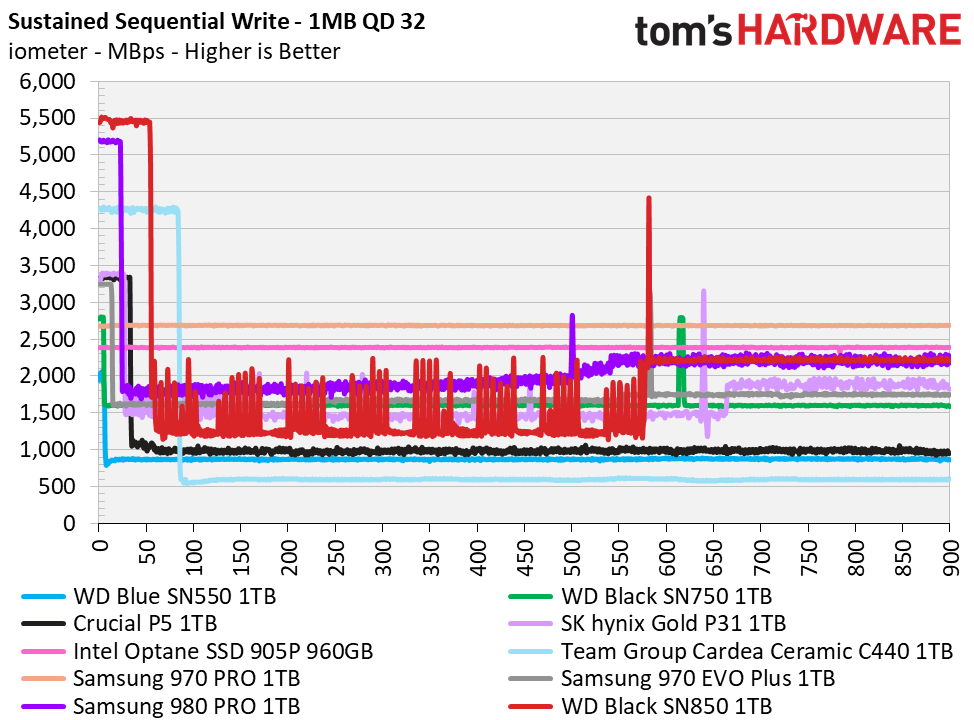
(See e.g. https://cdn.mos.cms.futurecdn.net/Ko5Grx7WzFZAXk6do4SSf8-128..., from Tom's Hardware)
see: https://www.anandtech.com/show/6459/samsung-ssd-840-testing-...
You're best bet for long-term reliability is to buy much more capacity than you need and try not to exceed >50% capacity for high write frequency situations. I keep an empty drive around to use as a temp directory for compiling, logging, temp files, etc.
Also, my understanding is that consumer-grade drive need a "cool down" period to allow them to perform wear leveling. So you don't want to be writing to these drives constantly.
I plan on using a couple of those as ZFS metadata and small block caches for my home NAS, we'll see how it goes but people generally and universally praise the SLC SSDs for their durability.
> You're best bet for long-term reliability is to buy much more capacity than you need and try not to exceed >50% capacity for high write frequency situations. I keep an empty drive around to use as a temp directory for compiling, logging, temp files, etc.
That's likely true. I am pondering buying one external NVMe SSD for that purpose exactly.
Every build gets fully tested at maximum TRACE logging, so that anyone who looks at the build / test later can search the logs for the bug.
8TBs of storage is a $200 hard drive. Fill it up, save everything. Buy 5 hard drives, copy data across them redundantly with ZFS and stuff.
1TBs of SSD storage is $100 (for 4GBps) to $200 (for 7GBps). Copy data from the hard drive array on the build server to the local workstation as you try to debug what went wrong in some unit test.