If all of that office space in downtown areas stays dark, and the zoning laws are altered or removed, it can be redeveloped into housing that's actually affordable.
We really are running into a wall on the methane crisis, and we we simply don't have the time to integrate these changes at a slower pace.
Let's focus on changing our regulations that prohibit building neighborhoods for pedestrians. Let's work on getting homes with solar roofs and big batteries. Let's get drone delivery everywhere. Let's electrify the transport system with electric cars, electric trucks, eVTOL aircraft. Let's tunnel underneath and between cities and connect them with hyperloops. Let's connect people in rural areas with low-cost, low-latency satellite internet access.
Doing these things will directly provide a great number of jobs for a great number of people. It will make a great number of new jobs possible. It will improve the natural environment. I think this is a much more positive direction to take than to try to slow things down.
"It argues this is only fair, as those who work from home are saving money and not paying into the system like those who go out to work."
They simply need more people to "pay into the system" again.
Taxation of WFH people is like taxing vegetarians because the tax revenue from sugar tax is too low.
Edit: Also fuck banks, of course their employees suggest taxing the middle class.
I don't believe it has anything to do with change.
I believe it has everything to do with isolating a vulnerable subset of society to exploit them. Divide and conquer. They want a bigger chunk of your hard earned money, thus they fabricate a tall tale of entitlement to vilify and turn the peole against you, and proceed to rob you of your paycheck because they want your hard earned money.
More money on electricity, heating, had to get better internet etc. Spending more on food as I am snacking and drinks more at home. It's not like the employers are sharing in this increased cost. The independent owned coffee place near my home is more expensive than the coffee can buy in the work canteen.
People who WFH will still spend a similar amount of money, just on different things and in different places.
Paying a flat tax on all writeable media to fund GEMA. Having to use Sofortüberweisung for online payments, etc.
Looking him up on LinkedIn shows he is working in London since 2009, at DB since 2015, did an MBA in NSW, Australia and another one at LBS in London.
Or, hell, tax high-income earners. For instance bank executives working for shady banks
> The tax would be paid for by employers and the income generated would be paid to people who can't do their jobs from home.
But somehow nobody in this thread seems to have read that sentence.
As an employer I would have an incentive to request works to show up in the office in order to not pay that tax.
Let’s say for a big company scaling down workspace they can offset the tax. For smaller companies it might actually be more cost effective to keep the office and demand works to come in.
Also why should anyone subsidise someone because their job requires them to be physically somewhere? Also why stop there? Why not tax ppl who have a less stressful job? Or less mentally demanding? Or less physically demanding? And then distribute that tax around.
Honestly, I chose to be a CS because I can work from home. That was the one thing that made me switch from medicine or experimental physics. Why should I be put in a worse situation because of that. And finally I have invested heavily into creating a room in my flat that acts as an office: Multiple monitors, desk, chair, servers, gigabit internet, etc. This contribution to the economy would not have happened if I was not WFH.
It's not.
It's the fact that a BANK is suggesting that CUSTOMERS take care of THE BANK's problems.
Their piss-poor planning is not my emergency. And if it IS my emergency, you can bet that additional taxes will not be on the table as a fix. Getting rid of the banking system and replacing it with something that works WILL be on the table, though.
> "WFH offers direct financial savings on expenses such as travel, lunch, clothes and cleaning," he said.
> The 5% tax rate "will leave them no worse off than if they had chosen to go into the office".
That seems a pretty clear implication that the money will ultimately come out of their salaries.
But if you're one of those high earners (that let's say works at Deutsche Bank) who sit in an office, you're not gonna write a proposal for higher tax for yourself. So instead you focus on those other people, who are "stealing" your salary by not having to go to the office anymore.
The state taxes where the lion's share of TOTAL wealth is (not wealth per person). That's the income of the middle class. That's why another new tax on income is suggested.
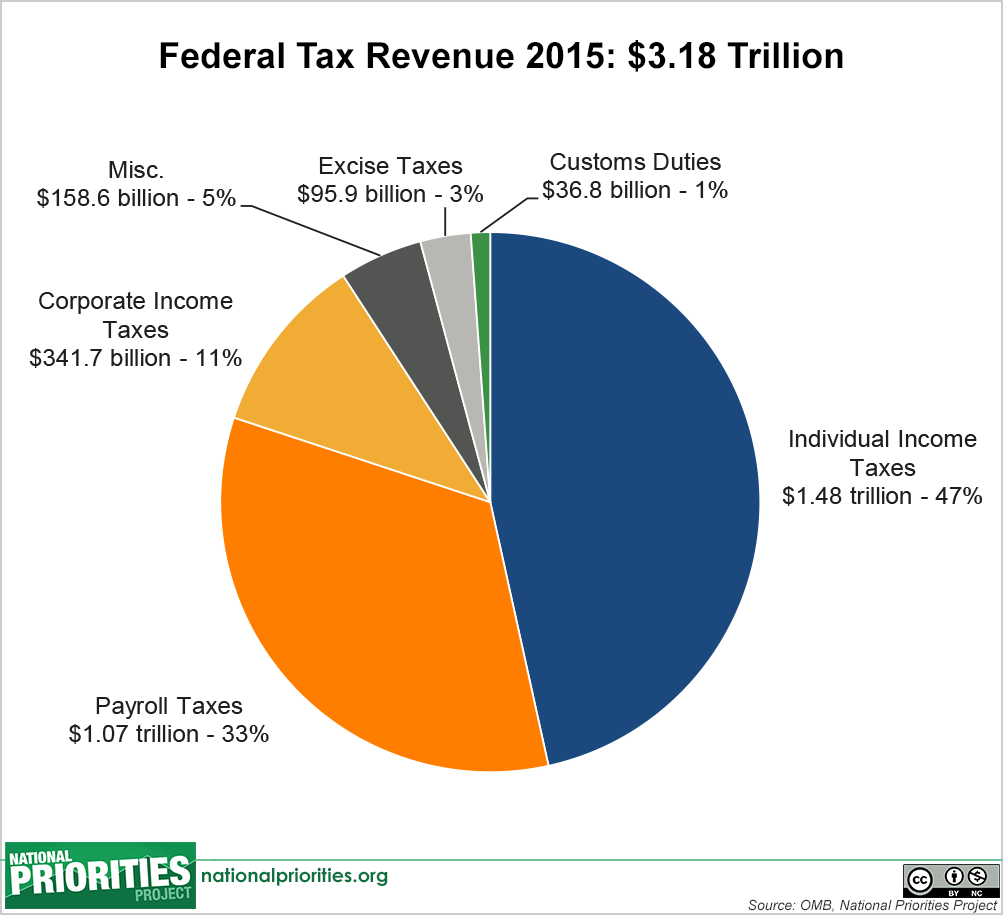
https://media.nationalpriorities.org/uploads/revenue_pie%2C_...
So middle class income represents 80% of the total tax income (and that's ignoring that customs duties and excise taxes also mostly come from that bucket, then we'd easily get to 85%)
"High earners" are generally defined as anyone earning more than double the average income in the country. For the US that's anyone making $62k2 = $120k per household*. Or for an individual that would be a chunk above that $62k, let's say $68k. All figures before tax, of course.
Home work improves many peoples mental state, reduces time spent at work (if you count commutes), people's footprint in terms of pollution and allow for the redistribution of people that were clustered in big cities under asfixiating rent/home owning costs. Why on earth would we disincentivize it?
>By working from home, people aren't paying for public transport or eating out at restaurants near their places of work, while expensive offices remain virtually empty.
Spending your money isn't an obligation as far as I'm aware. Should I be taxed for bringing my homecooked food to work then? What about walking to my workplace, or using a bike?
>"The virus has benefitted those who can do their jobs virtually, such as bank analysts, and threatened the livelihoods or health of those who can't," added Mr Templeman.
that one is reasonable until:
>It also wouldn't apply when people are asked to stay home for a public health emergency or other medical reasons.
So..the concern is that the virus hurts some workers, but it doesn't apply during times where workers are harmed?
Deutsche Bank placed number one in money laundering.
I was hoping Douchebank was going to go under. They were a candidate there for a moment at the beginning of April. Talk was they were going to fold. Too Bad.....
How does that ad hominem refute or support the claim that remote workers should be taxed to subsidize vulnerable jobs?
Is there a term for that?
I would gladly contribute a larger share of my income as taxes to ensure my community doesn't suffer, provided it was distributed equitably (which is a whole other complicated discussion.)
It's a bit like taxing cyclists 10 % of their income because they don't support the car industry...
Good analogy. But their argument is even worse because they don't look at the other benefits of remote work on the economy.
On the other hand they have a huge real estate portfolio (and mortgage portfolio) that I'm sure is now no longer looking like such a smart investment. So they're looking for them and their customers to be the recipients of these grants, no doubt.
> Quite simply, our economic system is not set up to cope with people who can disconnect themselves from face-to-face society.
So it's plausible that there is actually a problem here with the very sudden change of workforce distribution and how it affects society and the economy. But addressing it by simply taxing employers more for work-from-home jobs is definitely short-slighted. But in the short term it seems that something needs to be done to prop up the system because billions of dollars have left the economy overnight and it will likely never return.
God forbid we question our banking system or other broken systems that have been brought into the light of day since COVID started.
https://www.theguardian.com/business/2020/feb/16/dark-towers...
Edit: I know that name is a bit unfortunate, but it's a good book and I'm recommending it because of it's coverage of Deutsche, not for the political element - which is actually quite small.
Why just tax Zoom — Cisco, Google, and others have meeting products too (I'm stuck on WebEx, eww) so why should they be treated differently?
And if we do that, what does it say that we tax this thing that helps keep the economy from collapsing in the current crisis, punishing it financially, as if we resent it and want less of it?
If some jobs have become zombified because working practices have changed then those jobs need to go. We should support those people through the transition but trying to prop up unviable businesses isn't a sensible policy.
Coming out of this period should be a period of creative destruction but it seems to me current politicians don't have the backbone for it.
Why will there be a bill? The cost has already been paid by definition in lost output.
And when those that have saved more and borrowed less change their position taxes will automatically rise because tax is a ratio, not a fixed amount. The more activity there is, the more tax arises.
Savings are a store of taxation as well as value.
More borrowing means more debt that needs servicing.
We have known for a long time, the science is solid and being updated constantly, yet large companies don't do shit.
Doesn't matter how much recycling I do (which turns out is probably a waste of time), if a fucking billion dollar company creates a huge mess in a 3rd world country and pays peanuts.
/Rant
Alan Sugar (British Trump equivalent) similarly issued a demand for people to "get their asses back in the office" after telling everybody his commercial real estate portfolio wasn't performing: https://www.standard.co.uk/business/lord-sugar-offices-prope...
https://metro.co.uk/2020/09/03/lord-alan-sugar-calls-on-gove...
Good riddance to them.
I think there may be something else going on. "Essential" work has been allowed to continue, and "essential" had basically been defined as anything directly contributing to economic output.
Meanwhile, the productive desk jobs have moved to the home. This leaves two categories of jobs high and dry, the jobs maintaining the office building, and the bullshit jobs.
The problem is that the existence of bullshit jobs is part of the current deal, and estimates range from 40-50+% of how much work in a western economy is pointless. If the bullshit jobs disappear, it threatens that model and ultimately capital holders. The people may decide to tax capital!
https://en.wikipedia.org/wiki/Bullshit_Jobs
To quote wikipedia
  "The author contends that more than half of societal work is pointless, both large parts of some jobs and, as he describes, five types of entirely pointless jobs:

    flunkies, who serve to make their superiors feel important, e.g., receptionists, administrative assistants, door attendants
    goons, who oppose other goons hired by other companies, e.g., lobbyists, corporate lawyers, telemarketers, public relations specialists
    duct tapers, who temporarily fix problems that could be fixed permanently, e.g., programmers repairing shoddy code, airline desk staff who calm passengers whose bags do not arrive
    box tickers, who create the appearance that something useful is being done when it is not, e.g., survey administrators, in-house magazine journalists, corporate compliance officers
taskmasters, who manage—or create extra work for—those who do not need it, e.g., middle management, leadership professionalsThere is close to zero chance a bank, the pinnacle of capitalist institutions, supports such an inherently socialist proposal such as wealth redistribution.
By working from home, people aren't paying for public transport or eating out at restaurants near their places of work, while expensive offices remain virtually empty.
This is a terrible argument that just makes a lot of assumptions without also considering the benefits. The main assumption being that "WFH" is a net drain on the local economy.
While yes, people working from home aren't paying for public transportation, or eating out every day - they are spending money other ways. For example people are using food delivery services, buying more grocery, moving to cheaper COL areas thereby supporting a local economy somewhere else. They are buying better homes or furniture or equipment, etc. We need to understand better the complete impact on the economy to determine the net gain or loss.
> This is a terrible argument that just makes a lot of assumptions without also considering the benefits ...
You forget who is the beneficiary of people using those expensive offices. Could it be Deutsche Bank has a huge investment into commercial real estate and is looking to be the recipient of these "grants" ?
>The tax would be paid for by employers and the income generated would be paid to people who can't do their jobs from home.
That's what we want. We want to give people an economic incentive to go out and mix with people in the middle of a pandemic.
I'm working from home right now, but if you told me 5% of my pay would be taxed because of it I'd be back in the office like a shot.
>In the UK, Deutsche Bank calculates the tax would generate a pot of £6.9bn a year, which could pay
...For the massive cost of a huge wave of COVID caused by office workers who have been forced back into central london via public transport.
No, but we do want to incentivize those essential workers who are risking their health and who are often at or barely above minimum wage. Workers at long term care homes, grocery stores, schools, et cetera.
But such a plan is only superficially similar to the crazy Deutsche Bank plan.
So instead of companies forcing their employees to come to the office so they don't get slapped with a penalty tax, they'd be actively participating in optimizing commutes. And it would similarly support those workers who have no option.
I'm sure there would be all sorts of loopholes and weird situations in paid commutes. But there are also many of them in the remote tax suggested by the article. For instance, what would happen if a company officially says "no, you have to come to the office" but then in practice does nothing to enforce the rule?
Also, as a curiosity, where I live, there's a tax deduction for commute costs. Obviously, it's fine-tuned so that most people don't get to use it (i.e. would be so small that the effort to claim it exceeds the benefit), and so that you can never recover all your practical expenses. But some of those who have become remote workers because of COVID have lost access to that deduction.
By all means, tax the spectrum. Also work on making its distribution egalitarian.
Should we put an extra tax "at source" for - online shopping to support high street retailers ? - electric car manufacturers to support the oil industry? - all renewable energy companies to support coal mines?
There do you draw the line then?
Some countries are losing revenue, especially where products are bought from overseas and are not subject to some kind of value tax such as VAT, Sales Tax, GST. So yes some countries are looking into how they can tax online shopping. Which this is not to support the retail industry, it is to prop up the Government's funds.
> electric car manufacturers to support the oil industry?
Some countries are looking at taxing electric vehicles differently because they lose the excise taxes attached to fuel consumption. Which this is not to support the oil industry, it is to prop up the Government's funds.
> all renewable energy companies to support coal mines?
This will come, it is expensive to build and maintain power infrastructure. This will be especially more susceptible when power infrastructure is nationalized in a country.
The first example here was interesting as it displays a loss in tax revenue, the second is a loss in revenue to cover the cost of existing services, and the third an example of the same.
If the government builds infrastructure for a train for example, the cost does not stop because people stop using it. There maybe loans which need to be paid, maintenance which needs to be ongoing, jobs which need to be paid for etc. While over the long term this may dwindle down, the short term is that these costs need to be covered. Just like if you lost your job, you would be looking for a new job to cover your expenses, they just don't go away, the government does the same thing by relocating or reallocating taxes or revenue generation to another sector.
While I don't agree with the concept put forward, the general principles make sense.
I do agree with taxation to a certain extent(within reason). Like you say: infrastructure is expensive to build and maintain. That being said I am not a fan of paying for major inefficiencies or/and taxes meant to discourage/favour one industry as opposed to another(including long term subsidies).
I personally find it absurd how much is really paid as % in taxes from the yearly pay of a normal employee(taxes paid by employee, employer, included in product pricing, etc). This would be one of the reasons I don't like taxation at source(would render offshores almost obsolete).
“The government is good at one thing. It knows how to break your legs, and then hand you a crutch and say, 'See if it weren't for the government, you wouldn't be able to walk.” ― Harry Browne
Remote workers you get to pay for the crutch.
[1] Oct 05 WHO announces 750m cases and on that day there were ~1m fatailities. 1m / 750m = 0.0013 = 0.13% IFR ( end of article here https://www.nbcnewyork.com/news/coronavirus/nyc-ebola-doctor... )
Tax a very small % for automation at grocery stores. Low enough tax so that it is still profitable to automate checkout but also so that you don’t get a huge dump of unemployed ppl on the street.
> Deutsche Bank says its research is designed to spark debate around a series of important topics.
> Report author Mr Templeman said he'd had a lot of feedback on the report. "A lot of people aren't impressed at the idea of another tax, however, some have seen it as an interesting policy that governments can use to redistribute some of the gains from the pandemic which have been unexpectedly accrued by some people while others have lost out."
Also, there are many hidden drawbacks of working from home – it's more socially isolating, the work-life balance suffers, setting up a home office may be costly. I can imagine such a tax making working from home not worth it for lots of people.
If people can’t repay their loans you’re now stuck with something worth a lot less than all that money you gave out. OOPS.
I’ve been wondering what banks are going to do about this one. It’s a long term trend happening much faster than anyone could predict.
I believe a lot have been said here and it reveals how the so called economist at DB thinks.
On my side,I would just like to add a reference to F.Bastia
And its well known sophism:
https://www.investopedia.com/terms/f/frederic-bastiat.asp#:~....
When there's a significant balance of good-faith disagreement, mocking turns the temperature up substantially and people tend to avoid it more.
Fuel excises are used to fund roads, since electric cars don't use fuel, they don't generate revenue. Thus additional taxes are being contemplated.
What if monthly public transport tickets (if we're talking about places with public transport) and lunch subsidies are added to employees' benefit packages, but if you work from home these will be reduced at a pro-rata basis (WFH 40%? You only get 60% of that money)...
I wonder how companies are so amazing that feel they can do such evil shit with one face, and then turn with another and tell people they need to pay more taxes...
I mean LOL
[1](https://medium.com/technicity/big-banks-are-at-the-front-cen...)
People working from home save their employers money through reduced need for space, services and consumables at offices or other business premises.
They make lesser demands of public facilities, notably reducing the load on overcrowded transport infrastructure and so improving efficiency, the environment and, particularly at the current time, the health and safety of those who do still need to travel.
They support local businesses in the areas around their homes.
Their own quality of life may be qualitatively improved, not least by getting back several hours every week that is no longer wasted on commuting. This has obvious benefits including greater personal productivity, better mental health and providing more family time for parents and children during the week.
And as a secondary benefit, forcing businesses to accept more remote working might undermine long-standing toxic practices and presenteeism culture imposed by bad management, further improving both business productivity and personal quality of life for many.
We shouldn't be taxing working from home (or working closer to home instead of in distant facilities). If anything, we should be incentivizing this shift in our way of life, and we should be adapting our planning and infrastructure policies to support doing more of it in the future for those who can and want to. That could mean anything from just allowing more small business premises within predominantly residential areas where their services are likely to be needed right up to creating local business hubs where people can set up to work, access shared facilities and enjoy some personal contact if they don't have good facilities to work literally at their own home or they prefer a more social work environment.
We're definitely going to have some big bills to pay after the coronavirus problem has been mitigated, but I can think of a lot of more reasonable ways to generate extra revenue on the required scale than this. How about some real international collaboration to establish transaction taxes on multinationals that make huge amounts of money largely by moving money and/or personal data around with little evidence of any wider societal benefit from their activities, for a start?
Fuck everything about this.
I need to calm down a bit before reading the article :D but at least you have the gut/first reaction of a random joe to reading such headlines.
We need an alternative job that people always have the option to take. No need to tax anybody to create that
New paper on the approach today: http://www.fullemployment.net/publications/wp/2020/wp_20_06....
If there's a large-scale shift to working from home, I'd imagine you'd see an eventual rebalancing of cities & suburbans in both directions:
— more cafés and restaurants in suburban commuter towns or residential areas that were previously ghost towns during the day. (Personally, if there were more cafés and restaurants around my home (and we weren't in the middle of a lockdown) I'd be happy to frequent those while WFH to get out of the house & as a change of scene.)
— if offices do end up vacant longer-term, a conversion of some of this 'down town' space to residential.
In the interim, you'd probably want to support people and businesses along the way, but I don't think introducing taxes to chivvy people back to the existing (old?) status quo is the way forward out of all this. This could be an opportunity to make city centres a lot more livable.
On the issue of public transport — at least here in London, the network was struggling for funding even before the pandemic nevermind now. I think it's time to bite the bullet and make public transport free at the point of use — I'd happily pay an extra tax for that and would go some way to reducing day-to-day expenditure of people who depend on it most. Plus (again, when we're back to normal), it may encourage more people to reduce single-passenger car use if they're already paying for the train/bus.
Who pays for bills incurred due to working from home?
I can sort see this being a temporary tax on exceptional circumstances (such as public health crisis that halts work for those non-remote) but the proposal explicitly excludes this.
As a permanent tax this only sounds like a tax to make employees (since self-employed won't be taxed) pay for a hypothetical change in paradigm of how people work. Society has been investing in a model (expensive centralized infrastructure for on-site work) that is become obsolete and to sustain this obsolete model they propose to make employees pay for the transition.
That said, Germany isn't exactly a tax haven and I wouldn't agree to a tax increase if it isn't for directly supporting business currently affected by the pandemic (it will be a very large invoice...)
Businesses not affected by the pandemic: Deutsche Bank
Get the financial transaction tax and it would end a lot of useless transactions immediately and would maybe end some parasitic industries. It is also unlikely to hit people in precarious positions.
The chutzpah of these turds is unbelievable.
"For years we have need a tax on TBTF banks, their traders, their bosses, their board members, their speculators, and the taxes and bonds raised them to bail them of their losses, their bankruptcies, and their assholery." "Covid has just made it obvious".
Why don't we start on a 45% tax on the salaries of Deutsche Bank employees who can work from home but refuse to.
Because their business model is so intimately tied to state power, they're not really just a business, like others. They're able to create fractional money on which they charge interest, customer deposits are state-insured, even they are almost always first in line for bailouts and other special treatment in challenging times. They can also quite clearly afford to pay more.
Adding a tax on specific behaviors will just cause these $0 paying corporations to shuffle various activities around to come out paying $0 or less.
https://www.cnbc.com/2019/04/03/why-amazon-paid-no-federal-i...
https://www.cnbc.com/2020/02/04/amazon-had-to-pay-federal-in... ($162 million tax bill after 2 years of $0)
there are very few convincing reasons why anybody has earned 100x more than someone at the low end.
> What are you willing to change to help reduce emissions? #EnergyDebate
I'm going to sound like a total commie, which I'm not, but when are people going to get fed up with companies/persons earning billions telling us that WE need to be paid less so that THEY don't loose money or are paid more.
What. The. Actual. Fuck.